
Once a heroin user, former Judge Cook is now counseling addicts at Betty Ford clinic
From his seat on a folding lawn chair surrounded by federal agents in front of his heroin dealer's house in the early evening of May 22, 2013, Mike Cook hit bottom. His addiction would cost him his legal career, his reputation and his freedom.
But five years later with his prison sentence behind him, Cook, a former St. Clair County circuit judge, has received permission from a federal judge to leave the state while on probation to complete a master's program in addiction counseling connected to the renowned Betty Ford Clinic.
Cook, who was hooked on heroin while presiding over the St. Clair County drug court, has been accepted at the prestigious graduate school in Minnesota to obtain certification as an addiction counselor, according to federal court documents.
Cook, 48, who was sentenced to two years in a federal prison for a misdemeanor heroin possession charge and a felony weapons charge, was cleared to attend the Hazelden Betty Ford Graduate School of Addiction Studies in Center City, Minnesota. The 700-hour "clinical internship" began this month.
Cook and his attorney could not be reached for comment.
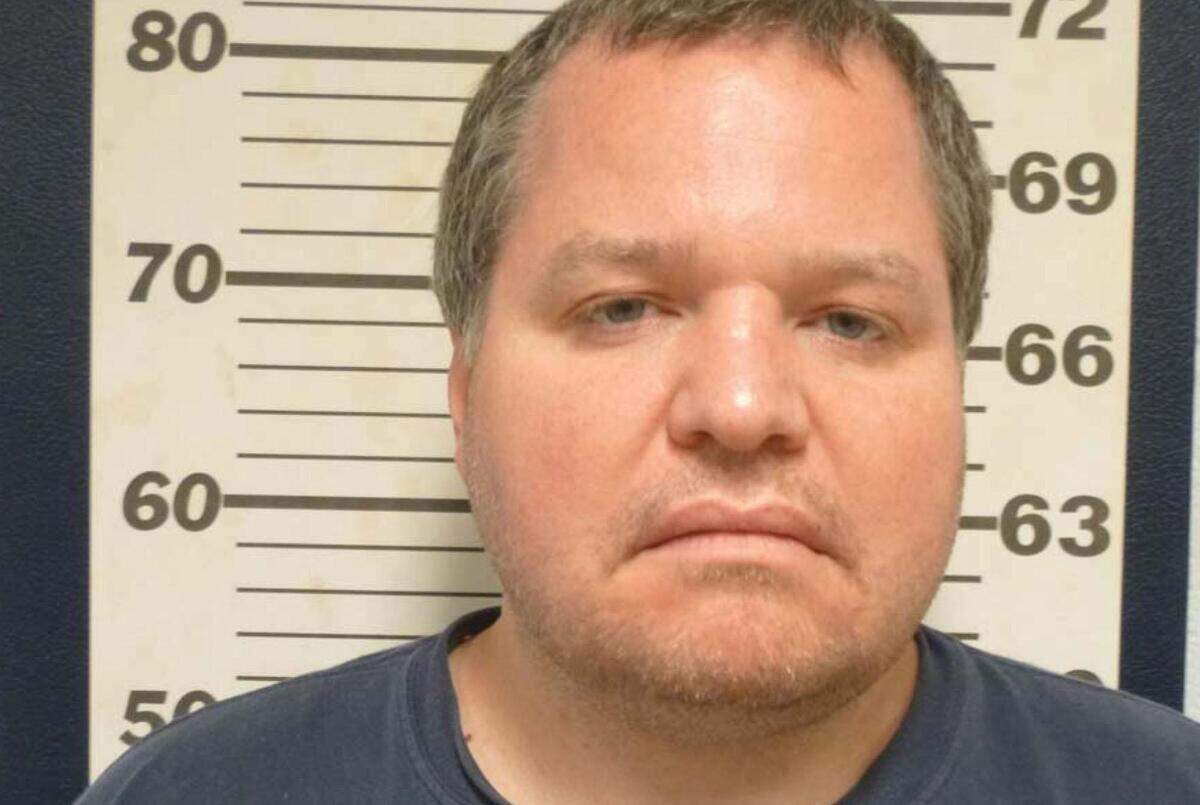
A court motion seeking the lifting of a travel ban during a three-year probationary period stated that Cook, who served his jail sentence at the Pensacola Naval Air Station in Florida, maintained a perfect 4.0 GPA on his way to qualifying for a master of arts degree in addiction studies, according to a motion filed in federal court by his attorney, Clyde Kuehn of Belleville. The motion stated that Cook was the first online student to be accepted into the internship program.
Cook additionally sought the lifting of the travel ban to be able to visit his wife and children on weekends and to occasionally visit a daughter in college in Tennessee.
The motion was agreed to by the U.S. attorney's office for the southern district and by Cook's probation officer.
The arrest of Cook set off a firestorm of publicity when a fellow St. Clair County judge, Joe Christ, died from a cocaine overdose at a hunting camp in Pike County where he and Cook were spending a weekend. More headlines erupted when a county probation officer was later arrested and charged with supplying the drug.
Paul Petty, the Pike County sheriff and coroner, was astounded when, during the autopsy of Christ, a small, red plastic vial containing cocaine dropped out of the judge's pocket. Petty contacted the FBI, which already was investigating.
Petty got to know Cook when the two met a week or so later in Hardin, in Calhoun County, to discuss Christ's death and other matters. Petty did not reveal the discovery of the plastic vial during this session with Cook.
Contacted Friday, Petty praised Cook and his efforts to end his addiction and to help others through counseling.
"Obviously, Mr. Cook's outcome to the past is the optimal success story," Petty said. "I would hope and pray that all who experience this type of addiction have the same drive and success ...This (heroin) was a very difficult thing to step away from."
Christ, 49, had just been appointed as an associate judge when he died.
The hunting camp, owned by Cook's father, Belleville attorney Bruce Cook, was sold in 2014 for $210,000.
Sean D. McGilvery, a friend of Mike Cook's, was eventually sentenced to 10 years in prison on a charge related to supplying drugs to Cook. McGilvery was released early on Sept. 29, 2017, after he received a sentence reduction for cooperating with federal prosecutors.
Former county probation agent James Fogarty, who pleaded guilty to supplying an eighth of an ounce of cocaine to Christ and Cook for use at the hunting camp, was sentenced to five years. He was released in 2016 and also served his time at the minimum security lockup in Pensacola.
Two other figures in the courthouse drug scandal are still in federal prison and will not be released until 2029. They are Deborah Perkins and her son Douglas Oliver. Both dealt with McGilvery to purchase cocaine acquired on the streets of South Chicago. Both were sentenced in 2013 to federal time. Perkins got 27 years and Oliver received 30 years.
They also were sentenced in state court to lesser time for reckless homicide and concealment of a death, which will be served concurrently with the more lengthy federal drug sentences. The state convictions were in connection with the heroin overdose deaths of Jessica Williams and Jennifer Herling at a home in Fairview Heights owned by Perkins. The building has since been demolished.
This story was originally published May 25, 2018 at 12:03 PM with the headline "Once a heroin user, former Judge Cook is now counseling addicts at Betty Ford clinic."