
She did a DNA test. Now she’s meeting two half-siblings she didn’t know existed.
DNA tests can help people find their birth parents, identify their countries of origin and solve crimes, like the cold case of the Golden State Killer in California.
They also can pull skeletons out of family closets, which is what happened to Ann Pilackas, of Lebanon, and her brother, Tom Clayton, of Alton. But the siblings weren’t upset to learn that their late father, Charlie Clayton, fathered three children they didn’t know existed.
They celebrated it.
“When we all got together the first time, it was seamless,” said Ann, 53, a French teacher at O’Fallon Township High School and mother of three. “It was like we had known each other forever. It shows you how strong the genetic aspect of it is.”
Ann and Tom grew up knowing about half-brother Fred Clayton, 66, of Santa Barbara, California, their father’s son from a previous marriage.
Half-brother Dennis Gathard, now 70, of Seattle, showed up on the family’s doorstep in the early 1980s, insisting that he was Charlie’s son, too. But it wasn’t until two decades later that a DNA test proved it, he said.
Two more DNA discoveries came this year in the form of a half-sister, Tracy Kuehn, 62, of Bridgeton, Missouri; and half-brother Bob Robbins, 71, of Springfield.
The siblings realize the story makes their dad seem like a philanderer, but they understand it was a different time. Women had no access to birth control pills in the 1940s and ‘50s, and many out-of-wedlock pregnancies remained secret. Ann and Tom don’t think Charlie knew about the babies.
“There’s no adultery here at all,” said Tom, 51, an IT specialist for Enterprise Rent-A-Car and father of two. “None of this happened outside of marriage. He never stepped out on his wives. He wasn’t a cheat. He wasn’t that kind of guy.”
“As a father, he was loving and generous and fun and supportive,” Ann added. “He never had a bad day. He was an eternal optimist.”
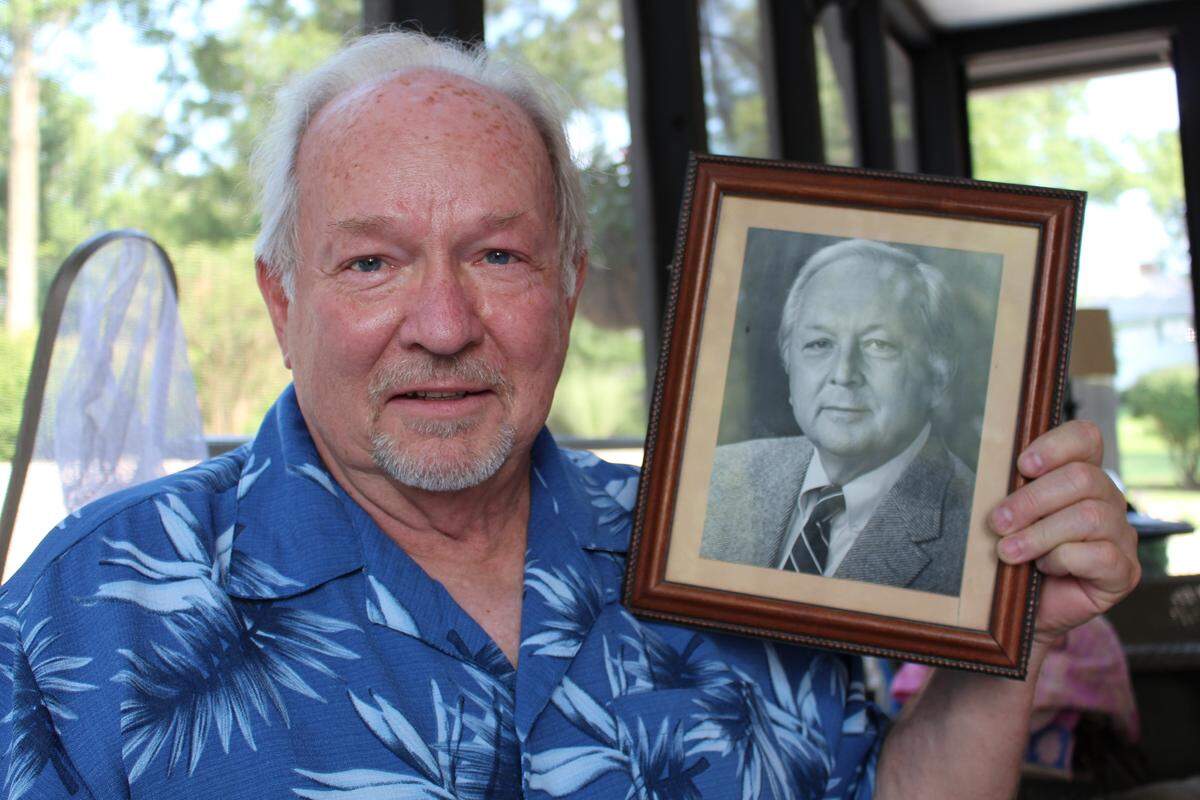
Last weekend, five of the six siblings and other family and friends gathered for a swim party at Ann’s house. There was plenty of splashing and laughing, hugging and crying.
Bob looks so much like Charlie, who died in 2016, that he played a joke on former neighbors Jerry and Sharon Cornell, both 80. He pulled up on a riding lawnmower, wearing Charlie’s jacket and favorite cap. Jerry stood frozen and speechless at first, then he walked over and shook Bob’s hand.
“You’re a ghost,” Jerry said, grinning. He later added, “There’s no denying your daddy.”
Playing detective
Several companies offer DNA testing to determine ancestral ethnicity or genealogical relationships. Costs range from $25 to $250, depending on services. The process typically involves swabbing your mouth or spitting saliva into a vial that is mailed to a laboratory and analyzed.
Ann, Dennis, Tracy and Bob each went through one or more companies, including MyHeritage, AncestryDNA, Family Tree DNA and 23andMe.
“Bob cost me 80 bucks,” Ann joked at the swim party, prompting Tracy’s daughter, Kacie Kuehn, 26, to chime in, “They can’t figure out if he’s worth it.”
The siblings have spent the past few weeks learning about each other’s childhoods, occupations, hobbies, families and personalities. They’ve also been playing detective, trying to figure out when, where and how Charlie crossed paths with the women who gave birth to Bob, Dennis and Tracy.
They know Charlie grew up in Glenarm, south of Springfield, and served in the Navy during World War II. After service, he earned a history degree at Millikin University and met his first wife, the former Ginger Lyn, in a Springfield bar. The couple divorced shortly after Charles Frederick (Fred) Clayton II was born.
Charlie married the former Sally Pfeffer, of Lebanon, in 1956, and they became the proud parents of Ann and Tom. Charlie sold roofing materials for Crown C Supply in St. Louis. Sally worked as a schoolteacher and later a lawyer before her death in 2010.
“She was Lebanon’s city attorney,” former neighbor Sharon said.
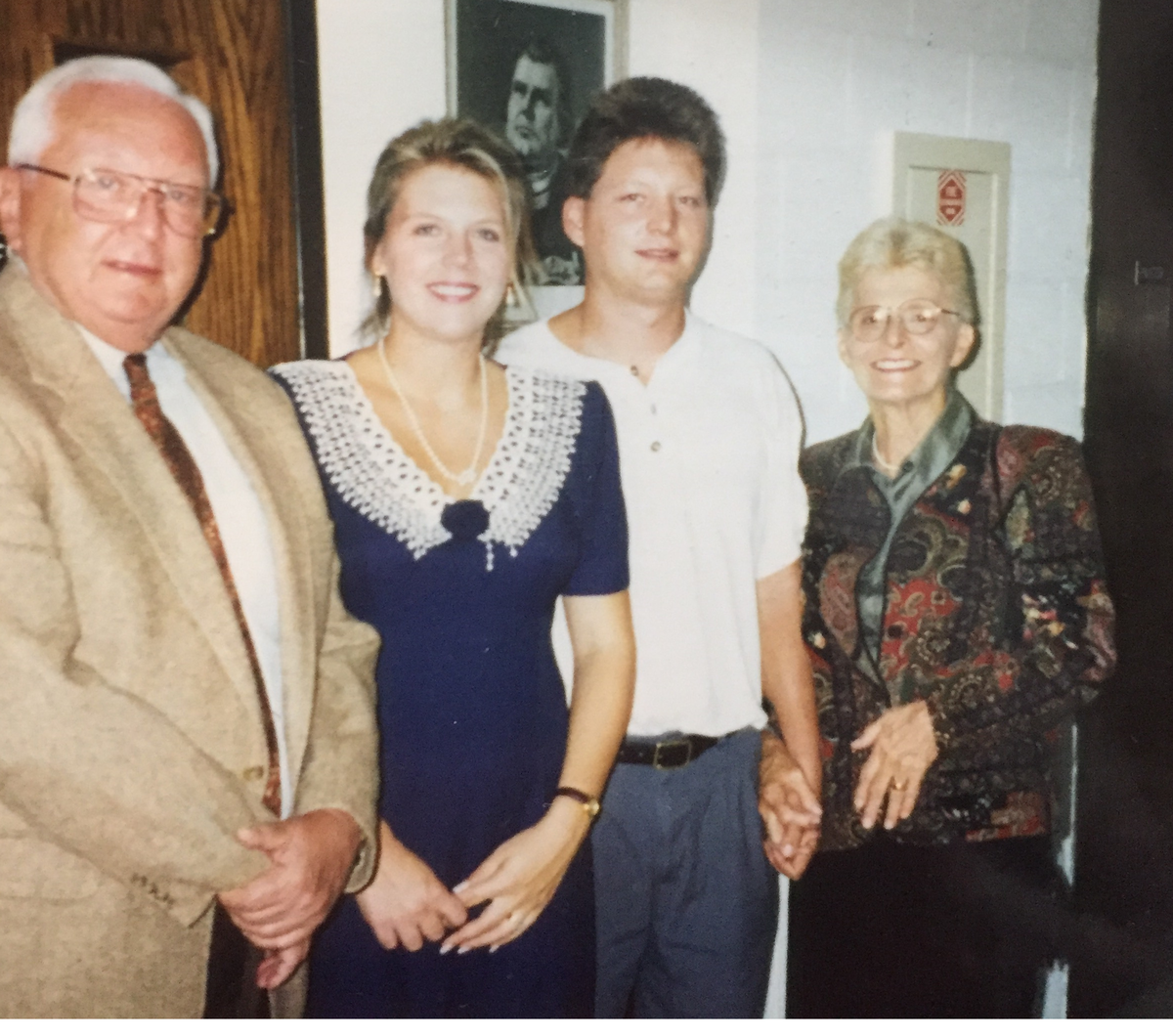
While Charlie and Sally were raising their family, Dennis was having suspicions about his own. Namely, he wondered why he looked so dramatically different than the man he called “Dad.”
It wasn’t until Dennis was in his early 30s that his mother, the former Eloise Smith, admitted that Charlie was his biological father. Charlie and Eloise had known each other in high school and reunited for a “one-night stand” after he left the military and before he married his first wife, Dennis said.
Dennis tracked down Charlie in the early ‘80s and arranged a meeting at Charlie’s home in Lebanon, pretending to be someone seeking an easement on his land.
“I said, ‘Do you remember Eloise Smith?’ And he said, ‘Yes.’ And I said, ‘She says you’re my father,’ ” recalls Dennis, now a retired engineer who owns rental property. “He didn’t say a word. He got bright red, and he walked over and took a pill.”
The two men met for coffee in Litchfield once or twice a year from that point on, although Charlie continued to question his paternity in a joking way, Dennis said. In the early 2000s, Fred persuaded Charlie to join Dennis in taking a DNA test, which confirmed they were close blood relatives.
Sister was adopted
Tracy’s mother, the former Marnell Jackson, met Charlie in the 1950s, when both were hanging out at the old Locust Hills Golf Course in Lebanon and going to the same parties. She also dated Sally’s brother, the late Tom Pfeffer. When Marnell got pregnant, people assumed it was Tom’s baby, the siblings said.
Tracy was adopted by St. Louis parents who also had a biological son and an adopted son. As an adult, she found Marnell’s name in legal papers and tried searching for her using methods available at the time, but she hit a dead end and gave up.
“When I became a mom, I just wanted to let her know that I turned out OK; I had a good life,” Tracy said at the swim party, fighting back tears.
Today, Tracy is a secretary at Holman Middle School in St. Ann, Missouri. She has four grown children and four grandchildren. Last Christmas, her daughter, Kristen Stensby, bought her and her husband, Ralph Kuehn, a DNA kit.
“We didn’t give it to them because she didn’t know her parents,” said Kristen, 34, of St. Louis. “We just wanted to help them find their origins. Are they Greek? Are they Canadian? Where did they come from?”
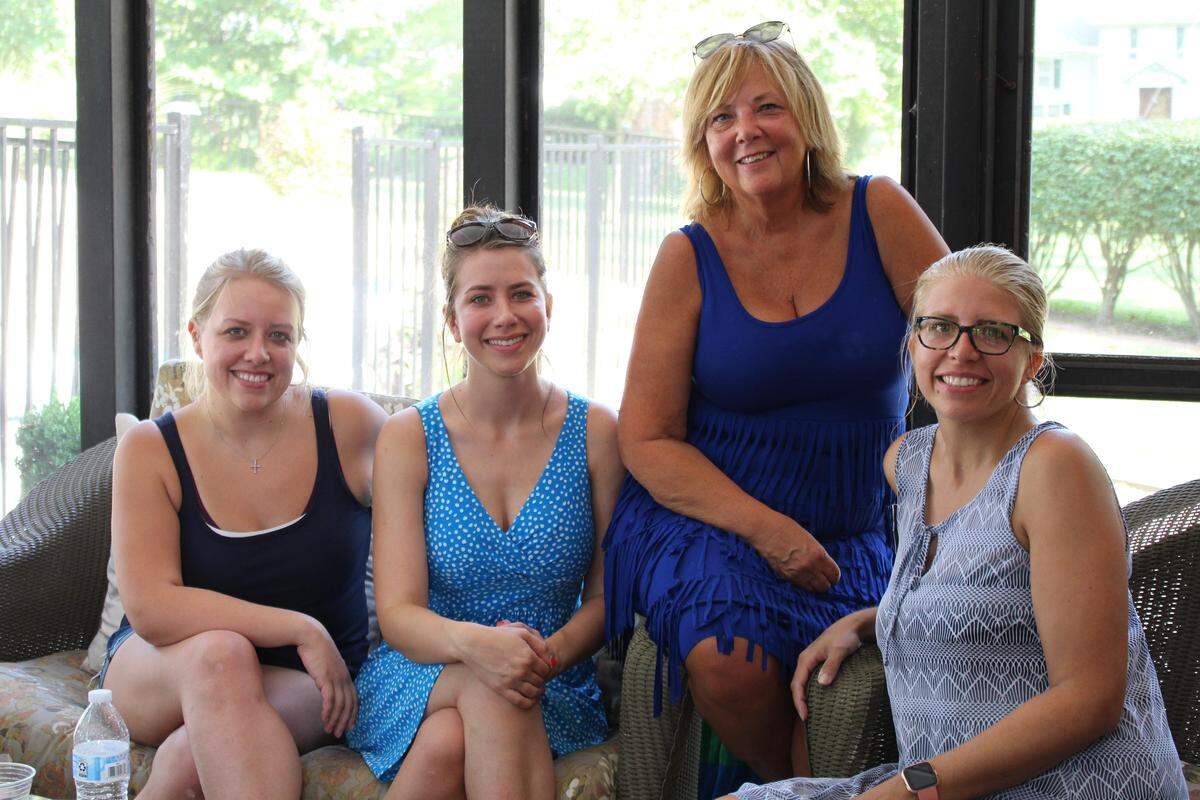
Tracy swabbed her mouth, put the sample in a vial, mailed it off and six weeks later received an email report, outlining her European roots. She submitted results for a more advanced analysis, which showed matches with Dennis and Ann.
When Kristen viewed Ann’s profile photo online, she immediately saw a resemblance to her mother. She reached out to Ann, and then the half-sisters talked by phone. Their families met in person on Feb. 2.
“It was very emotional,” Tracy said. “I didn’t have any sisters growing up, and she didn’t either. The female-to-female connection was very quick. We talk every day now.”
Oldest found last
The oldest half-brother, Bob Robbins, was the last to be found by his siblings. Like Tracy, he took a DNA test because he had received a kit as a gift. His wife, Becky, gave it to him on his birthday, April 30.
Bob grew up thinking his biological father was William Robbins, the man his mother, the former Betty Baird, married when she was 17. Bob was only 2 when they divorced, and he has no recollection of seeing William before or after. His mother then married Albert Rogers.
“I didn’t really want (to find William),” said Bob, a retired sheet-metal worker with three grown children and seven grandchildren. “I didn’t care. My stepdad who raised me ... He was who I considered my father. That’s who I admired. At my age, why did it matter who my real father was?”
Bob now believes Charlie had a fling with his mother in Springfield shortly after leaving the military in 1946, but he has no idea of the circumstances, he said.
Ann learned of her DNA match with Bob in June and got his phone number from his online contact, a sister-in-law. Ann texted him, and he called her back. She told him she thought he was her half-brother and that there were four other siblings. His photo had erased any doubt in her mind.
“I had mixed emotions,” Bob said. “It would have been nice to know 30 years ago, but maybe 30 years ago, this wouldn’t have worked. There might have been a lot of hostility (and stress on Charlie and Sally’s marriage).”
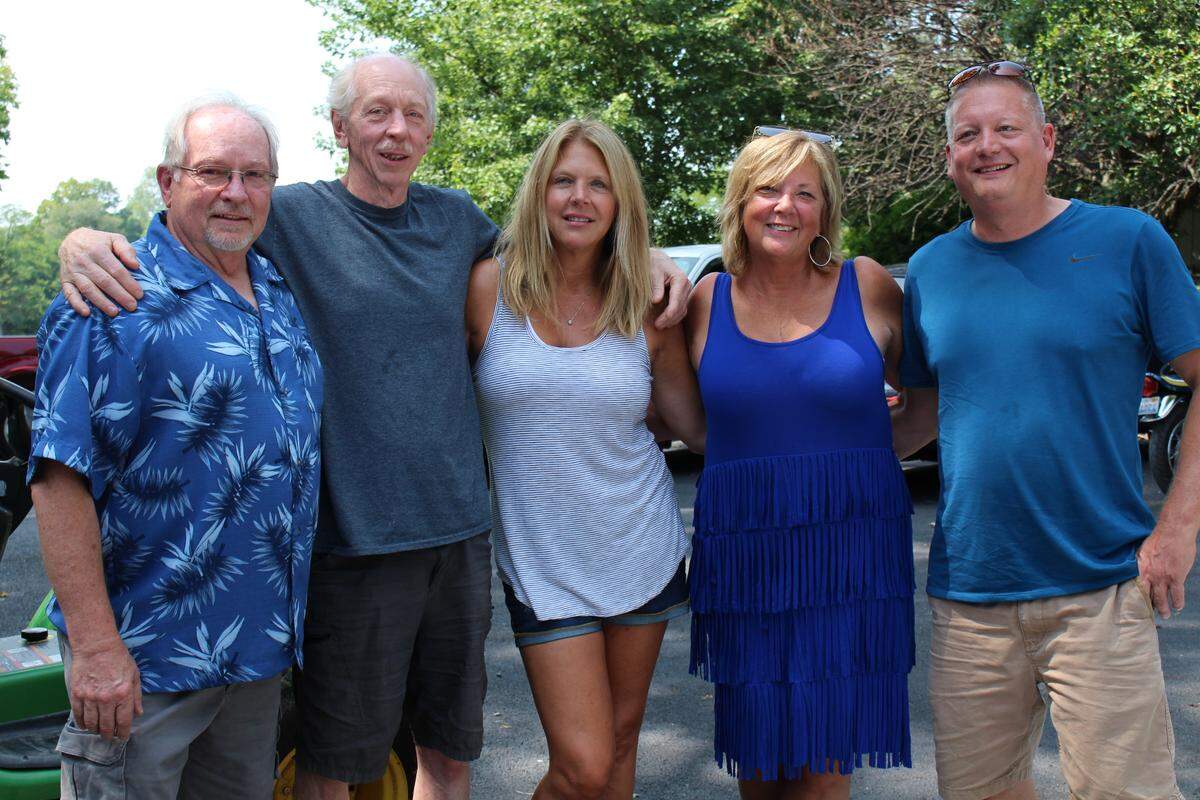
Bob met Ann, Tom and Tracy for the first time June 30 at a Litchfield restaurant. Ann gets teary eyed when she sees Bob because he reminds her so much of her father.
Tom, the baby in the family, hasn’t taken a DNA test. He figures it’s unnecessary because he has the same biological parents as his sister.
Tom can’t help but wonder if Charlie and Sally would approve of their children’s effort to dig up the past and their willingness to discuss private family matters in public. But he sees the new sibling connections as nothing but positive.
“I think it’s great that we all met,” he said. “We all get along. We’re family. We love each other.”
This story was originally published August 15, 2018 at 10:06 AM.