Downtown Belleville movie theater has been open for 100 years. How is that possible?
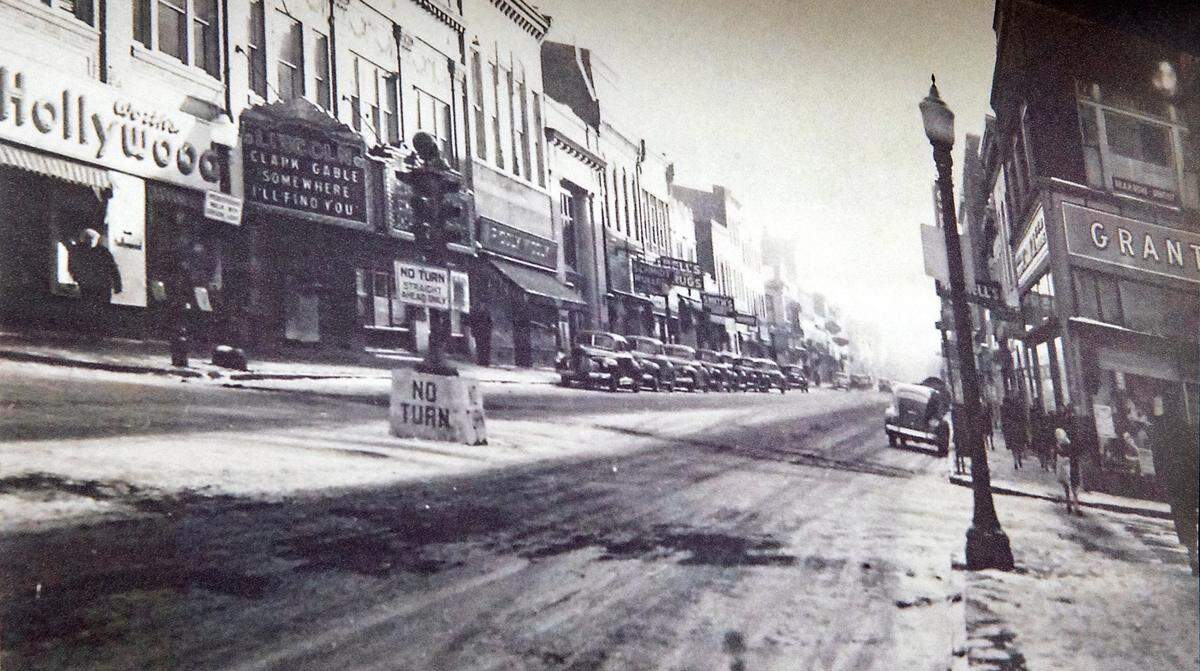
Sorting through old paperwork at the Lincoln Theatre in Belleville is like taking a class in film history.
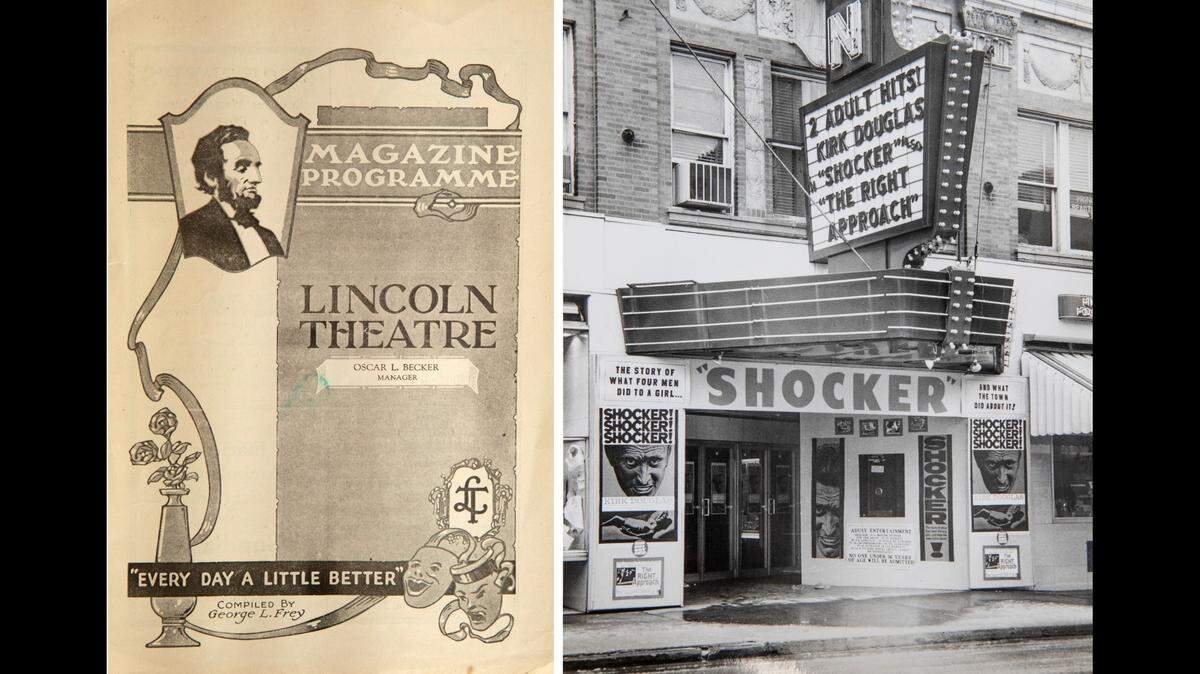
Programs from the 1920s promote silent movies such as “Little Lord Fauntleroy” with “America’s sweetheart” Mary Pickford and “They Like ‘Em Rough,” starring Viola Dana. One-reel shorts were combined with singing, dancing, comedy, magic and other vaudeville acts on stage.
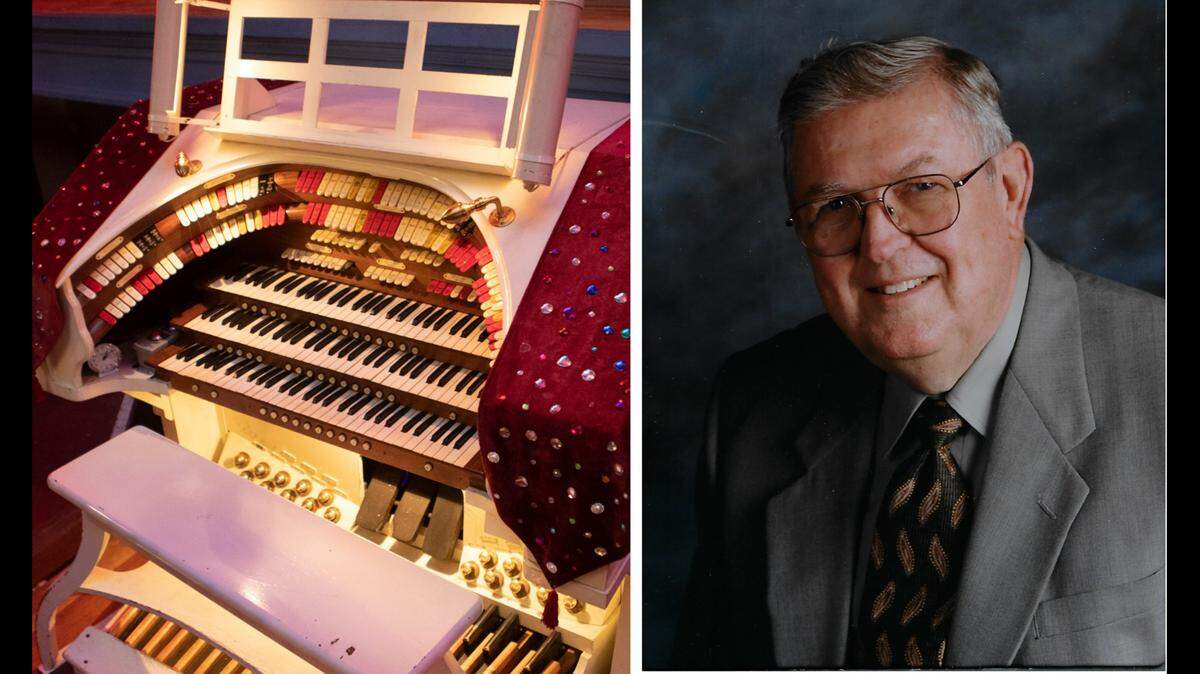
A black-and-white photo shows tuxedo-clad members of the Lincoln Theatre Orchestra, which accompanied all silent films until 1927, when a Mighty Wurlitzer pipe organ was installed.
“It was a cost-saving measure,” said co-owner Dave Schoenborn, noting one organist could mimic a host of musical instruments and produce sound effects such as whistles and sirens.
“Then the talkies took over in the 1930s,” he said.
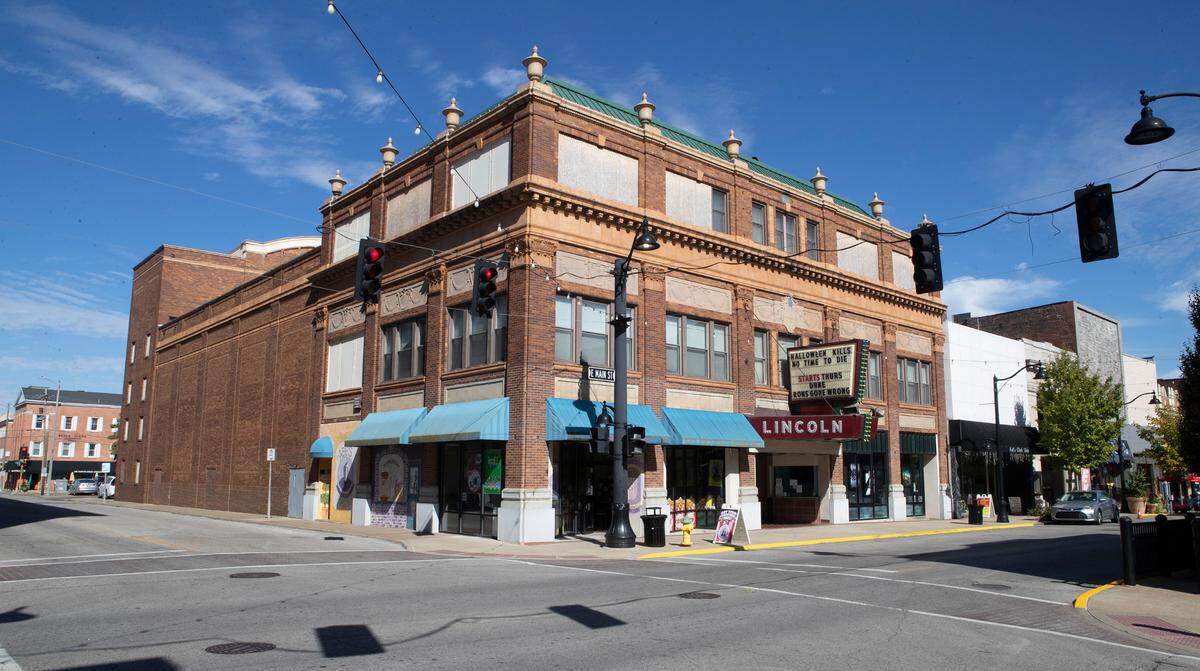
On a recent weekday, Dave was searching for memorabilia in a packed suite of offices he shares with his wife, Sandy, on the second floor of the Lincoln’s 100-year-old brick building at 103 E. Main St.
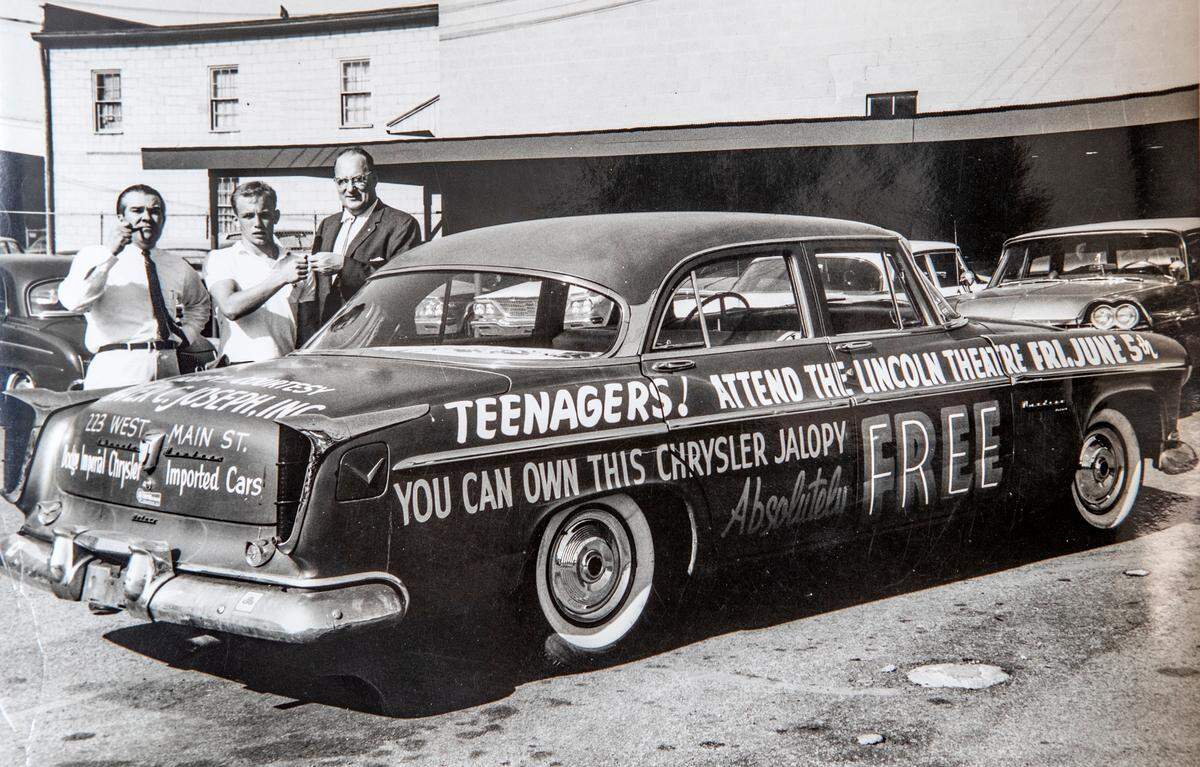
He found a dozen or so marquee images from the 1950s, when the theater showed “The Phenix City Story,” “Indestructible Man, “The Big Circus” and “Ben-Hur.” Signs announced that widescreen CinemaScope technology had arrived in Belleville with many movies in full color.
Some advertisements featured provocative teasers, such as “Mickey Spillane strips down to naked fury!” for “Kiss Me Deadly” in 1955.
‘60s bring rating system
Some of the Lincoln’s early 1960s films were billed as “adult hits,” including “The Right Approach” with Frankie Vaughan and “Shocker,” also known as “Town Without Pity.” That was before the Motion Picture Association of America established its rating system in 1968.
“Shocker” starred Kirk Douglas as Major Steve Garrett, who defended four drunken American soldiers facing court martial after gang-raping a 16-year-old girl along a river in occupied Germany.
“The story of what four men did to a girl ... and what the town did about it!” the posters teased.
Some movie themes, images and titles, such as “Blonde Bait” in 1956 and “I Passed for White” in 1960, might be considered politically incorrect today. A tagline for the latter read, “When he took her in his arms, she had crossed the color line.”
The Lincoln’s condition had badly deteriorated by 1980, when Sandy’s father, the late Richard Wright, and his wife, Betty, bought it from California-based Mann Theatres. Richard had served as general manager of BAC Cinema in Belleville.
“My husband was dedicated to keeping (the Lincoln) open,” said Betty, 83, who left her real-estate job to help him. “That theater was his life.”
The Schoenborns took over management in 2007, after Richard suffered a stroke. Sandy also has a sister, Kathy Going, who’s not involved with the business.
The family will celebrate the Lincoln’s 100th anniversary with “A Century of Entertainment,” a variety show with music, dance and theater reflecting the 1920s through today. It will be performed on Friday and Saturday nights and Sunday afternoon.
“I think it’s great that (the Lincoln has) lasted this long, and I hope that we can continue it,” said Sandy, 59.
Closed only for COVID-19
Few movie theaters in the United States have been in continuous operation as long as the Lincoln.
“This one has never closed, except for COVID-19,” said Dave, 57, of Belleville, noting that pandemic-related restrictions shut down venues across the country in March 2020.
“We tried to open in September of 2020, but there was no product, and there were no customers. So we stayed closed until May 28, 2021.”
Like Betty, the Schoenborns give Richard credit for the Lincoln’s long-term survival. He faced challenges with enthusiasm and innovation. His many renovations included removal of the CinemaScope screen and restoration of the proscenium arch in the 1980s.
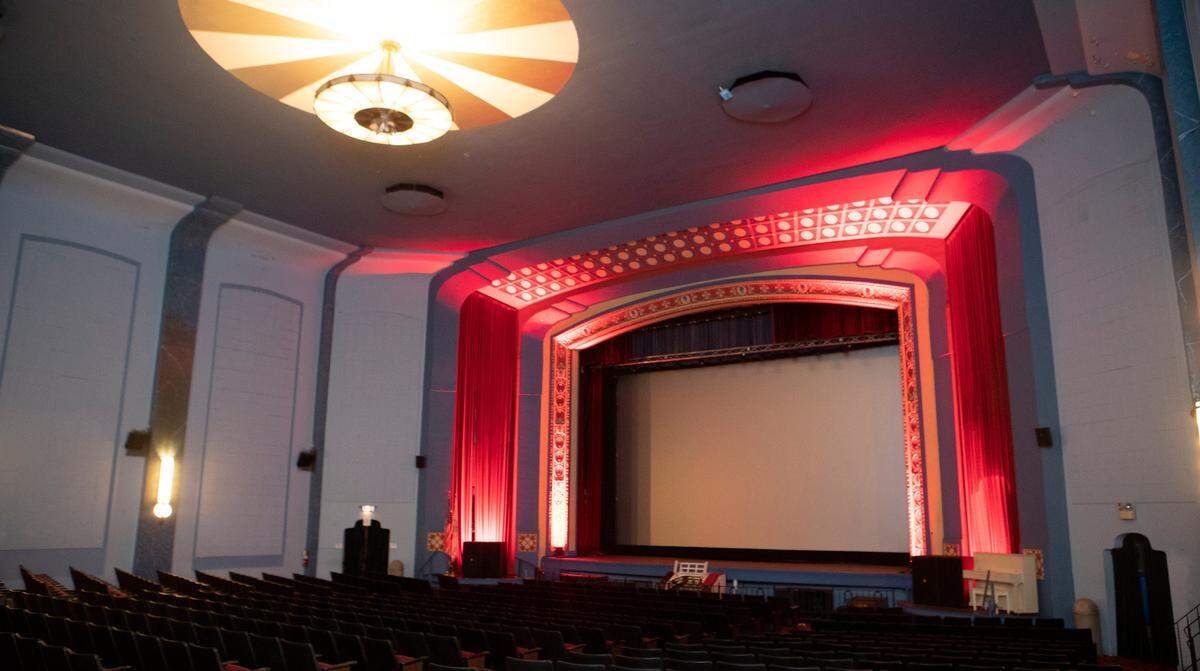
Richard converted the balcony into two smaller screening rooms, following a national trend toward multiplexes. But he refused to cut up the main level, which seats 540 people.
That allowed the theater to host dance recitals, wrestling competitions and other large events, as well as Saturday matinees for schoolchildren.
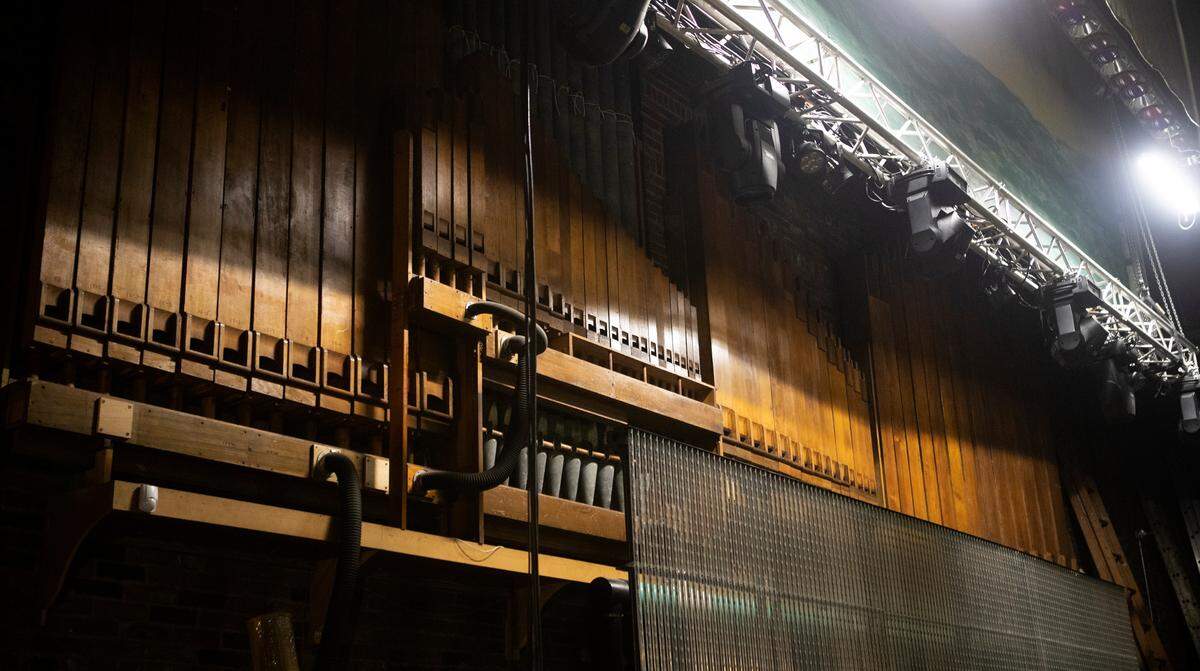
“People around the country came to see what (Richard) was doing because everyone else was doing the complete opposite,” Dave said. “He wanted to keep the vaudeville stage, and he wanted to put a pipe organ back in the theater.”
“He was always a huge pipe-organ nut, more than just a fan, so he wanted his own,” Sandy said.
Name selected in contest
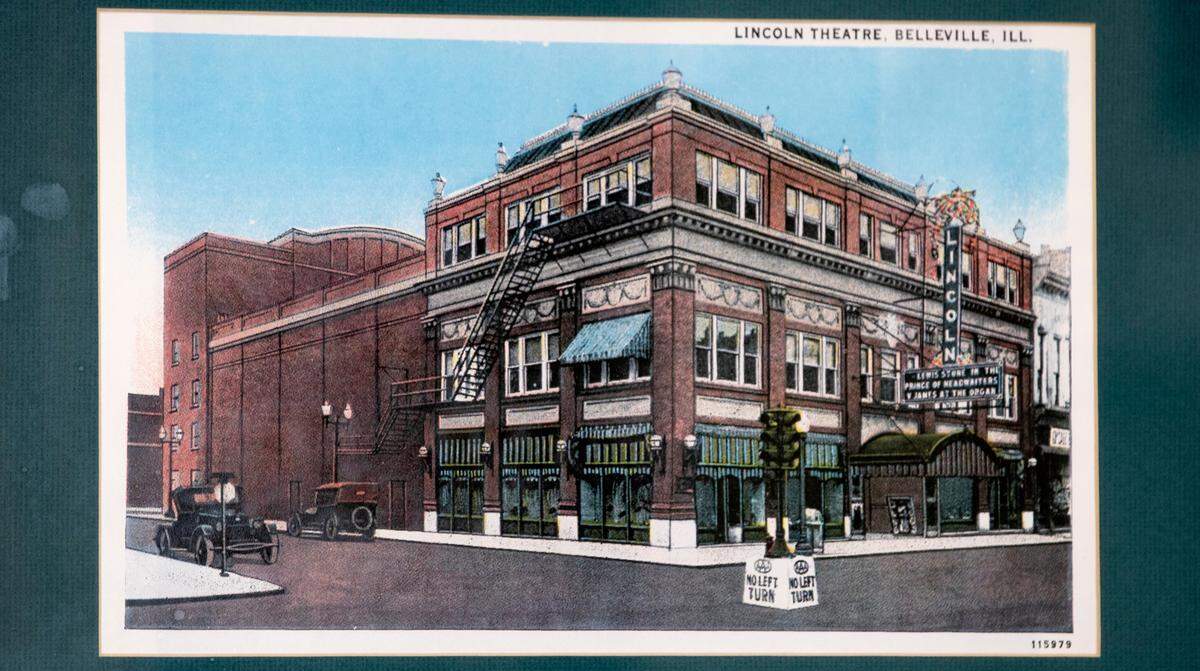
Mullen Building Corp. spent about $180,000 to build the Lincoln Theatre at East Main and North High streets in 1921. The company had recently purchased the Washington Theatre and Lyric Theatre in Belleville.
The Lincoln’s name was selected through a community contest, according to a history prepared for its 75th anniversary by the late Charles Kieskalt, a local movie buff.
The first show on Oct. 6, 1921, consisted of four vaudeville acts and a screening of the silent film “The Old Nest.” Tickets cost 36 cents for adults and 18 cents for children on the main level (27 cents and 13 cents in the balcony).
“Huge Crowds Jam Beautiful New Play House and See a Real High Class Movie and Vaudeville Show,” read the subhead on a story in The Daily Advocate.
The story revealed that Belleville residents were still bitter about an 1842 visit by English writer Charles Dickens, who had stayed at the Mansion House Hotel, which formerly stood on the Lincoln site.
Dickens described the hotel as “an old, shambling, low-roofed outhouse, half cowshed, half kitchen.”
Dickens couldn’t have degraded the Lincoln, the story argued, with its “well-built and spacious” building, “simple but beautiful” decor and plentiful and “commodious” seating.
The newspaper also praised the silent film and vaudeville line-up.
“If the management keeps up the same high class of performances in all particulars the Belleville public will respond with patronage,” it predicted.
Stepping stone for fame
The Lincoln had to turn away hundreds of people on Sept. 9, 1925, due to a sell-out crowd for “The Ten Commandments,” according to Kieskalt. The silent film’s three-day run was extended.
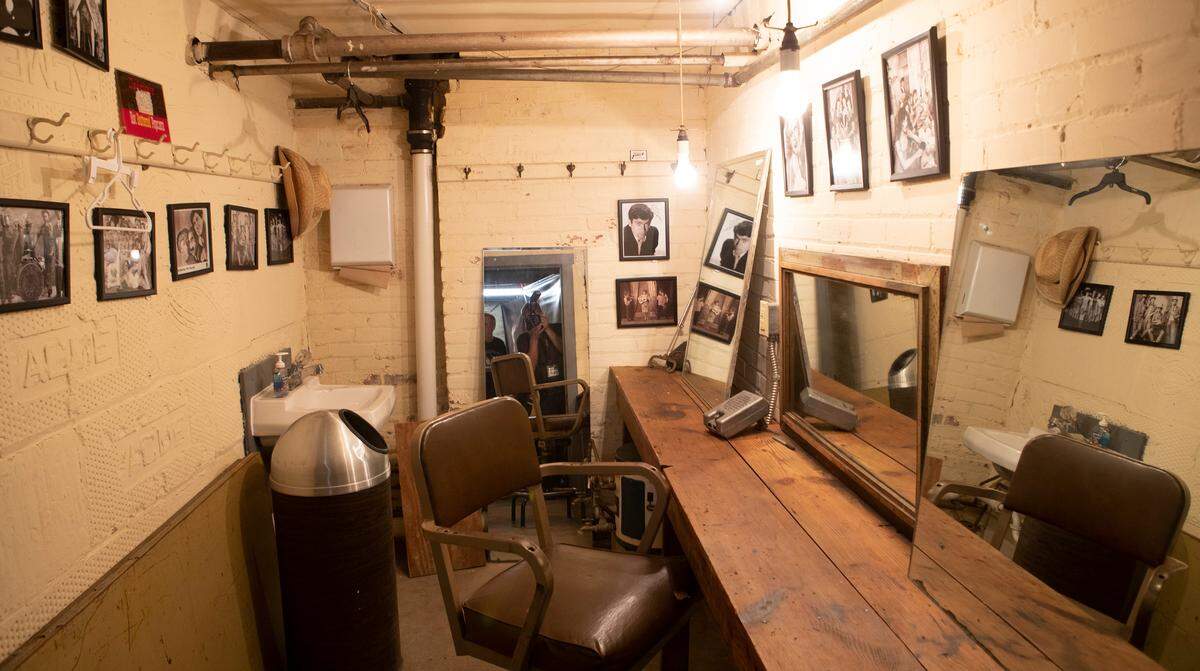
Fifteen-year-old dancer Ginger Rogers performed on Nov. 28, 1926, before she began her 10-movie collaboration with Hollywood icon Fred Astaire. Other vaudeville acts included comedy by The Three Nightingales, later known as the Marx Brothers.
“The date is unclear, but what is known is that the bulb-type horn used by Harpo Marx was stolen by him from a Belleville taxicab,” Kieskalt wrote. “Harpo loved the ‘whonk’ sound that it made and worked it into the Marx routines.”
“Hangman’s House” hit the Lincoln screen on May 6, 1928. That was notable because it contained the first appearance by John Wayne in a John Ford movie.
The theater showed its last silent film, “Four Sons,” on March 13, 1929. The talking motion picture, “Alias Jimmy Valentine,” arrived the next day with William Haines as a love-struck safe cracker trying to change his criminal ways.
“Talkies” quickly rendered pipe organs obsolete across the country.
The Fox West Coast Theatres chain leased the Lincoln in the 1930s, keeping it afloat during the Great Depression. In the 1940s, movies were often preceded by newsreels about World War II.
“Patrons craved entertainment and to escape the war’s harsh realities,” Kieskalt wrote.
“The Robe” with acclaimed Welsh actor Richard Burton played at the Lincoln on Jan. 14, 1954. It’s widely considered the first movie produced in CinemaScope.
Stan Kann on the organ
Richard rebuilt the Lincoln’s massive pipe organ in the 1990s. Since that time, it’s been used for a variety of productions, including organ concerts by the late Stan Kann, who played at the Fox Theatre in St. Louis and appeared on national talk shows with his vacuum-cleaner collection.
“(Richard) never dreamed that Stan Kann would play in his theater,” Betty said.
Today, organ music still greets Lincoln audiences before movies on Friday and Saturday nights. The Schoenborns also are bringing back a relatively new concert series that got sidetracked by COVID-19.
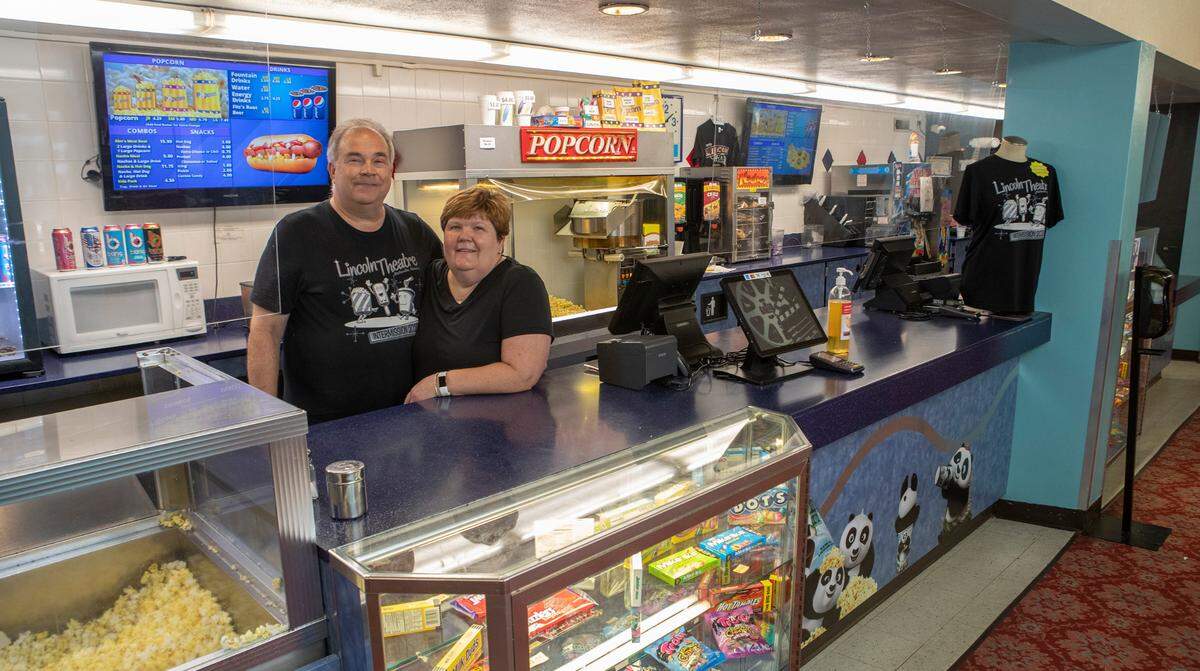
The theater’s concession stand sells popcorn from Abe’s Gourmet Popcorn, a sister business that occupies the corner storefront.
Betty is proud of the Lincoln’s legacy in downtown Belleville. She believes it has attracted customers not only to watch movies but also to shop in stores and eat in restaurants.
“When you see a line of people waiting to get in, you think maybe I want to be part of that, too,” Betty said.
The 100th anniversary show, “A Century of Entertainment,” is being produced by Take a Bow Showcase & Rising Stars, a non-profit performing-arts organization, with appearances by Royalty Events for Every Kingdom and Gabrielle’s Step by Step Dance Studio.
“Re-creating iconic entertainment highlights from each decade, 1920s to the present, and featuring classic songs and characters from blockbuster movie and stage musicals of the last century!” the flier reads.
Show times are 7 p.m. Friday and Saturday and 2 p.m. Sunday.
Tickets cost $10 for adults and $5 for children ages 5 to 11 (under 5 free). They’re available at the Lincoln box office, Abe’s Gourmet Popcorn or www.lincolntheatre-belleville.com.
Children and adults are encouraged to dress as their favorite movie character from any decade, participate in a costume contest with prizes and pose for photos with Disney characters.
The show also will be live-streamed. For more information, call 618-409-0015.
This story was originally published November 10, 2021 at 5:00 AM.