This puzzle-solving critter may be St. Louis Aquarium’s smartest. What else to see
The St. Louis Aquarium is home to more than 13,000 animals, from a Giant Pacific octopus, to jellyfish you can pet, to sea turtles.
The habitats contain more than 250,000 gallons of water all together, and there’s a variety of interactive experiences included in general admission.
The aquarium opened its doors in late 2019, and staff frequently welcome new animals. One of the latest exhibits, the moon jellyfish touch tank, opened this month.
Along with the moon jelly tank, the aquarium lets guests interact with and touch a variety of stingrays, sharks and “doctor fish,” which give visitors an exfoliating experience.
There’s plenty to see at the aquarium while keeping your hands dry, too. Shark Canyon is home to thousands of animals, including sandbar sharks, lesser devil rays and two rescue sea turtles.
The Deep area houses a Giant Pacific octopus, an intelligent animal capable of solving puzzles, traveling through a tube and fitting through any opening larger than a quarter.
You can also see venomous lionfish in The Deep.
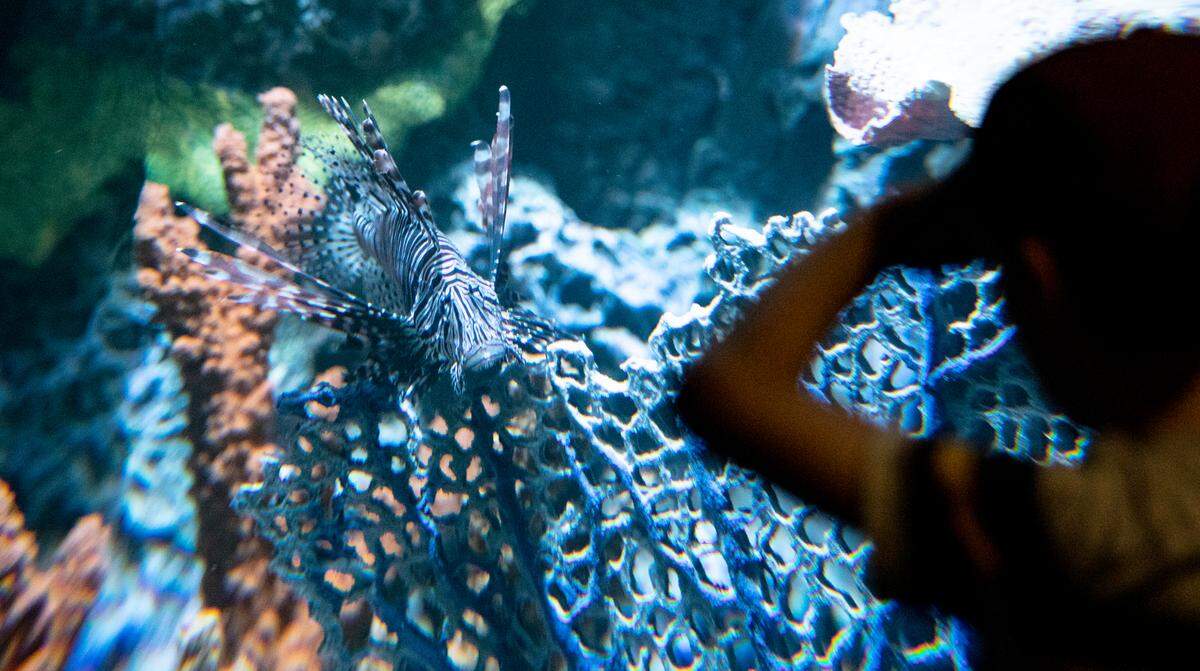
Here’s what to know about the inhabitants of the St. Louis Aquarium, from Executive Director Tami Brown.
Giant Pacific octopus
The aquarium currently hosts one male giant Pacific octopus. Members of the species are reddish-brown, and typically live four to five years. An average giant Pacific octopus weighs about 110 pounds, although National Geographic reports the species’ size record is more than 600 pounds.
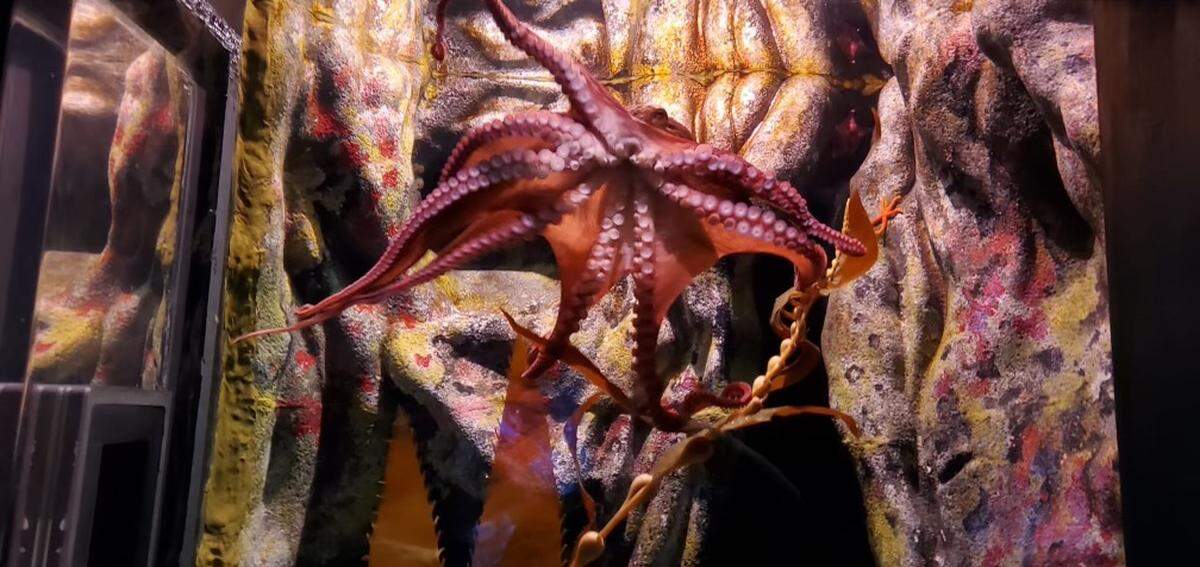
“They are really intelligent animals. And so, our aquarist team does what’s called enrichment, and works with that animal over its lifetime to provide food in ways that would require the octopus to hunt for it,” Brown said.
Some of the ways staff provide enrichment to the giant Pacific octopus include putting food into a jar, where the octopus would have to learn how to unscrew the jar or placing the food in a puzzle, requiring the creature to solve it. Staff have even put the octopus’ food in a Mr. Potato Head toy.
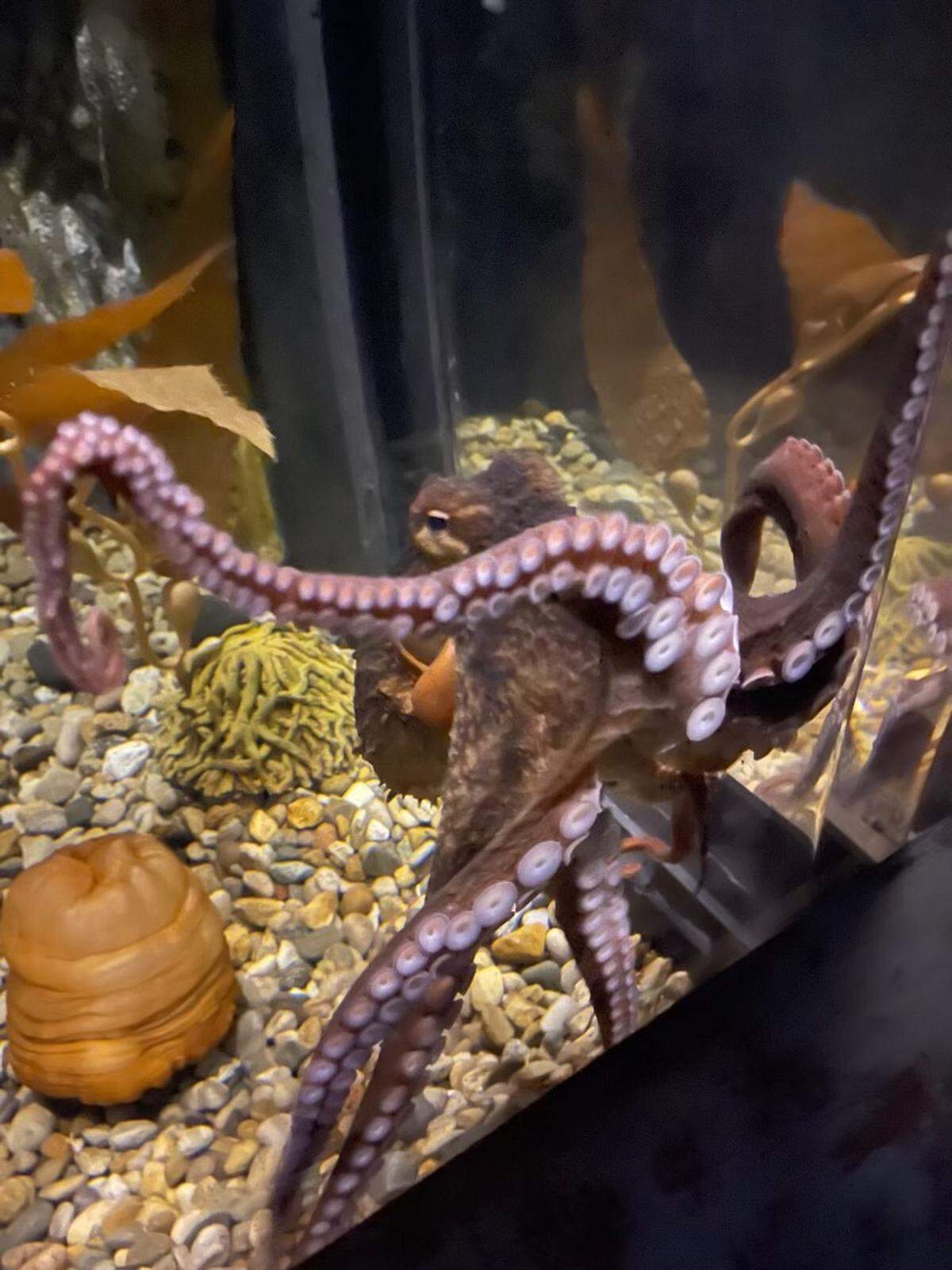
While the giant Pacific octopus is the largest species of octopus in the world, they’re capable of squeezing through extremely tight spaces, especially when incentivized by food.
“An octopus can fit through anything that is a little bit bigger than a quarter. And the reason for that is that their beak is their only hard part of their body,” Brown said.
The St. Louis Aquarium’s giant Pacific octopus lives in a two-sided habitat connected by a tube. Aquarium staff sometimes place the octopus’ food on the side he’s not currently at to encourage it to cross over.
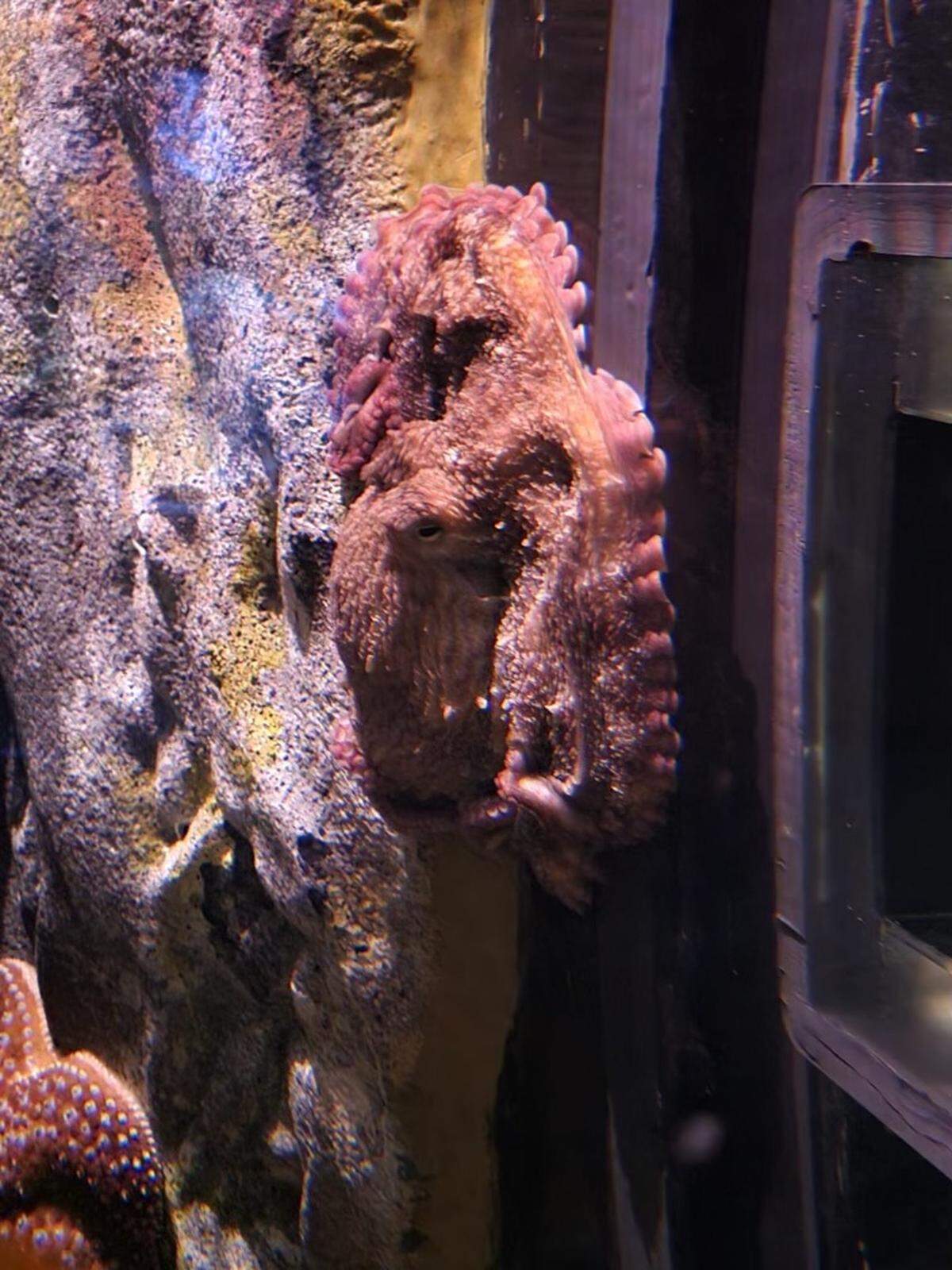
The giant Pacific octopus at the St. Louis Aquarium shares his habitat with just a few sea stars and anemones, because the species is generally solitary and doesn’t live near family or potential mates. In fact, the octopus typically dies soon after breeding.
One of the giant Pacific octopus’ most impressive skills is color camouflaging. The octopus can change its coloring to blend in with rocks or even highly patterned coral.
Their diet includes fish, lobsters, shrimps, crabs, scallops, other octopus and more.
Moon jellyfish
You can see moon jellyfish near the giant Pacific octopus at The Deep, but you’ll want to check out the habitat on the upper level, next to the stingray and shark touch pool, for an interactive experience.
A staff member stationed at the touch pool shares moon jelly facts with excited children and tells visitors how to safely interact with the jellyfish.
“All you have to do is take two fingers and get them a little bit wet, and then you can wait as the jellies come around in a flow,” Brown said.
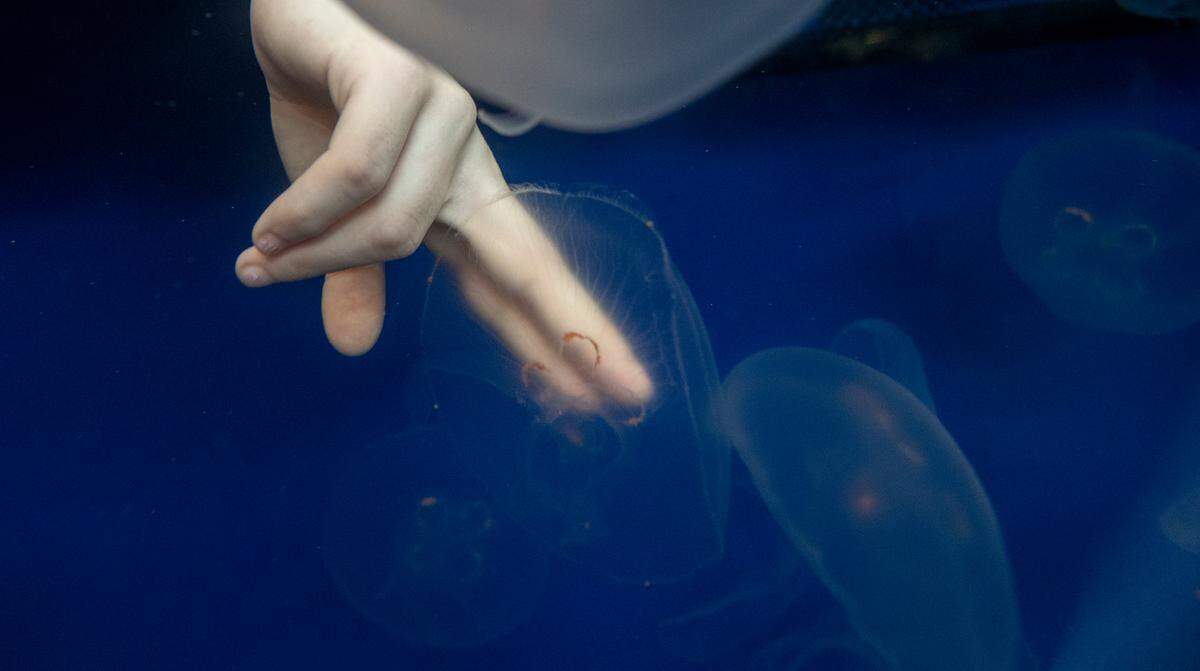
You can touch the top, or bell, of the jelly gently with two fingers. While other species of jellyfish can painfully sting humans, it’s safe to touch the bell of a moon jellyfish, Brown said. The animals feel a bit like a more solid version of gelatin.
Some types of jellyfish use stronger stings to capture food sources, but moon jellyfish eat juvenile brine shrimp and other very small animals.
“The sting that would be necessary for the jellies to be able to eat that small food is so light for a human that you would not even really feel it,” Brown said.
The St. Louis Aquarium opened its moon jellyfish touch station July 5.
Sharks, stingrays and sea turtles
You can see and interact with bamboo sharks and coral catsharks at a touch pool, along with stingrays and other creatures. The touch pool houses sharks from smaller species whose mouths aren’t very large, Brown said.
“Our animals all have free choice whether they want to interact or not. If they don’t want to interact, they can go out of reach of our guests,” Brown said. “So if a shark does come by, you can bet that it’s in the mood to interact with our guests.”
The touch tank with the bamboo sharks also houses cownose rays, horseshoe crabs, coral catsharks, Atlantic stingrays and more.
The other place you can see sharks is at Shark Canyon, which has seven species of sharks, three types of stingrays and thousands of fish, Brown said.
There are two green sea turtles at Shark Canyon, both rescues from the Georgia Sea Turtle Center. They were struck by boats and sustained injuries incompatible with ocean release.
“One, her back legs are paralyzed. And the other one, she was hit in her jaw, and so we have to do physical therapy on her jaw every couple of weeks in order to keep that range of motion,” Brown said.
While the rare sea turtles and thousands of other animals share a habitat with sharks, the aquarium has protocol to ensure the scene doesn’t turn into a buffet.
In nature, a shark hunts once per week or every other week. They aim to conserve energy by hunting infrequently, Brown said. At the St. Louis Aquarium, staff spread out sharks’ meals over three feedings per week so they don’t get hungry enough to want to hunt.
What other interactive features are available?
Along with the moon jellyfish and the touch pool with stingrays and sharks, there’s a pool of doctor fish located near the beginning of the St. Louis Aquarium journey.
You can put your flat hand in and see tiny fish flock to pull off your dead skin. There are sinks and hand sanitizer stations available at the doctor fish habitat and throughout the aquarium to clean your hands after interactions.
A variety of interactive experiences, including the touch pools, is covered by general aquarium admission. There are more activities you can do through purchasing ticket add-ons, such as a behind-the-scenes tour and dive messages.
At the behind-the-scenes tour, staff teach visitors about the animals’ feeding, veterinary care and more. The experience culminates with a walk across a narrow rope bridge over Shark Canyon.
This story was originally published July 22, 2022 at 5:00 AM.