Leonid meteor shower may be better this year. When, where to look for it near St. Louis
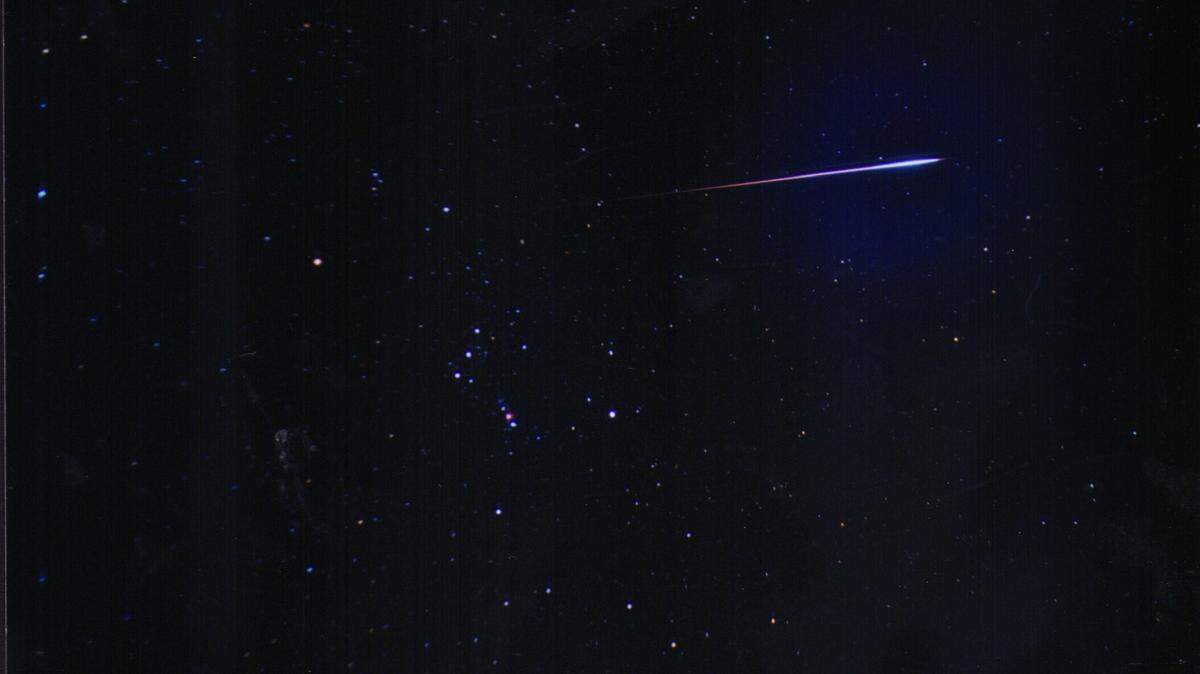
The Leonid meteor shower, which takes place each November, isn’t typically thought of as being quite as stellar as August’s Perseids or December’s Geminids. But some scientists say there’s reason to believe this month’s Leonids will outperform expectations.
About every 33 years, the location of the Leonids’ parent comet, Tempel-Tuttle, can create a “meteor storm,” but it’s not expected to happen again for roughly another decade.
While astronomers don’t necessarily expect a storm of meteors this November, some predict a debris stream left from Tempel-Tuttle in 1733 could lead to a “strong outburst of Leonid meteors.”
Richard Fefferman, sky ranger at Gateway Arch National Park, told the News-Democrat there is no way to know how accurate the prediction will be, but he will be watching the skies to see whether the expectations come to fruition.
If the debris from more than 280 years ago do lead to a stronger Leonid showing, some scientists predict stargazers could see between 50 to 250 meteors per hour, depending on their location.
“This year we do expect a pretty good bump-up of activity, although not all scientists agree that there will be anything that noticeable,” Fefferman said. “But some believe there could be an enhancement in activity.”
When could the Leonid shower peak near St. Louis?
The Leonid’s traditional peak is Thursday evening, but since this year may be affected by the 1733 debris, the best time to stargaze may be closer to Friday night around midnight or in the early morning hours Saturday.
Mark Jones, secretary of the St. Louis Astronomical Society, recommended stargazers watch the skies before moonrise.
Fefferman, a Belleville resident, said he likes to find a dark spot out in the country to avoid light pollution and get the best possible view of the sky. Of course, be sure to avoid trespassing.
Here are the sky ranger’s top five tips on stargazing:
Bundle up: Stargazing is one of the coldest things you can do, as you are sitting still, exposed to the cold and wind.
Many more meteors, maybe 10 times as many, will be seen from a dark site out in the country than from close to the city. Find a spot with a dark view to the east and overhead.
You won’t need any equipment, but bring a lawn chair or something to lie on for comfort.
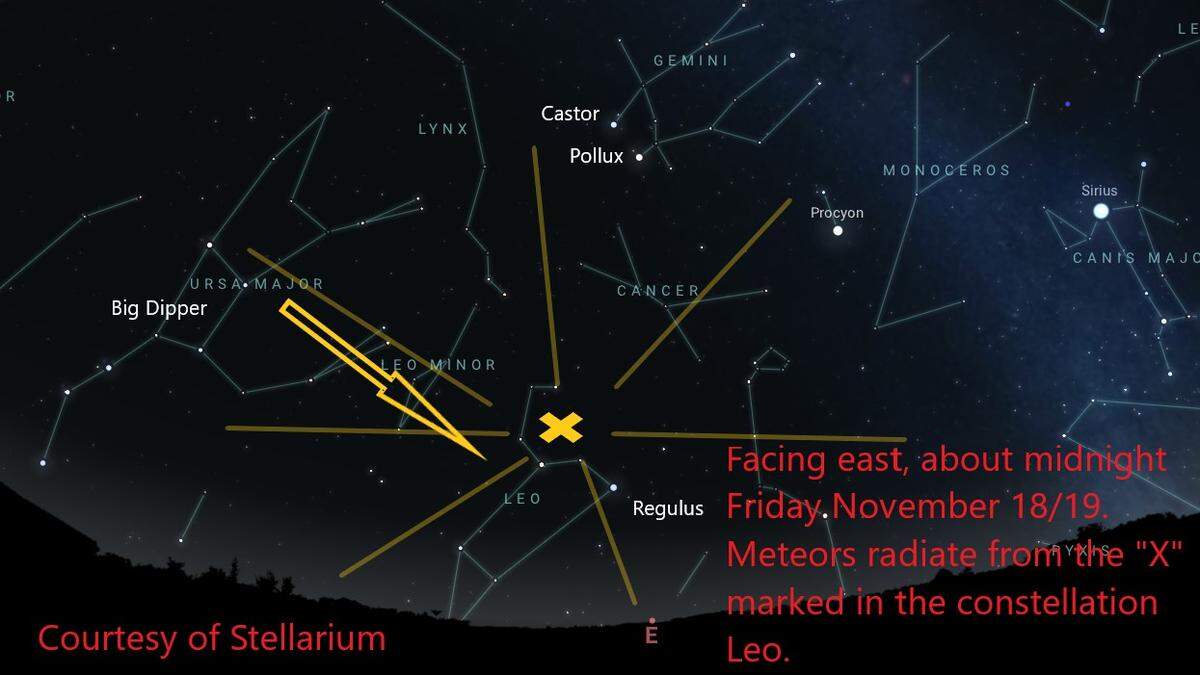
Since the meteors will appear to come from a point low in the east in the direction of the constellation Leo, the most meteors will probably be seen high in the east to northeast and southeast.
You can check out the Night Sky Network to search for astronomy related events near you.