
Truth or legend? America’s first Christmas tree was decorated here in the metro east
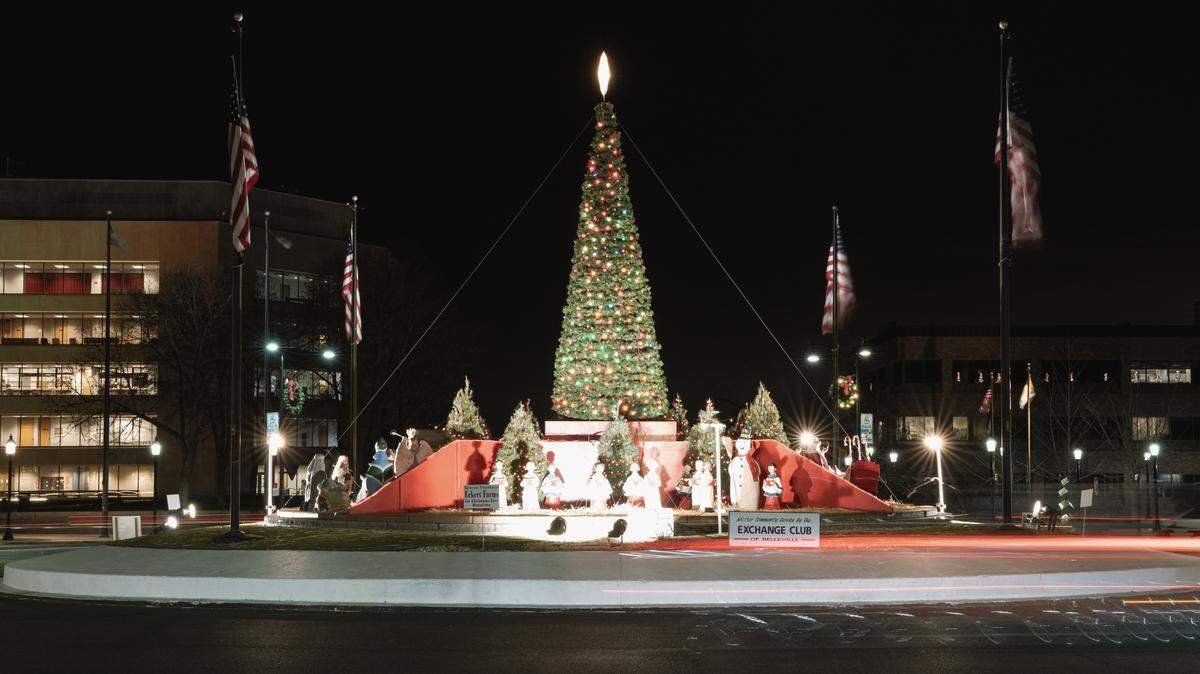
If you’ve heard that the common myth that first Christmas tree in the United States came from Shiloh, you’ve certainly heard wrong.
If someone told you that the first Christmas tree in Illinois came from Shiloh, however, you may have been told the truth.
“When the rumor was first brought up here about us having the first tree ever years ago, I knew this wasn’t true,” says Brenda Kern, the city clerk for the city of Shiloh.
But being a fan of local history, she knows where the rumor came from.
Christmas trees are a European tradition of tenuous origin, but most sources claim the first was erected some time in 15th century Germany or 16th century Latvia. But one thing is certainly true: Germans love their Christmas trees, and they brought them to Illinois during the mass migrations of the 19th century.
How it started
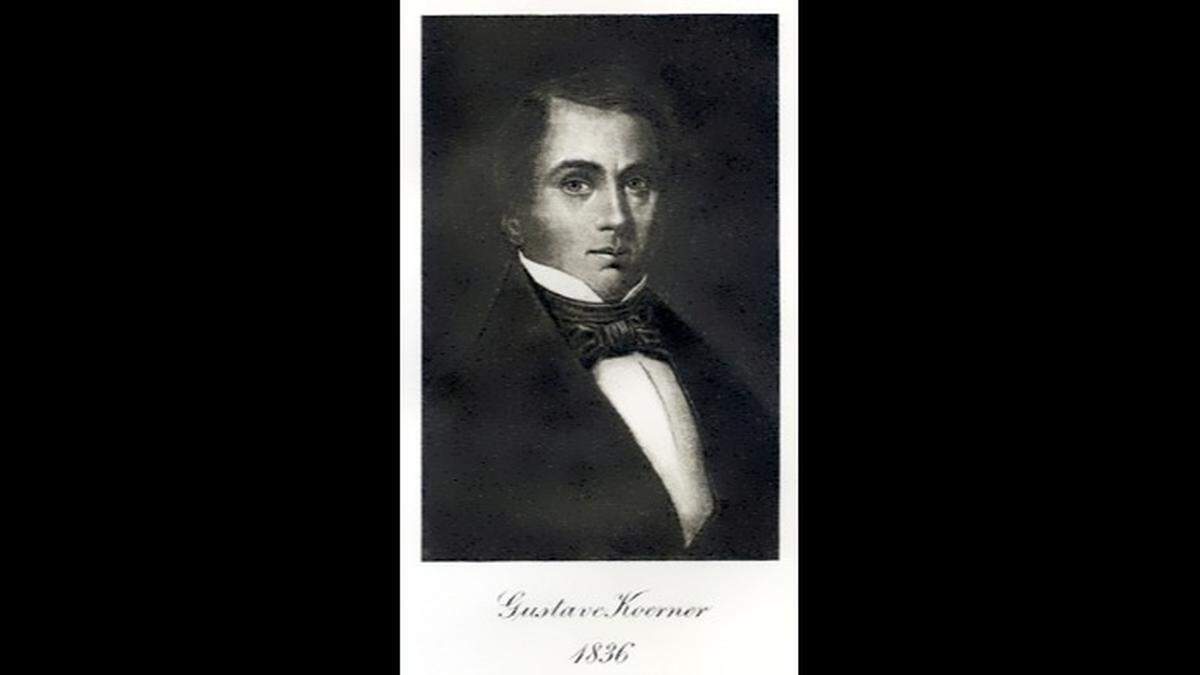
It all comes down to Gustave Koerner, the famous 19th century abolitionist, statesman, and German immigrant responsible for much of Belleville’s German ancestry. Koerner was an avid journaler, and in one of these reflections he discusses the setting of a Christmas tree in his historic home on Abend Street.
“Daughters took the top of a sassafras tree which still had some leaves on it,” Koerner writes in volume one of his memoirs, “dressed it with waxed candles, ribbon and bits of colored paper and the like and hung it with little red apples and nuts and all sorts of confections made by their Aunt Caroline and decorated it for the Christmas season.”
It’s the last sentence of this journal entry that passed into urban legend: “Perhaps this was the first Christmas tree ever lighted on the banks of the Mississippi,” it said.
Germans are coming to town
Due to a series of reforms and unification wars, German people in the region now known as Germany came to the United States in three waves, the first of which was in the 1830s.
Koerner then traveled to the U.S. with the Engelmann party in 1833 after a failed coup in the city of Frankfurt, thus marking the first definitive German population to establish itself in Illinois.
As is the case with any mass migration, the people also brought their culture with them.
“Geographically speaking, I think they’re a little far from being on the ‘banks of the Mississippi,’” says Jack LeChien, co-chairman of the Gustave Koerner House Committee. “But since Illinois was the western frontier, and knowing the demographics to the area at that time, it’s probably safe to say it was the first Christmas tree in the general region.”
When Koerner and Engelmann landed in Illinois in hopes of establishing a German community outside of slave states, the majority of residents were English, French, and Scots-Irish emigrants from eastern and southern states looking for new farm land. LeChien, who helps manage the historic Koerner house restoration on Abend St. in Belleville, points out the differences in how German migrants celebrated Christmas versus their “American” contemporaries.
“Being on the frontier was, at least, a culture shock,” he says, “It looked more like a party than what we would probably now consider a Christmas celebration.”
In the first volume of his memoirs, Koerner gives a raucous first hand-account of historic Belleville’s Christmas debauchery.
“Young and old alike fired muskets, pistols and Chinese fire-crackers,” writes Koerner, “which, with a very liberal consumption of egg-nog and tom-and-jerry, was the usual, and in fact, the only mode of hailing the arrival of the Child-Christ.”
So is it true?
The unfortunate truth is that no one knows exactly when the first Christmas tree came to the metro-east and Illinois, but LeChien says its relatively safe to assume Koerner was telling the truth.
“The Germans who first came here were highly educated and not very prone to exaggeration or lying,” he says. “Koerner was a lawyer and, often times, a journalist, so it’s safe to say he was well qualified to make such claims.”
Immigrants from the first wave of German immigration, such as Koerner and Engelmann’s party, were known as “Latin farmers” due to their educational background, though many of them weren’t farmers at all. In the 19th century, students in European universities were required to know a certain degree of Latin.
Theodor Engelmann and Gustave Koerner were friends from their time at university and their higher education was evident among other farmers in the region, many of whom could not read or write in any language, let alone Latin.
With no other evidence presenting itself, and with the Koerner’s strong pedigree for contemporary writing, it is safe to say that at least in the Midwestern United States, these German immigrants of the Engelmann and Koerner family brought the first Christmas trees to Illinois as surely as they brought Latin and sauerkraut.
For the record, according to history.com, the first records of Christmas trees being cut for display in America come from 1820s in another German community, Bethlehem, Pennsylvania.
This story was originally published December 10, 2024 at 5:00 AM.