
Head to snowy Switzerland if you dare to try canyoning in winter
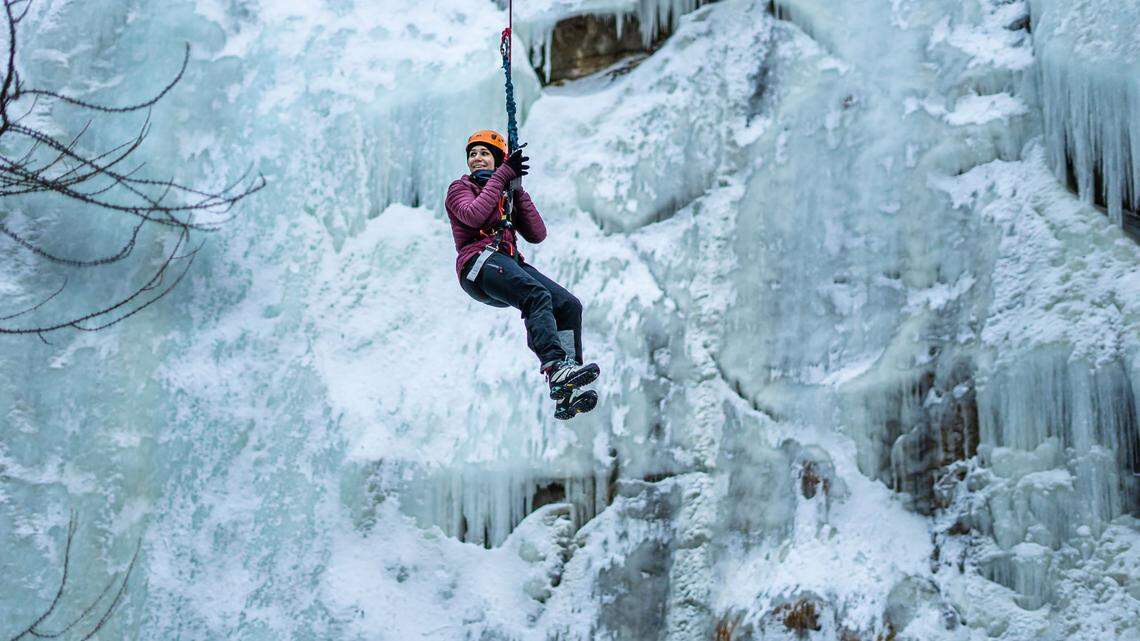.jpg "We admire the spectacular surroundings. Thick icicles hang from the walls, massive rocks tower above and below.")
SAAS-FEE, Switzerland - Hiking in the mountains - many people enjoy it. But if the constant ups and downs, despite the beauty of nature, become tedious at some point, you can turn up the adventure dial: grab a climbing harness and helmet and venture down a gorge in a zigzag course. This is called canyoning, and if you’re looking for an extra dose of adrenaline, just do it in the depths of winter.
Is it dangerous, or does it just look that way? “You have to know what you’re doing,” says mountain guide Marc Derivaz, who will lead us - a reasonably athletic group of five - down the Gorge-Alpine via ferrata in the Feeschlucht gorge in the Valais Alps in southwest Switzerland.
None of us are extreme athletes, but we want to feel like we are for a few hours - if only to push our limits in a safe environment. Time to step out of our comfort zone.
A “Closed” sign at the outset
We start in Saas-Fee, from where Marc leads us onto a path marked with a “Closed” sign. We follow him because Marc comes from the mountains and we are sure he knows what he is doing. Without a guide, you shouldn’t be out here on your own, if only because of the amount of snow.
Thick flakes fall continuously from the sky, collecting in hoods and landing on noses and eyelashes. The ski slopes around the Saas Valley are closed due to the masses of snow and poor visibility, adding to the sense of adventure. It is not really dangerous – otherwise Marc wouldn’t be here with us – but there is a certain excitement in the air.
We head downhill, past a chapel. We sink into the deep fresh snow every few meters and laugh. We put on crampons in the parking garage above the trail but don’t need them right now. Instead, we admire the snow-covered landscape and have enough breath left to chat.
We ask what animals live here. “Chamois, ibex, marmots in summer, things like that,” says Marc. He is brief but clear, which helps us later on.
Fear of heights a no-no
We walk across a small bridge over the gorge. Water rushes, the snow crunches under our shoes, and all we hear is the jingle of the carabiners on our climbing harnesses.
Marc explains what we are about to do: we will cross the gorge on a zip line, over rocks, an icy waterfall, and turquoise blue water many meters below us.
We are heading for a rather steep rock face opposite, with a narrow ledge serving as the landing strip. Up to this point, the trip has been mainly enjoyable, but now it’s getting exciting.
The snow, which continues to fall steadily from the sky, and the wind blowing through the gorge feel like cold therapy for skin tightening during the “flight.”
But there’s no time to think about anti-aging as once you’ve made it across the gorge, you unhook yourself, secure yourself, and make room for the next person.
That means heading on down several ladders that are attached vertically to the steep wall. Those afraid of heights will have a problem now at the latest.
We recall what Marc drummed into us beforehand and keeps reminding us as we work our way along the gorge, guided by a steel cable: one of our two carabiners must always be closed. We must always be secured at least once. If we forget this and slip, we would fall several meters down to the rocks and ice-cold water below.
I go first. If I don’t see the small metal steps installed on the steep wall right away, Marc instructs me to feel for them with my foot and clear them of snow. He comes last once everyone else has found their way across the gorge.
Almost routinely, we complete the second gorge crossing one after the other with the next zip line. We now know that we glide across at walking pace and hang firmly in the safety harness - plus we have enough time to admire the spectacular surroundings. Thick icicles hang from the walls, while massive rocks tower all around us.
At the end of the zip line, we make our way along the steep walls like mountain goats, crossing wobbly bridges, always safely secured. It is hard to know what impresses us most - the view above us or the view down below.
This story was originally published February 25, 2026 at 10:20 AM.