Illinois and Missouri have taken different approaches in handling coronavirus threat
Illinois and Missouri have handled coronavirus in their own way for the past three weeks, reflecting different philosophies in the governors’ offices, different state processes and different statistics on number of cases.
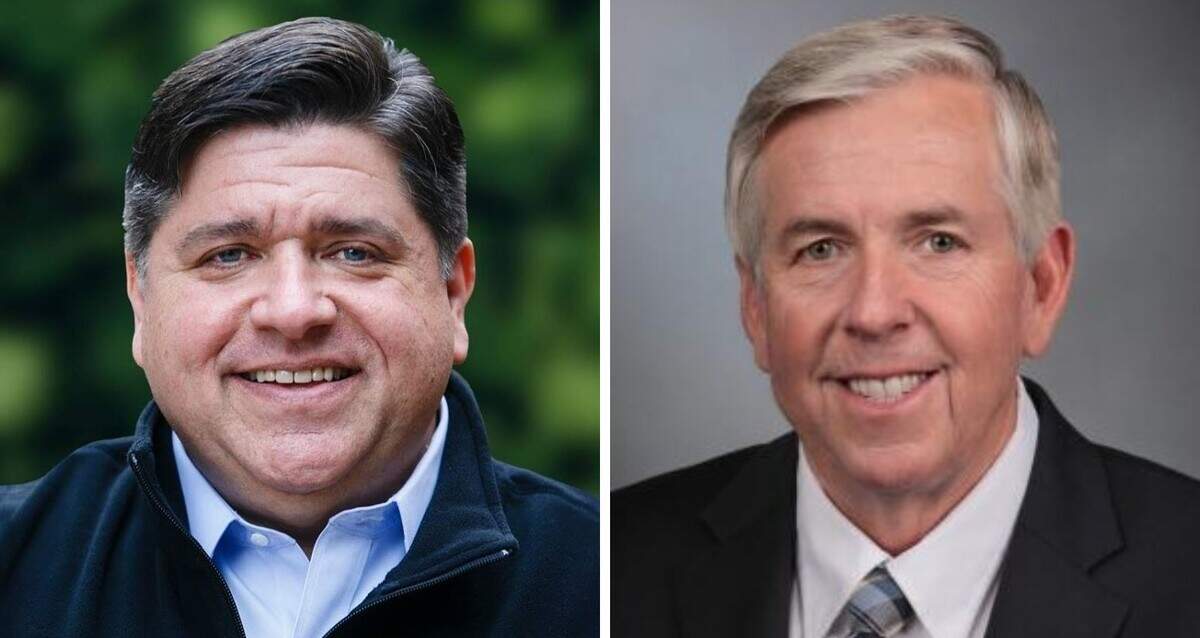
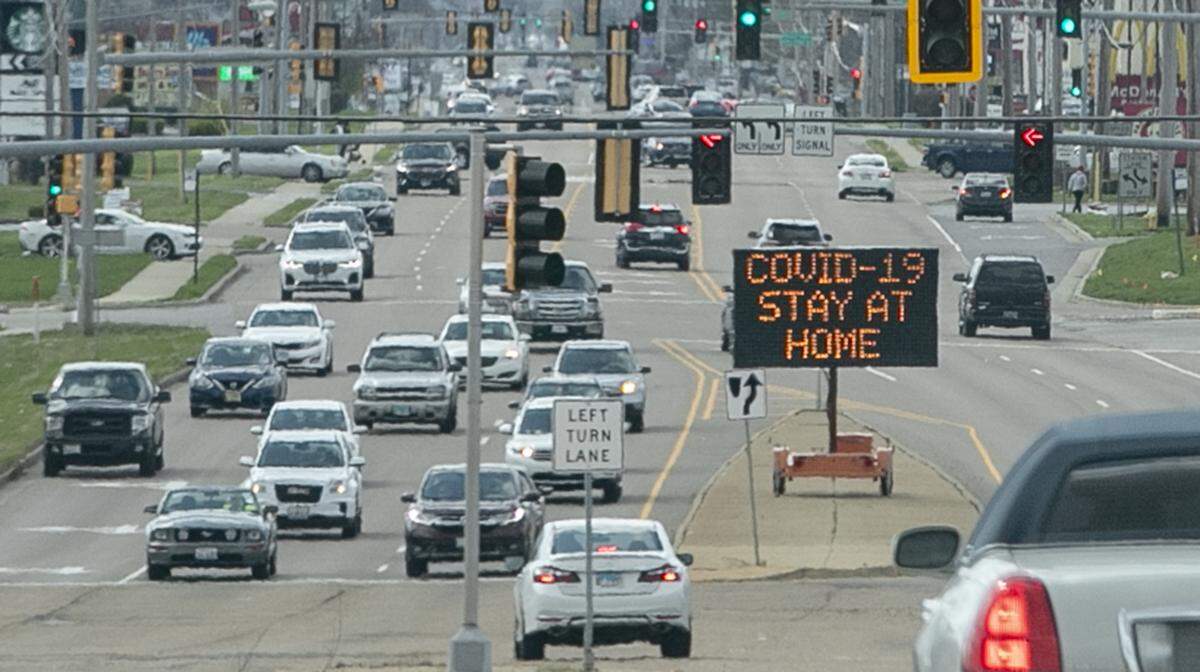
Most notable was Illinois Gov. J.B. Pritzker’s decision to issue a stay-at-home order that took effect on March 21. He asked residents to limit outings to grocery shopping and other “essential” tasks and closed non-essential businesses.
Missouri Gov. Mike Parson hasn’t taken that action, allowing local governments to make key decisions on their own. St. Louis, two other cities and 12 of the state’s 114 counties have issued stay-at-home orders, according to The Missouri Times in Jefferson City.
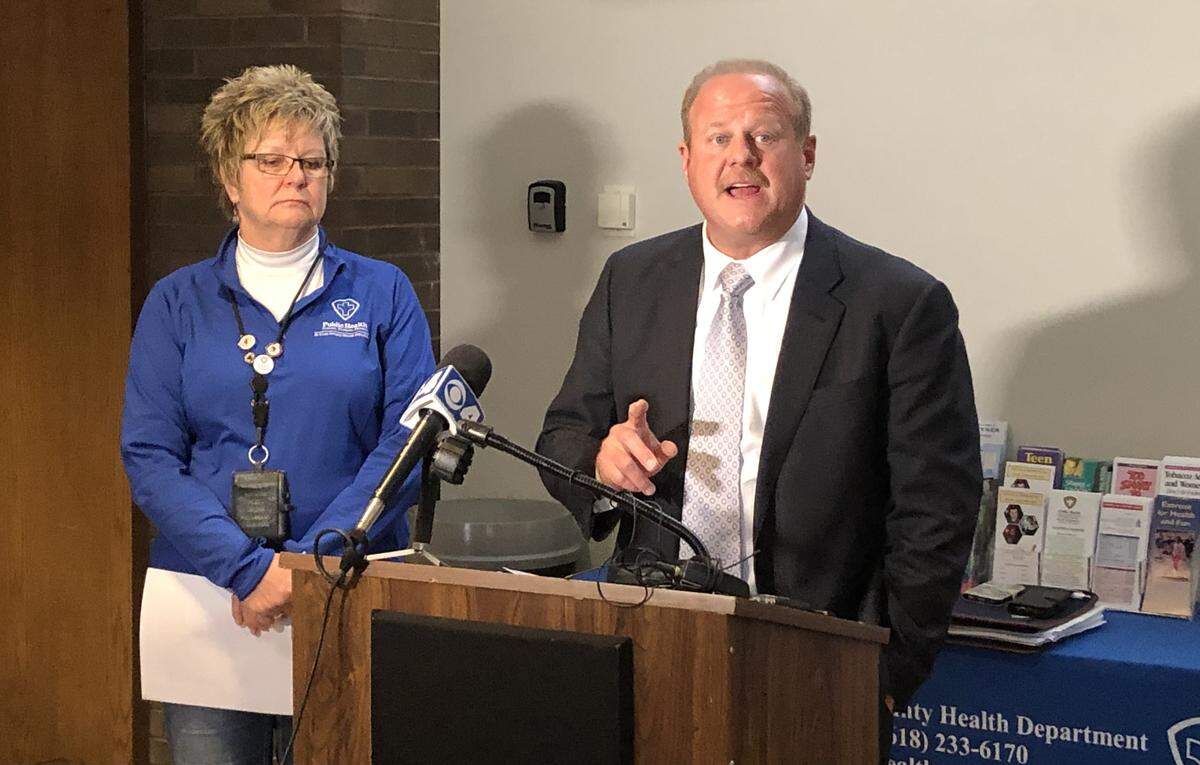
Consistency was one topic covered Tuesday in a live-streamed briefing sponsored by the St. Louis Regional Chamber. Speakers included St. Clair County Chairman Mark Kern and Madison County Chairman Kurt Prenzler from Illinois and St. Louis County Executive Dr. Sam Page, St. Charles County Executive Steve Ehlmann and city of St. Louis Mayor Lyda Krewson from Missouri.
“We’re fortunate in Illinois that our governor is not acting in a piecemeal way,” Kern said. “He issued a statewide shelter-in-place (order) 10 days ago.”
The World Health Organization declared COVID-19, the respiratory illness caused by coronavirus, a pandemic on March 11. There have been more than 877,000 confirmed cases and 43,000 deaths worldwide as of Wednesday morning.
Illinois has had 5,994 confirmed cases and 99 deaths, according to the Illinois Department of Public Health. Nearly 4,500 of those cases and 39 deaths were reported in Cook County as of Tuesday.
Missouri has had 1,327 cases and 14 deaths, according to the Missouri Department of Health and Senior Services.
Illinois’ population was 12.7 million in 2019, compared to 6.1 million in Missouri, according to the most recent U.S. Census Bureau estimates. So Illinois has more than twice the number of people and more than five times the number of confirmed coronavirus cases.
Missouri cities and counties take action
Local officials in Missouri issued stay-at-home orders that took effect March 23 in the city of St. Louis and the counties of St. Louis, St. Charles and Cole; March 24 in the cities of St. Joseph and Kansas City and the counties of Cass, Clay, Jackson, Jefferson and Platte; and March 25 in the counties of Boone, Green, Randolph and Ray. Each has its own rules on which businesses can operate.
The city of Branson closed non-essential businesses and enacted other restrictions on March 24, but it stopped short of telling residents to stay home.
“It would help in Missouri if we had a statewide response,” said Page, who practiced anesthesiology before he became St. Louis County executive. “A stay-at-home order from the state would help us a great deal. But I also want to recognize that the governor’s office is working with us on a lot of other fronts.”
People in St. Charles County have been driving significantly less in the past couple of weeks, traffic figures show, but roads are busier in the western part than in the eastern part.
Ehlmann attributes this to the fact that more residents in the eastern part work in St. Louis County, where a stay-at-home order is in effect.
“A lot of people in the western part of our county are from Warren and Lincoln counties, and basically they either have not been educated (or) restricted in what they can and can’t do,” he said.
“(Those in the eastern part) are getting the message much better than the people in the western part of the county, and that’s one of the problems without having some kind of statewide response to this. In that regard, I’d love the state to get a little more involved.”
At least 270 million people in at least 33 states, 89 counties, 29 cities, the District of Columbia and Puerto Rico are now being urged to stay home to slow the spread of coronavirus, according to a New York Times report.
Differences in approach, timing and style
A recent St. Louis Public Radio story pointed out that the Missouri and Illinois governors differ not only in approach but also in style. Parson tells residents the pandemic isn’t “doomsday,” while Pritzker shares worst-case scenarios at daily press briefings.
Pritzker has issued 17 executive orders this year, compared to Parson’s six, although some of Pritzker’s actions are similar to those taken by Missouri state agencies.
Chris Mooney, a political science professor at University of Illinois-Chicago, told the radio station that party philosophy factors into gubernatorial handing of coronavirus. Pritzker is a Democrat who’s been critical of President Donald Trump’s leadership. Parson is a Republican and Trump supporter.
“The Republican inclination is to avoid government intervention,” Mooney said. “Whereas the Democratic inclination is to let the government jump in and get the job done.”
Here are some of the coronavirus-related actions taken in Illinois and Missouri in the past three weeks:
- Pritzker declared a state of emergency on March 9, when Illinois had 25 confirmed cases, to allow federal reimbursement of related costs and access to disaster-relief funds. Parson followed suit on March 13, when Missouri had four cases.
- Pritzker began daily press briefings on March 9. Parson started holding them on March 17.
- Pritzker ordered the cancellation of all public and private gatherings of 1,000 people or more, effective March 13.
- Parson “strongly urged” the cancellation of public gatherings with more than than 50 people on March 15, lining up with new U.S. Centers for Disease Control recommendations. Pritzer ordered such cancellations the next day.
- The Illinois Gaming Board closed casinos on March 16. The Missouri Gaming Board closed casinos on March 18.
- Pritzker ordered Illinois schools to close, effective March 17. Parson announced on March 19 that all Missouri schools had shut down voluntarily.
- Pritzker prohibited on-site food consumption at restaurants and bars, effective March 16, limiting services to drive-thru, carryout and delivery. The Missouri Department of Health and Senior Services took similar action a week later. The city of St. Louis already had stopped on-site food consumption on March 20.
- Pritzker extended expiration dates on vehicle registrations, driver’s licenses, permits and parking decals on March 17. The Missouri Department of Revenue did the same on March 21.
Pritzker mobilized the Illinois National Guard to help with the COVID-19 response on March 17. Parson mobilized the Missouri National Guard on March 26.
- Illinois held its primary election on March 17. Missouri had already voted on March 10. Parson announced March 18 that municipal elections would be postponed until June 2. Illinois holds municipal elections in odd-numbered years.
- Parson signed an executive order “easing regulatory burdens” related to trucking, teacher certification, medical licensing and other areas on March 18.
Pritzker ordered health-insurance companies to cover the costs of “telehealth” services by in-network providers on March 19.
- Pritzker prohibited gatherings of more than 10 people in Illinois, effective March 21. The Missouri Department of Health and Senior Services did the same two days later.
- Parson suspended a regulation that prohibited restaurants from selling unprepared food on March 23.
- Pritzker eased restrictions on the hiring of certified-nursing assistants who have been inactive on March 24.
- Pritzker began allowing remote notarizations by notary publics on March 26.
- Pritzker extended deadlines on March 28 for license applications under the Cannabis Regulation and Tax Act, a law related to recreational marijuana. Missouri only has medical marijuana.
This story was originally published April 1, 2020 at 12:36 PM.