St. Louis hospitals, an important resource for southwest IL, are nearing COVID capacity
Hospitals in St. Louis, an essential resource for the southwestern Illinois region, are rapidly nearing capacity as the number of COVID-19 patients skyrockets, the director of a metro area pandemic task force said Friday.
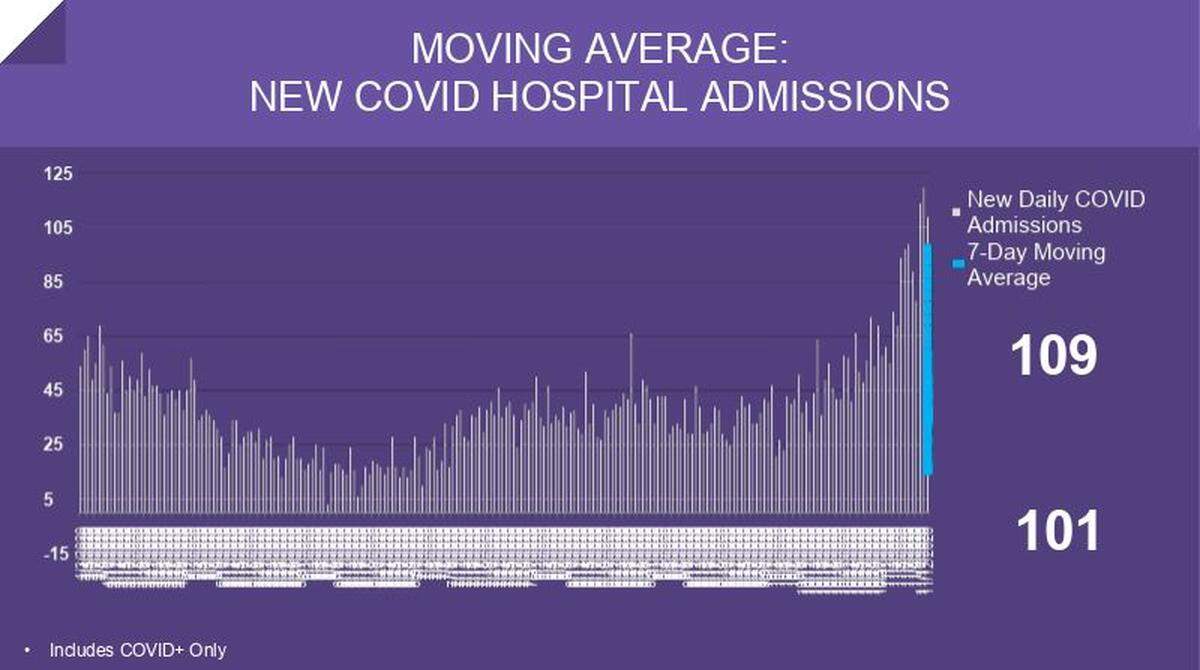
“The number of people so ill that they have to go to the hospital is nearly three times what we described as a sustainable level,” said Dr. Alex Garza, commander of the St. Louis Metropolitan Pandemic Task Force.
Hospitals in the St. Louis region have been forced to turn away patients because of skyrocketing admissions of COVID-19 patients, the St. Louis Post-Dispatch reported.
In the metro-east, hospitalizations have surpassed levels the region saw in the spring. If patients from southern Illinois need expert care at St. Louis hospitals, they could be turned away.
St. Louis-area Mercy hospitals, for instance, had 129 requests for transfers from outlying areas last week, said Dr. Keith Starke, senior vice president for the hospital system. There was no room for 39 of those patients.
“What happens to those patients when they can’t be transferred?” Starke said. “ ... As these numbers go up, our ability to accept transfers goes down because when we are full, we are full.”
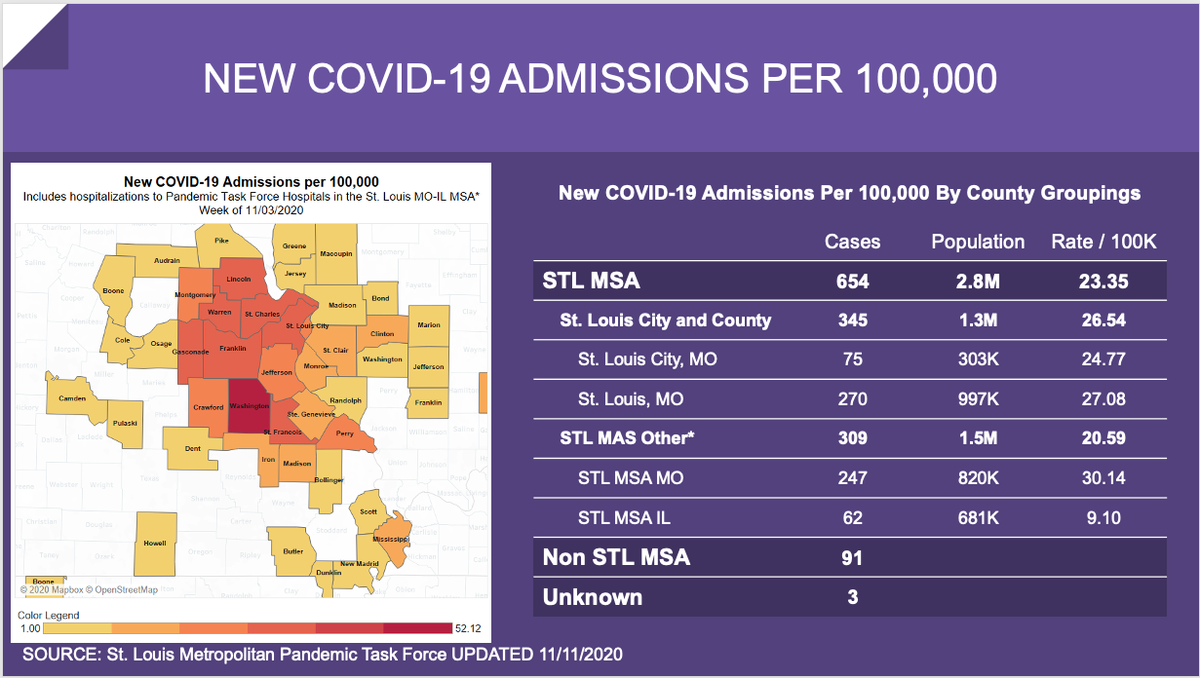
At the pace hospitalizations and cases are increasing, the number of patients with serious cases of COVID-19 could double in two weeks, Garza said. If the region continues on its current trajectory, intensive care units will be completely full by the first week of December.
“At that point we will not have the capacity we need to sufficiently care for our patients,” Garza said.
A statewide mask mandate would prevent the spread of COVID-19 in Missouri and nearby regions across state lines, providing health care workers the relief they need to continue treating seriously sick patients. A stay-at-home recommendation would help too, Garza said.
While Gov. J.B. Pritzker implemented a statewide mask mandate in Illinois months ago, Missouri Gov. Mike Parson has left it up to local leaders to decide. Increasing COVID-19 rates in Missouri have spilled over into the metro-east, where rules have been stricter but ineffective in slowing the spread in recent weeks.
“He continues to stick with his premise that this is a local priority and that local governments know what’s best for their citizens. Unfortunately, what we’re seeing is that’s not the case,” said Dr. Clay Dunagan, an infectious disease specialist for BJC HealthCare in St. Louis.
Local authorities often don’t have the resources or information they need to implement rules that would save lives, Dunagan said. People argue it’s a violation of their freedoms to have to wear a mask or obey guidelines.
“American values are replete with stories of individual heroism and self-reliance, which are strong values that have served our country well. That’s not what’s at stake here. The individuals who say it’s their personal liberty not to put a mask on are actually doing something that’s a fundamental violation of what we consider the norms of society,” Dunagan said. “There’s nothing about our country that says it is OK for people to do things that put other people’s health at risk.”
Stay-at-home orders
Stay-at-home orders such as those midwesterners saw in the spring could return as hospitals run out of room for patients.
Pritzker warned Illinoisans on Thursday they could see “some form of mandatory stay-at-home order” return if COVID-19 trends don’t turn around. The Illinois Department of Public Health recommended people stay home as much as possible for the next three weeks.
St. Louis County Executive Dr. Sam Page issued a “safer at home” order on Friday telling residents to stay home except for essential errands such as work or school, seeking medical care, grocery shopping or going to the pharmacy.
St. Louis City Mayor Lyda Krewson banned gatherings of more than 10 people, but did not implement any other restrictions as of Friday morning.
Hospitalizations in southwest Illinois
The number of patients hospitalized with COVID-19 has also skyrocketed in Illinois and the metro-east.
As of Thursday night, 5,362 people in Illinois were in the hospital with COVID-19. Of those, 990 were in intensive care units and 438 were on ventilators.
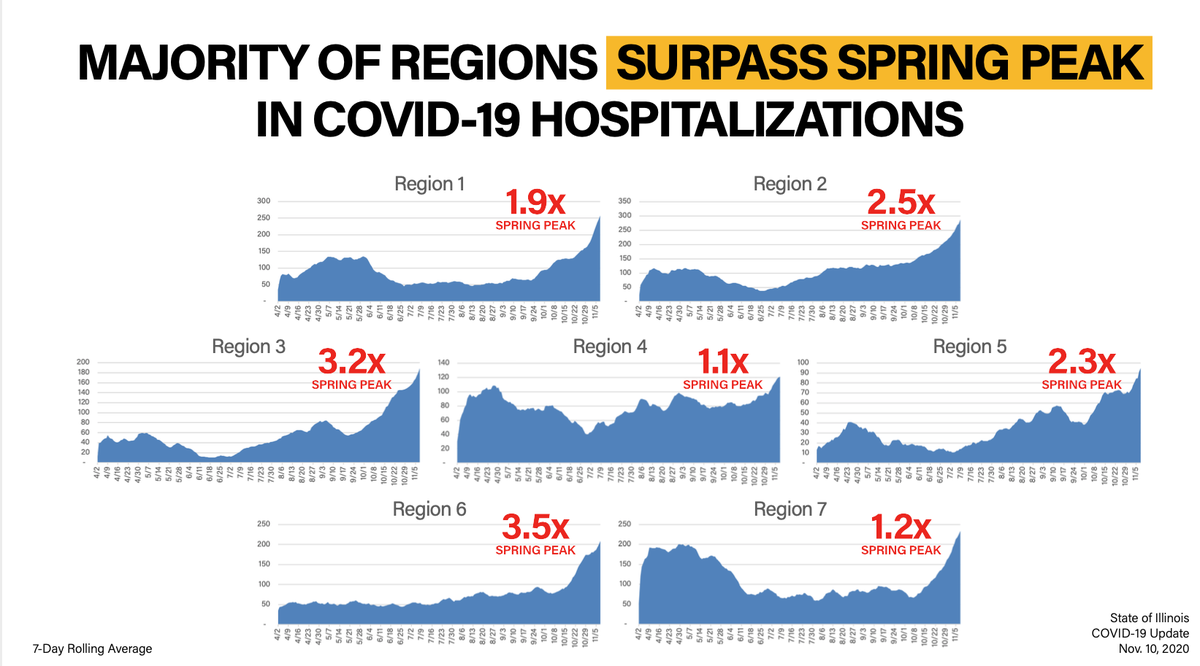
“We never saw that number in wave one. This is an all-time high and I am telling you that that number is only going to increase based on the numbers of cases we’ve identified in the last several weeks,” IDPH Director Dr. Ngozi Ezike at a news briefing Thursday.
In the metro-east, 57% of intensive care units were occupied as of Thursday night.
This story was originally published November 13, 2020 at 11:20 AM.