COVID pushes Edwardsville and other cities to reconsider bans on video gambling
After the state of Illinois legalized video gambling in liquor establishments 12 years ago, a handful of metro-east communities prohibited it, citing moral, social and economic issues.
Now the COVID pandemic is pushing some to reconsider.
Glen Carbon Village Board voted 5-1 to repeal its ban on video gambling in October. Mayor Rob Jackstadt told trustees that it would provide an alternative revenue source for restaurants and bars facing financial hardship due to COVID restrictions. Establishments with slot and poker machines get a percentage of proceeds.
“I especially empathize with the local American Legion Post 435, located on Main Street in Old Town,” Jackstadt said at the board’s Oct. 27 meeting. “Our Legion needs video gaming to stabilize its economic situation.”
Edwardsville and Maryville officials also have discussed policy changes.
Edwardsville City Council voted in November to allow video gambling in halls operated by veteran and fraternal organizations, albeit with strict rules and plans to review the decision in a year. Aldermen are asking residents to vote in April on a referendum item to help them decide whether to extend the option to bars.
“This is a non-binding referendum,” Ward 7 Alderman and mayoral candidate Art Risavy said at a City Council meeting on Dec. 15. “But it will engage the public to see what their feelings are in reference to who is in favor of video gaming and who is not.”
The other two metro-east communities that opted out of video gambling are the village of Roxana and city of East St. Louis.
Roxana is a “dry” town that prohibits liquor sales, and it doesn’t have any restaurants or bars. East St. Louis officials haven’t discussed changing its policy on video gambling, according to City Manager Brooke Smith.
“The casino is already struggling (due to COVID restrictions), so we don’t want to take anything more from it,” she said, referring to the Casino Queen, which normally provides a third of the city’s revenue.
Gambling expands in Illinois
Opposition to gambling historically has come from religious leaders who consider it morally wrong and those who say it can lead to crime, addiction and disproportionate financial losses for poor people. But it has become a common way for governments to generate revenue, with supporters preferring the less-stigmatized term “gaming.”
Illinois legalized betting on horse races in the 1920s, created the state lottery in the 1970s and authorized the opening of riverboat casinos in the 1990s.
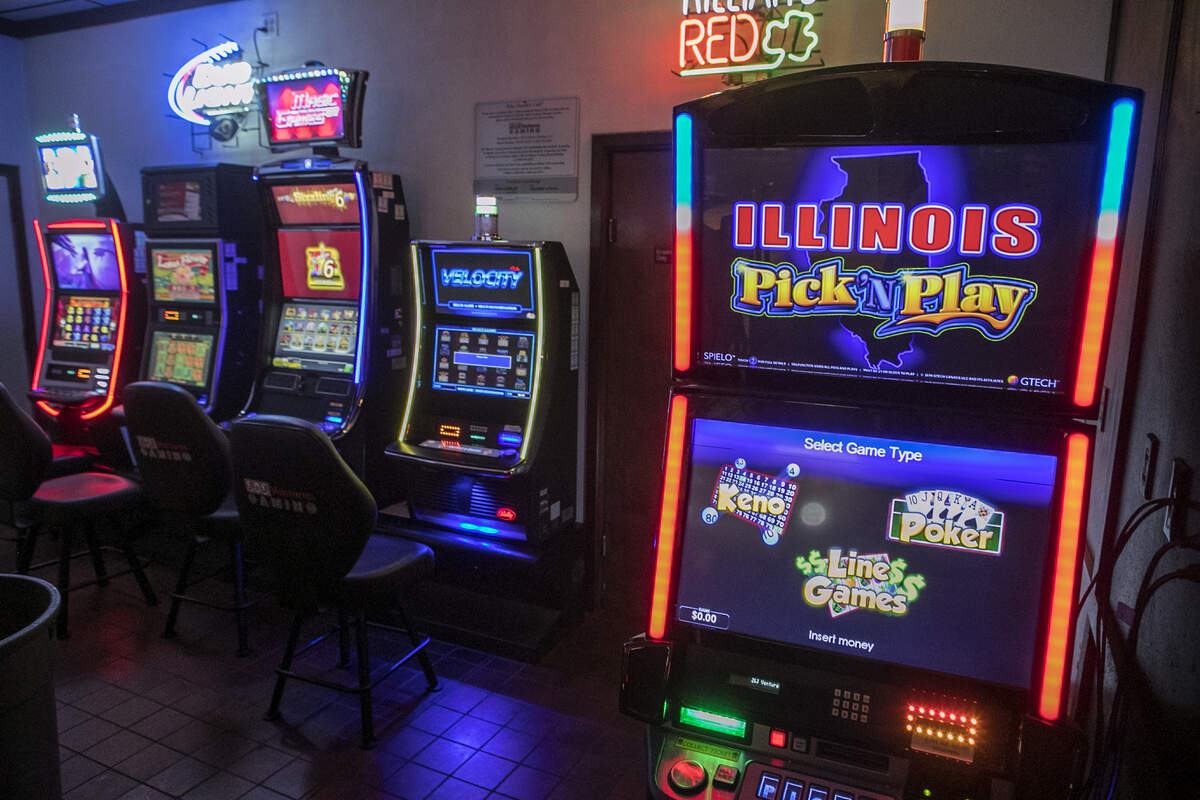
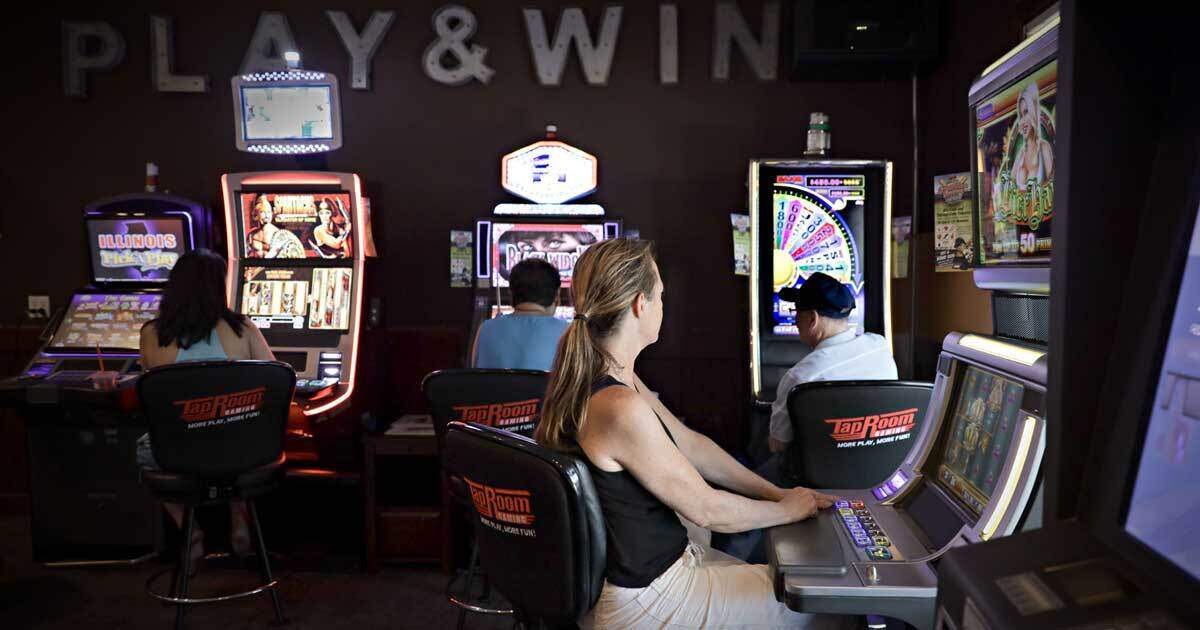
The Video Gaming Act of 2009 allowed slot and poker machines or “terminals” to be installed in restaurants and bars, truck-stop convenience stores that sell packaged liquor and halls operated by veteran and fraternal organizations. It took three years to implement the law.
“Today, more than 30,000 video slot and poker machines operate outside casinos, more than any other state in the country,” according to a 2019 study by the investigative nonprofit ProPublica, which called video gambling in Illinois a “botched money grab” that has largely hurt rather than helped the state.
A 2019 “gaming expansion law” increased the limit on the number of slot and poker machines from five to six at each location. There are now 38,180 machines at 7,446 locations in Illinois, according to Joe Miller, director of policy for the Illinois Gaming Board.
The new law also raised taxes on video-gambling proceeds from 30% to 34%, with 29% going to the state of Illinois and 5% to local governments. After-tax profits are divided equally between liquor establishments and terminal operators (companies that own the machines).
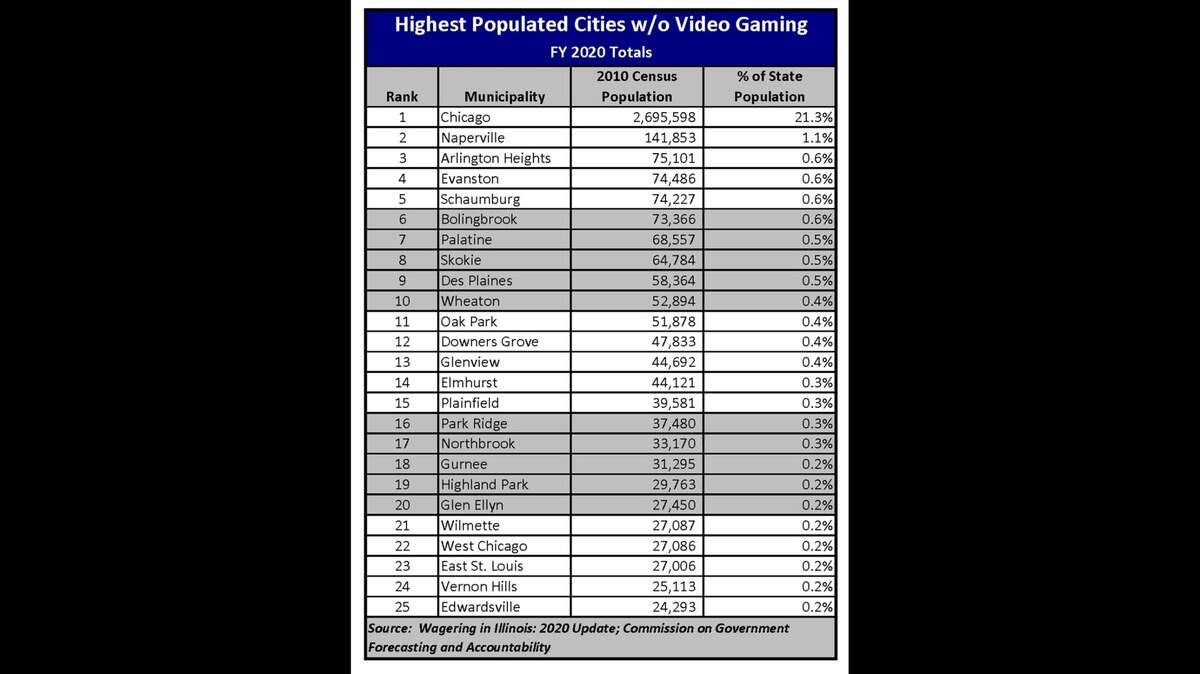
The Video Gaming Act gave municipalities the ability to opt out of video gambling within their borders, and many went that route, but some changed their minds later.
The percentage of Illinois residents living in areas with bans dropped from about 63% in 2013 to 36% in 2020, according to a wagering report by the Illinois Commission on Government Forecasting and Accountability.
“More and more local governments searching for additional revenues are turning to video gaming as a new revenue source,” the report stated.
Chicago, by far the largest Illinois city that prohibits video gambling, has faced pressure to repeal its ban and use tax revenues to reduce a budget shortfall projected at $1.2 million for 2021. But an Illinois Gaming Board investigation into alleged bribes and illegal deals by two of the state’s largest terminal operators isn’t helping with the industry’s image.
Former mayor supported ban
The late Gary Niebur, mayor of Edwardsville from 1993 to 2013, opposed video gambling, calling it “not consistent with community standards,” according to a story in the Edwardsville Intelligencer. Three local ministers also spoke against it during a 2012 debate, and the City Council voted 6-1 to impose a ban.
Fast forward to last March, when the state of Illinois began putting in place COVID restrictions that forced restaurants and bars to close or severely limit operations for months at a time.
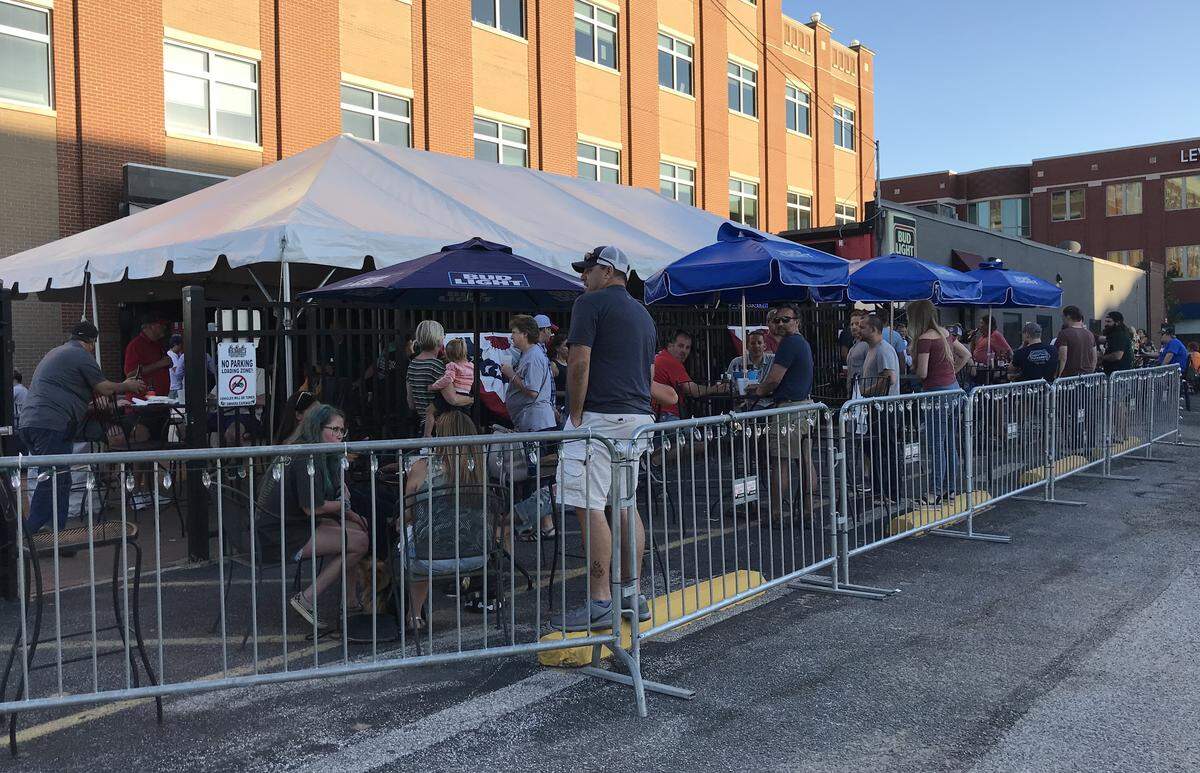
By summer, owners of Edwardsville establishments were asking city officials to change course on video gambling, arguing that it could help them recover from financial losses by generating tens of thousands of dollars a year for each location and attracting new customers who now drive elsewhere to play.
The Back Bar owner Marion Gilson, The Corner Tavern co-owner Randy Niebur and others gave impassioned speeches at a City Council meeting in September.
“We are asking for help,” Gilson said. “We are abiding by all these COVID rules. They’re ruining our businesses, and this little bit you can do for us is all we’re asking.”
Ron Eberhardt, commander of American Legion Post 199 in Edwardsville, testified that his organization had been hurt by increasing costs and decreasing membership and that he had heard no public outcry or opposition to video gambling in the community since the idea began floating around town.
City Council consideration started with a proposed ordinance that would have largely repealed the ban. That was revised to limit video gambling to halls operated by veteran and fraternal organizations and a gas station with what could be categorized as a truck-stop convenience store. Aldermen voted it down 4-3 on Sept. 25.
Jack Burns, Craig Louer and Risavy supported the proposal. S.J. Morrison, Janet Stack, Will Krause and Chris Farrar opposed it.
“I don’t think that the advent of video gambling is going to tarnish the city of Edwardsville,” said Burns, who represents Ward 2, adding that he understood what it was like to be a businessman trying to make ends meet in a tough market.
The City Council then considered another ordinance to allow video gambling only at halls operated by veteran and fraternal organizations. That passed on Nov. 3 with a 5-2 vote.
Morrison, who represents Ward 1, said he reluctantly supported the second proposal because video gambling would be largely limited to the organizations’ members and guests, and they can’t post signs to draw in the general public. He doesn’t see further erosion of the ban as a solution to the short-term problem of COVID hardship.
“I don’t like video gambling,” Morrison said. “I think it’s exploitative, and it preys on the economically distressed and those who are already prone to addiction.”
Morrison said many communities start small with video gambling, then it spirals to include slot and poker machines everywhere, not only in restaurants and bars but also gas stations and “gaming parlors” that are like mini-casinos.
Referendums guide decisions
Glen Carbon Village Board prohibited video gambling in 2012, then placed a referendum item on the ballot to gauge public opinion, according to the Intelligencer. Residents voted 3,690 to 2,772 to support the ban.
Maryville Village Board prohibited video gambling in 2012 and again two years later, after local bar and restaurant owners succeeded in getting a referendum item placed on the ballot. Residents voted 1,638 to 1,165 to support the ban.
In September, Maryville Mayor Craig Short told the Intelligencer that some village trustees were open to the idea of a policy change and that the board would address the issue in the “near future.”
“With the size of Maryville, I don’t believe this would be a significant revenue stream for our village like it would be for a community the size of Edwardsville,” he said. “However, the village board is looking for ways to help our restaurant and bar businesses, especially because of the suffering they have endured due to the ongoing pandemic.”
Short couldn’t be reached by the BND for comment this week. Maryville’s ban on video gambling remains in place, according to an online Illinois Gaming Board database.
In December, Edwardsville City Council voted unanimously to place a referendum item on the ballot in the April 6 consolidated election, asking residents if they would like to see video gambling allowed in bars with Class B or C liquor licenses and more than 50% of revenue coming from on-premises alcohol consumption.
Most if not all bar owners in Edwardsville support a repeal of the ban on video gambling, according to City Manager Kevin Head.
“It would be a lifesaver for the small businesses,” he said this week.
Steve Seibert, owner of Big Daddy’s restaurant and bar in Edwardsville, has been waiting 10 years to install slot and poker machines. He filled out a state application after the Video Gaming Act became law in 2009 but before Edwardsville passed its ban in 2012.
Seibert said local restaurants and bars are operating at a “competitive disadvantage” because people can go to surrounding communities and spend money on video gambling instead of playing in Edwardsville.
“It’s not for everybody,” Seibert said. “We understand that. It might turn some customers off. But it might bring us some new customers as well.”
Alderwoman focuses on students
Stack, who represents Edwardsville’s Ward 3, voted to ban video gambling when it first came before the City Council in 2012, voted against both proposed ordinances last fall and plans to vote “no” on any future ordinances that would allow slot and poker machines in the city.
One of her main concerns is that local residents include thousands of Southern Illinois University Edwardsville students.
“We are responsible for those students, and video gaming is highly addictive for students ages 18 to 22,” Stack said, noting she did extensive research on the industry 10 years ago. “... I feel that there are too many social issues that would evolve from people being drawn into gambling who could ill afford it.”
Stack suggested the city take other steps, such as eliminating the food and beverage tax, to help struggling restaurants and bars through the COVID crisis.
Ward 1 Chris Farrar also voted against both proposed ordinances last fall. In a recent email newsletter to constituents, he explained his position, saying it’s unfair to allow video gambling at gas stations or halls operated by veteran and fraternal organizations while depriving restaurants and bars of the option.
Farrar also gave his take on the referendum item.
“This is non-binding so the result does not require us to allow for gambling,” he wrote. “But I can tell you, some would feel compelled to allow for gambling if a wide margin of the population is for gambling. I am against this referendum on gambling and encourage you all to vote against gambling in Edwardsville.”
The ordinance that passed in November allows video gambling at halls operated by veteran and fraternal organizations that have Class D liquor licenses, including American Legion Post 199 and the Loyal Order of the Moose. Edwardsville Knights of Columbus hall operates under a Class B license but may qualify for Class D.
The new ordinance provides that the 5% in local tax revenues on video gambling in halls operated by veteran and fraternal organizations will be put into a community redevelopment fund instead of going into city coffers.
“The agreement was that we would not profit from video gaming, that we would put that money right back in the community,” said Head, the city manager.
This story was originally published February 11, 2021 at 5:00 AM with the headline "COVID pushes Edwardsville and other cities to reconsider bans on video gambling."