CDC reports 54 IL counties at elevated COVID levels. What to know about the metro-east
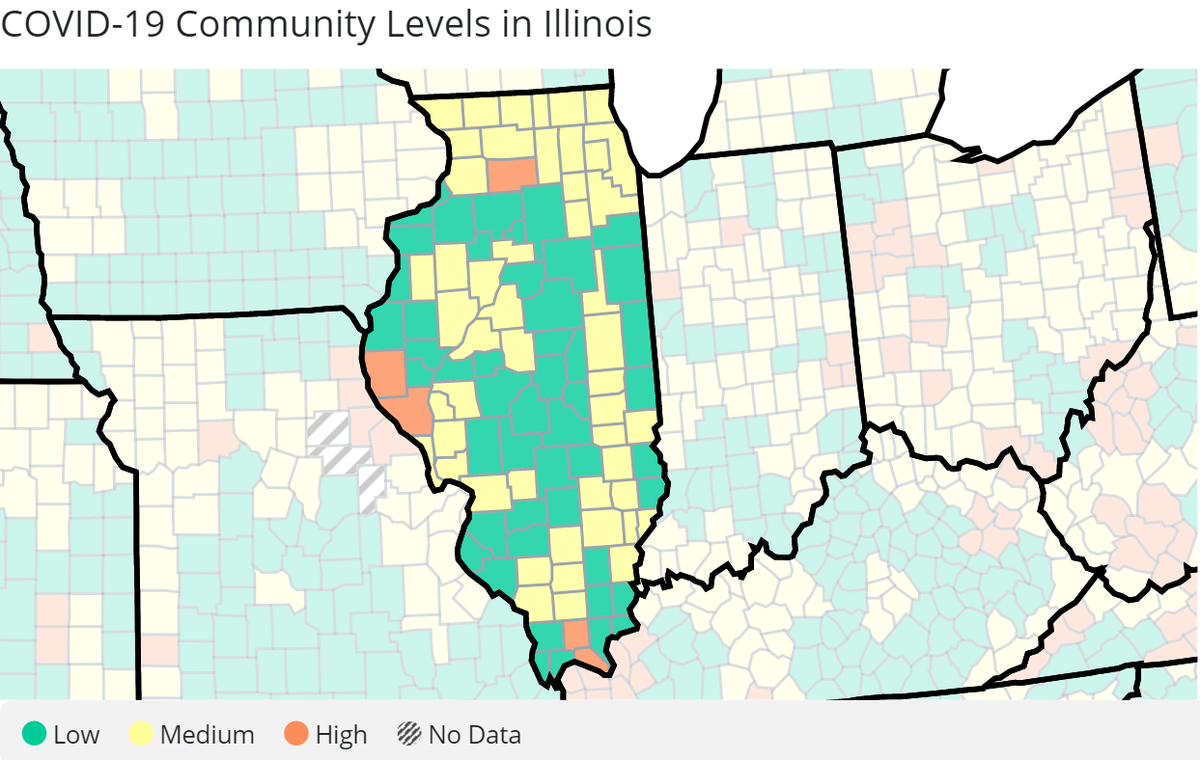
The number of Illinois counties at elevated COVID-19 community levels dropped from 88 to 54 in the U.S. Centers for Disease Control and Prevention’s latest update. Five counties are at high community levels, compared to 33 the previous week, and 49 are at medium.
Illinois Department of Public Health officials said in a Dec. 30 statement they were encouraged by the decline in elevated counties, but urged continued caution as respiratory viruses pose risks to members of the community.
“I applaud Illinois citizens for practicing important preventative measures to reduce the spread of infection and protect our hospital capacity,” IDPH Director Dr. Sameer Vohra said in the statement. “It is encouraging to see fewer Illinois counties at an elevated risk for COVID-19, with only five counties currently at high risk. However, as we continue to experience significant levels of flu, COVID-19, and other respiratory infections, it is important to continue protecting those most vulnerable to severe outcomes, especially individuals over 65, those immunocompromised, and those with chronic medical conditions.”
The five Illinois counties at high levels as of Dec. 30 are Pike, Adams, Johnson, Massac and Lee.
St. Louis County, St. Louis City, Madison, Bond, Jersey, Calhoun, Greene, Perry and Jackson counties were among the medium level localities. St. Clair, Monroe, Clinton, Washington and Randolph counties and others were at low levels.
The CDC’s COVID-19 community levels are updated Thursdays and based on metrics from the past seven days, including new hospital admissions per 100,000 people, average percent of staffed, inpatient beds occupied by COVID patients and new cases per 100,000 people.
The federal agency advises people in high community level areas to wear a mask indoors and on public transportation, and people at a higher risk of severe illness should consider precautions in medium-level areas.
COVID-19 in St. Clair County, statewide
St. Clair County’s weekly case rate has declined by 32.35% as of Dec. 28, the CDC reports. The rate of tests performed has dropped by 33.93% through Dec. 23, and test positivity is up to 12.66% as of Dec. 27.
The county’s rate of new COVID-19 hospital admissions per 100,000 people is at 9.1, down from 17.6 the previous week, and 7% of the county’s staffed inpatient hospital beds are in use by patients with confirmed COVID-19.
IDPH reported four COVID-19 deaths in St. Clair County the week of Dec. 24, but two have since been removed after a follow-up investigation from the local health department. Two additional deaths were reported Dec. 31.
St. Clair County’s daily case rate has declined from 25.2 to 15.3 per 100,000 individuals, IDPH reports, and 15% of the county’s intensive care unit beds are available. The seven-day rolling number of hospital admissions is three.
As of Thursday night, IDPH reported 1,767 people were hospitalized with COVID-19 in Illinois, including 225 in intensive care units and 80 patients on ventilators.
The statewide daily case rate is at 17.8 per 100,000 people, and 17% of Illinois’ ICU beds were available as of Dec. 30. The state’s seven-day rolling number of hospital admissions is 157, and IDPH reported 47 weekly deaths in the state.
Public health officials recommend Illinois residents take the following precautions against COVID-19 and other respiratory viruses:
Get up to date with vaccinations
COVID-19 testing
Enhanced ventilation at gatherings
Good hand hygiene
Stay home and contact your health care provider if you become sick
Vaccination and testing information is available online in St. Clair County.
Note: Some CDC data, such as test positivity rates, the number of tests performed and total case rate, update on different days. IDPH data and CDC data may not update at the same time, so metrics may vary across agencies.
This story was originally published January 3, 2023 at 10:44 AM.