Illinois health officials say COVID-19 activity is on the rise. Here’s what to know
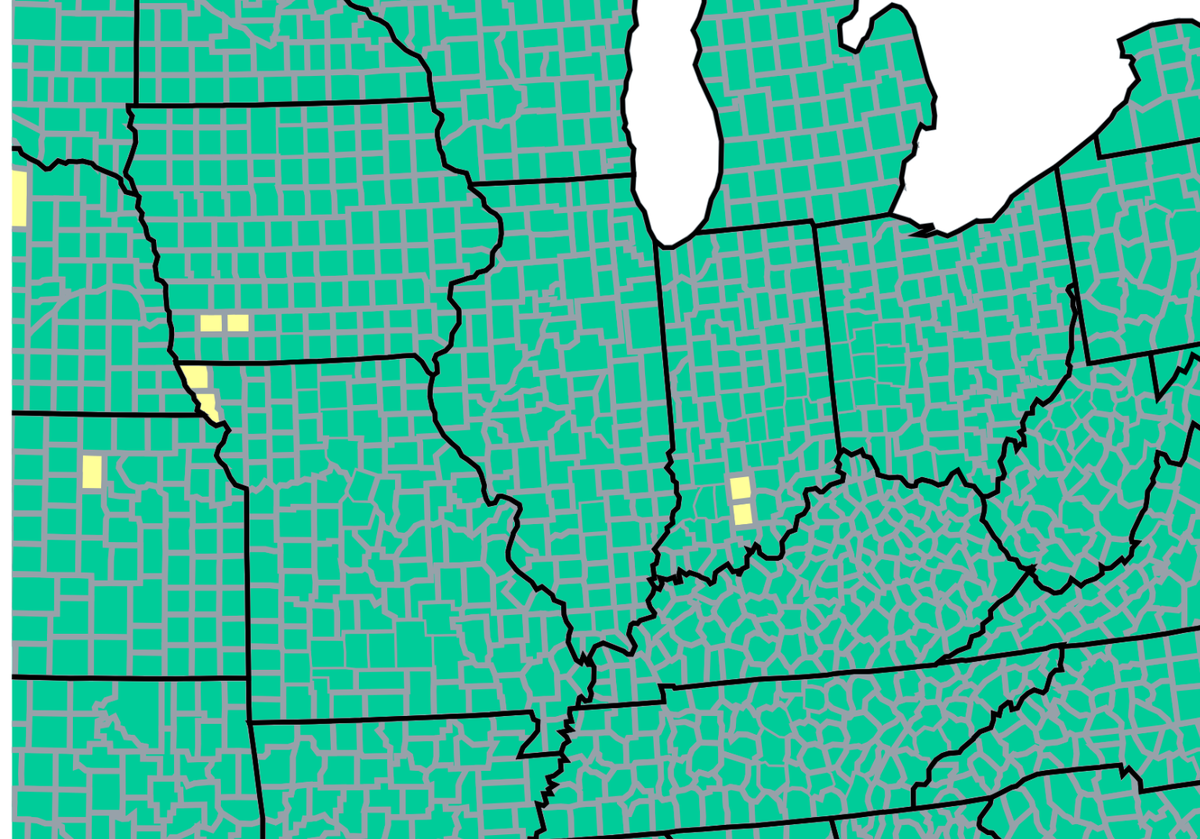
Although the U.S. Centers for Disease Control and Prevention is reporting all Illinois counties are at a low level for new COVID-19 hospital admissions, the state Department of Public Health is warning residents of “rising COVID-19 activity.”
In an Aug. 25 release, officials with the Illinois Department of Public Health said wastewater surveillance, the primary metric being used in the state, indicates “moderate COVID-19 activity.”
Pandemic-era reporting metrics changed in May when the federal COVID-19 public health emergency ended. As a result, the CDC no longer tracks COVID-19 cases.
There was a recently 14% spike in new COVID-related hospital admissions across the U.S., data from early August showed, but most counties across the country remain at a low COVID-19 level, according to the CDC.
In addition to the spike in admissions, public health officials are also monitoring trends for other respiratory viruses, especially influenza and respiratory syncytial virus (commonly referred to as RSV) as the colder months approach.
“Although hospitalization rates and deaths from COVID-19 remain low, it is important for our residents to know that we are seeing rising COVID-19 activity across Illinois,” state Department of Public Health Director Dr. Sameer Vohra said in an Aug. 25 statement. “We are fortunate the vast majority of Illinoisians have received immunity from a COVID-19 vaccine or previous infection that protects them against severe disease. However, COVID-19 continues to pose a risk for our seniors, individuals with chronic medical conditions, and those who are immunocompromised.
“IDPH is closely monitoring COVID-19 hospitalizations and deaths, emerging variants, and a broad range of respiratory illnesses including flu and RSV,” he continued. “As we approach the fall, our residents will have access to a number of tools, including updated shots and treatments, that can help us avoid another ‘tripledemic.’ Please contact your primary care provider to learn about the options available to protect you and your loved ones this upcoming respiratory season.”
Officials expect the CDC to release guidance about updated booster shots in September, the release continued.
Data from the wastewater surveillance system indicate flu and RSV levels are “low” across the state, according to the health agency.
Wastewater data in Belleville
Wastewater surveillance data is available for sewage treatment plants in Belleville, O’Fallon, Sauget, Edwardsville and other Illinois locations.
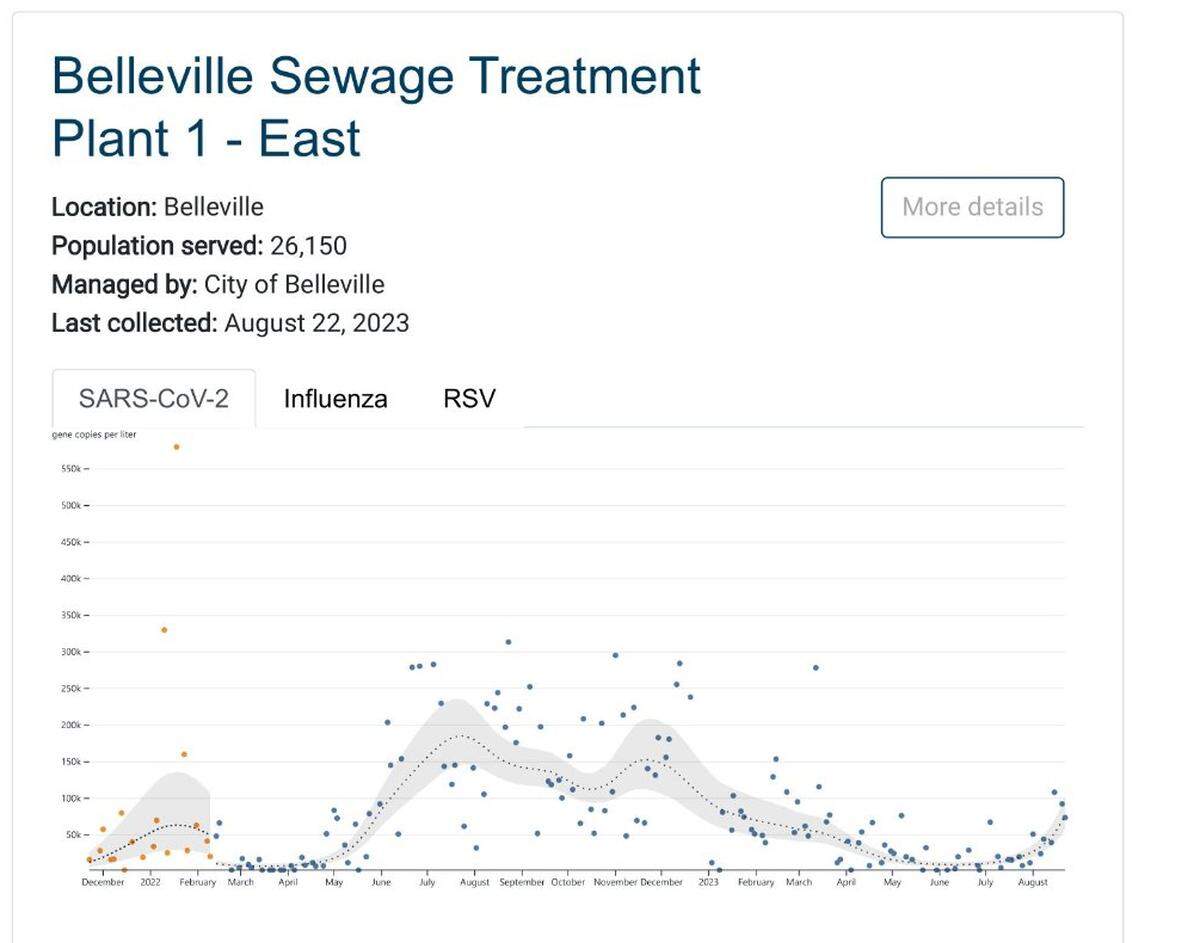
In addition to COVID-19 data, researchers also track samples of RSV and influenza. The information is presented in scatterplots, with dots representing the number of virus gene copies per liter of sewage.
Recent data from Belleville’s sewage treatment plant shows COVID-19 gene copies spiked in August compared to May, June and July, but have not reached last winter’s peak.
“Trends and SARS-CoV-2 levels should not be compared between treatment plants because of unique variations in treatment plants, including size and contribution from non-human sources like rainwater and industrial fluid,” the Illinois Department of Public Health’s wastewater surveillance page says.
In O’Fallon, levels are also up from June and July.