
With 17 million pills in Madison County, this man helps police fight opioid crisis
In 2014, Madison County had the second-highest number of prescription painkillers in the nation. In that year, there were enough pills in the county for each person, including children, to have 126 pills each.
In 2017, there were more than 17 million pills in the county.
Collinsville, like many other cities, has had to adjust rapidly to the opioid epidemic, which includes prescription pills, heroin and other powerful drugs.
Over the years, Lt. Eric Herman has seen multiple drugs come and go within Southern Illinois. When he started as a police officer, the drug taking over the area was meth. Then it was crack cocaine. And as each drug lost popularity, a new drug took its place.
He said this, though, has not been the case with heroin.
“I’ve been a police officer for over 20 years, and it’s something I’ve never seen before in my law enforcement career,” said Herman, who works at the Collinsville Police Department. “I’ve never seen anything like it.”
The opiate crisis has overwhelmed law enforcement, who respond over and over again to the same houses and the same people to treat overdoses.
“We were helping them from dying at the scene, but we weren’t helping them further along in recovery,” Herman said.
In 2017, James Jordan changed that.
Jordan, a peer recovery specialist at Chestnut Health Systems, reaches out to people in St. Clair and Madison counties who are addicted to drugs. One of the main ways he finds those struggling with addiction is through the Collinsville Police Department.
Collinsville Police will respond to an overdose or drug-related call and will administer the overdose-reversal drug Narcan if needed and make sure the person is medically stable. Once they leave, they call Jordan.
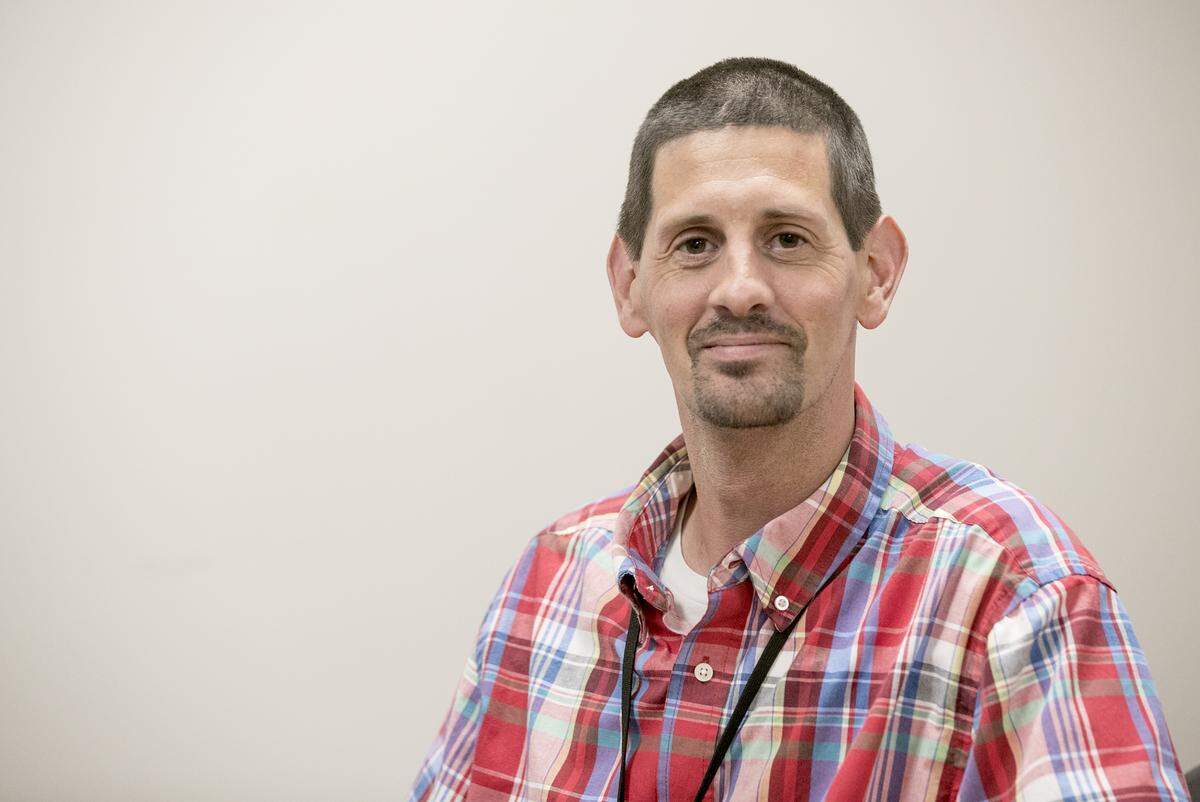
“James comes and knocks on the door. He says here’s who I am and here’s what I’ve done,” Herman said.
Jordan goes to people’s houses, calls their phones and makes contact by any means necessary to extend his offer — recovery. Through Chestnut Health Systems, Jordan helps addicts detox from the drugs and start treatment. He guides them through medical, physical and emotional treatment plans.
Most of all, Jordan offers them constant support in their battle with drugs.
“He helps that person re-engage successfully with the community,” said Jennifer Roth, executive director of the Mental Health Board in Madison County. “It’s hard to maintain recovery when you’re isolated and can’t get the resources you need.”
Jordan said the response to his house calls are mixed, but the person almost always indicates they do want to recover.
“Some people aren’t ready, others are ready and just don’t know how to go about getting help,” Jordan said. “And that’s what I’m here for, I’m here to bridge that gap between certain services. Because some people are struggling in the addiction and ... they think there’s no hope and there’s no way out.”
An overabundance of pills
Eighty-seven people died in 2017 from overdoses in Madison County — or one every four days on average — according to data from Chestnut Health Systems. Of those deaths, 82 were caused by opioids. In St. Clair County, 27 of the 46 overdose-related deaths were caused by opioids.
Jordan said part of the problem is doctors prescribing an unnecessary amount of prescriptions opioids.
“A person goes in for a car wreck and they may need pain pills, but they give them 90 pills,” he said. “Then a 14-year-old is picking up the pills in the mom’s cabinet or grandma’s cabinet and they don’t see it as a drug.”
If you lined up every pill in Madison and St. Clair counties end to end, they would stretch from St. Louis to Milwaukee — about 324 miles. This is assuming each pill is the average size and each day’s supply is only one pill.
At the Collinsville Police station, a drug drop box sits in the lobby. The box is about the size of a standard mailbox.
Herman said the entire mailbox gets filled with drugs each month.
"That's a huge indication that we have way more drugs than we need just with that quantity," he said. "That’s like going to a restaurant and they were filling two Dumpsters with food. You would say they are making way too much food."
'I've been where you're at'
Throughout Madison and St. Clair counties, Jordan contacts 12 to 15 people a month in response to referrals.
In just Collinsville, Herman said he doesn’t know exactly how many people they’ve referred to Jordan, but he knows it’s more than 50.
Through treatment, Jordan helps people return their life to normal. One man in particular has been coming to the program almost since it began about nine months ago.
"He has a job, he's able to be a part of his own life. He has a house and pays his bills on time. That’s a big thing for people who have had nothing their entire lives, who have struggled for so long," Jordan said.
Roth said part of Jordan’s success is based on personal experience.
For 23 years, Jordan used methamphetamine. For him, and others struggling with addiction, using drugs took over his life.
“We can’t just stop using. Once we’ve picked up and started using, once we’ve made that choice, after that, you don’t have a choice anymore,” he said.”That’s when the obsession and the compulsion comes in, that’s the disease of addiction.”
Jordan’s goal is to get people to detox long enough to be able to make that choice again. Sometimes, it may take a person three or four attempts at recovery before it sticks. Jordan struggled in and out of programs for 13 years before finally leaving drugs behind.
“I still think about using occasionally, but it’s a fleeting thought,” he said. “Today I weigh the pros and cons. The pros definitely outweigh the cons. Before, they didn’t. I didn’t have anything to live for.”
Herman said Jordan’s personal experience allows him to reach people in a way the police department cannot.
“It’s amazing the way that someone who has fought that particular foible, that particular crisis in their life, who has slayed the dragon, can go to someone else in the process and say, ‘I have been where you’re at. I know how to get out, here’s how I got out,’” Herman said.
The impact
Herman said Jordan’s help has put them in the best position in the past eight years to handle the opioid epidemic.
About eight years ago, Herman said, they were unprepared to deal with the growing crisis of heroin. People overdosed and there was no way to bring them back.
When officials were issued Narcan about a year ago, they were able to start reviving those who were overdosing. Sometimes, it takes up to four doses of the drug to clear a person’s system.
As for who is impacted by opiates, Herman said the drugs do not discriminate.
"You can usually pick one group where that’s their favorite drug. That’s not the case with heroin," Herman said. "It’s whites, blacks, people in their 50s, 60s, people in their teens, people whose family has a lot of money or they have a lot of money or people who don’t have anything."
Herman said, however, Jordan has made a visible impact on the community. He said they are running less drug-related calls, and houses they’ve responded to multiple times for drug-related disputes are no longer an issue.
“He can climb right in there and get down in their soul and reach them in a way that the average person can’t,” Herman said.
Jordan said for him, seeing someone overcome their addiction is a blessing.
“It’s better than any high I’ve ever encountered,” he said.
Herman said if people know someone struggling with addiction or are addicted themselves, they can contact the Collinsville Police Department at 618-344-2131, Chestnut Health Systems at 618-877-4420 or Jordan's direct line at 618-792-0375.
This story was originally published June 6, 2018 at 9:31 AM with the headline "With 17 million pills in Madison County, this man helps police fight opioid crisis."