Harmony-Emge and Triad districts expect to save millions by powering schools with solar
Harmony-Emge School District 175 and Triad Community Unit School District 2 are going green to cut operating costs and protect the environment.
Both districts successfully applied to participate in a state program designed to encourage the development and use of renewable energy. As a result, they will get help paying for the installation of large solar systems to power six schools in Belleville, Troy and St. Jacob.
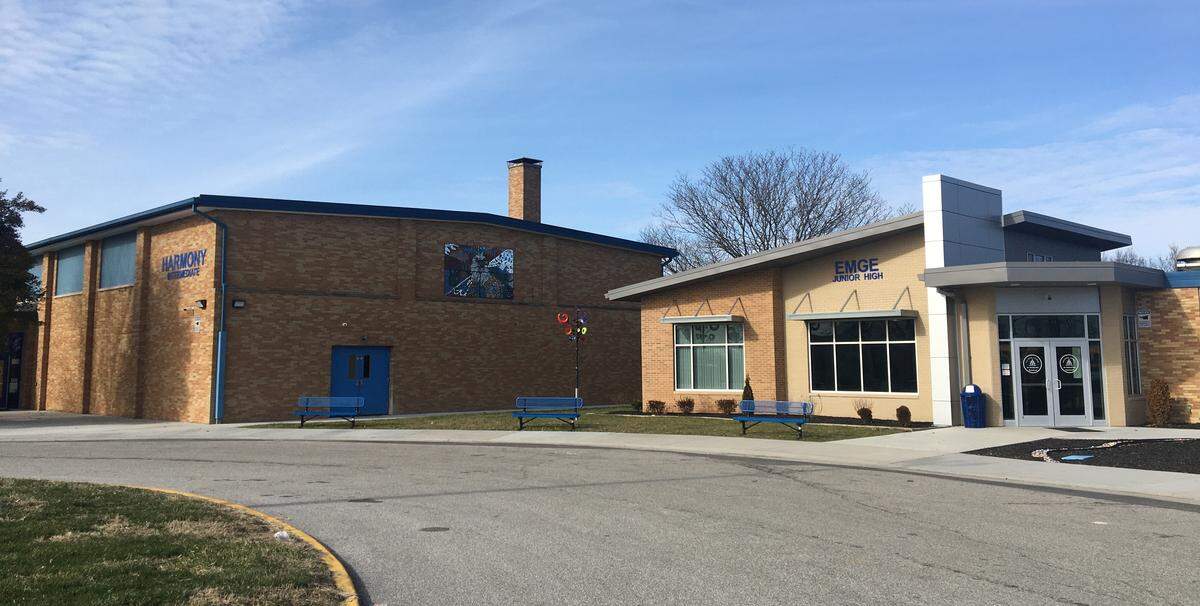
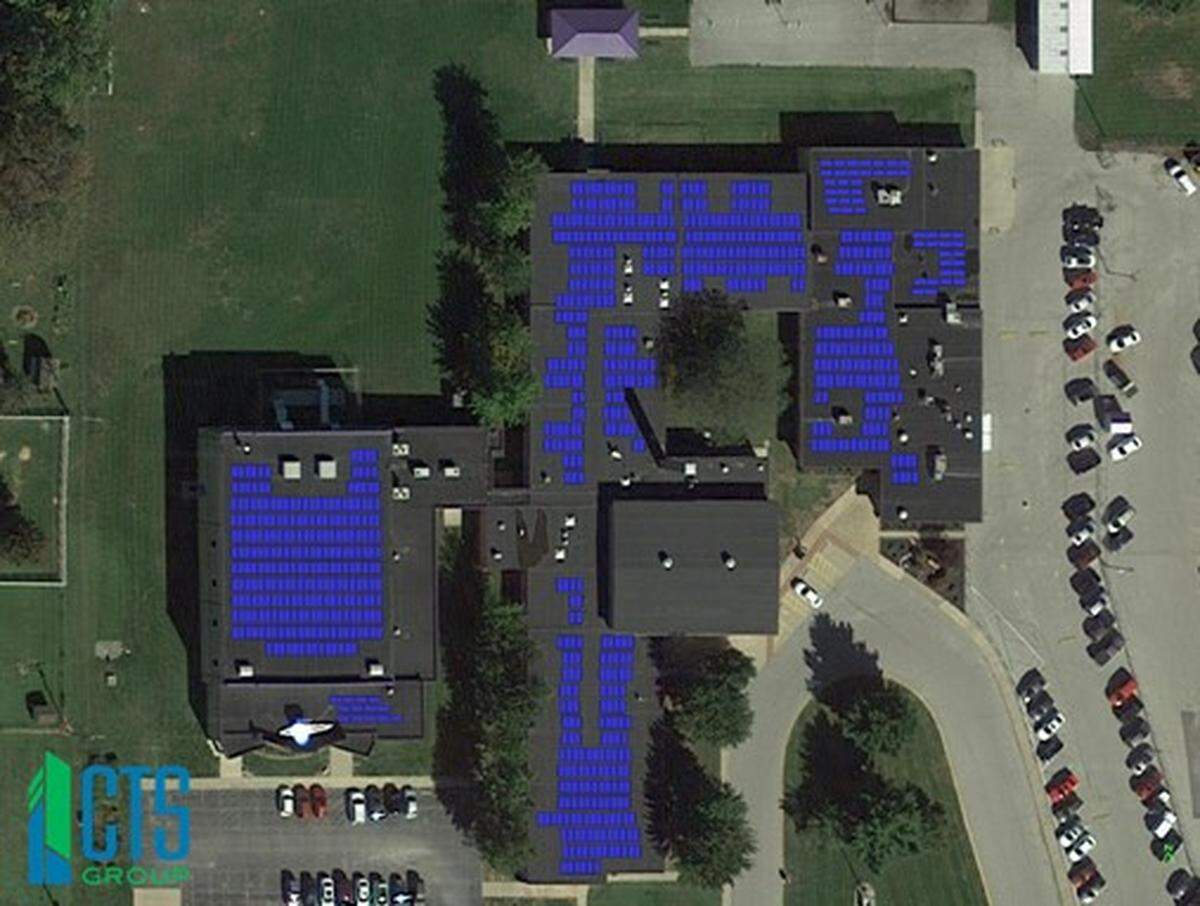
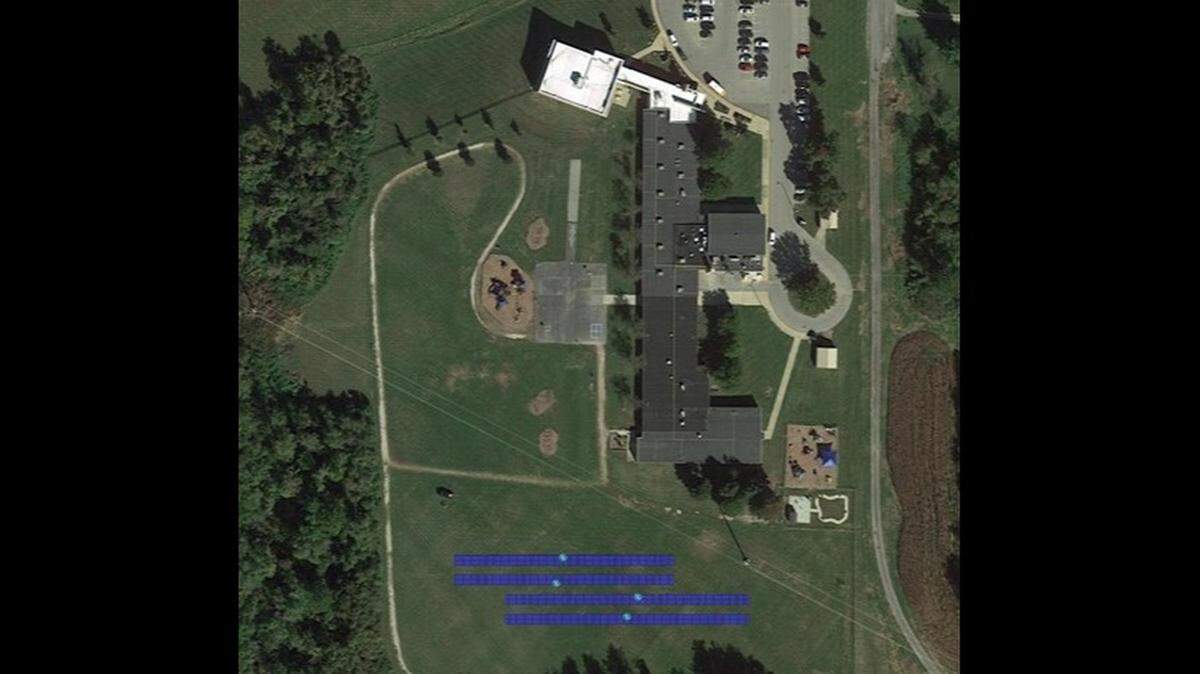
“I would estimate by the end of February, we’ll start seeing solar panels go up,” said Dave Deets, superintendent of School District 175, which includes Harmony Intermediate School, Emge Junior High and Ellis Elementary School in Belleville. “It’s going to be a rooftop system on the Harmony-Emge campus, and it’s going to be a ground-mounted system at Ellis.”
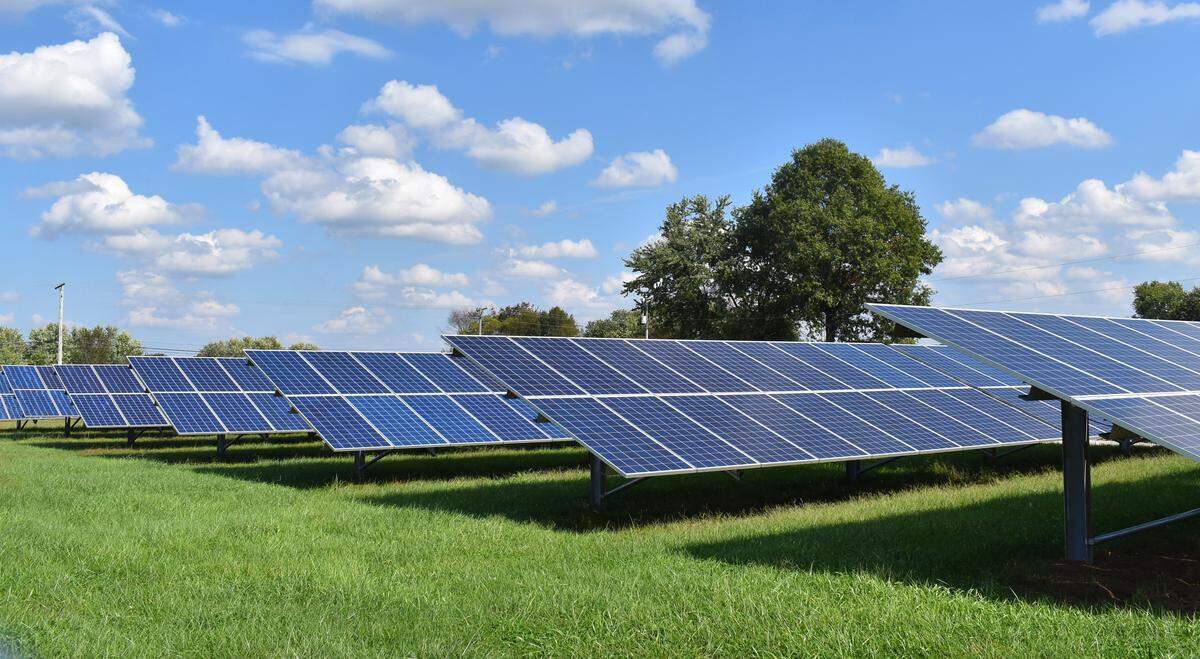
In other words, an empty field behind Ellis will be transformed into a mini solar farm.
Deets hopes to eliminate district electricity costs entirely with the two solar systems and recent facility upgrades to improve energy efficiency.
“This is more than a financial investment,” he said. “We’re very big into character education in our district. All three of our schools are National Schools of Character. Part of that is being caring and responsible, and responsibility includes being good stewards of the environment and leading the way with green initiatives.”
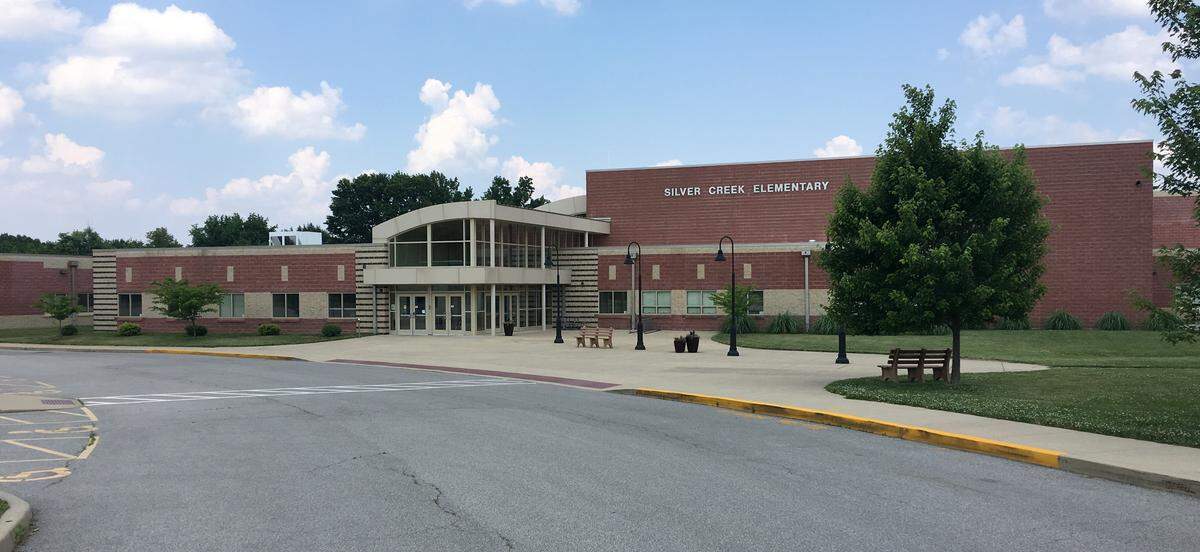
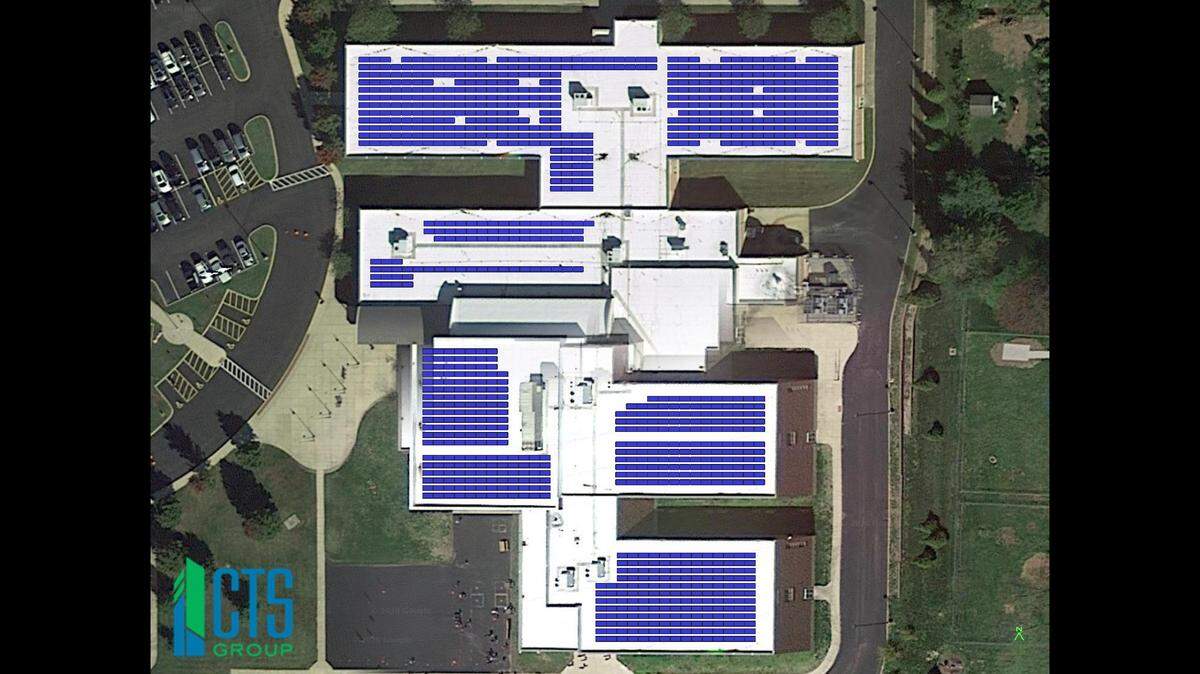
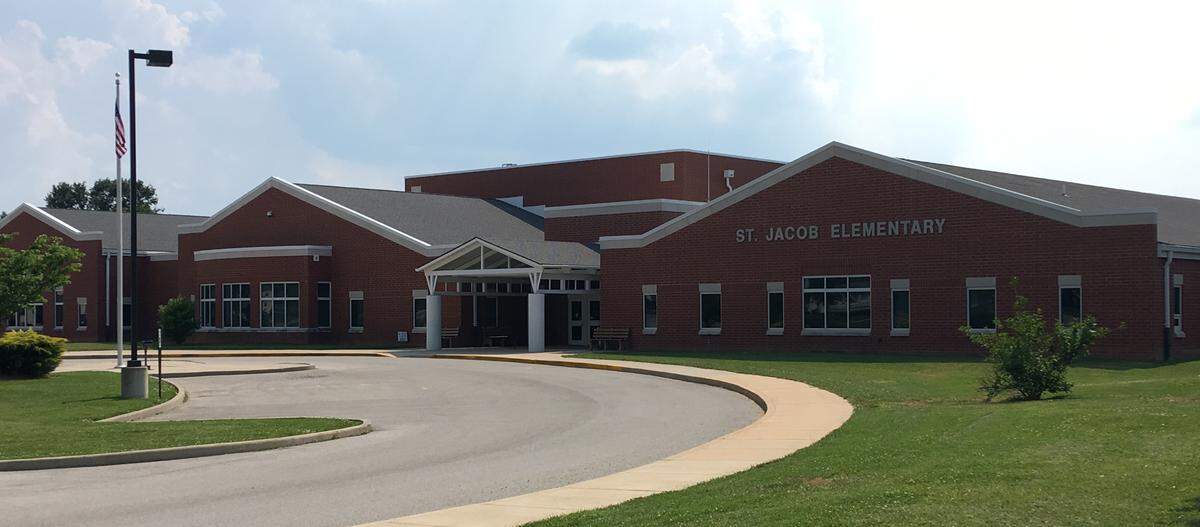
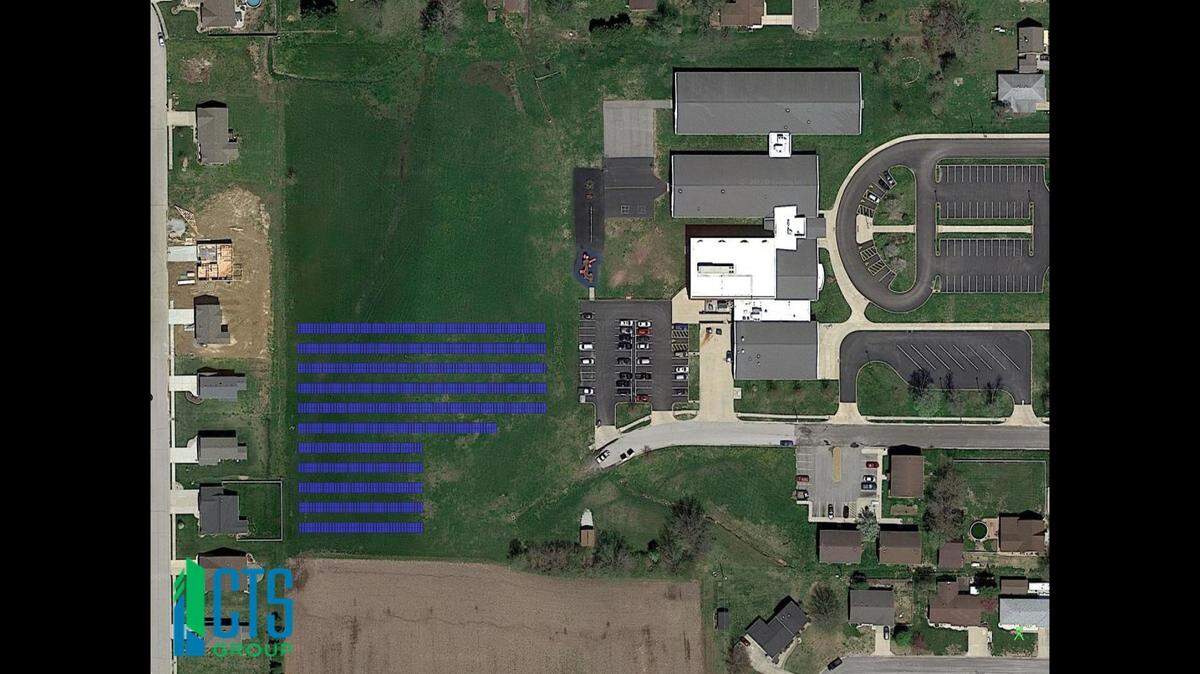
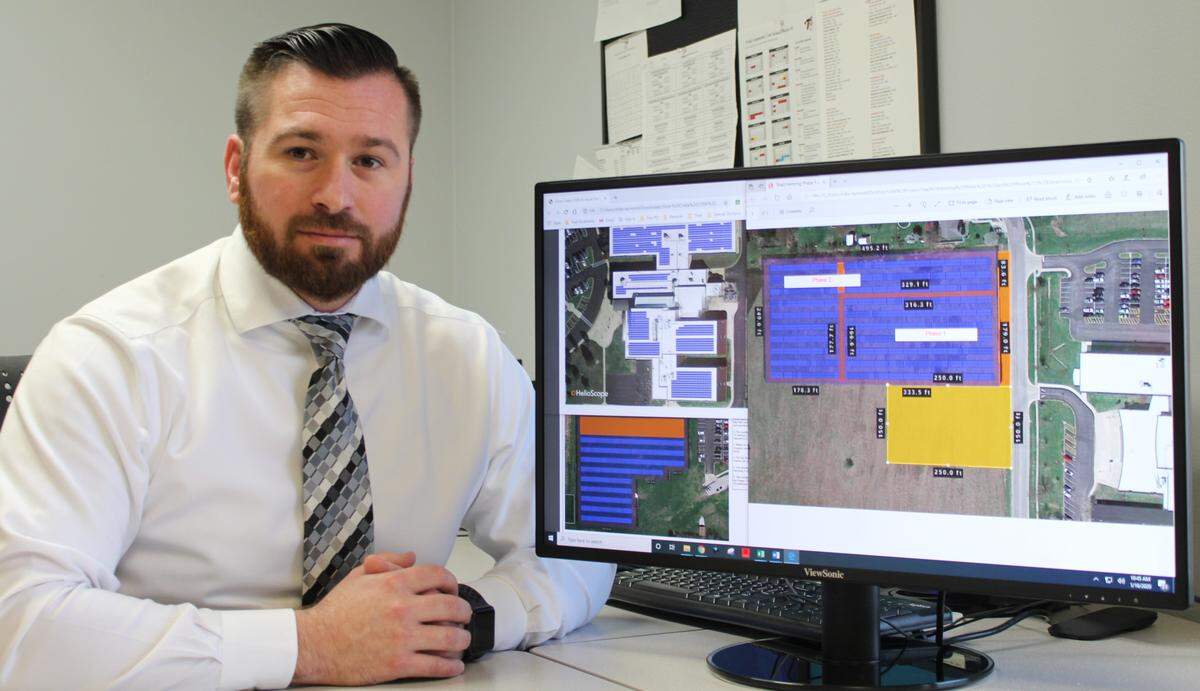
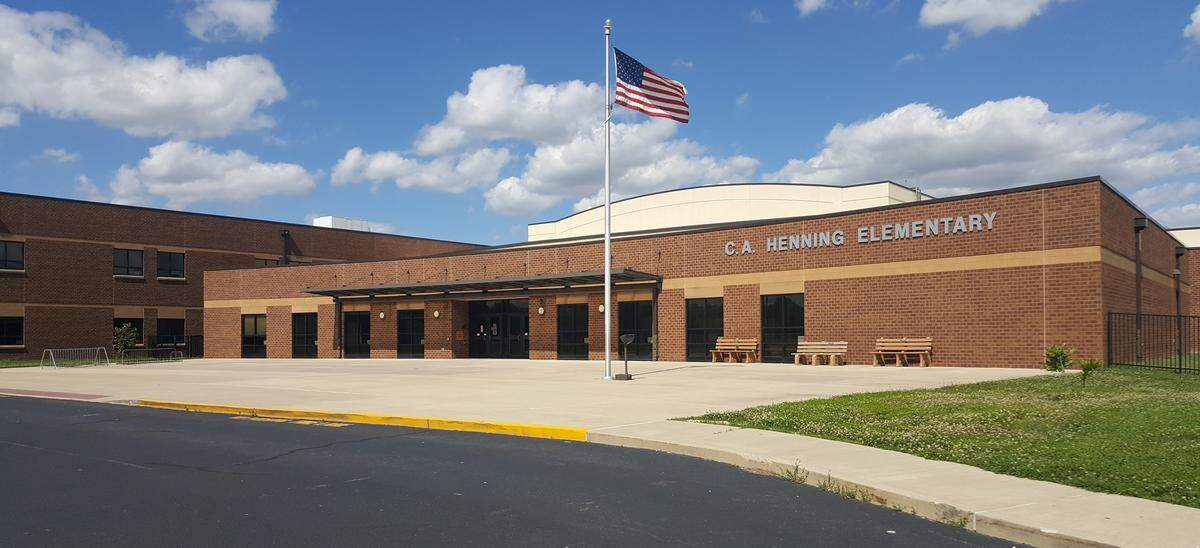
Also this spring, the Triad district is installing a rooftop solar system at Silver Creek Elementary School in Troy and ground-mounted systems at C.A. Henning Elementary School in Troy and St. Jacob Elementary School in St. Jacob.
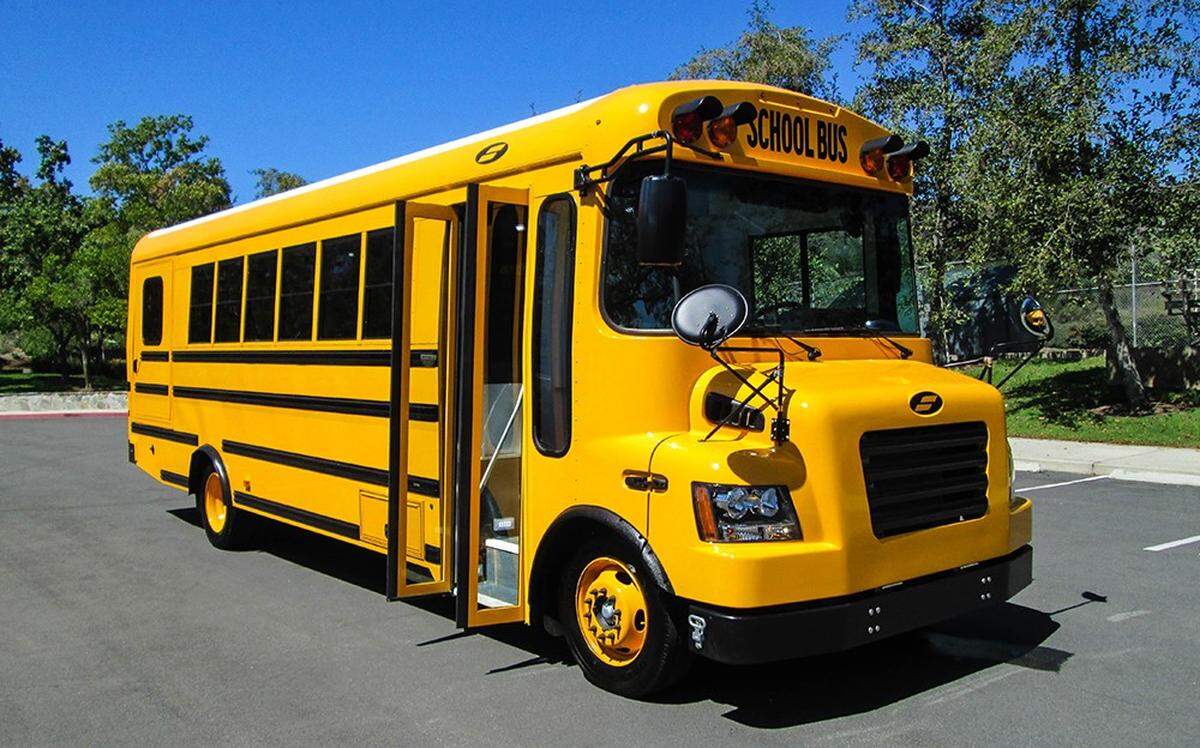
Triad already owns a hybrid Toyota Prius for use by district staff, and it recently received a state grant to purchase three all-electric school buses.
Triad Director of Business and Communication MIke Raymond sees these efforts as a way to save tax dollars but also to educate local residents and students on green technologies.
“(They’re) witnessing solar panels and electric school buses coming to life in their own front yard,” he said.
Thousands of solar projects
Harmony-Emge is making a $1.2 million initial investment in its two solar systems but expects to recoup most of that after five years and begin saving $45,000 to $50,000 in annual electricity costs.
Triad is making a $2.8 million investment for the first phase of its three solar systems and expects to recoup that amount and save another $3.8 million in electricity costs over 30 years.
“We hope to have Phase 1 completed around the middle of April,” Raymond said. “It’s moving very quickly.”
Both metro-east solar projects were made possible by the Adjustable Block Program, which was authorized in 2016 by the Illinois Future Energy Jobs Act. It set a goal for the state to get 25 percent of its electricity from renewable sources by 2025.
The legislation was billed as a way to strengthen the Illinois power grid, keep down consumer costs, stimulate job growth and protect the environment.
About 10,000 solar projects have been approved in the “distributed generation” category, which includes businesses, schools and homeowners who want to produce electricity for their own use, said Anthony Star, director of the Illinois Power Agency, an independent state agency that administers the Adjustable Block Program.
That’s different from the “community solar” category, which includes solar farms built to distribute electricity to other users on the Illinois power grid.
“With community solar, there’s a long waiting list,” Star said. “But with distributed generation, there’s still capacity that’s left in terms of funding that’s available.”
In both categories, incentives are offered in the form of renewable-energy credits that solar projects earn by producing electricity which utilities, such as Ameren, are required to buy. The money comes from a state-mandated surcharge of up to 2 percent on all residential and commercial power bills.

25-year warranties on panels
It will cost about $1.2 million to build Harmony-Emge’s two solar systems, said Gordon Schweitzer, senior engineer with CTS Group, the St. Louis company that’s designing and installing them.
The district took out a $900,000 loan, which it plans to repay in five years, Deets said. It will receive $459,000 by selling its Adjustable Block Program renewable-energy credits.
“Another incentive that we will be applying is the Distributed Generation Rebate, also known as the Smart Inverter Rebate, and that is around $150,000,” Schweitzer said, speaking of an Ameren program. “And then the energy savings will pay off the remainder.”
The solar panels have 25-year warranties but are expected to last longer.
Local residents may not even notice the rooftop panels on the connecting buildings that house Harmony Intermediate School and Emge Junior High, but two sixth-grade teachers are making sure students know all about them.
Danielle Steigerwald and Rachel Poettker are incorporating the project into their curriculums, including lessons in science, math, history and language arts.
“When our superintendent told us about the school putting in solar panels, the two of us were super excited because our kids can see how they impact the environment,” Poettker said. “There will be software that will track how much energy the panels are banking versus how much energy the school district is using.”
Poettker was referring to the district’s ability to bank energy produced during months when plentiful sunshine allows excess production and use it during months when it’s cloudy.
Steigerwald and Poettker have already been teaching students about renewable energy and other environmental issues. One project has them building and racing solar-powered cars. Another focuses on reducing the use of plastics.
“As human beings, we impact our environment heavily, and through finding sources of renewable energy, we can lessen that impact,” Steigerwald said. “And we need to teach that. It’s part of our NGSS (Next Generation Science Standards).”
Two phases at Triad schools
Triad officials plan to install their three solar systems in two phases. Phase 1 includes rooftop panels at Silver Creek Elementary School and part of the ground-mounted panels at C.A. Henning Elementary School and St. Jacob Elementary School.
The district has taken out a loan to pay for the $2.8 million installation cost, Raymond said. It will receive about $857,000 by selling its Adjustable Block Program renewable-energy credits and another $315,000 through Ameren’s Illinois Distributed Generation Rebate Program.
“Over the next 30 years, we will save more than $3.8 million (in reduced power bills) over and above the cost of the project,” Raymond said, speaking of Phase 1. “We’ll go above that with Phase 2.”
Triad and CTS Group are now applying for Adjustable Block Program incentives for Phase 2.
When both phases are completed, officials expect the solar systems to provide 100 percent of electricity at Henning (eliminating its $125,000 annual power bill) and St. Jacob ($71,000) and 42 percent ($45,000) at Silver Creek.
“This is being done to reduce the long-term costs in our operating budget so we can put money back in our facilities and help grow in conjunction with our growing population,” Raymond said.
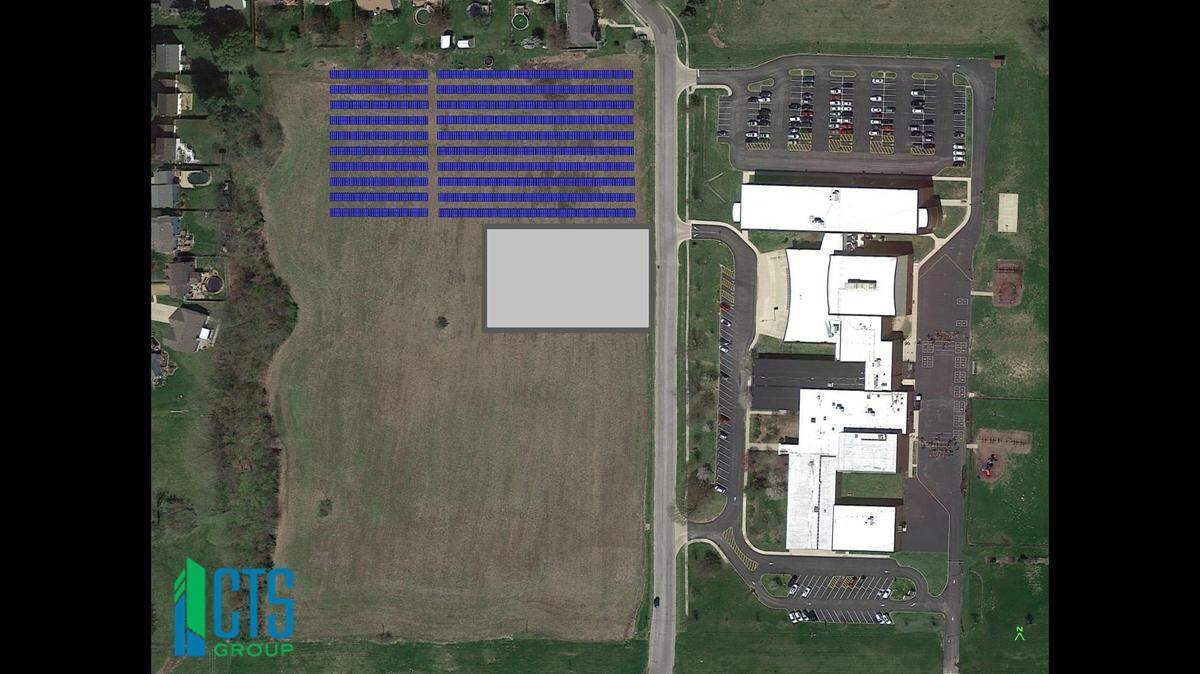
Solar panels will be installed on land next to Henning that Triad formerly rented to a farmer, with a 60-foot easement between the solar system and five residential properties. Panels will go up in a vacant field next to St. Jacob, where the easement will be 30 feet between the solar system and four homes.
There also will be a parking lot and charging station at Henning for the three all-electric buses. The district is paying for them with a $650,000 grant from the Illinois Environmental Protection Agency’s Driving a Cleaner Illinois Program. Funding came from a 2016 settlement in the emissions-cheating case against Volkswagen.
“Triad views itself as an innovator that is leading the way in the future of education,” Raymond said.