Ancient poop gives insight into Native American life after Cahokia was abandoned
The Cahokia Mounds area has become a testing ground for an archaeological method that involves analyzing molecules from human feces.
In other words, ancient poop.
The method was used recently to verify that Native American life didn’t end when Mississippians abandoned the city of Cahokia in the late 1300s. There was a resurgence in the 1500s and 1600s, according to A.J. White, a doctoral student in anthropology at University of California, Berkeley.
“There’s very little archaeological evidence for an indigenous population (after Cahokia),” he said. “But we were able to fill in the gaps through historical, climatic and ecological data, and the linchpin was the fecal stanol evidence.”
A study by White and other researchers has been published in the latest issue of American Antiquity, a professional journal of the Society for American Archaeology.
Historians knew members of Illinois Confederation tribes lived in the region after the Mississippians. The study showed that populations peaked around 1650. It also appears that Native Americans were using controlled burns to maintain grasslands for bison to graze, protecting their source of meat and hides.
The study challenges popular portrayals of the “vanishing Indian,” but not the core history of Cahokia Mounds.
“It just adds evidence that supports the rise, florescence and demise of Cahokia and eventually the moving in of (other Native Americans),” said Bill Iseminger, former assistant site manager at Cahokia Mounds State Historic Site. “It may indicate that there were larger numbers than we thought.”
Iseminger, 75, of Collinsville, retired in December after nearly 49 years on staff.
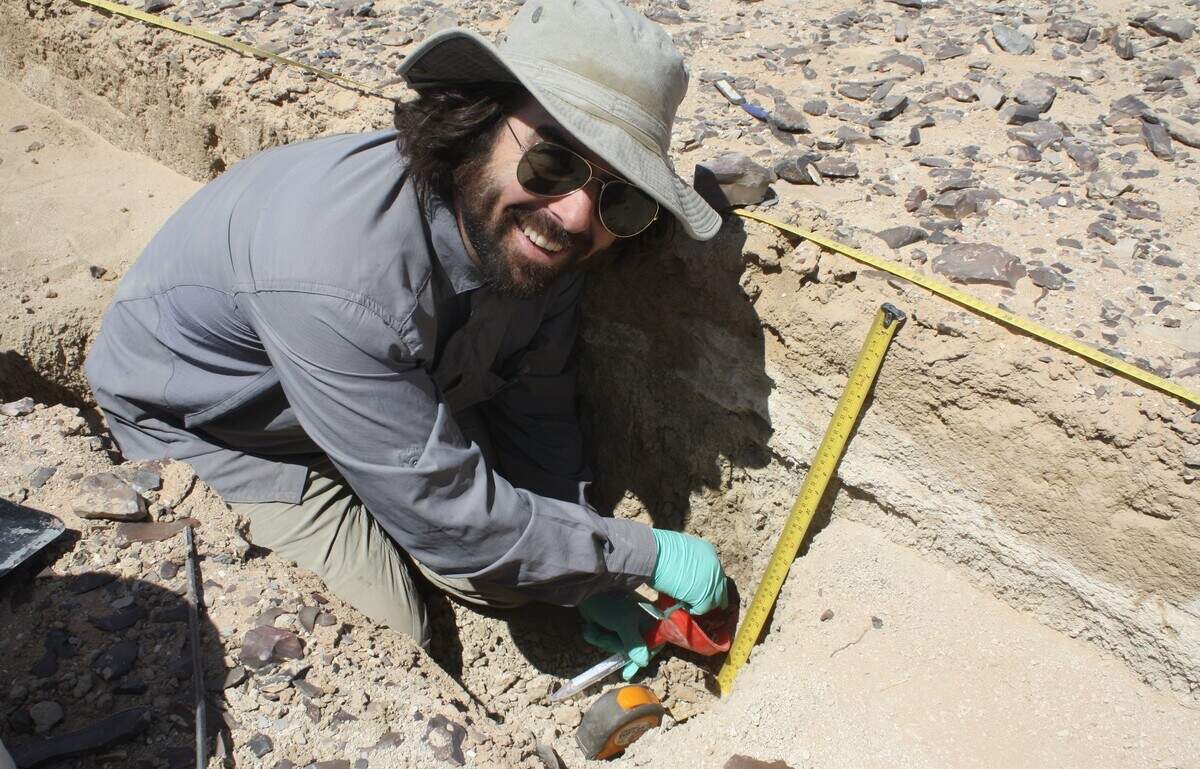

Gap between 1400 and 1700
Cahokia Mounds is located between Collinsville and Fairmont City. It’s considered one of the most important archaeological sites in North America, and some people want to turn it into a national park.
The vast majority of research and discussion has focused on the period between 700 and 1400, when up to 20,000 people from the Mississippian culture lived in the city of Cahokia, which covered about 6 square miles. Experts largely blame its abandonment on drought and depletion of resources.
The gap in knowledge about what happened in the region after the Mississippians left has created a false impression, White said.
“It leads to a sense of finality. It leads you to think that maybe this area was like a ghost town, that there was no one around until the Europeans came (in the 1700s). But what we’re trying to show is that wasn’t really the case.”
The Mississippians were farmers, fishermen, hunters, gatherers, traders and mound-builders who stayed in one place, so archaeological digs in the Cahokia area have yielded plenty of artifacts and information about their lives.
In contrast, Illinois Confederation tribes followed a seasonal cycle, moving from semi-permanent villages to hunting camps depending on time of year.
“If there are archaeological sites from this time period, they’re probably a lot smaller because people weren’t staying in the same spot year-round,” White said.
It’s also possible that evidence was destroyed by the development of local highways and subdivisions before it was protected by state law.
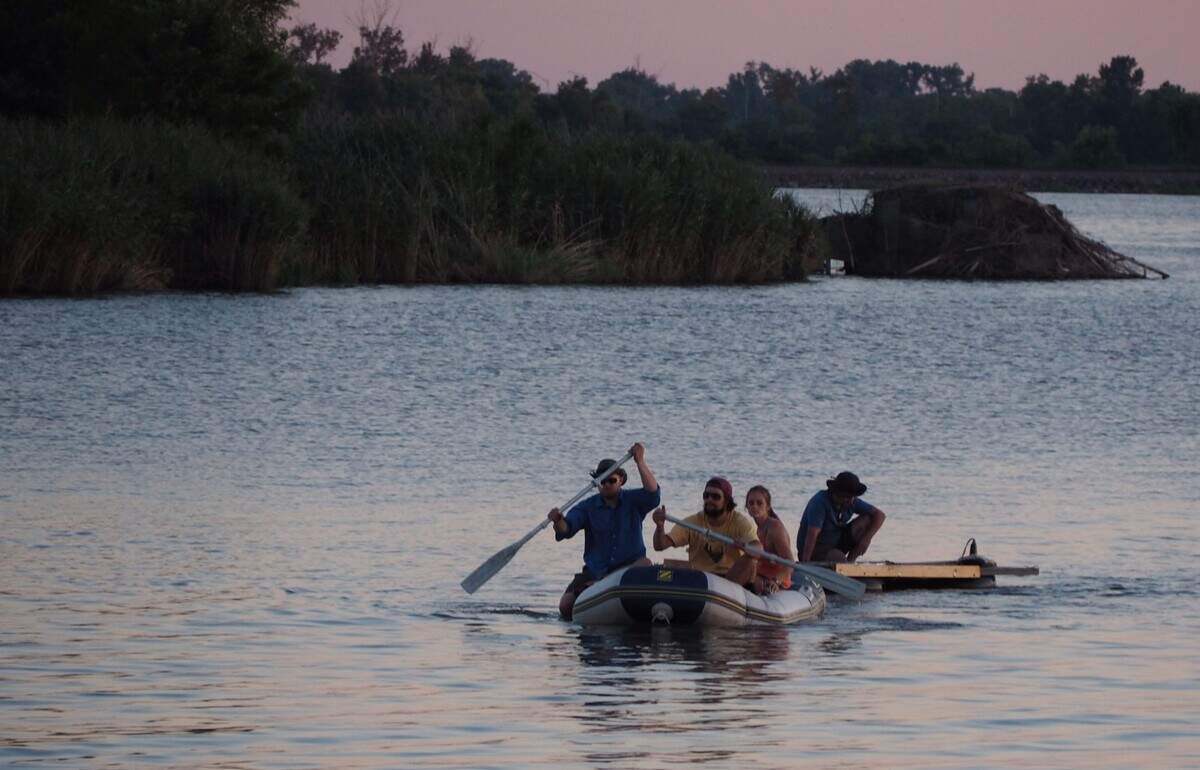
1,100 years of history in mud
White, 30, of San Rafael, California, has been fascinated with Cahokia Mounds since his freshman year of college, when he took an introduction to archaeology class.
As a graduate student, White decided to explore the theory that rain would have broken down the scattered feces of Native Americans living in the region and that particles would have ended up in Horseshoe Lake, a major watershed.
“Poop is something ... Well, everybody does it, and it can provide information that I think has been overlooked by archaeologists in the past,” he said.
In 2016, White paddled out on the lake with Indiana State University graduate students working under environmental geoscience professor Jeffery Stone. They pushed a tube into the muddy bottom and removed a 10-foot-long vertical core sample with layers of sediment dating from 900 A.D. to the present.
This technique is commonly used by paleontologists and other scientists, Stone said.
“The process basically allows us to go back in time and reconstruct what was happening by looking at things that were trapped in the lake and archived or stored in the sediment.”
White co-authored his study with Samuel Munoz of Northeastern University, Sissel Schroeder of University of Wisconsin-Madison and Lora Stevens of California State University, Long Beach.
The researchers did a “fecal stanol population reconstruction” by looking at human feces molecules at different points in time, as determined by radiocarbon-dating. Concentrations increased significantly in the 1500s and 1600s, before French missionaries and other white settlers arrived.
“Also at the same time, we found a spike in charcoal,” White said. “That is consistent with people who might be managing the grasslands through burning, which Native Americans did as a way of maintaining their bison-hunting lifestyle.”
White now is working on a dissertation that involves fecal stanol population reconstruction at an archaeological site in Jordan.
This story was originally published January 29, 2020 at 5:00 AM.