Coronavirus renews debate over shopping bag fees in Edwardsville and other cities
Coronavirus has prompted the city of Edwardsville to postpone implementation of an ordinance that would have required large retailers to start charging a shopping bag fee on April 1.
Edwardsville City Council made the decision in mid-March after recognizing that social-distancing restrictions were likely to last longer than expected and that local businesses were already facing big challenges, according to Ward 5 alderman Will Krause.
“We’re hopeful that once this pandemic is over, we’ll be able to roll it back out,” he said.
The ordinance will require stores 7,000 square feet or larger to charge customers 10 cents for each single-use (disposable) paper or plastic bag. Retailers keep the money. The idea is to encourage customers to bring their own reusable bags.
Edwardsville City Council approved the ordinance in October.
“The overall goal is to stop these single-use materials from ending up in the waste stream,” Krause said. “It’s a small step we can take to help protect the environment.”
.JPG "Schnucks shoppers (2).JPG")
The new start date for the shopping bag ordinance is May 1, but that could change depending on how long Illinois Gov. J.B. Pritzker keeps his “stay-at-home” order and other restrictions in place, Krause said.
On March 28, Pritzker made several recommendations to protect employees and customers in grocery stores against the spread of coronavirus, which causes a respiratory illness known as COVID-19. One was discouraging the use of reusable bags.
“We’ve continued to work with the Illinois Retail Merchants Association to make shopping a safer experience,” Pritzker said.
Coronavirus has renewed an international debate over single-use plastic bags, which have been banned, taxed or made subject to fees in hundreds of cities, dozens of countries and nine U.S. states in the past 10 years. Bag manufacturers are promoting as them as safer from a health standpoint.
Krause expects the city of Edwardsville to spend time “re-educating” the community before implementing its shopping bag fee.
“You’ve got people saying the reusable bags are dirty or gross,” he said. “But they’re no dirtier than the mail that comes to your house or the Amazon box that’s delivered to your front door. I don’t find that to be a valid excuse (for using disposable bags).”
.jpg "Sheila and Mary (1).jpg")
A grassroots organization called Bring Your Own Glen-Ed worked more than two years to drum up support among local residents and city officials for a shopping bag fee. One of its leaders is Mary Grose, an Edwardsville resident and hospital nurse.
“In the scheme of things, this is a minor story,” she said Thursday. “I’m very sensitive to the fact that coronavirus is on everyone’s mind, as it should be. Safety is first and foremost.
“But, of course, I have to admit that I’m disappointed that the ordinance is on hold. I don’t think we’ve given up on the idea that it will be put in place eventually.”
Edwardsville would have been fifth city in Illinois to impose a fee or tax on single-use shopping bags. The other four are Chicago, Oak Park, Evanston and Woodstock.
Schnucks Markets, a St. Louis-based supermarket chain with an Edwardsville location, generally opposes charging customers for bags, but it didn’t fight the Edwardsville ordinance and promised to abide by the city’s decision. Last month, employees were gearing up for the change.
“We were actually going to introduce a new bag for our Edwardsville store,” Schnucks spokesman Paul Simon said Thursday. “It’s a reusable plastic bag that we were going to charge 10 cents for. It’s reusable up to 125 times.”
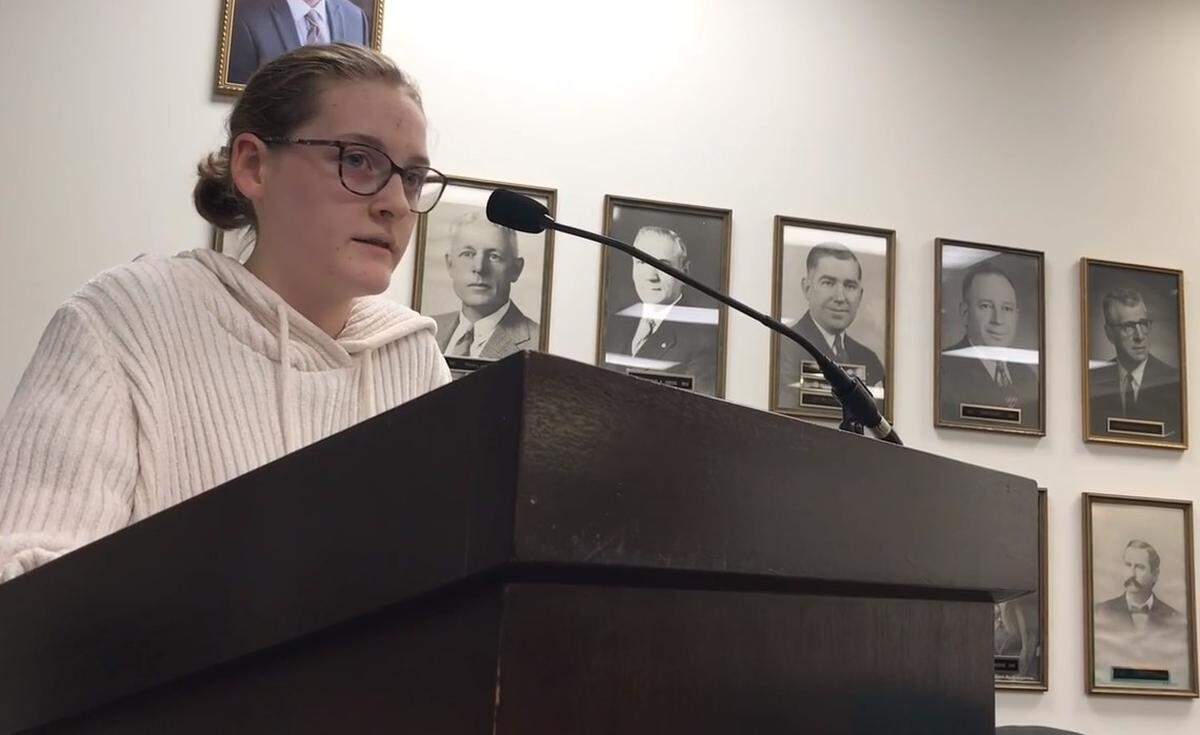
Environmentalists say plastic bags end up in lakes, rivers and oceans, washing up on beaches and killing marine life and animals that ingest or get tangled up in them; and endanger humans because they break into smaller pieces and get ingested through water, food and air.
The plastics industry has long argued that bag fees, taxes and bans hurt consumers and don’t really help the environment.
The science around reusable bags and their potential to spread disease is “contentious,” according to a March 26 report in the New York Times, which focused on the current campaign by bag manufactures to promote single-use bags as safer in a world threatened by germs such as coronavirus.
“Environmental experts stress that single-use plastics can still harbor viruses and bacteria they pick up from their manufacturing, transport, stocking or use,” the report states.
Grose questions the logic of discouraging reusable bags, particularly if shoppers are willing to bag their own groceries. But if stores do ban them temporarily, she suggests carrying unbagged items out to vehicles or pushing them in carts.
The coronavirus pandemic could set back the international movement to reduce the number of single-use bags at a time when it was gaining steam, Grose said.
“When coronavirus is gone, there will still be a plastic-waste problem, and we don’t want to forget that. Hopefully, we can solve it without jeopardizing anyone’s health.”
Pritzker used his daily news briefing on March 28 to encourage changes at grocery stories that could slow the spread of coronavirus.
“To be clear, there’s nothing new that customers need to know for shopping, other than to be vigilant about their social-distancing practices,” he said. “As we’re asking stores to make their requirements as clear as possible, it is up to each individual to follow our social-distancing requirements.”
Here are the recommended changes at grocery stores that Pritzker listed:
- Signs at entrances, informing customers they must stay 6 feet away from each other.
- Continuous announcements of social-distancing rules on public-address systems.
- Floor markers to show people where they should stand in checkout lanes.
- Efforts to encourage cashless purchases to move customers through lines faster.
- Dedicated staff members whose job is to walk the floor and enforce social distancing.
- Shield guards between customers and checkers and baggers.
- Temporary bans on reusable shopping bags.
- Promotion of online ordering and pickup to reduce the number of in-store shoppers.
- Greater use of self-service checkout stations.
Schnucks has instituted the vast majority of these recommendations and also is trying to line up customers in every other checkout lane whenever possible, Simon said Thursday.
“At this time, we are not discouraging the use of reusable bags. But as you know, things surrounding coronavirus are changing very rapidly, and if our policy on bags should change in the future, we will announce it to our customers.”
This story was originally published April 6, 2020 at 5:00 AM.