Coronavirus closed Illinois schools. Here’s how remote learning works in Belleville.
Spring was shaping up to be crazy busy for Taylor Geluck, junior class president at Belleville West High School.
She was planning field trips, prom, a charity basketball game between police and firefighters and a series of environmental projects funded by a Coca-Cola grant. Her math team was headed to the state tournament and her softball team was gearing up for its 2020 season.
Then BOOM! The coronavirus pandemic changed education in a big way all over the country. Governors shut down schools, forcing officials to move classes online and shredding the extracurricular plans of students and staff.
“It really hit me hard, especially at first,” said Taylor, 17, of Millstadt. “It just didn’t seem real. We’ve been working so hard for the past few months on (school activities). I’m used to being go-go-go all the time, really busy, and all of a sudden, everything stopped.”
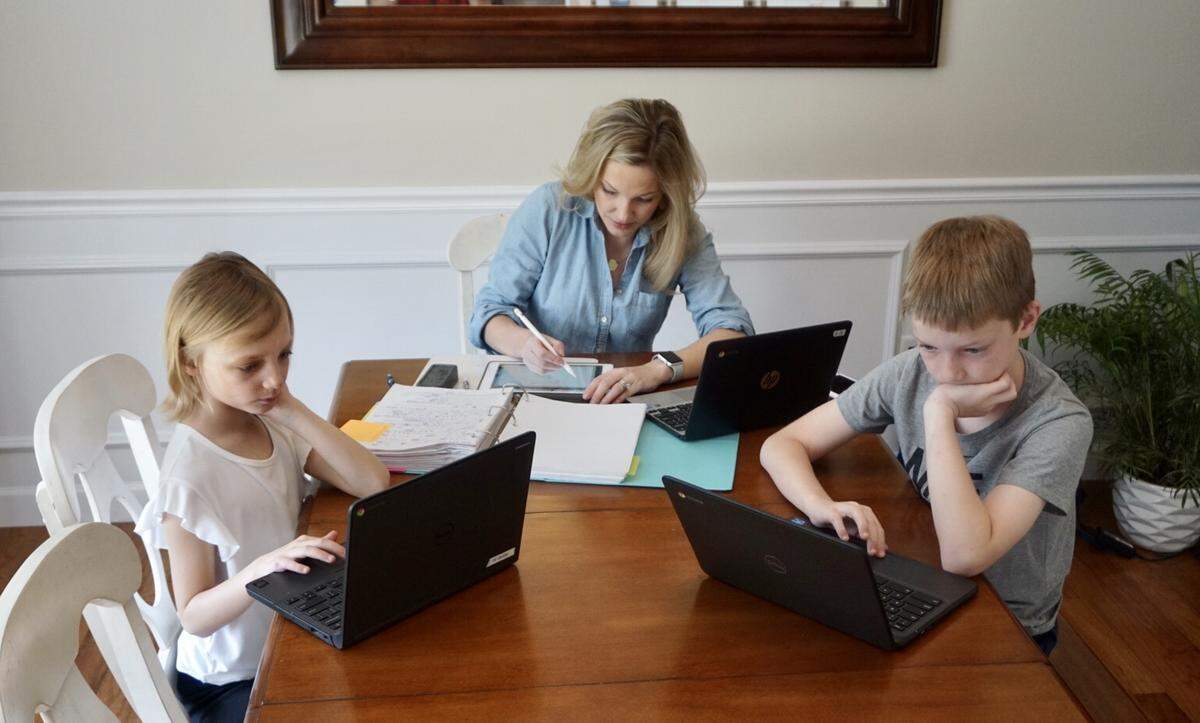
Taylor spends some of her extra time trying to adapt to a completely new academic system. Instead of driving to school and attending classes, she works independently via laptop at home.
Belleville Township High School District 201 has transitioned more than 4,800 students at Belleville East and Belleville West to remote learning, also known as electronic learning, e-learning, online learning, mobile learning or distance learning.
Whatever the term, it means students are separated from teachers and each other. For Belleville high schools, the new reality took effect March 18.
“I’m not going to say it’s been easy,” said District 201 Superintendent Jeff Dosier. “But the attitude of our staff and our students has been really positive, and that give all of us educators some confidence that we can do some good with this.”
Graduation in limbo
Illinois Gov. J.B. Pritzker closed public and private schools throughout the state on March 17. Dosier and other District 201 administrators had anticipated the order and began preparing early, allowing online classes to be launched the following day.
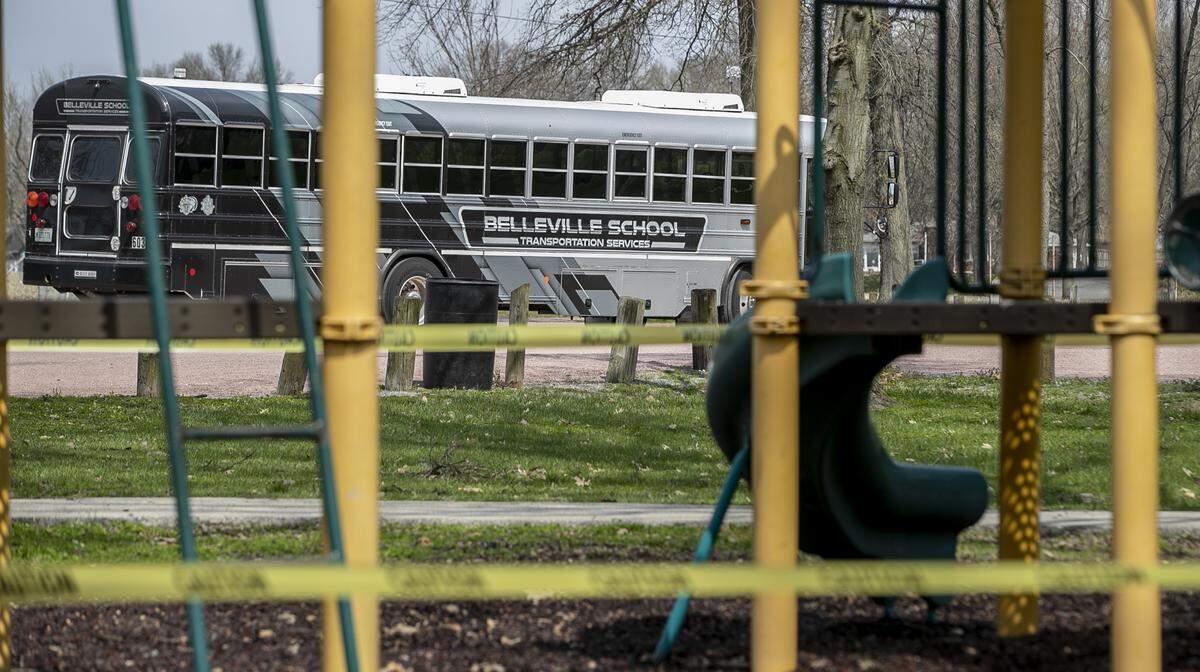
The district loaned out several hundred Chromebook laptops. Most students have Internet access at home, Dosier said. Those who don’t can go to local parks, sit in cars and use Wi-Fi from strategically-placed school buses that park four hours a day.
“Everybody’s kind of pulling together to make it work,” Dosier said.
Belleville East and West proms have been canceled, and graduation ceremonies are in limbo. On March 31, Pritzker extended school closings and a statewide stay-at-home order through the end of April because of coronavirus, which causes the respiratory disease COVID-19.
The Illinois State Board of Education has issued recommendations for remote learning that give school districts wide flexibility in developing systems that meet the needs of their communities, including how much to rely on technology. They encourage creativity and empathy.
The state has temporarily suspended SATs and other standardized testing. School districts must continue providing meals to students enrolled in free-lunch programs.
“A focus on keeping children emotionally and physically safe, fed, and engaged in learning should be our first priority during this unprecedented time,” the recommendations state.
Getting motivated
Many school districts report that remote-learning participation is lower than normal attendance. At Belleville high schools, attendance rates range from 94 to 97 percent in the spring, Dosier said. Remote-learning participation is averaging in the low 70s.
Taylor attributes that in part to state guidelines that prohibit schools from letting at-home performance negatively impact a student’s grades or academic standing. It can only improve them.
“It’s hard to find the motivation to do the work because I already have all As,” Taylor said. “It just seems like busywork. But I feel that I need to do it. I know that if I don’t learn the material, it’s going to hurt me in my science and math classes next year.”
Under District 201’s system, students work at their own paces and follow their own schedules. They “check in” each day by replying to an email by 2 p.m.
Jaylon Muchison, 18, of Swansea, a senior at Belleville West, tries to get up at 7 each morning and start doing homework at 8 a.m. with the goal of finishing by 1 p.m.
“But there’s some people I know, some of my friends, and they may not wake up until 1 o’clock, so they have to work until 7,” he said.
Specified school “engagement hours” are 8:30 a.m. to 1:30 p.m. Monday through Friday, Dosier said.
A necessary part of independent study is deciding where to do it. Some students rotate between beds and couches, porches and basements. Things can get complicated for large families with parents and siblings all sharing the same space.
“It’s obviously not the same as being in a classroom, but it’s making the best out of a difficult situation,” Dosier said.
Technological tools
Belleville high schools are using a variety of software programs, particularly Google Classroom, to help with remote learning. Teachers can post assignments, videotaped lectures and reference materials. Students go online to ask questions, take tests and submit essays.
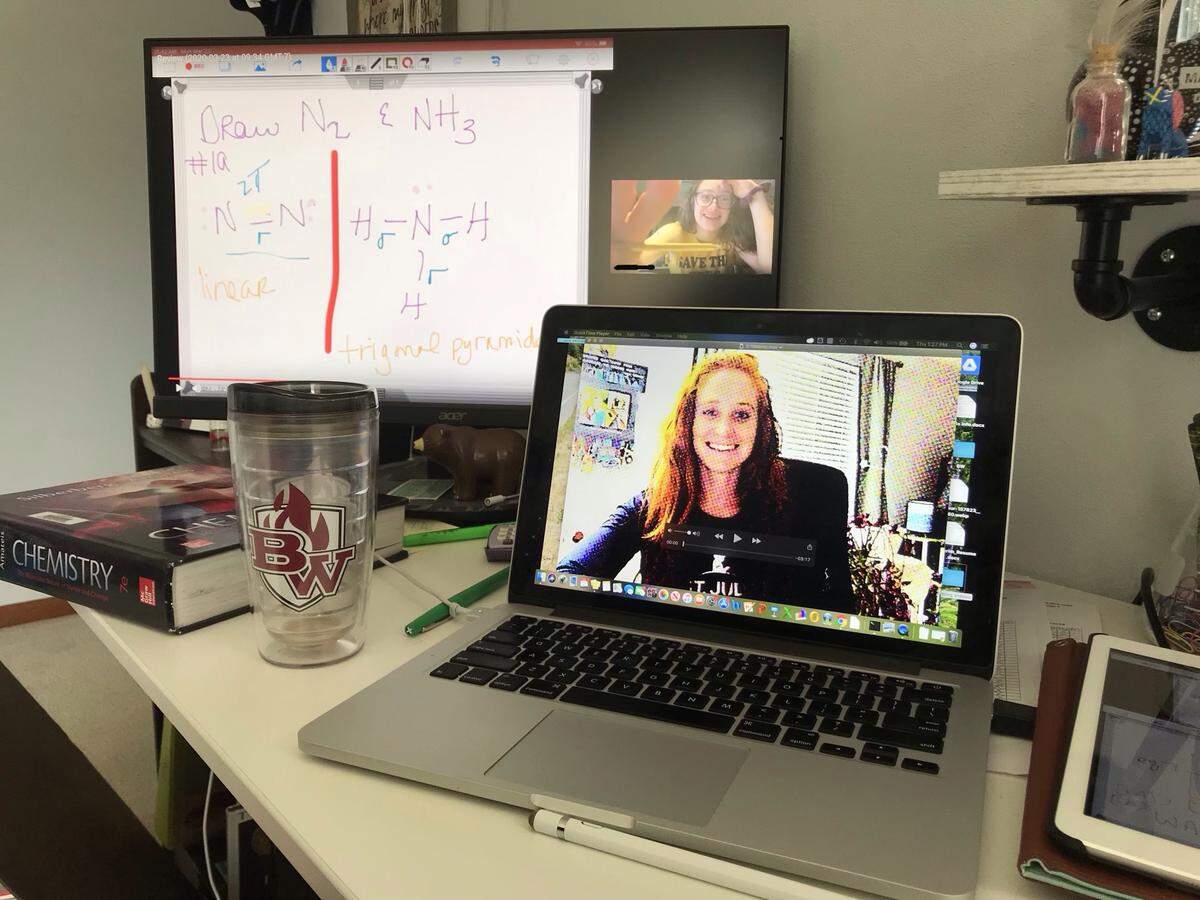
Elisabeth Knierim, a chemistry teacher at Belleville West, also has been sharing YouTube videos from other sources that are 10 minutes or less. She doesn’t want students to spend more than 30 minutes a day on chemistry.
“I understand that they have other classes and responsibilities,” Knierim said. “Some of them are taking care of siblings and helping out around the house, and some of my students are still working. And they’re still adjusting to e-learning. It’s new for everyone.”
Knierim uses the video-conferencing app Google Meet to lead live discussions with the 23 students in her Advanced Placement Chemistry class. But they can watch the recorded version later or skip it altogether. It’s their choice.
Rebecca Schrader, teacher and math department chair at Belleville East, has found the Doceri app to be a good tool for her Pre-calculus and Algebra II Honors classes.
“It looks like I’m writing on a chalkboard or dry-erase board,” she said. “(Students are) hearing me talk and seeing me go through steps in a math problem, just like they do in a classroom.”
Schrader also has made herself available for office hours through Google Meet.
Beyond academics
Knierim has a total of 127 students in five classes, so keeping up with all of them from afar is challenging.
Knierim uses Google Forms to conduct mini-surveys, not only about their academic issues, but also their mental and emotional states. If students seem to be struggling, she reaches out by email or Google Chat to see if they need help.
“I have some kids who love (remote learning),” she said. “But I have some kids who are missing their interactions at school with other kids and teachers.
“My first and main concern is that my students are OK. This is a difficult life experience for them. ... The learning of new chemistry content definitely comes in second to their well-being. I love my kids. They’re fantastic human beings, and I miss them.”
If Schrader doesn’t hear from students for a couple of days, she contacts the school office, and a Belleville East assistant principal tracks them down, calling parents or possibly even stopping by homes to make sure they’re OK.
Knierim and Schrader agree that personal contact with students is better than communicating on the internet. Teachers can engage in casual conversations, asking, “How is your day going?” or “What are your plans for prom?” and pick up on potential problems.
“Technology is fantastic, and we really appreciate it, but there’s always going to be glitches,” Dosier said. “You can’t read an email and look in their eyes to make sure they understand it.”
Silver linings
Belleville students, teachers and administrators have accepted the fact that classes can’t move at their standard speeds or accomplish their normal goals after such an abrupt transition, particularly since families are also dealing with a major health and economic crisis.
But Schrader sees silver linings to the forced experiment.
Students are learning about flexibility and responsibility, she said, and employees are gaining technological skills that might help in the future, when the region is hit by a major winter storm or schools are forced to close for other reasons.
“I think there are a lot of positives that have come out of this,” she said. “The community has been so supportive.”
Switching to a completely new way of studying was initially challenging for Maddi Rodriguez, 16, of Belleville. She said she still misses being able to get questions answered quickly by teachers instead of waiting for emails or scheduled online chats.
But Maddi, a sophomore at Belleville East, has enjoyed spending time at home. She calls remote learning “the new normal.”
Maddi usually does schoolwork in her room. She tries to finish early, freeing up the rest of her day to watch TV shows and old movies, go outside and play catch or visit with friends and fellow softball team members through FaceTime and Snaphat.
“Working at my own pace at home is easier, and I seem to get things done more efficiently,” she said. “A classroom can obviously be distracting, and when I’m alone in my room and it’s quiet, I can stay focused.”
Still hopeful
Belleville high school students have been watching more TV, streaming more movies, playing more video games, spending more time with family and developing new hobbies while stuck at home.
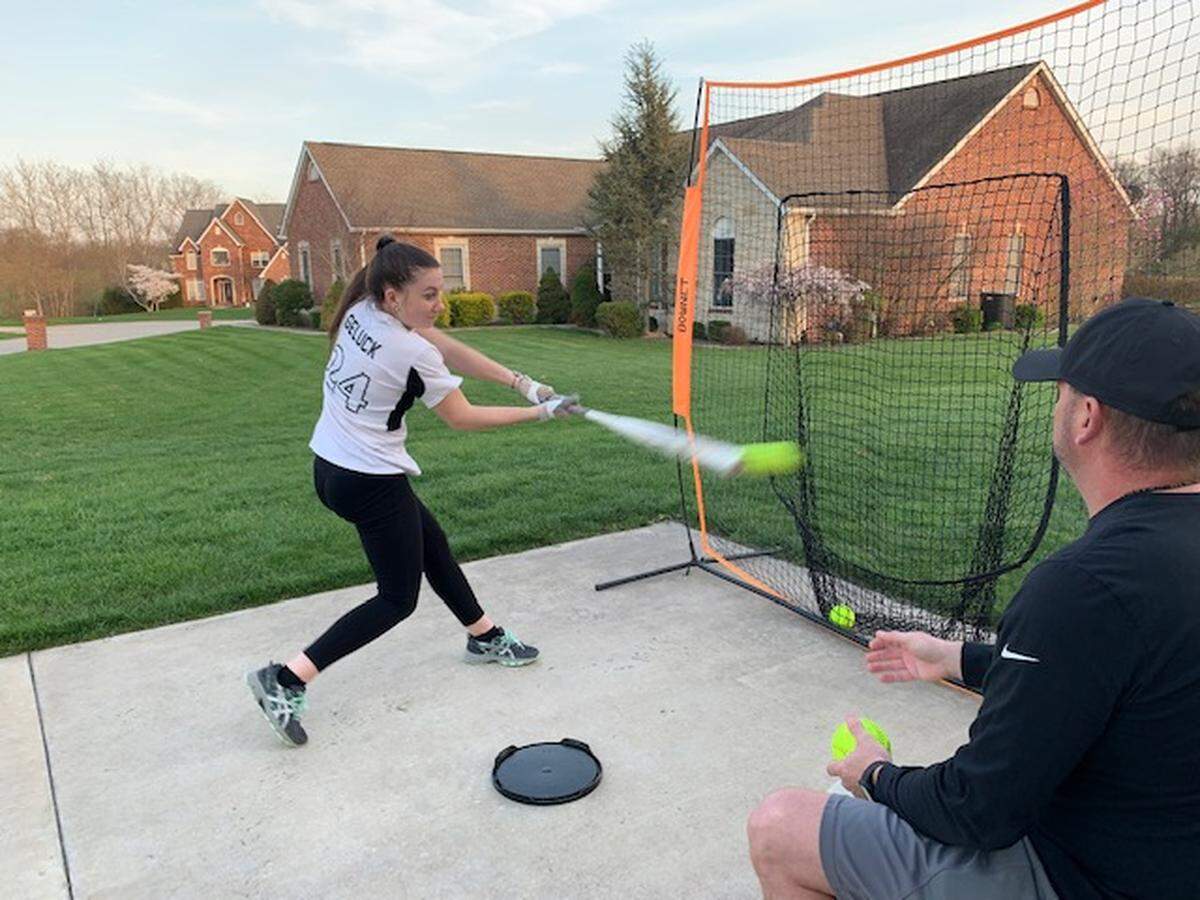
Taylor’s father, Brian Geluck, helps her with softball drills that Belleville West coach Kassandra Schaab posts each day on Google Classroom. Taylor also does yoga and timed 1-mile runs that have become friendly competitions among softball team members.
“Obviously, I’m hopeful for a school season, but in June, I’ll also be starting club softball, and I want to play in college,” Taylor said. “So I don’t want to get out of shape and loose it during this time.”
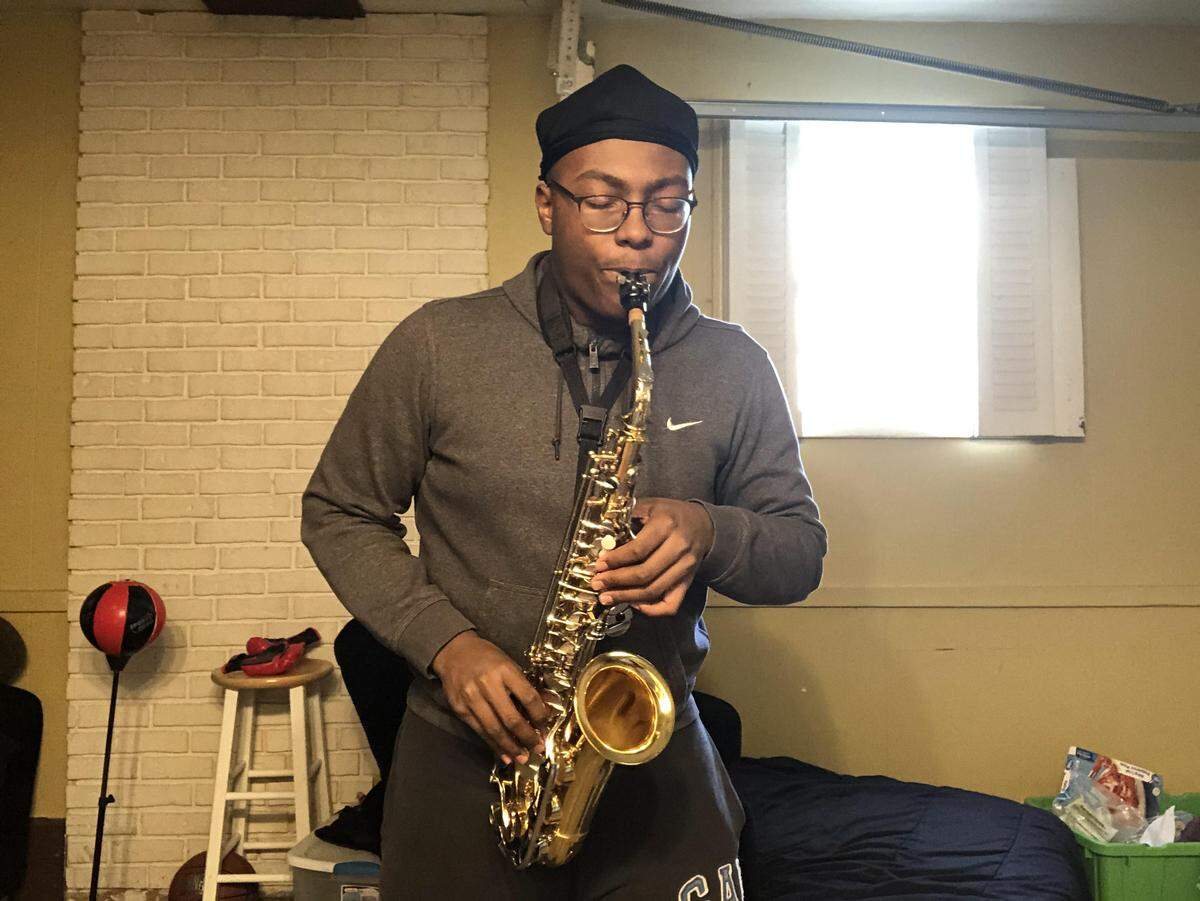
After Muchison finishes his homework, he practices alto sax in his garage. He doesn’t want to get rusty, even though he may never play again with the Belleville West Honors Symphonic Band. He’s a senior set to graduate this spring.
Muchison was involved in many other extracurricular activities at school, including choirs, honor societies, clubs and committees. All have effectively disbanded. A Little Theatre production of “Picasso at the Lapin Agile” was canceled for the third week of March.
Muchison also had been cast in the lead role of “On the Town,” a musical scheduled for late April.
“We’re hoping we can do the shows later, just so we don’t feel like we did all of this work for nothing,” he said. “And it’s not just about the work. We just want to enjoy it and have fun with it.”
This story was originally published April 10, 2020 at 5:00 AM.