Coronavirus Q&A with state director on Centralia facility for people with disabilities
News of a coronavirus outbreak at a Centralia facility for people with developmental disabilities has been upsetting for residents, employees and others in the community.
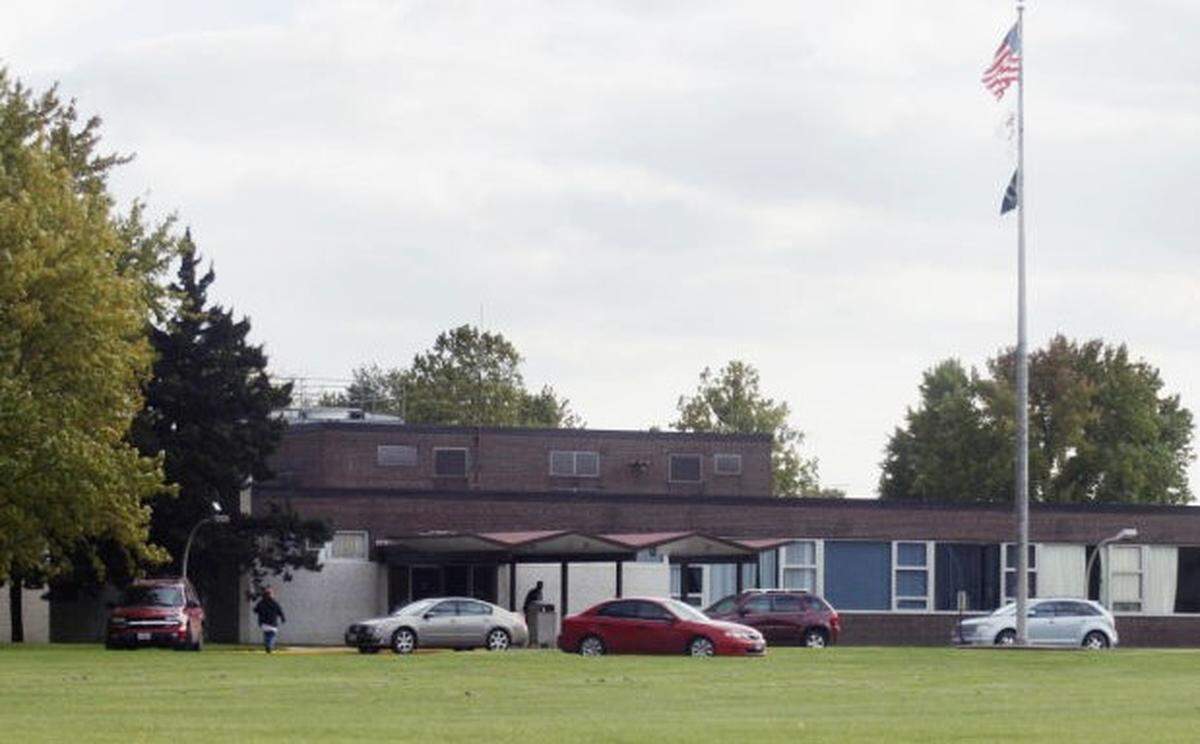
It also has presented logistical challenges and forced hard decisions by the Illinois Department of Human Services, which operates Warren G. Murray Developmental Center, and its on-site administrators, who are responsible for protecting 559 employees and 243 residents with Down Syndrome, cerebral palsy and a wide range of intellectual abilities.
Half the facility’s residents are non-verbal, and about 60% receive psychotropic medications, according to its online Human Services profile. Some have medical conditions that put them at high risk for COVID-19 complications.
On Wednesday, Allison Stark, the department’s director of Division of Developmental Disabilities, agreed to address concerns and answer questions from the Belleville News-Democrat. She oversees Murray and six other state-operated facilities.
“I just think everybody’s doing the best that they can, so I’m happy to share how we’ve been operating during this very challenging time,” Stark said in a phone interview from Chicago. “I’m really proud of the staff.”
On April 8, Murray notified parents and guardians of 23 confirmed coronavirus cases, including 17 residents and six employees. On Tuesday, Human Services reported an increase to 41 cases, but that was later revised for a total of 39 cases, including 23 residents and 16 employees.
On Thursday morning, Human Services spokeswoman Patti Thompson confirmed that three Murray residents had been hospitalized with worsening symptoms.

Who is being tested?
In response to the coronavirus pandemic, Human Services created an infectious control team of doctors and nurses who developed testing guidelines for the seven state-operated facilities that house people with developmental disabilities, Stark said. Murray is the third-largest.
The team determined that tests would be administered to anyone showing possible COVID-19 symptoms and anyone in contact with a known positive case. This week, that was expanded to include asymptomatic employees who want to be tested.
“This is what our infectious control team thinks is a reasonable way because obviously our tests are not unlimited,” Stark said. “... If we tried to test everyone across our state-operated developmental system, we would run out of tests.”
Stark noted that the seven state-operated facilities for people with developmental disabilities have more than 1,600 residents and 3,900 employees.
Some 127 people at Murray have been tested for coronavirus, Stark said. That includes the 23 residents and 16 employees who tested positive and about 70 people who tested negative. The rest are awaiting results.

Where are positive cases?
All 23 residents at Murray who tested positive for coronavirus live in Grape Cottage, one of seven residential buildings on the 120-acre campus. They are quarantined in their rooms with no roommates and leave only to go to the bathroom, Stark said.
All 49 residents of Grape Cottage have been tested. Twenty-six received negative results. Residents of three other cottages who were quarantined last week due to possible symptoms tested negative. One with symptoms at Fir Cottage is still being isolated as a precaution.
The 16 employees at Murray who tested positive all work at Grape Cottage. They were sent home to self-quarantine, Stark said.
Thirteen of the 23 residents who tested positive have had mild symptoms such as fever, cough or runny nose, while seven are asymptomatic. The state can’t provide ages, disabilities, medical conditions or symptoms of the three hospitalized patients because of rules that protect client privacy, according to Thompson.
“Anyone who has symptoms of being ill has been seen by a doctor, just because we have doctors on staff in our state-operated developmental centers,” Stark said.
How are meals served?
Each cottage at Murray has four residential units, a main dining room, kitchen, nurse’s station, day area and laundry. Meals for all Grape Cottage residents are being prepared in its kitchen and delivered to rooms, Stark said.
Residents of the other six cottages are eating in their own units or being divided into smaller-than-normal groups and eating in dining rooms, between disinfections, Thompson said. All cottages are using disposable plates and utensils.
Local 401 of the American Federation of State, County and Municipal Employees, the union that represents Murray employees, suggested last week that meals be prepared in a central location so dietary staff wouldn’t have to work in Grape College.
That path was rejected because it could risk violation of public health standards that require food to be kept at a certain temperature, Stark said.
“I think it’s very important to remember that, with any of these kinds of viral infections, we’re trying to really keep staff associated with a specific cottage and reduce the amount as much as we can of cross-pollination between the different cottages.”
What else has changed?
All state-operated facilities for people with developmental disabilities have implemented Illinois Department of Public Health guidelines for long-term care centers during the coronavirus pandemic, Stark said. That means regular temperature checks, employee health screenings and no visitors.
The full list of guidelines can be viewed on the Public Health website.
Some people have asked why Murray residents who tested negative for COVID-19 are living in the same building as those who tested positive, instead of being moved.
The facility made that decision in consultation with the Illinois Department of Public Health, Stark said. Officials believe the two groups can be adequately separated and that moving residents would disrupt their routines and cause logistical problems.
“As soon as you start moving people into different environments, it’s just very hard to maintain the tracing and tracking of individuals, so we were encouraged very early on to make sure that individuals could be supported in isolation in their own rooms,” Stark said.

How are people holding up?
It’s been difficult for some of the 23 residents at Murray who tested positive for coronavirus to stay isolated in their rooms around the clock and for employees to keep them occupied, Stark said. They watch TV, play games and do other activities.
“But it depends on whether they’re symptomatic or asymptomatic,” Stark said. “Obviously, if someone is not feeling very well, they might be more inclined to be sleeping.”
Obtaining adequate supplies of personal protective equipment has been challenging for all Illinois agencies, Stark said, but Murray now has enough PPE for Grape Cottage employees to wear KN95 masks, face shields, gowns and gloves. Employees in other cottages are wearing masks and face shields or goggles.
Stark praised employees at Murray and other facilities for “showing their true colors” and continuing to report to work each day, despite the fact some residents are ill and some of their co-workers have tested positive for coronavirus.
“I think everybody is just really doing their best and really trying to get up each day and support the (residents) and have a positive outlook and hope that this can resolve with as little lasting impact as possible,” she said.

This story was originally published April 17, 2020 at 1:22 PM.