One of ‘the most racist places’ in Illinois sees its first Black Lives Matter protest
For the last seven years, at the end of his workday at the state psychiatric hospital, Kevin Jackson has left this nearly all-white town of 4,200 and headed straight home to Carbondale, 20 miles to the north.
It never felt safe for a black man in Anna, he said. But for the first time Thursday evening, he walked down Main Street.
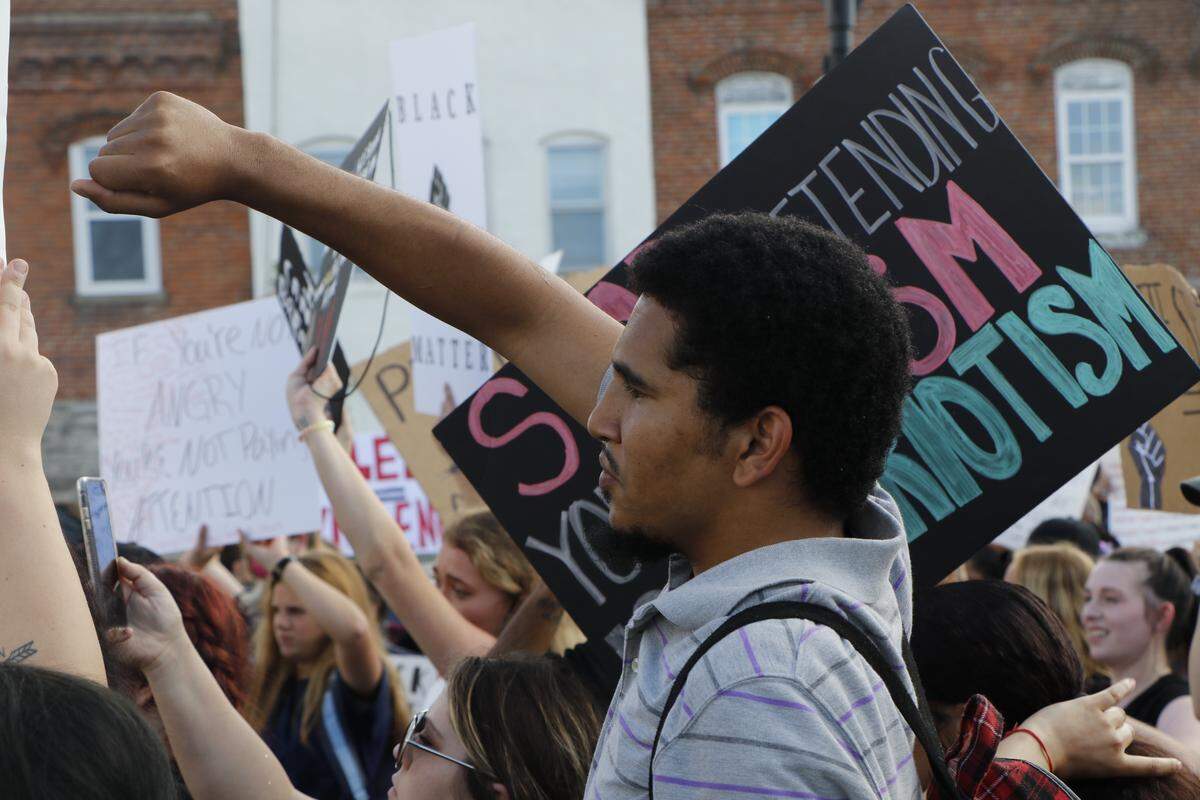
He was one of about 150 Black Lives Matter demonstrators who marched through the tiny downtown to protest the death of George Floyd in Minneapolis. It was most likely the first such event in the town’s history.
“I probably wouldn’t do it again without my white brothers and sisters,” said Jackson, 38. “Having people who look like those who disdain us makes this legit.”
Anna isn’t just another mostly white town. It has a particular history as a “sundown town,” where blacks weren’t welcome after dark. The bleak legacy includes white mobs that drove out black families in 1909 after the lynching of William “Froggie” James in Cairo, 35 miles to the south. He was accused in the killing of the Anna stationmaster’s daughter, coincidentally named Anna Pelley.
While the town was actually named for the wife of its 19th-century founder, blacks know that for some, A-N-N-A stands for: “Ain’t No [N-word] Allowed.”
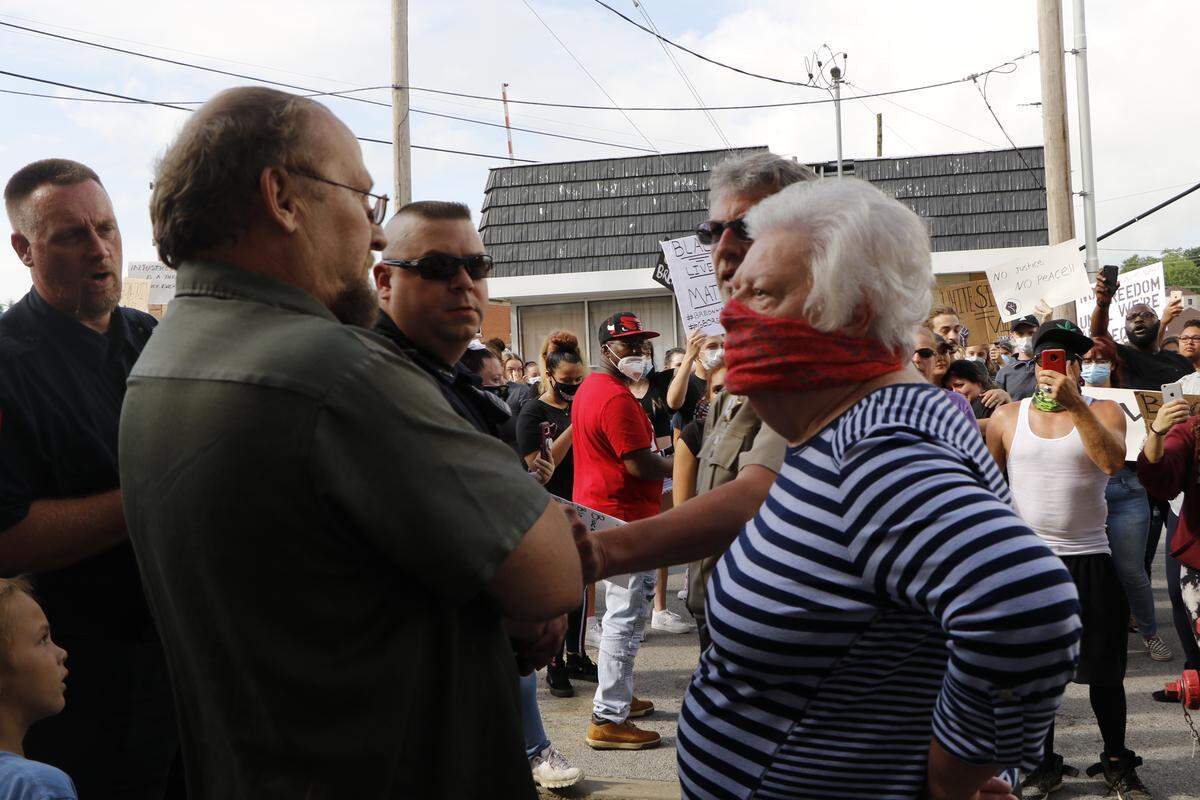
The old acronym hung heavy in the atmosphere Thursday. Small groups of unfriendly residents, lining the streets along with the mostly neutral onlookers, leered at the marchers. It led to tense standoffs, defused by police.
One white resident, Jeff Barnes, 51, was restrained by officers as he moved toward the protesters. He declared that there was no racism in Anna.
“None of that goes on here,” Barnes said.
But grieving the death of George Floyd was also a way of drawing those older ghosts into the daylight, said the protest’s organizer, Jessica Moore.
“We’re just trying to get the word out that obviously racism still exists. There are people who think it doesn’t, but it is definitely still here,” said Moore, 25 who is half black, half white. “Maybe (the protest) will inspire the racist people to realize that we are not one-sided anymore. We are together. Join us or be miserable and be mad about seeing us all together.”
An ugly legacy
Sundown towns were one of the ugliest aspects of the Jim Crow era. Residents and law enforcement used local rules, intimidation and violence to keep blacks out of their communities.
Hundreds of towns and even entire counties operated under sundown rules from the early 20th century through the 1960s, when the Fair Housing Act became law.
Black families in southern Illinois lived in Cobden or Ullin instead, where they weren’t as discriminated against. They even lived in Anna until the 1909 Cairo lynching.
“For Anna to kick black people out was against their 40 or 50 year history,” said Jane Adams, a historian of Union County, where Anna is the largest town.
But the harm was permanent, and eventually the acronym took hold.
“The acronym dies tonight,” Ryan Horton, a 37-year-old white man from Anna, screamed as he marched past a repair shop where a group of counter-protesters looked on silently.
Despite the acronym, many residents believe racism is dead in Anna and should remain buried. Digging up memories of prejudice among the older generation could “turn people racist,” said Lisa Lowe, 52, who closed up her floral shop, Enchanted Garden, well before the protest Thursday afternoon.
“When they’re coming out at us, I’m feeling like maybe they’re prejudiced against us,” said Lowe, who is white. “I wish that people would just get over all of this and get along and love each other.”
But Moore said that’s not the reality.
“My whole life growing up I had to pretend that I wasn’t black,” Moore said. “I had to pretend that my culture was irrelevant because every time I tried to speak on my culture besides my white side, I got talked shit about. I got called the n-word. I made myself forget who I was because of the people around me. They made me feel like I had to be a certain way to fit in.”
Lowe’s daughter, Darci Morrison, 21, said she believes Anna still suffers from a racist undercurrent. She faced it when she dated a boy who was black. He always felt “uneasy” coming to see her in Anna, she said.
“It’s still here,” said Morrison, who is white. “They won’t say it to your face, but you see it.”
The undercurrent has to be challenged, said Amanda Goodman, 22, of Anna, who helped organize the protest.
“You’ve gotta do it in the most racist places,” said Goodman, who is white. “And obviously, this is one of the most racist places in southern lllinois.”
Police protection
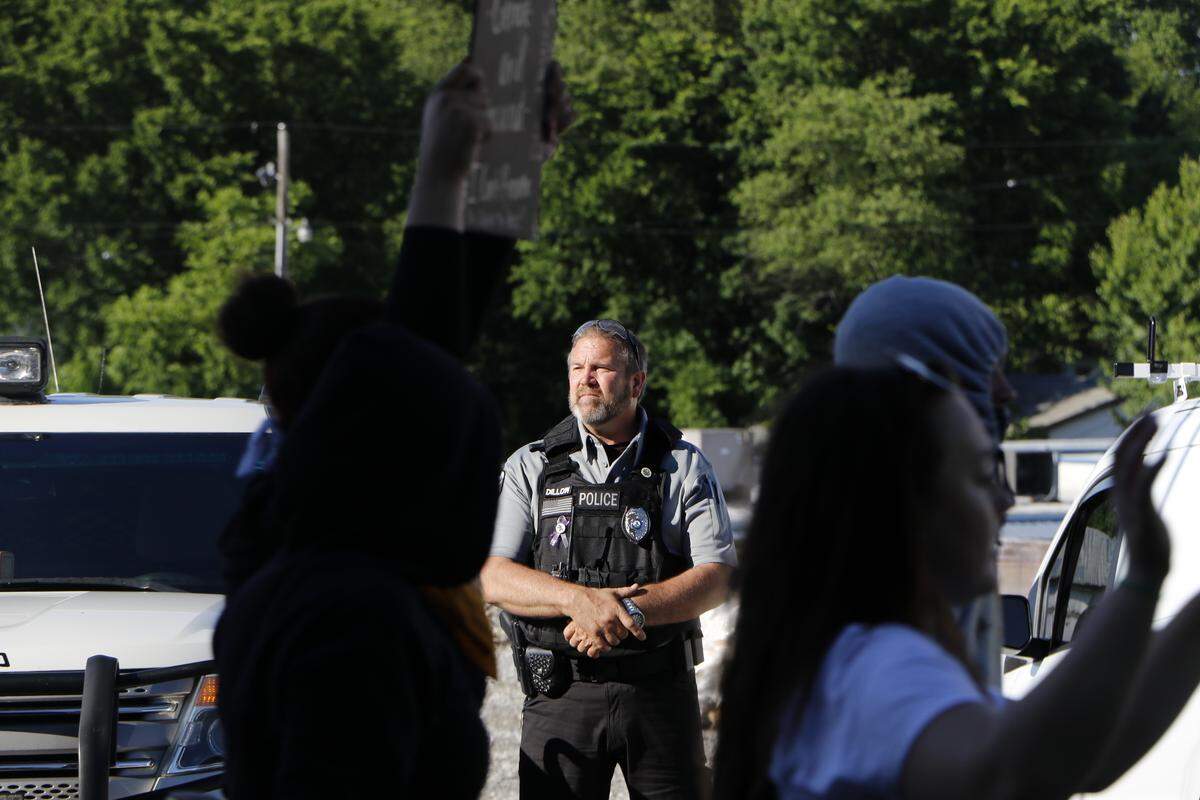
Even when marchers deviated from the designated route, police blocked off roads for them. They deescalated tense situations between protesters and hostile onlookers.
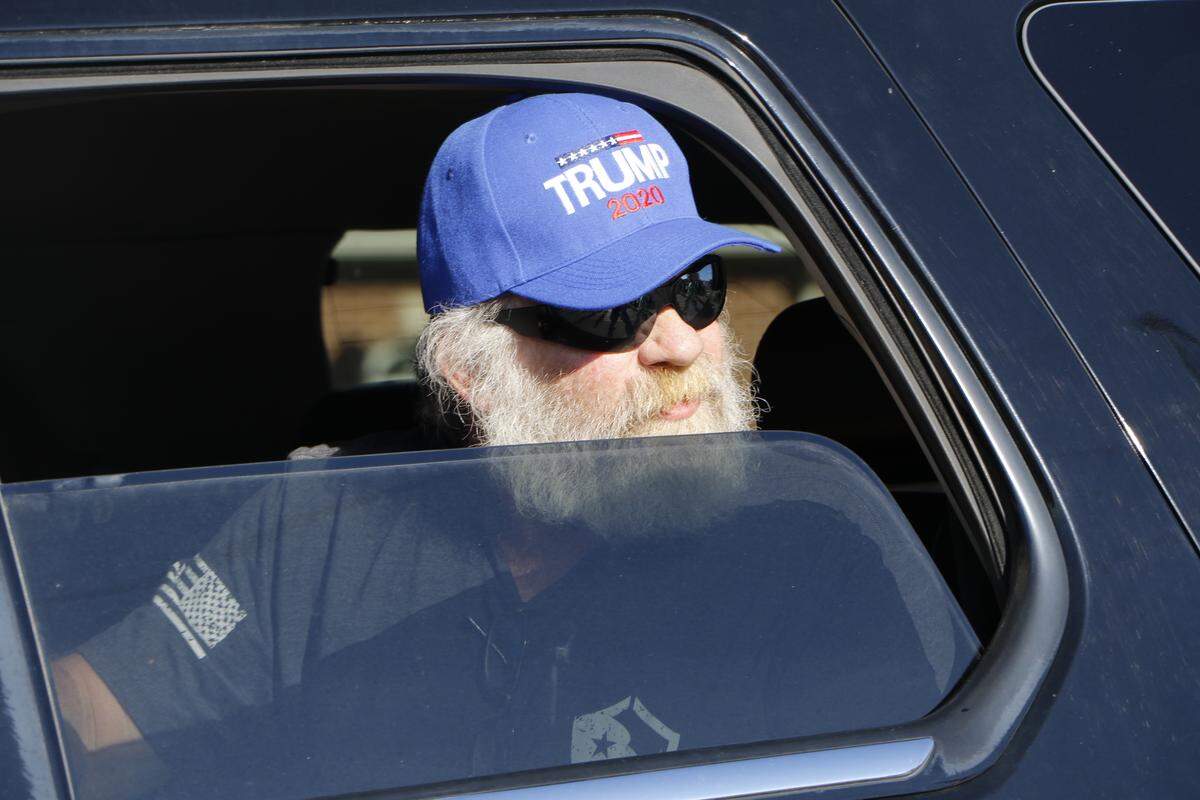
“It’s racists like you who give this town its image,” Horton, the Anna man, yelled at a small group of men wearing “Make America Great Again” t-shirts and hats.
Moore said she received dozens of threats from people who said they’d bring out their guns and shoot protesters.
But police were helpful and protective from the beginning, she said. Chief Bryan Watkins talked with Moore throughout the protest, making sure she was hydrated and safe.
“Shout-out to Chief Watkins. He looked me dead in the face and respected me,” Moore said. “I respect him so much. He said, ‘We’re here to protect you.’ I appreciate that, especially from Anna police, of all people.”
Lowe, the florist, said she was afraid her building would “go up in smoke” because of the protests. A rumor on social media had protesters wanting to loot the local Walmart. But Moore said the protesters were never interested in looting or damaging anything.
“I’m not out here to destroy Walmart. I need Walmart,” Moore said. “I live in Ullin. Anna is the closest place for me to go to a Walmart.”
Alleigh Curtis, 17, a white girl who runs the front desk at the barbershop in downtown Anna, said she hopes her hometown’s reputation will slip away.
“I feel like we have a reputation that we don’t exactly deserve so hopefully this will help people realize we’re not what people say we are,” Curtis said. “Hopefully this will open people’s eyes up to how many people care, that we support what they believe in.”
Moore said despite the threats, despite people asking her to back down, she’s glad she took the risk of holding the protest.
“(George Floyd) gave us the courage to take this on.”
This story was originally published June 5, 2020 at 7:52 AM.