Horse racing returns to Collinsville track, but no fans will be in the stands
Fairmount Park had “spectator-free” horse racing for one day, March 17, before closing down for nearly three months due to the coronavirus pandemic.
“It was a little eerie not to hear the roar of the crowd,” Jim Watkins said Monday, speaking as a horse owner and trainer and president of the Illinois Horsemen’s Benevolent and Protective Association.
But silence in the stands will be a new normal at the Collinsville track, which is reopening Tuesday with no spectators, in accordance with Phase 3 of the Restore Illinois plan to restart the economy.
Post time is 4:30 p.m. TV cameras and other media are being asked to stay outside the gate in a mostly empty parking lot.
“Only authorized personnel, including jockeys, trainers and others directly involved in the races and care of the horses will be allowed on the premises,” said Jon Sloane, track spokesman.
The public can watch Fairmount Park races online through TVG, a company that livestreams horse racing across the country and allows account holders to place bets. Or people can use other “advance-deposit wagering” platforms to put money down on their favorite horses.
The track, horsemen and state earn more in commissions when bets are placed on-site, but off-site betting has been part of Illinois horse racing since 2010, said Domenic DiCera, executive director of the Illinois Racing Board.
“We’re looking forward to getting the show on the road again, and we hope people will tune in and play,” Sloane said.
Blow to horse-racing industry
Illinois Gov. J.B. Pritzker issued an executive order on March 16 that prohibited gatherings of 50 or more people, beginning March 18, to slow the spread of the coronavirus, which causes the respiratory disease COVID-19.
It was a blow to the struggling Illinois horse-racing industry, which was counting on relief from a new gambling-expansion law that went into effect last year. The law paved the way for tracks to operate casinos with table games, roulette, slots, video gaming and sports betting.
“Part of it was to require racetracks that were (expanding) to run more days so we could have more product and employ more people,” Sloane said.
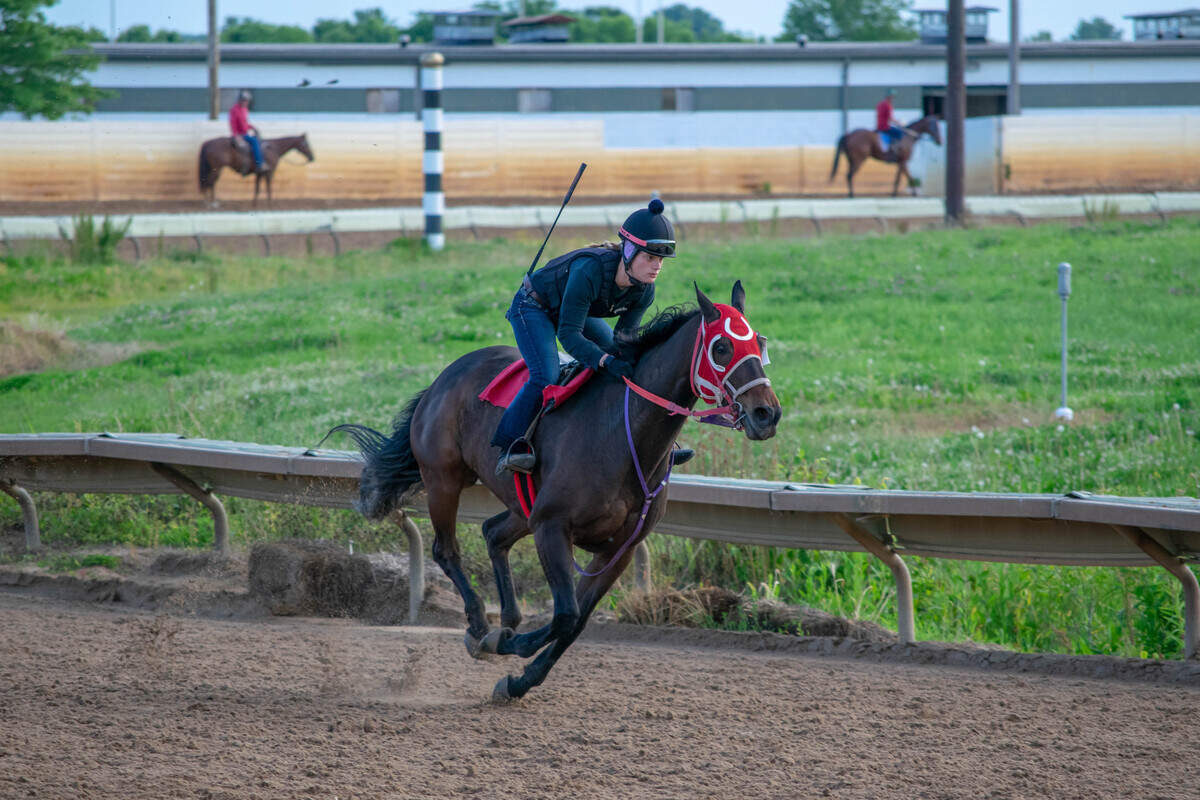
Fairmount Park scheduled 60 days of racing this year, compared to only 40 days last year.
“People invested in more horses because we were going to go up to 60 days, and they kept horses over the off-season that they probably wouldn’t have kept,” Watkins said, noting these moves created additional costs for food and other care.
The track’s regular season started March 3 but ended after 15 days because of the coronavirus shutdown.
“I always tell people, ‘We work 365 days a year, but we only have a chance to earn money to sustain our businesses 60 days a year,’” said Watkins, 56, of Collinsville, a former history teacher. “We have to make the most of it, so (during a shutdown), each day’s loss is greatly magnified.”
Fairmount Park and Hawthorne Racecourse in Cicero, two of the state’s three remaining horse-racing tracks, have applied for casino licenses, according to the Illinois Gaming Board. It’s unclear how the shutdown will affect the process.
Earlier this year, Fairmount Park was making tentative plans to build a $50 million casino.
“We were expecting revenue from the casino in 2021 and that money may not be there until 2022,” Watkins said. “(The coronavirus) could push back when construction on the casino begins and the revenue begins to flow.”
Other changes at the track
Fairmount Park has established a schedule that includes racing at 4:30 p.m. Mondays and Tuesdays through Sept. 7.
Up to 1,000 people work at the track during regular seasons. About half are direct employees such as cashiers, maintenance workers, servers, bartenders and security guards, and half are horse owners, trainers, jockeys, grooms and exercisers.
Only a fraction in the former category are now on the job.
“We’re actually being very careful, practicing social distancing, wearing masks,” Sloane said. “They’re taking temperatures of people (at the door).”
More than 100 people involved in the care of horses live in dormitories on the property’s “backstretch,” along with about 600 horses.
Representatives of the Racing Industry Charitable Foundation, which helps to make sure resident horsemen receive proper medical care, went door-to-door to educate them about COVID-19 and precautions to keep it from spreading.
Watkins noted that veterinarians, farmers, blacksmiths and others in the metro-east also are affected when Fairmount Park is closed.
“We’re glad to be back to work,” he said. “We’ll certainly miss the roar of the crowd, the spectators, but we’re glad to have the horses back doing what they love to do and have the potential of making some money to sustain our businesses.”
This story was originally published June 9, 2020 at 5:00 AM.