
Here’s the inside story on how ESPN’s 30-for-30 ‘Long Gone Summer’ came together
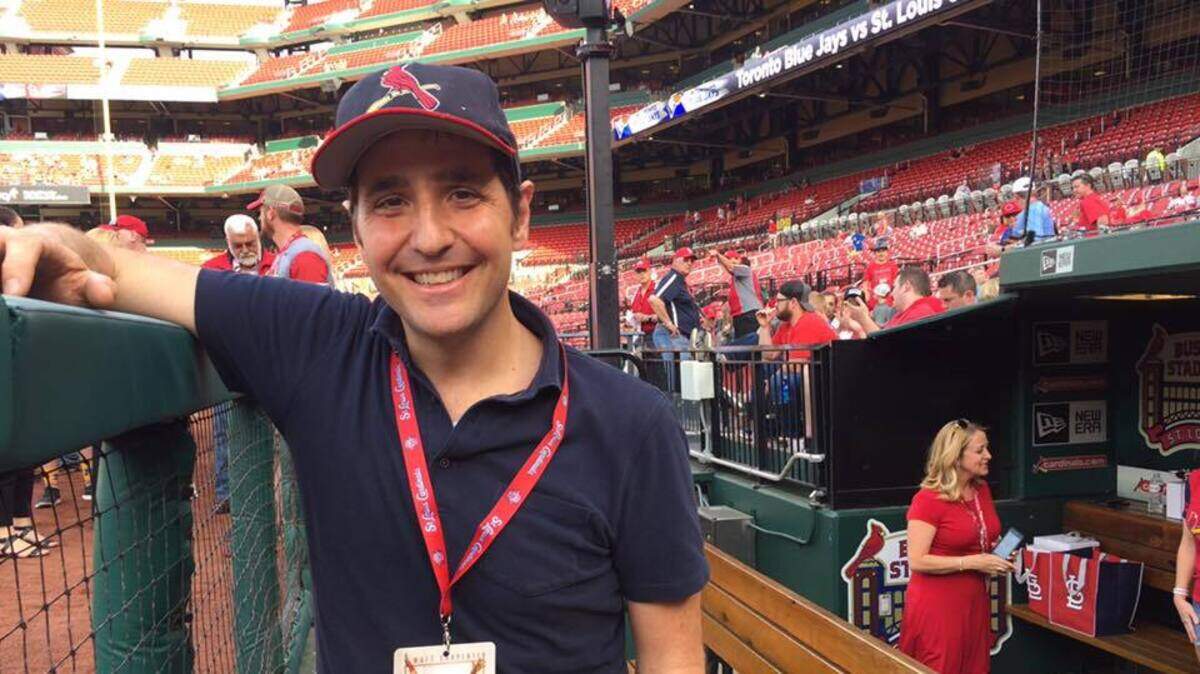
Growing up as a St. Louis Cardinals fan, Edwardsville native and award-winning veteran documentary filmmaker A.J. Schnack’s latest project, “Long Gone Summer,” about the home-run record chase during the summer of 1998, couldn’t have been more fulfilling.
“Cardinals baseball was a big part of my childhood. I remember my dad would say, ‘Let’s go for a drive,’ and we’d drive around the cornfields of Edwardsville, listening to Jack Buck and Mike Shannon on the radio,” he said.
The documentary on the Big Mac-Slammin’ Sammy mania will air at 8 p.m. Sunday, June 14, on ESPN as part of its “30 for 30” series. The documentary will be available on ESPN Plus after Sunday.
The film takes people right back to the moments 22 years ago, a time-capsule of one of the most memorable seasons in the history of baseball when the St. Louis Cardinals’ Mark McGwire and the Cubs’ Sammy Sosa chased Roger Maris’ single-season home-run record of 61, which he set in 1961, breaking Babe Ruth’s longstanding record of 60 in 1927. The timing was right — it was four years after the 1994 strike, bringing fans back to the game with a lot of excitement and drama.
Later, those feelings would be tarnished with the steroid-use revelations, and the film addresses the aftermath. The Congressional hearings took place in 2005, when the House Government Reform Committee looked into the allegations of steroid use in Major League Baseball and the adequacy of the league’s response.
McGwire would admit to steroid use in 2010, claiming it was for injuries and that he would have still hit the home runs. It was around the time he was hired as a hitting coach with the Cardinals. Sosa has always denied it.
Schnack’s objective was to bring every facet back, recalling the mood of the country and why it was such a big deal — a snapshot of a time and place.
“I hope people will take it all in, remember what it was like that summer. And now it’s cloudy because of the steroid era, but I wanted to make it clear how everyone felt that summer and all the emotions we had,” he said. “We unpack a little of the controversy, what we now know, and what we learned from that season. Fan arguments on 1998 will go on forever. I wanted the film to speak for itself.”
Schnack describes the story as not just a baseball one, but a cultural one for the whole country.
“It was the central storyline of the summer,” he said.
Schnack, 51, was putting the finishing touches — including color mixing, sound – on the film earlier this week while he was doing a round of press interviews from Los Angeles, where he now lives and works. In all, the film took three years to make.
It was selected for the Tribeca Film Festival in New York, but the 19th annual festival, originally scheduled for April 15-26 was canceled because of the COVID-19 pandemic. ESPN will be the world broadcast premiere.
“ESPN and I had been talking about doing a project together, and this topic was at the top of my list. Was there a reason why they hadn’t done it before? We started talking about how to make it happen. They believed in my vision, the story I wanted to tell,” Schnack said.
McGwire and Sosa hop on board for documentary
After hearing about what Schnack had in mind, both McGwire and Sosa signed on to the project. Ken Griffey Jr. is not involved, although he is included in the coverage.
“They had never talked about it (later years). In the research I did, I didn’t see anything in several stories published before,” he said.
He was able to get the sluggers comfortable about opening up, and their segments are intimate and revealing.
“They’re sharing some part of themselves, in the context of that season and baseball, with a little clarity,” Schnack said.
Schnack, a graduate of the University of Missouri School of Journalism, has meticulously detailed the season from the perspective of more than 40 first-hand witnesses. St. Louis Manager Tony LaRussa, broadcasters Mike Shannon, Joe Buck, Chip Caray, George Will, Bob Costas, Mike Bush, other sports media, Cubs and Cards players, Cubs and Cardinals staff, and McGwire’s son, Matt, now 33, are among those interviewed.
Trust from the two power hitters
Tim Forneris, the groundskeeper from Collinsville who returned McGwire’s record-breaking home run ball to him in an on-field ceremony, was the first person he interviewed, Schnack said. He included clips of Forneris’ appearance on the Late Show with David Letterman
Schnack gained access to many subjects not only because of his approach, but that the two main guys — McGwire and Sosa — said yes, which indicated they trusted him.
“We started making calls. It was important for some of them to know Mark and Sammy were involved,” he said.
On film, KSDK’s Mike Bush says people were desperate for a feel-good story that year.
After McGwire was traded to the Cardinals in July 1997, he wound up hitting a total of 58 home runs (American League included), so there was a great deal of buzz about him breaking Roger Maris’s 37-year-old record.
Sosa wasn’t considered a factor, but Griffey was. In 1997, Junior had hit 56, the most in the American League since Maris, but didn’t surpass it in 1998. After the All-Star break, he only had two in 28 games.
‘People forget how insane it got’
When interviewing comic book artist Todd McFarlane, who paid about $3 million for McGwire’s 70th home run ball that season, Schnack told his producer McFarlane had to be the beginning of the film.
“I think people forget how insane it got. It was so big, and so, definitely, someone paying millions of dollars for a baseball had to be included,” Scnack said.
If you are a St. Louis Cardinals fan, you know exactly where you were Sept. 8, 1998, when McGwire broke the single-season home run record with No. 62.
Schnack does.
“Of course. I was here in L.A. with my production company. There was a room where we could watch TV. Four, five of us were together, cheering very loudly,” he said.
It was the Tuesday night after Labor Day when McGwire had tied Roger Maris’s record of 61. The ball went yard in the fourth inning of a nationally televised broadcast against the Cubs, barely clearing Busch Stadium’s left-field wall.
The home run calls and the moment 62 left the yard
Shannon, who had been in the booth for 27 years and best friends and teammate with Maris in 1967 and 1968, made the call on KMOX Radio: “A shot into the corner! It might make it! There it is — 62, folks! And we have a new home run champion — a new Sultan of Swat!”
Joe Buck, then 29, was working the broadcast booth for Fox: “Down the left-field line, is it enough? Gone! There it is, 62. Touch first, Mark, you are the new single-season home run king.”
McGwire hugged first base coach Dave McKay, but needed to go back and touch the bag. He picked up his 12-year-old son, Matt. Sosa came over from the outfield. The Maris family was present. Forneris scooped up the ball. Jack Buck burst into tears.
It was an unforgettable moment for Cardinal Nation, and a magical moment for the sport. Until it wasn’t.
“In retrospect, there was a price to pay for it,” broadcaster Bob Costas says in the film.
Capturing traditions, providing fair coverage despite Cardinals fandom
Using a mix of MLB archives, game broadcasts and contemporary footage of Chicago and St. Louis, including his beloved hometown, Schnack captures the sense of traditions, rituals and generational and community bonding connected with baseball, the great American pastime: Neighborhood kids playing ball, not unlike A.J. did as a little leaguer; the organist striking familiar chords, the sea of red at the old Busch Stadium, the lore of Wrigley Field.
“It was really fun to shoot a couple of days in Edwardsville,” he said.
The famous Cards vs. Cubs rivalry aside, Schnack is fair in his coverage. McGwire ended the season with 70 home runs, Sosa 66, but the Cubs also went into the playoffs after nabbing the Wild Card while the Cardinals stayed home.
The movie ends with McGwire’s induction into the St. Louis Cardinals Hall of Fame in 2017, telling the crowd in Ballpark Village playing for the Cardinals was the best 4 1/2 years of his life.
Neither Sosa nor McGwire are expected to be voted into the Baseball Hall of Fame because of the performance-enhancing drugs scandal.
Sammy ‘surprise’ from the documentary
Was there anything in the filmmaking that surprised him? Schnack said he had forgotten that Sosa had surged ahead of McGwire that August.
“I remember they were tied many times, but I had forgotten that Sammy went ahead, but then McGwire caught up,” he said.
While cutting the film, Schnack said he was struck by the different perspectives when Maris was on pace for the record compared to the summer of 1998.
“I felt we were doing our job to tell that story, too, of all of them,” he said.
Schnack said, as a filmmaker, he likes to be as hands-on as possible, and his skills include writing, editing and cinematography. He applauded the “Long Gone Summer” team.
“I had a great crew,” he said.
Working with Jeff Tweedy of Wilco
Another plus for Schnack was that he was able to work with Wilco front man and renowned musician Jeff Tweedy on the score, which Schnack described as one of the best he has ever heard for a nonfiction film. Fellow Cardinals fan Tweedy, a Belleville native now living in Chicago, composed and recorded the music with his son Spencer, a drummer.
Schnack said he did not know Tweedy personally but talked to ESPN about asking him to do the music, figuring that growing up here, he would have experienced Cardinals baseball.
“He wanted to be a part of it. I was excited. It was a thrill to wake up on my birthday to get 20 tracks in my email, and getting to edit it the last three months has been great,” he said.
With his broadcast journalism background, Schnack’s news sense dictated how he would tell this story. He not only inherited his dad’s love of the game, but his appreciation for the news as well.
“My dad loved the news. He watched the news every evening. He and I would watch ‘Nightline’ together every night,” he said.
“As a storyteller and a filmmaker, I try to convey the experience I’m having,” he said.
Want to watch?
- “Long Gone Summer” produced by Edwardsville native A.J. Schnack
- The documentary chronicles the home-run record chase between the St. Louis Cardinals’ Mark McGwire and Chicago Cubs’ Sammy Sosa
- 8 p.m. Sunday, June 14
- ESPN
Keep up with Schnack’s on his Twitter, https://twitter.com/ajschnack, and website, https://www.bonfirefilmsofamerica.com.