Some say this herbal remedy eases pain, but 4 southwest Illinois cities have banned it
Some people swear by kratom as an herbal remedy, and it’s legal for use by adults in Illinois.
But a state representative has tried to ban it, and three metro-east cities and a village have prohibited its possession, use and sale due to safety concerns. Most recently, Edwardsville City Council passed an ordinance in March on the recommendation of Police Chief Jay Keeven.
“We were presented with quite a bit of health-related data, and members of the community spoke out against it because of its potentially harmful side effects,” Ward 1 Alderman S.J. Morrison said last week. “There’s just not a lot known about it.”
People who violate the ordinance are subject to a $750 fine. Kratom already had been prohibited in Jerseyville, Alton and Glen Carbon.
Kratom is a centuries-old traditional medicine derived from the leaves of the mitragyna speciosa, a tropical tree in the coffee family that’s native to Southeast Asia. Because of its psychoactive effects, different strains are used to treat pain, anxiety, stress and fatigue. It’s also been billed as a way to help addicts with opioid withdrawal.
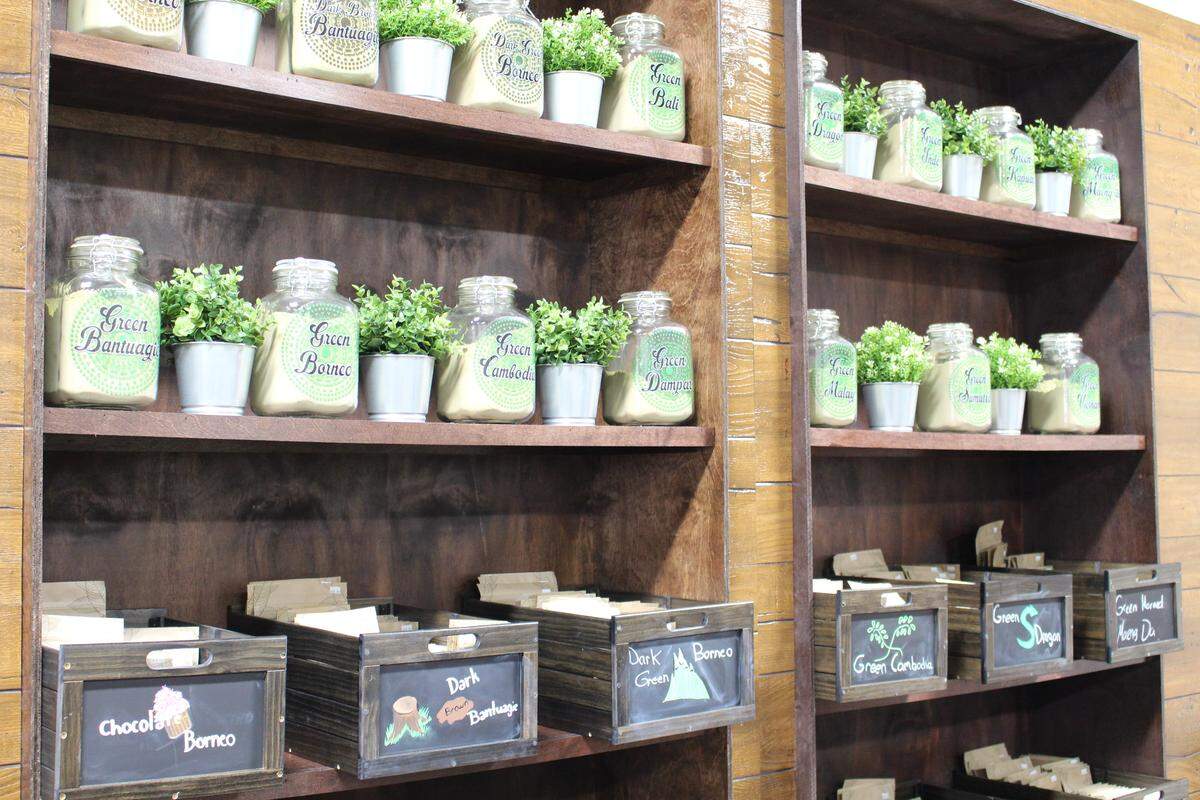
Kratom is mostly sold in powder or capsule form. Some people smoke, chew or eat the leaves or brew them to make tea for a quick boost in the morning.
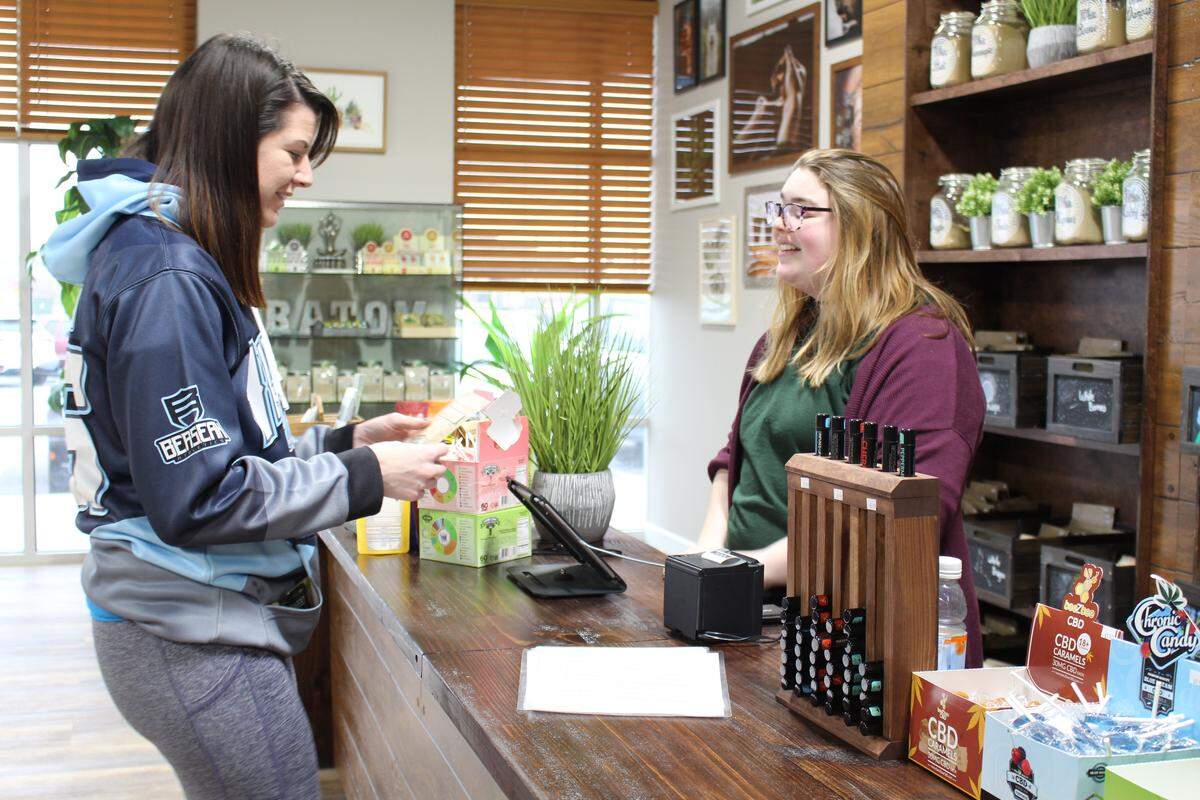
“We get a lot of construction workers,” said Nathan Schumacher, a clerk at the CBD Kratom store in Belleville. “Their bodies ache, and a lot of them use it to kind of power through their days and keep their aches and pain in check.”
Schumacher estimates about half the store’s business comes from kratom sales. It also carries extracts, lotions, tea and edibles with cannabidiol (CBD), a non-intoxicating hemp compound whose popularity has soared since the U.S. Agricultural Act of 2014 loosened restrictions on industrial hemp cultivation.
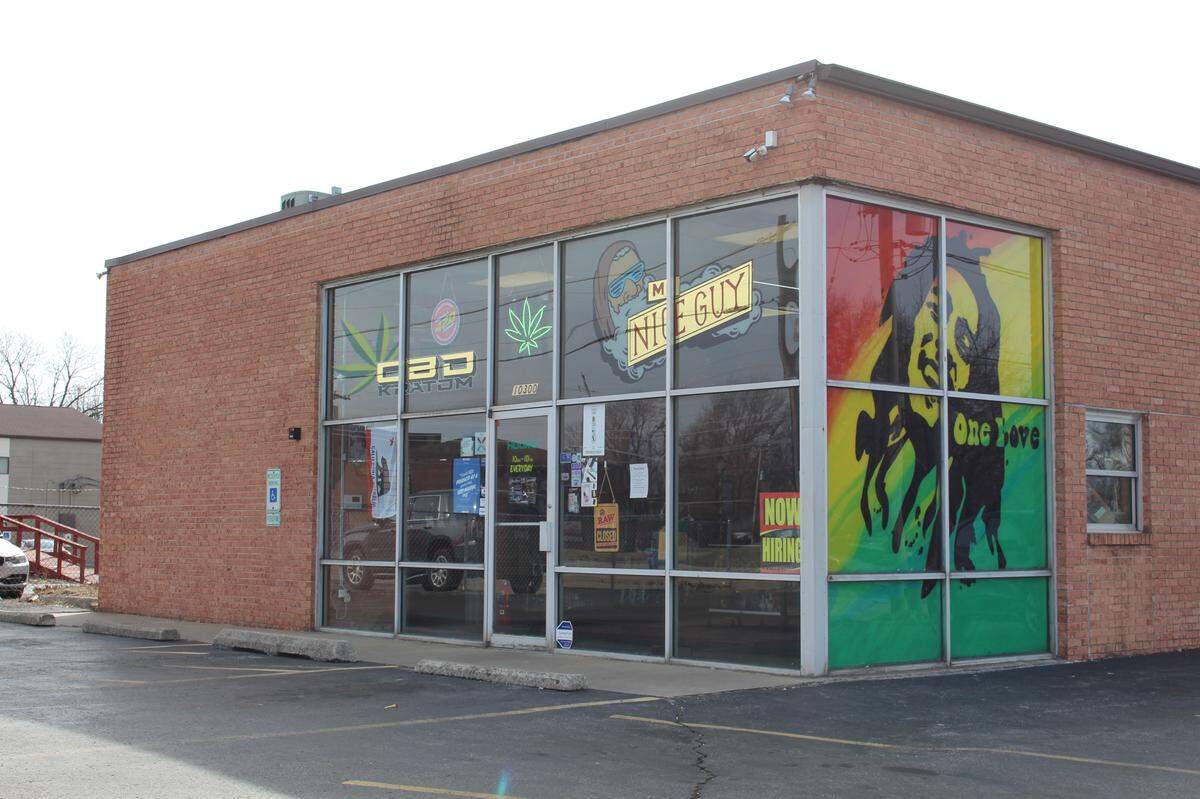
There’s also a CBD Kratom store in Fairview Heights, which is paired with one of the company’s Mr. Nice Guy head shops.
.JPG "Kratom measure (h-1).JPG")
Illegal in six states
Kratom has been banned in six states — Wisconsin, Arkansas, Indiana, Vermont, Rhode Island and Alabama — and about a dozen cities, according to Kraoma, a Nevada-based company that buys it in Indonesia and Malaysia, sells it online and maintains a running database of its legal status in U.S. cities and states.
“Our kratom comes from organic farms, and our farmers and harvesters follow sustainable practices,” the company’s website states. “We also test each batch we receive at an independent 3rd-party laboratory in the US. That further ensures the quality and purity of our products.”
A 2016 kratom ban in the District of Columbia was reversed in 2019.
Kratom is legal in Illinois, but the state’s Kratom Control Act, passed in 2014, made it a Class B misdemeanor for anyone under 18 to buy or possess it. Selling it to a minor is punishable by a fine of $500 to $1,500 and up to six months in jail.
In 2017, State Rep. Katie Stuart (D-Edwardsville) introduced House Bill 4106 to expand the act and cover adults, but the legislation died in committee earlier this year. Stuart didn’t return calls for comment.
The U.S. Food and Drug Administration hasn’t approved kratom, and its website warns consumers not to use it.
“FDA is concerned that kratom, which affects the same opioid brain receptors as morphine, appears to have properties that expose users to the risks of addiction, abuse, and dependence,” it states. “There are no FDA-approved uses for kratom, and the agency has received concerning reports about the safety of kratom.”
Kratom also is being studied by the U.S. Drug Enforcement Administration, which is deciding whether to classify it as a controlled substance, said spokesman James Pokryfke.
Jerseyville leads charge
Jerseyville Police Department cited kratom as a safety concern as early as 2012, when Jerseyville City Council passed an ordinance to ban synthetic cathinones — stimulants more commonly known as “bath salts” — and a synthetic cannabinoid (marijuana) called “K2.”
Five years later, Jerseyville became the first city in Illinois to prohibit the possession, use and sale of kratom.
“There are some studies out there that say people can start taking kratom and kind of wean themselves off the opioids that they’re addicted to,” said Assistant Police Chief Scott Woelfel. “However, there are also several studies that say if you take kratom, it can lead to taking more opioids. There’s not been enough solid research on it.”
The city of Alton prohibited kratom in 2018, followed by the village of Glen Carbon in 2019 and Edwardsville in March.
That forced several stores, including the El Tigre head shop in downtown Edwardsville, to stop selling kratom. The CBD Kratom chain now uses the name “The CBD Shop” for its Alton store, which is paired with a Mr. Nice Guy.
The St. Louis Post-Dispatch reported in 2019 that public health officials had attributed the deaths of at least three people in the region to ingestion of too much “mitragynine,” an alkaloid in the kratom plant.
St. Charles County, Missouri, considered a ban on kratom last year, but ultimately opted to regulate it and publish a lengthy warning on its website.
“Too much kratom, or adulterated products, can lead to respiratory depression and has been associated with death,” it states. “Kratom may cause psychosis and hallucinations. The products may be addictive and can have a synergistic effect when taken with other medications.”
Chain has 35 stores
Many metro-east residents know little about kratom, and some first heard the name when CBD Kratom stores opened in Alton, Fairview Heights and Belleville.
The company’s roots go back to 2013, when David Palatnick and his wife, Dafna Revah, opened a Mr. Nice Guy head shop in University City, Missouri.
The chain has expanded to include seven Mr. Nice Guys in the St. Louis area and 35 CBD Kratom stores in St. Louis, Chicago, Dallas and Houston, Texas, and Los Angeles, according to its website. Some are owned by franchisees.
“We’ve always operated under the interpretation that CBD was legal, and we’ve had zero problem with law enforcement,” Revah said last year, when the Belleville store opened. “... All of our products have less than .3 percent THC. It would probably take several gallons to make you feel any psychoactive effects, and to my knowledge, that is physically impossible.””
Revah didn’t return calls for comment this month on kratom bans.
CBD Kratom customer Jocolyn Accola, of Belleville, told the BND in 2019 that she’d been taking kratom capsules instead of pharmaceuticals for six years to alleviate pain resulting from hip and shoulder surgeries.
The former U.S. Marine attributed her issues to the heavy packs she carried before receiving a medical discharge. She discovered kratom while stationed at Camp Pendleton in California.
“In the Marines, they had me on Vicodin, but I started taking kratom,” Accola said. “It helped take away my pain, and I stopped taking the Vicodin. I felt better taking (kratom) than I did taking pain killers, and I’ve been taking it ever since.”