Black woman alleges racial profiling by southwest Illinois police after traffic stop
Editor’s note: This story was updated at 5:30 p.m. Feb. 20, 2022, with the full 20-minute police dashcam video from the traffic stop. An earlier version left out the last three minutes of the video due to a technical issue.
A Black woman is raising questions about law enforcement in Caseyville after she says a police encounter left her feeling harassed because of her race, physically sore and degraded.
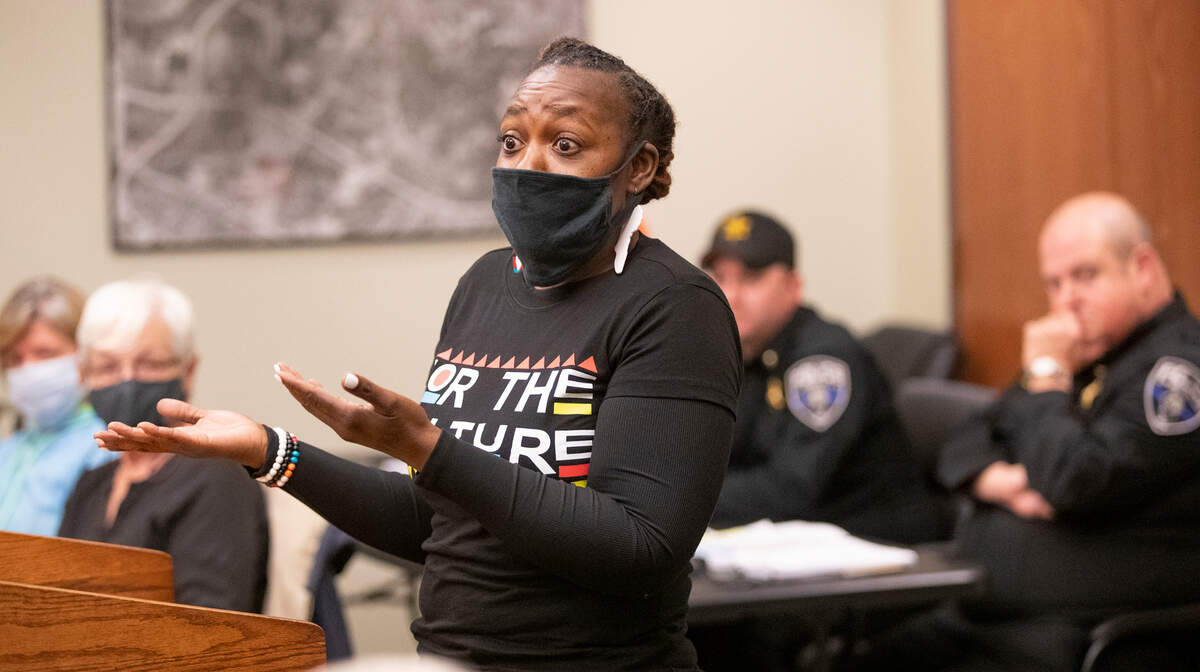
Tanya Fox, 40, made her concerns publicly known when she described her experience during the village board meeting Wednesday night.
Fox is alleging Caseyville police officers racially profiled her as a Black person who uses drugs earlier this year because they pulled her over after following her from a hotel they said was in a “high drug area.”
“You picked me out,” Fox said at Wednesday’s meeting. She also accused the officers of twisting her arm and fingers while she was handcuffed and touching her inappropriately during a search of her clothing.
Village officials say they’ve investigated and stand by the officers’ actions.
They don’t think racial profiling was a factor in the traffic stop, and they didn’t see excessive force or inappropriate touching in the police dashcam video.
Illinois State Police reviewed the material and determined the officers didn’t do anything that appeared illegal, warranting a criminal investigation, according to spokesman Josh Korando.
Caseyville Police Chief Tom Coppotelli said the only thing the officers did wrong was make inappropriate statements during the stop and when Fox went to the police station afterwards to pick up a complaint form, based on the dashcam video and a video Fox posted to social media. He said each statement resulted in a “verbal counseling” with the officer involved.
The officers told Fox they pulled her over because she didn’t come to a complete stop before turning right at two red lights near the hotel, according to the dashcam video, which the Belleville News-Democrat obtained through a public records request. And Fox acknowledged that her registration was expired, the video shows.
These offenses are legal reasons for police to pull anyone over. But Fox has questioned the officers’ motivation because they brought up drug activity at the hotel during the traffic stop.
Fox said in an interview with the BND three days after the stop that she wasn’t at the hotel for drugs; her family was living there temporarily because they were displaced from their home in Belleville. She said she was leaving for work the morning she was pulled over. It was about 7:45 a.m. on Saturday, Jan. 8.
The officers didn’t find any drugs during the stop.
Driver, activist group call for action after traffic stop
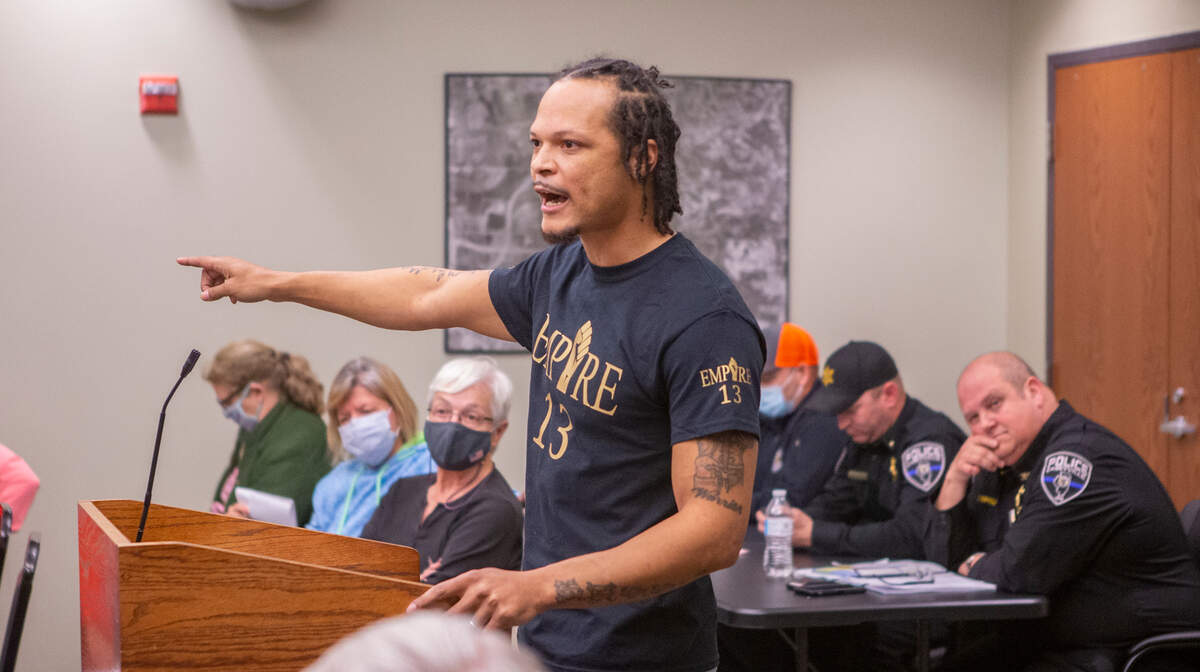
Belleville-area activist JD Dixon joined Fox at Wednesday’s village board meeting. Together, they called for the suspension and independent investigation of the three officers involved in Fox’s traffic stop.
Dixon is the president and founder of Empire 13, a grassroots activist organization. It formed in the aftermath of employee protests against alleged racial discrimination at Empire Comfort Systems in Belleville.
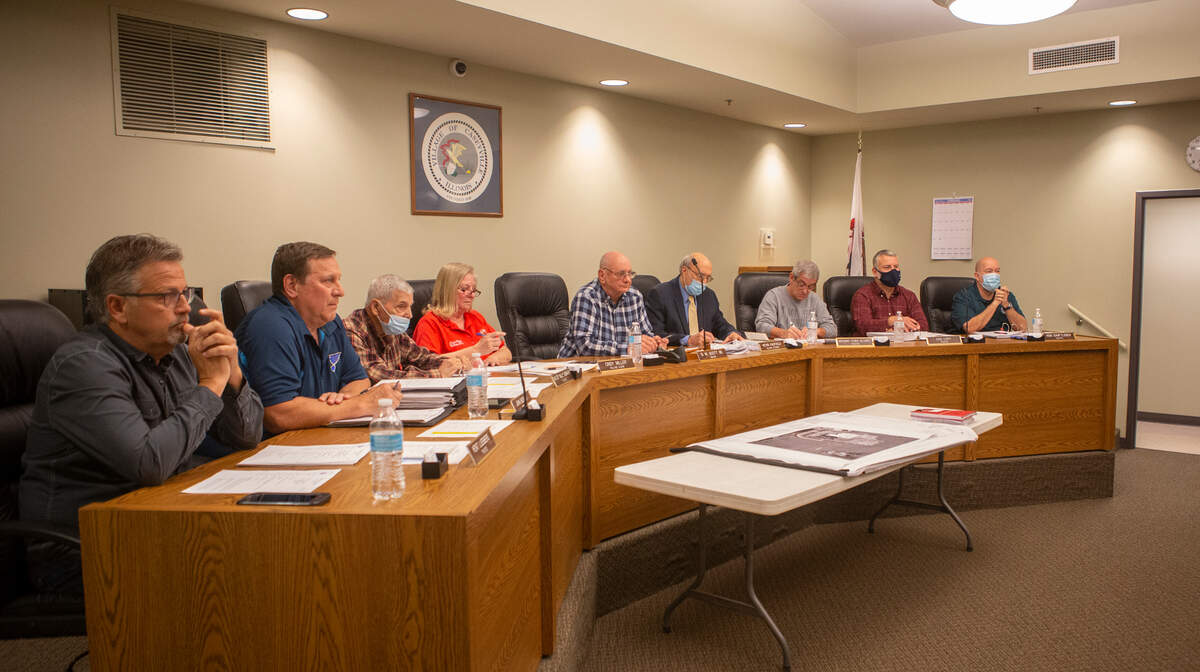
“Just because every last one of y’all don’t know what it is to be racially profiled because you’re not Black, that does not mean you do not consider — and not only consider, hold to the utmost regard — what Tanya Fox went through,” Dixon told the board, which is comprised of all white men.
Empire 13 previously got involved in a public discussion over law enforcement last year in Fairview Heights, where a police officer was accused of using excessive force on teenagers who got in a fight at SkyZone Trampoline Park.
The Fairview Heights Police Department’s investigation found the officer’s use of force was appropriate, and its findings were backed by independent reviews by the Illinois State Police and O’Fallon branch of the NAACP.
Coppotelli said he requested State Police review the situation in Caseyville, too. He noted that the State Police investigator who reviewed the case is a Black man.
“I had the Illinois State Police Public Integrity Unit review this case and they said that it’s perfect, there’s nothing wrong with this case, there’s no sign of racial profiling or anything that our officers did wrong,” Coppotelli said during Wednesday’s board meeting.
“I also want to tell you that I don’t find any evidence of racial profiling, and our officers acted with professional conduct, they acted with compassion, and I stand by their decision on that traffic stop that day.”
After the meeting, Caseyville Mayor G.W. Scott Sr. said the village wasn’t planning to take further action.
The East St. Louis branch of the NAACP, the closest to Caseyville, declined to comment when contacted by the BND.
‘Just because you can do something, doesn’t mean that you should’
Fox and Dixon are also calling for a statewide end to a legal police tactic they believe Caseyville officers used in the Jan. 8 stop: pulling a driver over for a traffic violation to be able to investigate something else.
It’s known as a pretextual stop because breaking a traffic law becomes the pretext for law enforcement to look for evidence of criminal activity, such as drug possession.
The American Civil Liberties Union has also spoken out against the practice.
Ed Yohnka, the director of communications and public policy for the ACLU of Illinois, said the civil rights group discourages pretextual stops, even though they’re legal, because they can result in racial profiling, lead to distrust of police and waste police resources.
“There’s the old adage that just because you can do something, doesn’t mean that you should,” Yohnka said.
“One of the ways you actually combat crime is to investigate crime, not simply to investigate someone’s presence in a particular area,” he added. “… If somebody robs a bank, you don’t stop everybody that pulls into the bank for the next week. You investigate the crime.”
Coppotelli said the department increases patrols in the area around the hotel to discourage crime with a visible police presence and to protect drivers and pedestrians in the business district by enforcing traffic laws. “In fact, the hotels pay a voluntary tax to help insure those patrols,” he said.
Some of the traffic stops in that area could be pretextual, Coppotelli said. He said the department’s policy doesn’t promote or discourage pretextual stops.
What happened in Caseyville traffic stop
From the start of Fox’s encounter with police, she told the officers she thought it was harassment for them to follow her from the hotel. Each of the officers mentioned drugs in response to this allegation.
One officer said, “It’s not harassment because … that hotel is high with drug traffic. You go that early in the morning, OK? Your ID returns out Alton. You’re from Belleville. And then you leave after you went there. The car was off, then the car was on.” Coppotelli identified this officer as a drug enforcement officer.
A second officer said, “What he was trying to explain to you is it’s a high drug area, OK? You’re in and out. You don’t return out of there, OK? And we already know —”
“I’m not a drug addict,” Fox interjected.
A third officer, who the others identify on camera as a sergeant, said, “It’s not harassment. It’s doing police work. … If we find out you don’t have anything to do with drugs, then we’ll let you go.”
The police report provided by the department doesn’t mention drugs or the hotel.
The officers ultimately wrote Fox tickets for expired registration and for obstruction because she didn’t immediately comply with their commands, first to give them her driver’s license and then to get out of the car.
While the officers were repeating their commands, she repeatedly requested that they call their sergeant, a police supervisor, the dashcam video shows. The back-and-forth lasted about 35 seconds before the officers pulled Fox out of her car.
Obstruction is a Class A misdemeanor, which means the officers could have taken Fox to jail and impounded her car, according to Coppotelli.
They handcuffed her, searched her clothing and eventually let her go at the scene of the traffic stop with a notice to appear in court.
Coppotelli said Fox escalated the situation by not following orders, and he is OK with the way the officers handled themselves, except for two statements captured on video.
The first statement came about three minutes into the stop, as Fox and the officers argued over whether or not their following her amounted to harassment. One officer said to another, “She ain’t gonna (expletive) listen.”
The second statement happened at the police station, which Fox recorded with her phone.
Someone off camera can be heard saying, “We probably should have just taken you to jail and towed your car.” Fox wrote in a social media post that it was an officer involved in her stop and that she believes he said this “to try to intimidate me even more.”
Fox described feeling scared during the traffic stop in her complaint against the officers.
Dixon, the community activist, called the situation “appalling” after talking to Fox and watching the dashcam video.
“That is trauma,” Dixon said in an interview. “You’re watching the video and you’re seeing what overt policing has done to Black people in America. How do you go forward not being afraid when they can use any excuse to pull you over? It has to stop, and that’s why these officers have to be held accountable for these actions.”
This story was originally published February 20, 2022 at 6:00 AM.