How high do gas prices go before southwest Illinois commuters turn to mass transit?
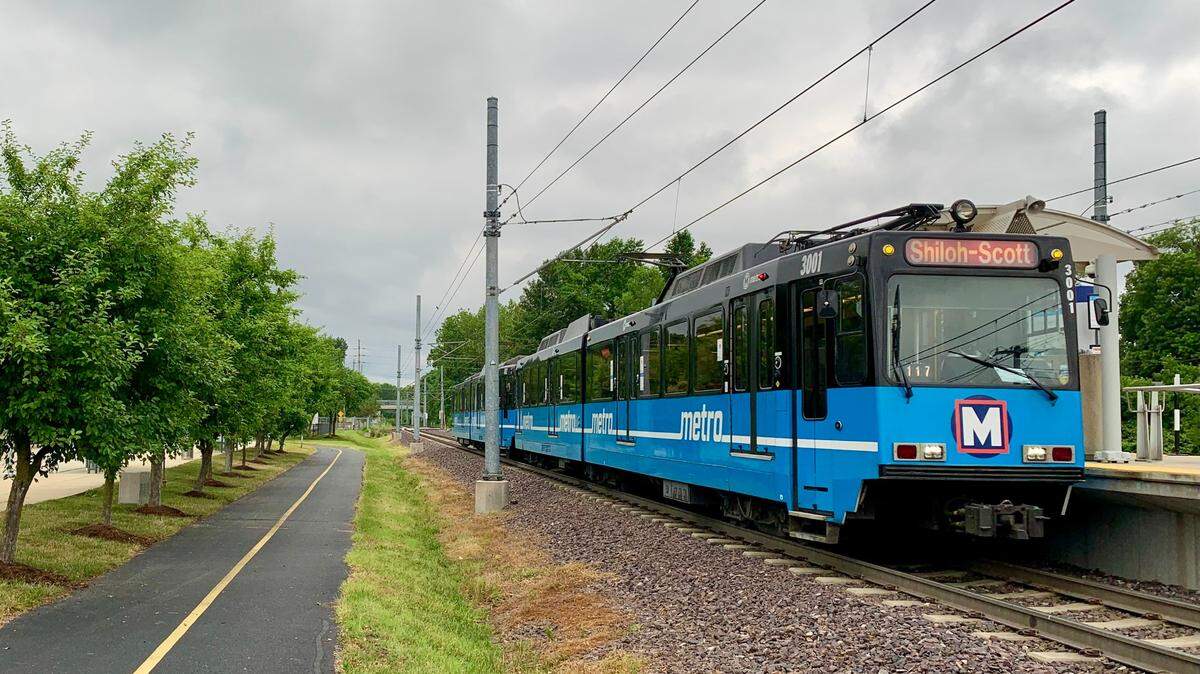
Higher gas prices related to the war in Ukraine are expected to boost ridership on mass transit in the St. Louis metropolitan area.
But it’s unclear how much, according to Taulby Roach, president and CEO of Bi-State Development, which operates Metro buses and MetroLink trains in St. Louis and St. Clair County.
That’s because mass-transit usage also is affected by weather conditions, construction on Mississippi River bridges between Illinois and Missouri and a host of other factors.
“It’s very difficult for us to isolate to just one thing,” Roach said Monday. “But I can unquestionably say that higher gas prices affect our ridership positively.”
Roach identified $4 a gallon as a “pivot point,” meaning people seem to start changing their transportation habits and turn to mass transit in greater numbers when gas prices rise to that level.
The American Automobile Association reported Monday that gas prices were averaging $4.065 a gallon across the United States, just below a record of $4.114 set in 2008. The average was $4.06 at pumps in Madison County and $4.16 in St. Clair County.
“I just filled up a car today,” said Ken Sharkey, managing director of St. Clair County Transit District. “Normally, it would be under $50, but it was over $60. That’s significant.”
Sharkey gave another reason why it will be hard for mass-transit officials to make direct correlations between rising gas prices and increased ridership on buses and trains in the coming weeks: COVID-19.
Many people are returning to their offices in St. Louis or elsewhere after working at home for two years.
“It’s been inching back up the past few months, but it’s gradual,” said Sharkey, noting that bus and train ridership dropped by 50% in the St. Louis region when COVID-19 hit. “We’re not at pre-pandemic levels, no way.”
St. Clair County contracts with Bi-State to operate its Metro buses and MetroLink trains.
Bi-State benefits from increased ridership, even if it’s caused by higher gas prices, because ticket sales go up but not the price of gas for its buses, according to Roach.
“We have a fuel-hedging strategy,” he said. “We make advance purchases on our fuel hedge, and that allows us to stabilize the price of gas over a longer period of time. So right now, our fuel hedge would very much be in the positive because we were able to buy in bulk before, when the prices were low.”
Tickets cost $1 for Metro bus rides or $2.50 for MetroLink train rides. Monthly passes are available for $78. Senior citizens (65 and older) and people with disabilities pay half those amounts.
Bi-State and St. Clair County Transit District often step up marketing when gas prices climb, encouraging people to consider mass transit as a way to save money.
“Once people take transit, and they find out it can get me where I need to go in a reliable, safe and affordable way, you hope to gain transit riders for the long term,” Sharkey said.
S.J. Morrison, managing director of Madison County Transit District, couldn’t be reached for comment on Monday. That agency operates its own bus and bike-trail system.
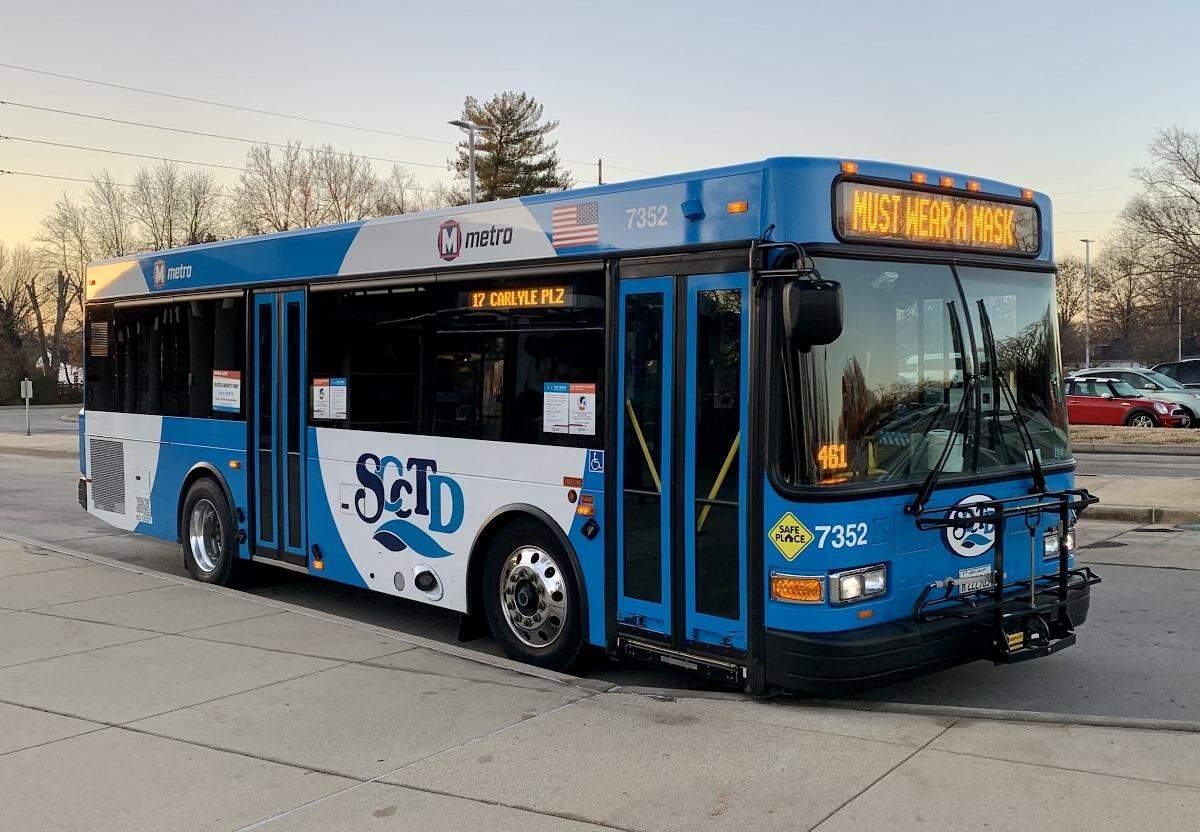
This story was originally published March 8, 2022 at 6:00 AM.