End of an era: The ‘pioneer sisters’ leave their beloved Ruma convent after 146 years
Could a plumbing problem be a sign from God?
The question makes nuns with the Adorers of the Blood of Christ smile and playfully shrug their shoulders.
Even if it wasn’t divine intervention, flooding caused by a water pipe bursting this winter definitely helped solidify their heart-wrenching decision to leave their Ruma convent after 146 years.
“We became more and more aware that we didn’t have the resources or the people to keep everything going,” said Sister Mary Catherine Clark, 75, a member of the order’s U.S. Region leadership team, based in St. Louis.
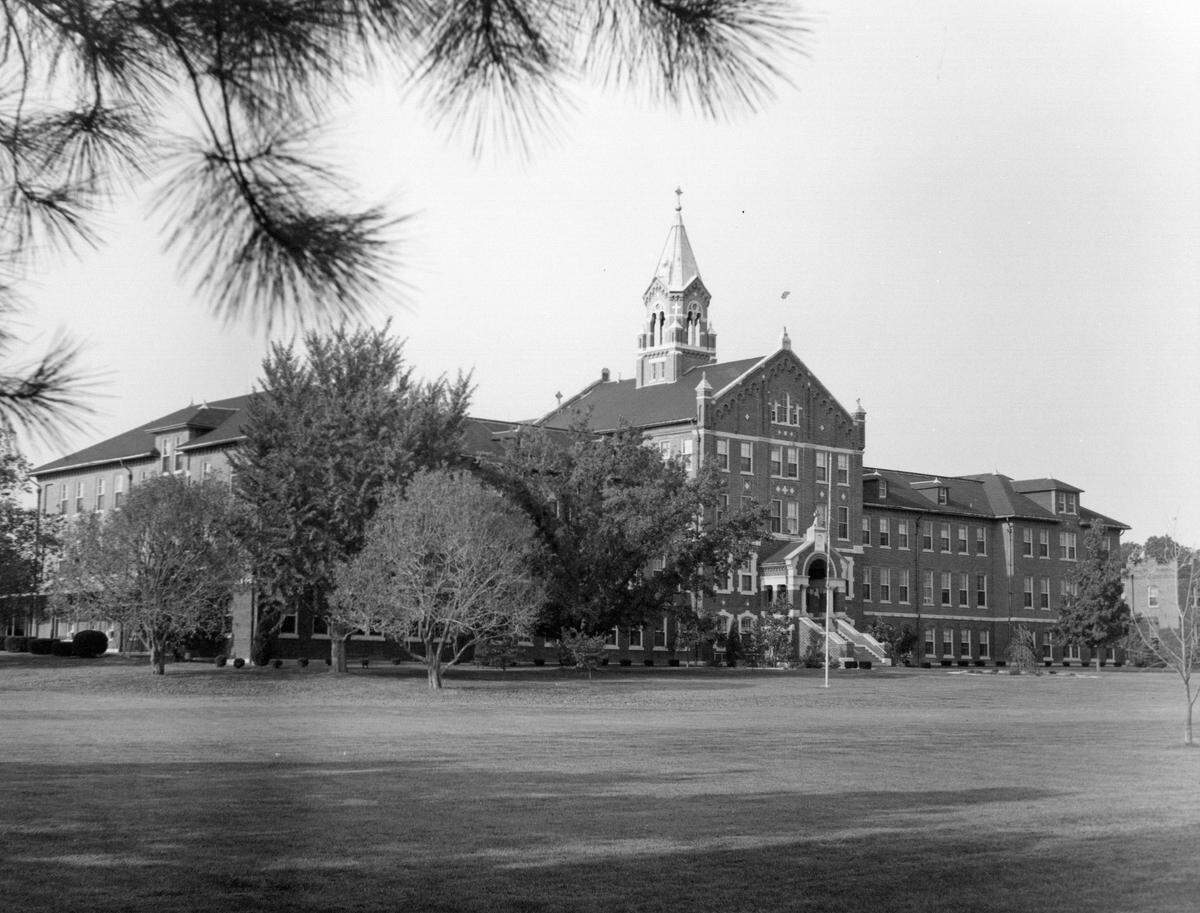
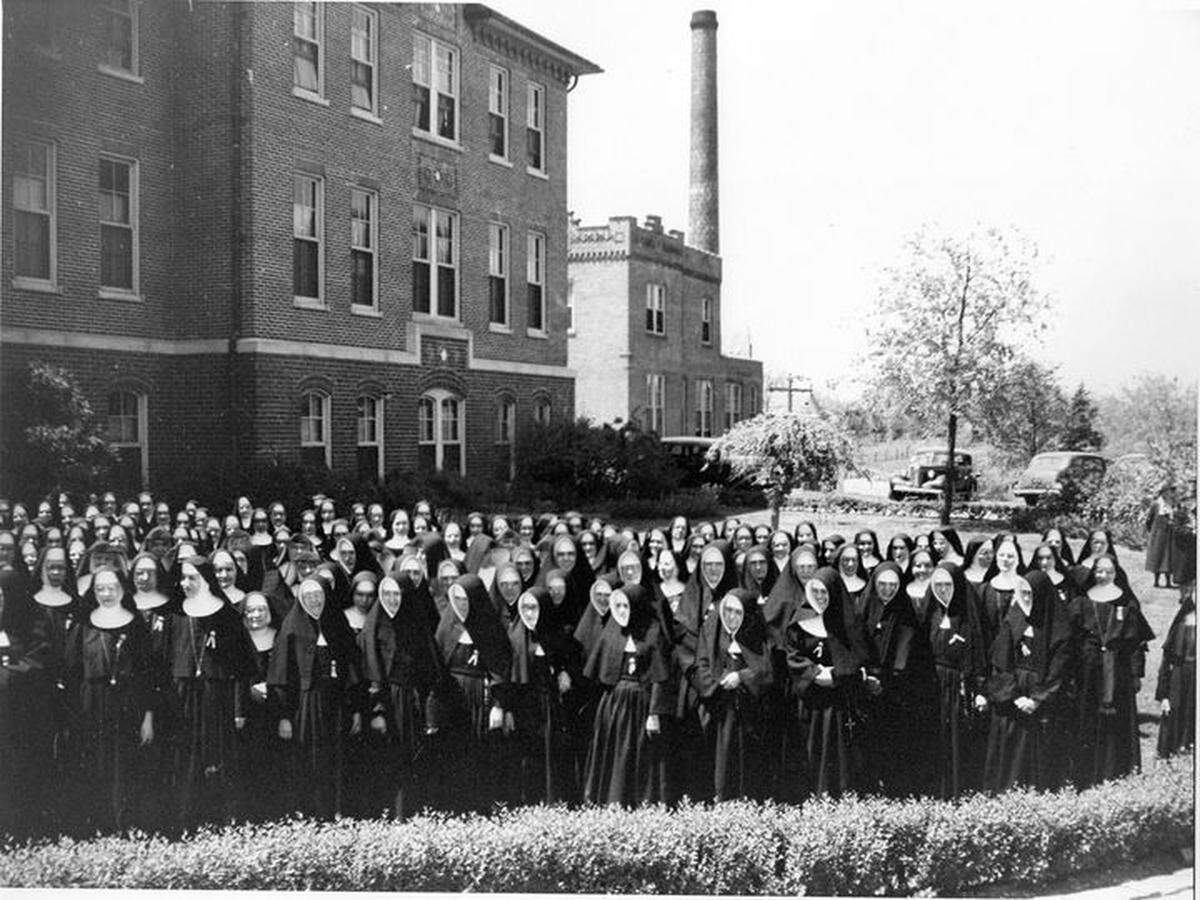
The convent dates back to 1876, when pioneer nuns from Germany were establishing ministries in the United States. Surrounded by more than 400 acres of farmland and woods, it’s a peaceful and picturesque place for services, retreats and prayerful walks.
But by the end of last year, only 37 sisters were actually living on site. That’s down from about 200 nuns and women in formation in the late 1950s and early ‘60s, when the Ruma province also operated Precious Blood Institute, a Catholic girls high school.
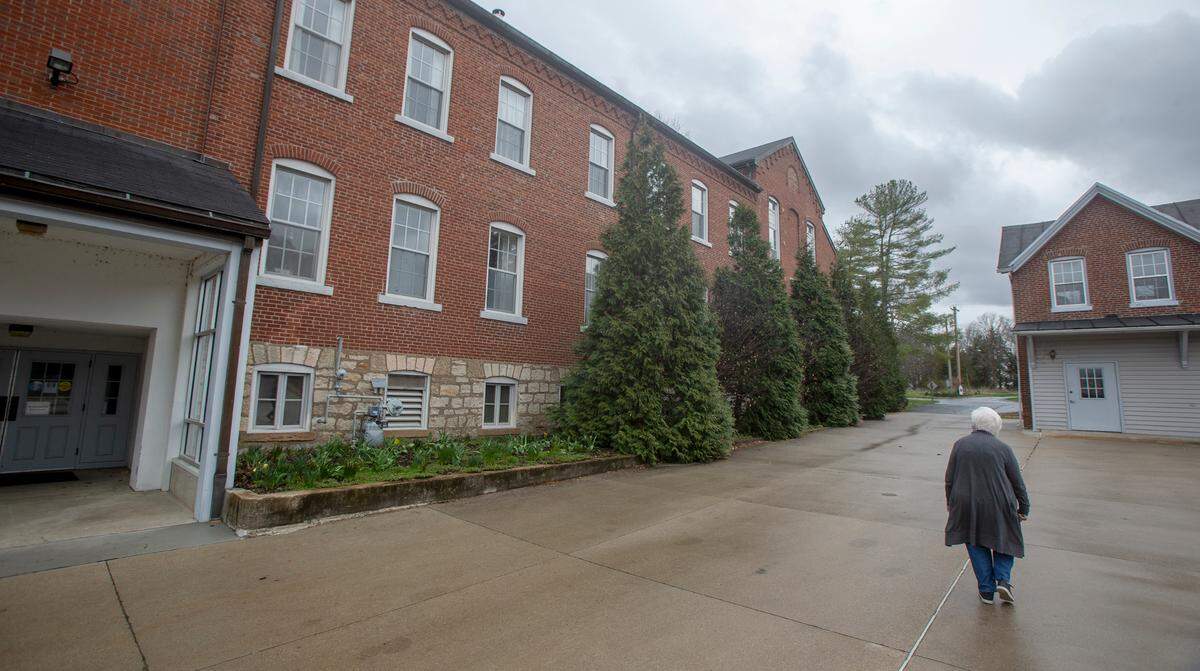
Another problem was rising utility, maintenance and repair costs for the 112,000-square-foot brick complex, which includes the original 1867 structure and two additions, one built in 1890 and one in 1926.
“It isn’t even a matter of not having the resources,” said Sister Barbara Hudock, 71, former U.S. Region leader. “We looked at where we want to use our resources, and we don’t necessarily want to use them to maintain a building this big for a small number of sisters.”
The Adorers also considered environmental factors, concluding that they could be better stewards of the earth by “rightsizing” and reducing their ecological footprint.
Many people have asked what will become of the former Ruma motherhouse and surrounding property. The short answer is, the nuns aren’t sure. They will know more in the coming weeks and months.
“It could be turned into a venue,” Hudock said. “It could get sold. It could get torn down. It could be used for another ministry.”

Historic transition
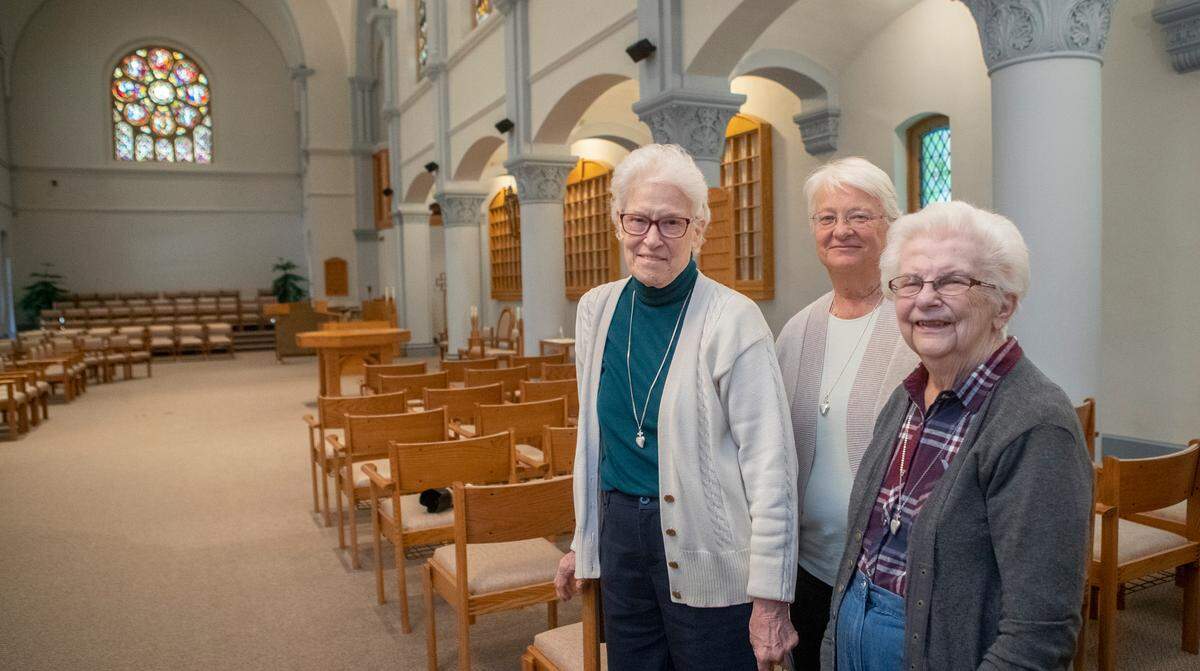
On a recent weekday, Clark, Hudock and other sisters gathered in the convent’s parlor to talk about their historic transition.
Hot-pink tags were pinned to furniture and antiques, signaling to movers that nuns had claimed them for their new rooms or apartments at the Benedictine Living Community at the National Shrine of Our Lady of the Snows in Belleville.
The sisters spoke in positive and pragmatic terms, insisting that the relocation won’t change their purpose or stop their ministry, and it could even expand their reach with Benedictine communities in need. But they admit that the past few weeks have been emotional.
Ruma was their spiritual center, even when they were working at Catholic churches, schools and hospitals throughout southern Illinois or serving as missionaries overseas.
“No matter where you go and how long you’re gone, that is always home,” said Sister Gabrielle Rowe, 91, her eyes welling up with tears. “You come back as often as you can.”
Rowe gave thanks for the tears, noting that she hadn’t cried since the move was announced earlier this year. But she characterized them as a sign of sentiment, not despair.
“We’re not a sad people,” she said.
The nuns leaving Ruma range from 75 to 97. Most joined the order as high-school freshmen. Sister Raphael Ann Drone, 80, was only 13. Sister Mildred Gross, 84, was following in the footsteps of her three biological sisters when she arrived in the mid-1950s.
Gross was sick with a heart condition during her formation. The nuns asked if she wanted to return home.
“I said ‘no’ because I felt called to religious life, and I stayed,” she said. “My friends gave me one week to stay, and this year I am celebrating 65 years as an Adorer.”
In the early years, the girls roller-skated and played volleyball in the giant auditorium. As young women, they took their vows in the chapel with its 37-foot-high arched ceiling, massive columns and colorful stained-glass windows.
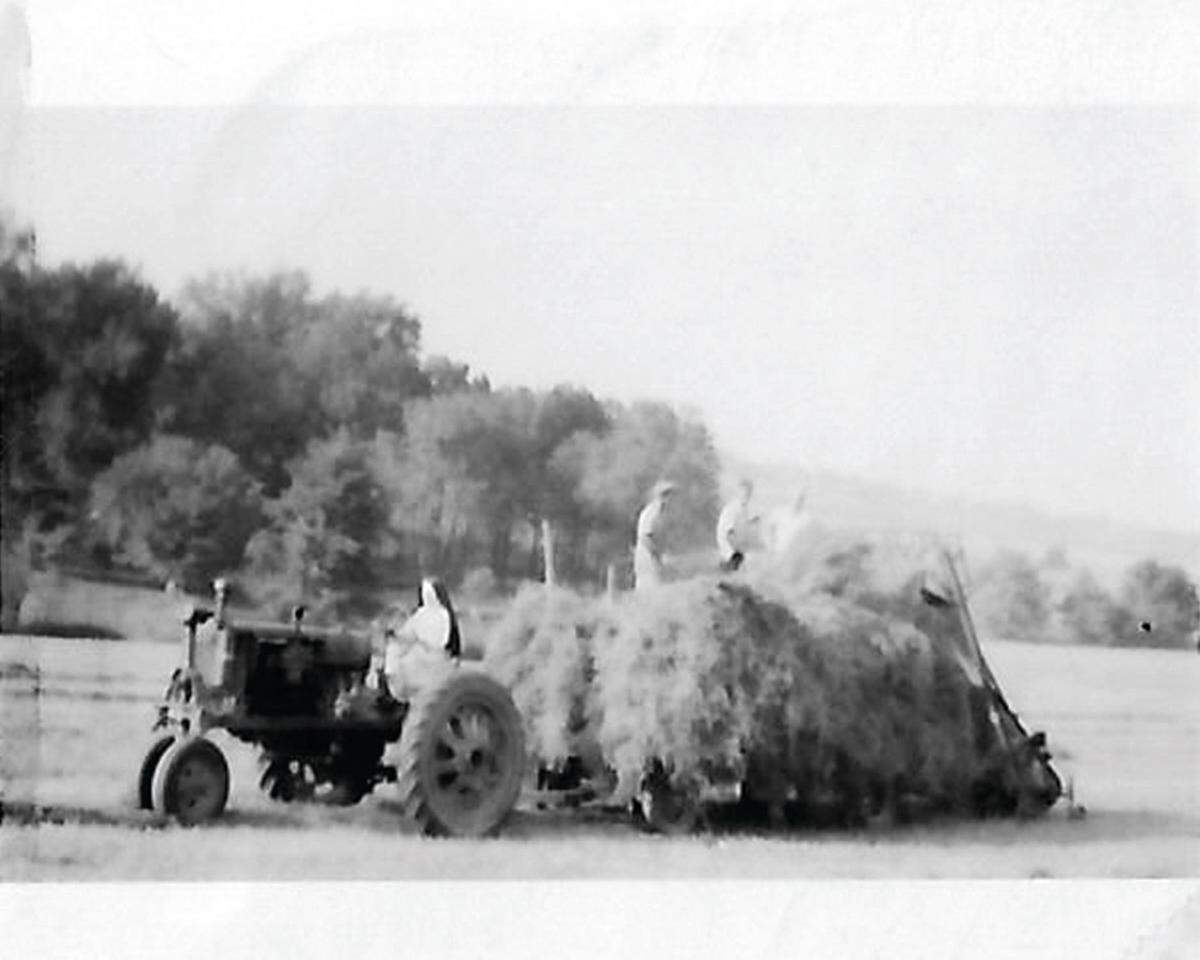
Some remember planting gardens, feeding livestock and harvesting potatoes in full habits. The rural convent was largely self-sufficient. It even had its own butcher shop.
The order’s dress code changed in the 1960s and ‘70s, when the nuns switched to veils only and eventually street clothes. Today, they wear silver heart-shaped pendants with drops of Christ’s blood and crosses on top.


Roots in Italy
Maria De Mattias, now a saint, founded the Congregation of the Sisters Adorers of the Blood of Christ in Italy in 1834 with a focus on education and helping women, children and the poor.
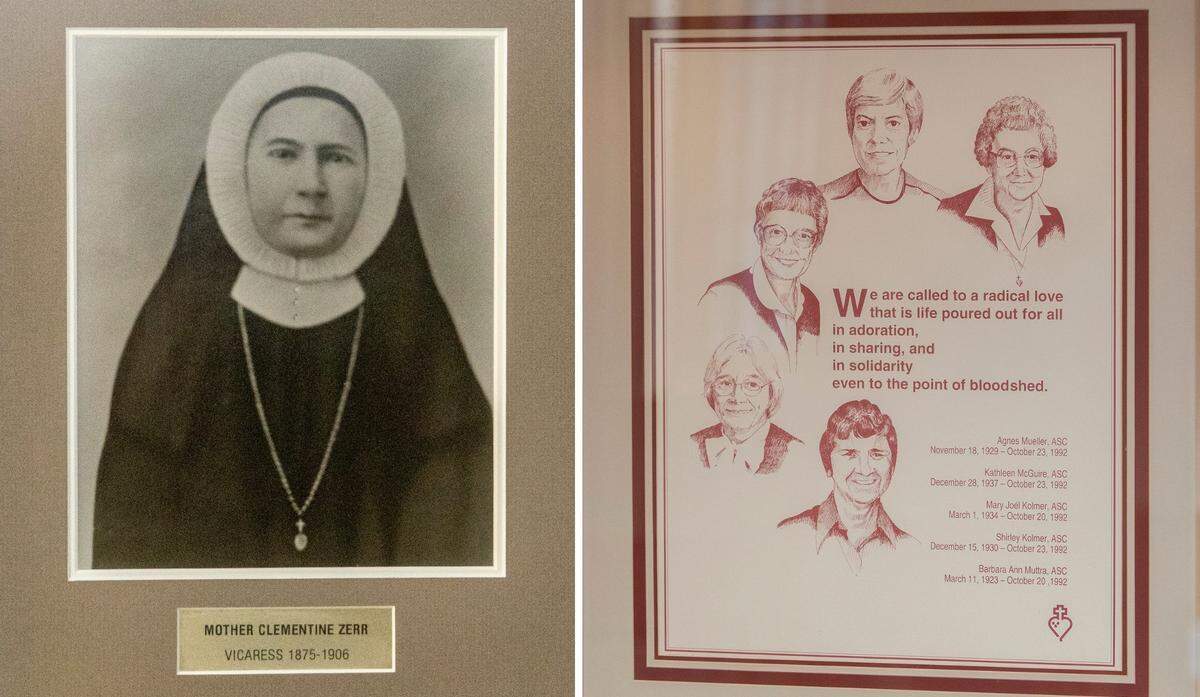
German sisters began immigrating to the United States in 1870. About a dozen nuns and novices led by Sister Clementine Zerr planned to settle in Edwardsville but followed the wishes of Bishop Joseph Baltes, head of the former Catholic Diocese of Alton, and went to Ruma instead.
Zerr paid the diocese $12,000 for 26 acres, two horses, an unspecified number of cattle and an 1867 brick structure built to house a Catholic school and seminary that had failed, according to Sister Regina Siegfried, 81, archivist-in-chief.
One history noted that the nuns had few tools to clean the abandoned site, plow fields or plant crops, surviving only because of “sheer grit” and the goodness of Catholic neighbors. It also maintained that area priests placed bets on whether they could make a go of it.
The location was isolated, but the province was never meant to be cloistered.
“Clementine and the pioneer sisters knew that this would be home, but the road goes out,” Siegfried said. “We go where the need is. It’s about serving our brothers and sisters in a broader context.”
Over the years, the Adorers expanded the Ruma complex with land purchases and building additions and established a cemetery that now serves as a final resting place for more than 500 nuns, next to St. Patrick’s Parish property.
Most notably, they bought the Simpson family farmhouse and 251 acres with an orchard and spring in 1891. They converted the summer kitchen into lodging, which became known as the “Rumada Inn.” Guests included Cuban refugees in 1980. Now it’s an arts-and-crafts studio.
As the number of sisters grew, they fanned out across southern Illinois, working as teachers and counselors, holding a variety of jobs in Catholic parishes and hosting Masses in Ruma for the public. They helped staff St. Teresa’s Academy in East St. Louis for decades.
“At one point, we had three hospitals,” said Sister Raphael Ann Drone, 80. “There was one in Red Bud, one in Taylorville and one in Murphysboro.”
There is perhaps no better symbol of the nuns’ staying power than a statue of Mary, mother of Jesus, in the convent’s chapel. It was displayed in the seminary, known as Sacred Heart College, when Zerr and the pioneer sisters arrived in 1876.
Beyond Ruma, the Adorers also established provinces in Wichita, Kansas, in 1902 and Columbia, Pennsylvania, in 1906. The three combined in 2000 to form the U.S. Region, which has about 150 members. The order also is active in Guatemala, Vietnam, Bolivia and Korea.
The former Columbia province sold its historic motherhouse in 2012, and the order is looking at changes in Wichita as well.

Liberia murders
No retrospective of the Ruma convent is complete without mention of a tragedy that made international headlines and caused many people to associate its ministry with martyrdom.
Priests with the Society of African Missions had invited the Adorers to Liberia in the early 1970s. For two decades, the missionaries taught school, staffed health clinics and performed charity work in and around the capital of Monrovia.
A civil war was raging by 1992, when rebel forces killed five nuns, including Sister Barbara Ann Muttra, Sister Mary Joel Kolmer, Sister Shirley Kolmer, Sister Agnes Mueller and Sister Kathleen McGuire.
Investigators determined that Muttra and Kolmer (Mary Joel) left their suburban convent to take a Lebanese security guard to check on his family and picked up two members of the allied West African peacekeeping force before they were ambushed on the road by soldiers with the National Patriotic Front of Liberia.
“The burned-out vehicle later was identified by its intact license plate,” the BND reported in 1993. “Remains of the two sisters were found nearby. Bullet fragments and the condition of the vehicle led to the conclusion that all occupants had been shot.”
It’s believed that the three remaining nuns tried to leave the convent the next day, but fighting broke out. Then rebels showed up demanding money and shot McGuire as she opened the gate. Kolmer (Shirley) and Mueller told them they had no U.S. currency, only Liberian cash. They were shot, too.
Forensic evidence showed multiple fractures in their skeletal remains, indicating that the women were beaten with a blunt object after they were killed.
“Shocked and appalled” officials from the U.S. State Department condemned the “cowardly act,” according to an Associated Press story.
“The State Department declared the fact that these women had no role in Liberia’s civil war and were in the country to work with orphaned children and other victims of the conflict makes the killings all the more repugnant,” the story stated.
Today, the martyrs are memorialized inside the Ruma convent with plaques and portraits and outside with a bronze sculpture of five women in a circle with outstretched arms, clasped hands and faces looking up to the heavens.


Looking forward
The Adorers’ main focus now is making the move from Ruma to Belleville as comfortable as possible for the 37 nuns, who range from active and able-bodied to sick and in need of skilled-nursing care. It’s being done in phases.
“I’ll be turning the lights out,” said Drone, one of the last three sisters scheduled to leave in April.
Gross, Rowe and Sister Anne Irose, 90, gathered in the Benedictine dining hall recently to report on what life is like in their new home. They appreciate the shrine’s 200 acres of trees and rolling hills and look forward to raised-bed gardening this spring.
They’ve also reconnected with students, co-workers and others from their years of service in the Catholic community.
“We’ve come to a place that is so welcoming,” Rowe said. “They wanted us and needed us. They’ve been so gracious, and there is nothing that (the order’s) leadership won’t do for us. If you just breath that you want something, it appears the next day.”
The nuns emphasize that the Adorers are known for their resiliency and ability to overcome challenges and adapt to change.
As a novice, Irose thought she was going to be music teacher all her life. Instead, she opened a mission in Puerto Rico in 1961 then spent decades in the Andes Mountains of Bolivia, falling in love with its people and embracing different foods, customs and languages.
Irose was forced to return to the United States after developing macular degeneration, but she’s made the best of it.
“If we don’t say ‘goodbye,’ we’ll never be able to say ‘hello,’” she said.
The sisters attribute much of their success to southern Illinoisans who have loved and supported them. Donations supplement their salaries, stipends, retirement benefits and investments from property sales. They’re not funded by the Catholic church.
The Adorers look back with great pride on the Ruma convent, which arguably has had the biggest impact on Randolph County.
“Our presence in the county has been significant,” Clark said. “Our doors have always been open for education, spiritual growth, the sacraments and also for employment.”
Nearly 40 area residents work in maintenance, nutrition, food service, grounds-keeping and health care at the complex, which has a industrial-size kitchen, dining hall and skilled-nursing wing.
Several nuns stated that while they’re not happy about the move, they’re trying to stay positive and keep things in perspective.
They point to the horrible hardships now faced by Ukrainian war refuges. They recall having to abandon their own work in China, Croatia and Liberia at different points in time.
“We’ve done this before,” Siegfried said. “We can do it again. And we’re doing it together. It’s the mission that keeps us going. That’s what calls us. As precious as this land is, as precious as this building is, that’s not the mission.”
This story was originally published April 1, 2022 at 5:00 AM.