Cahokia Heights woman was among first Black fashion art directors. Here’s her story
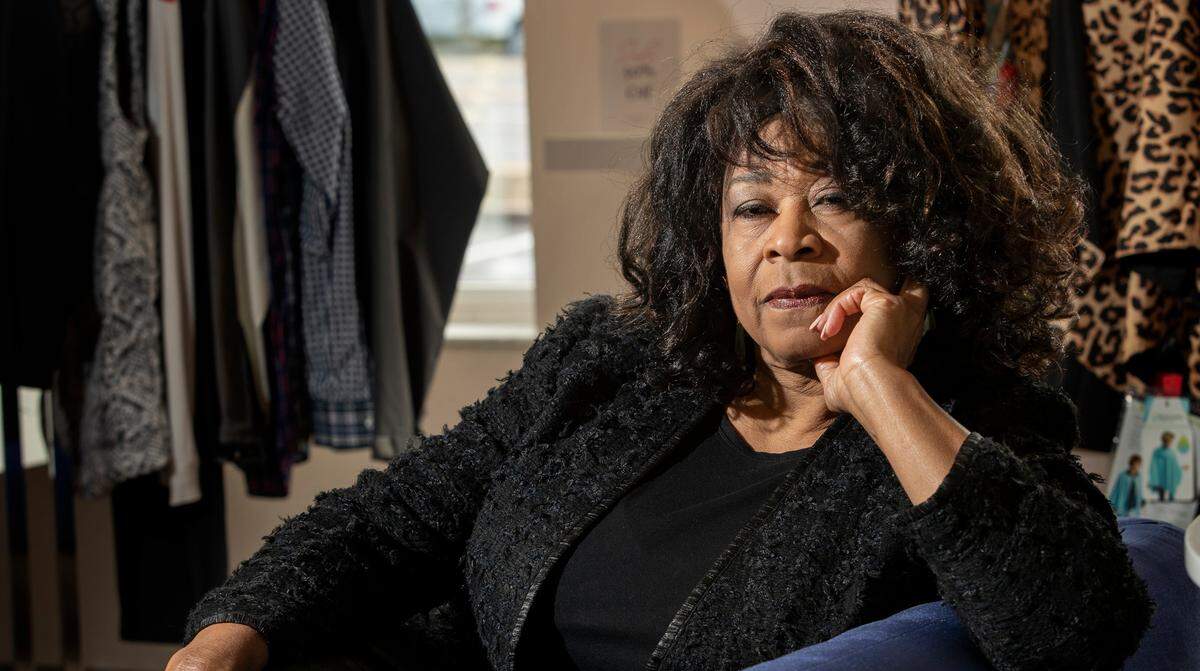
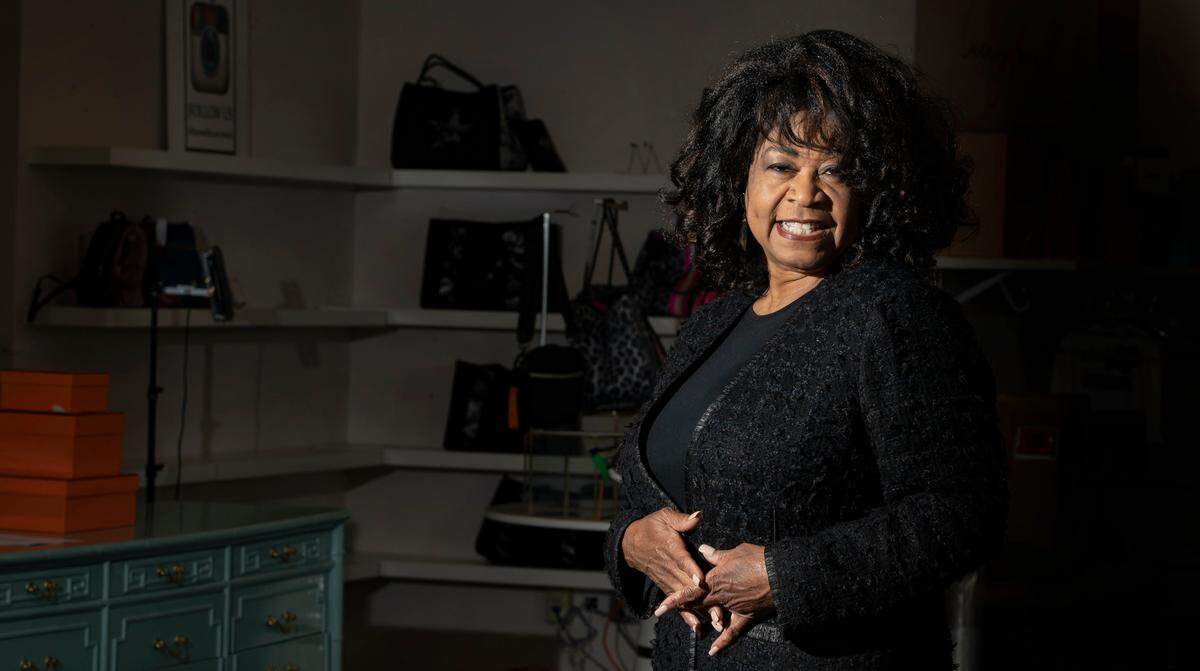
Paulette Whitfield Black is very confident in her skills. But she also takes pride in what she doesn’t know.
After all, that’s how the Cahokia Heights native got her start in the fashion industry, becoming one of the first Black fashion art directors in the country. She’s always willing to learn.
During a recent Zoom call with the BND, she reflected on how she taught herself to draw at a young age and the moment she was motivated by colleagues to transition from being an illustrator to an art director.
It’s a trait that had led to her 40-year career as a fashion advertiser.
Whitfield Black, who doesn’t feel comfortable sharing her age because “a fashion girl never tells”, has worked for former department chains like Bullock’s, Broadway Stores and Foley’s and created ad campaigns featuring models like Naomi Campbell and Cindy Crawford.
“I promote the idea of fashion,” said Whitfield Black, who lives in St. Louis. “Fashion is nothing, really. It’s about what you make of it.”
Now, Whitfield Black is retired and works on her own ventures, which includes publishing COVERINGS Magazine, a quarterly outlet centered on faith and fashion. The Southern Illinois University-Edwardsville alumnus is also focused on coaching the next generation of talent in the fashion space, which she got to exercise as a panelist for a March mentoring event for Fashion Group International of St. Louis (a professional forum that advances the business of fashion and design), where she serves as a board member.
Whitfield Black talked to the BND about her career beginnings, growing up in Cahokia Heights and being a Black woman in the fashion industry with an extensive career that spans three markets (Los Angeles, Houston and St. Louis):
This interview has been edited and condensed for clarity.
Define fashion advertising for those who may not be familiar.
I’ve done everything that has to do with fashion marketing/advertising, and it’s a lot of pieces. When you peel it back to just one phrase, it would be fashion promotions, and that kind of puts it under everything because I’ve always promoted fashion in some way or the other–whether it was advertising, public relations, publications, fashion shows, fashion art directing. It all comes under promoting fashion.
What inspired you to do that?
The paper doll thing was like a fetish for me when I was 13 or 14 years old, but I never wanted to do the ones you buy in the store. I wanted the magazines or the catalogs, and I would cut out the models because I was very intrigued with the way fabric folded around the elbow and the arm. Those were things I found so fascinating— how it draped on the body.
When I was at Cahokia (High School), I was in the library. I was just browsing the shelves, and there was this little pink book. I walked to the shelf, pulled this little thin book out, and it was the story of a fashion illustrator, and in this, she was telling how she got started, when she went to school, all of her experiences of becoming this and getting into the industry. I was so excited. I grabbed the book, went home to my mom, and I was like mom look, look, look, they pay money for me drawing those paper dolls. It was a very exciting time for me because I didn’t have anybody. I was in Centreville. Back then, nobody was doing this.
Did growing up in Cahokia Heights influence your interest in fashion? Can you describe the fashion scene there?
There was no fashion scene per se, but my mom was always a fashion palette. There were 11 kids, and with all of that my mother never lost her femininity, so I would watch her. She always wore high-heeled shoes and she always dressed well. She would dress herself well. She would dress my dad well, and even though there were lots of us, we always had what was new. We didn’t have the most expensive things, but because we had to make do—but still we were up to date with things— she taught me how to shop and how to take the least expensive things sometimes and put it together so that it looked like a wow. She didn’t do Goodwill, but we did shop (at) the smaller stores. I was grown up when I started shopping at the larger department stores, so because I had learned how to purchase my items from some of the smaller stores, when we went to parties and stuff like that, I always had something unique.
Did you have other fashion influences?
My older sister. She went to school at East Side and she and her friends were very preppy dressers, and I was a tomboy coming up and I remember the day I decided I didn’t want to be rough like that anymore. I wanted to be like them, and she was already polished. She played classical piano, and she was just amazing to me. She became a role model, and I can look at her and say ‘I’m going to fix myself up, and I’m going to stop scratching up my knees.’ I wanted to look like that. I wanted to wear earrings like her. She inspired me to be more ladylike and more polished in my appearance.
After high school, you went to Southern Illinois University-Edwardsville, where you graduated in 1973 with a bachelor’s in art education. Then, you started your career the following year in Los Angeles. What was that experience like?
Well, I started doing illustrations as a production artist for Broadway Stores, then went into art direction. I would design advertisements for the story, then design the whole campaign for the season. I just wanted to be an illustrator, but was pushed into art direction. They knew what I had, but I didn’t know what I had, and I was fighting it at first
All of the illustrators, the production people, the layout artists—they would all get copies of what I would lay out for the campaigns and then they would pull (them) and then they would start making it happen. They would go on set, and if it had to be shot, they would shoot it. It takes a whole day to illustrate two figures, so by the time I do two or three days on one ad, I’ve lost thoughts of concepts and ideas and campaigns and that’s what they wanted. (They’d say,) ‘You just sketch what you’re thinking and what you see and then we’ll pass it on to everybody’….that’s how I draw. I draw it fast. I draw it quickly and then I put everything together.
You worked with models like Naomi Campbell and Cindy Crawford. What exactly did you do for them?
We did the photoshoots that were set up…what most people don’t understand is that the professional way to do a photoshoot is not to let the photographer just shoot. That’s what the photo art director is for. We came up with the whole idea. I laid out every page of that catalog and now it’s time to go shoot it…. Some of those girls were very young (at that time). Some of them were fresh out. It was very, very, very exciting.
The department stores would use us a lot of times when there were models that they wanted to take to the supermodel level, and we were kind of like that in between (space). They had to have something to go to the other agencies.
When did you launch COVERINGS and what made you want to start it?
We had a launch party in downtown St. Louis in 2013. I made that for me and women like me. I’m a woman of faith, and I’m definitely a woman of fashion. I have always been chasing this magazine. The demand is greater than the supply. I know that 60% of the money that’s made in retail is from our community, the faith community, because we buy lots of clothes. We have a Sunday wardrobe. We have a career wardrobe. We have a play wardrobe. These women in the church, when they stand up, they have women watching them. All of these magnitudes of women want to be like you. You have the power to set the looks, the taste levels. I believe in these women.
Fashion & Faith Experience is also Christ-centered. Is that a fashion show?
Fashion & Faith Experience is an event. COVERINGS actually produces Fashion & Faith. It brings together businesses and the faith community. It’s a fashion show. It’s almost like a musical. It’s the fashion. It’s the music. It’s an amazing experience. It promotes designers who are in the faith community. They don’t have anywhere to go. (With) Fashion & Faith Experience, we have seminars, we have a luncheon where we give the First Lady of Fashion award, which honors Eve in the Bible. It’s putting God back in front of this whole thing.
Your faith seems to be an integral aspect of your work. Why is that important to you?
It’s important to me because I realize who the real creator is in me. I realize I don’t know what to do. All of a sudden, it’s like a light bulb goes off. My job is and has been, like in Star Trek, to go where no man has gone before. In starting out, I didn’t even realize I could come up with an idea…my faith is important to me because I know I don’t know anything. I know what I don’t know.
What’s your experience being a Black woman in fashion—considering that there have been times when Black women’s styles weren’t considered fashionable?
Because I started my career and grew my career on the West Coast, it wasn’t really difficult because they were more open. There were many cultures. As an African-American in this business, I learned how to navigate. Because I was new in the industry, I had to learn as I performed. Being African-American, they already assumed I didn’t know a lot. I never had the haughty spirit. That’s never who I’ve been, unless you challenge me. I was always non-threatening, and they kept me in that box. As long as I kept that persona, they would show me how to do things. That worked in my favor, but you still had to keep a low-profile because if you get too big too fast, it’s over for you.
What’s something that you learned from growing up in Cahokia Heights that stays with you?
How to be kind and never to judge a person by their outward appearance. Judge them by their character, treat everyone the same. I learned that there, and that’s why, even in the fashion business, I’ve learned that we have a right to be an individual, in our fashion choices, our style. Once you realize you have that right, then you can be comfortable in your own skin. That stays with me because there were a lot of children and our family was well-known.
BEHIND THE STORY
MOREWe want to hear from you
Help us cover East St. Louis, Cahokia, Centreville and surrounding communities by sharing your tips, questions and ideas. What issues are affecting your community? What stories would you like us to tell? What’s important to you? Please share your thoughts with DeAsia Paige at dsutgrey@bnd.com or 239-2500.