New study aims to prevent barriers to COVID testing, vaccination in East St. Louis
A year ago, Cherry Bell likely would not have agreed to participate in COVID-19 research. The East St. Louis native was still learning about the effects of the virus and had reservations for not taking the vaccine.
Then her aunt and cousin contracted the virus and eventually died from it last fall.
“It was unexpected,” said Bell, 49. “COVID had got in their lungs and attacked their organs. They were on ventilators for over a week and the doctor told me that there was too much damage done and they had to take them off the ventilator, so they died on the same day.”
That’s when Bell decided to get vaccinated.
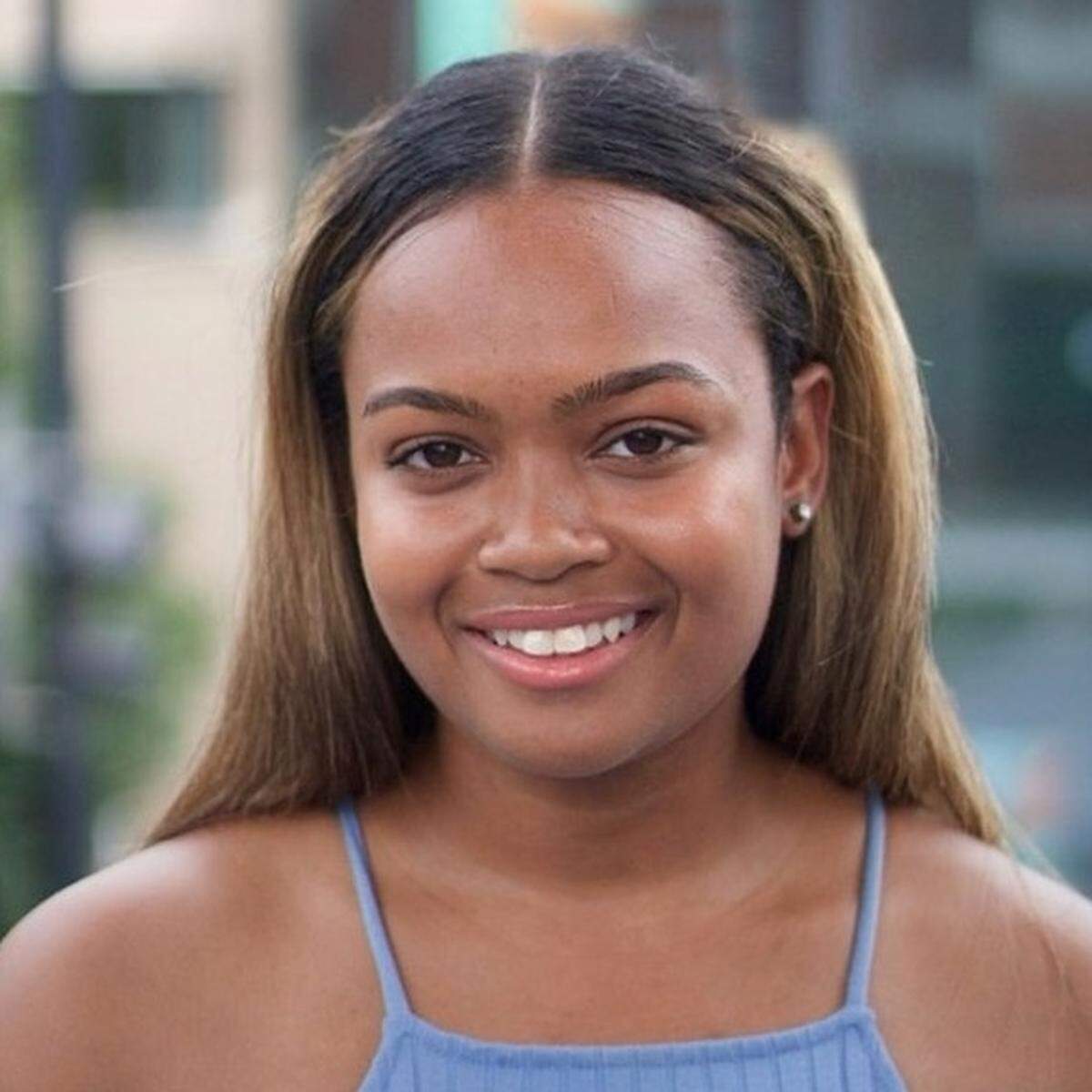
The deaths, which had hit so close to home, also motivated her to help others in her community protect themselves from the virus. Bell is now one of three outreach specialists for a new study that aims to address challenges related to COVID-19 testing and vaccination for the most vulnerable residents in St. Clair County, which includes those in predominantly Black communities like East St. Louis.
“I know I’m going to be able to reach some people, but for some people, just like me, I had to see something traumatic happen for me to say that I will get this shot,” Bell said. “I want to reach someone before they get to that point.”
Eliminating barriers
The study officially launched earlier this month and is housed by Comprehensive Behavioral Health Center, an East St. Louis-based facility that provides emotional, rehabilitative and social support for residents in the area. It’s spearheaded by Liliane Windsor, a social work professor at University of Illinois Urbana-Champaign, Ellen Benoit, sociologist at North Jersey Community Research Initiative, Rogério M. Pinto, social work professor at the University of Michigan, and Joe Harper, executive director of Comprehensive Behavioral Health Center.
With $975,000 in funding from the National Institute of Allergies and Infectious Diseases, project leaders hope to boost access to COVID-19 testing and vaccination for people of color and low-income communities in the area while building adherence to COVID-19 protocols.
At the height of the pandemic, Black people were three times more likely to be infected with COVID-19 than white people. In St. Clair County, from March 1 to June 1 of 2020, Black residents represented almost half of confirmed COVID-19 cases even though they made up just 30% of the county’s population.
Statistics like that are why Liliane Windsor has spent nearly two decades leading research projects that address disparities in the most vulnerable communities. It’s what brought her to East St. Louis.
“I am really committed to community building and working with communities to identify resources and help give a voice and bring resources together so that communities can identify solutions to their own problems, and I’ve always been fascinated with cities like Newark, Detroit, Baltimore and East St. Louis because of their history of struggle, racial tensions and their resilience as well that you can find in these places,” Windsor said. “These are neglected communities that haven’t received a whole lot of investment and they tend to be forgotten.”
Windsor’s research in East St. Louis was motivated by her current work in Newark, New Jersey, which started in 2009. It initially focused on studying the intersection of substance abuse and incarceration in the city, the results of which Windsor says will be published soon.
Since then, she’s been able to build a foundation in the city to implement additional research projects and further address challenges within the community.
“Of course, when COVID-19 came along, that was something that had a major impact,” Windsor said about her research in Newark. “The research that I do focuses on oppression, looking at the historical forces, social determinants of health and how these things create inequities that impact predominantly Black communities and how we can try to intervene in partnership with these communities to address these gaps.”
Windsor’s COVID-19 project in Newark is still ongoing and is based on an HIV model of services, which includes extensive outreach and subsequent recommendations to ensure participants have as much information as possible to protect themselves and others.
“The idea is to do outreach in communities that have had high incidences of HIV and test everyone who’s willing to test so that we can identify our positives,” Windsor said about the HIV model. “You give them the outreach, you test, you give them the test result, you refer them to a continuum of services. So if you are negative, you are referred to prevention services and if you’re positive, you’re recommended for treatment services, which have been effective in HIV prevention and treatment.”
She wants to adapt the same practice to the COVID-19 study in East St. Louis.
The two-year project involves participants answering several surveys over a six-month period, which will ask them their thoughts on COIVD-19. An eligible participant must be a St. Clair County resident, at least 18 years old, able to read English and be at high-risk for COVID-19 exposure or complications. Participants can receive $240 for completing the five surveys, and they can be randomly selected for a final survey for which they’d be paid an additional $50.
For and beyond COVID-19
The goal with the surveys isn’t solely to aid in COVID-19 prevention. Windsor wants to help with additional hardships that participants may face.
“For example, if I’m living in a crowded position, and I have no control of what’s going on with other people who are living with me — my house is maybe two rooms and I have seven, eight people living there — how do I isolate if I’m positive?” Windsor said. “So one of the interventions is about connecting them with other services that might be able to address some of the structural problems like helping them find housing if they are positive.”
Kenya Hooper, who’s another outreach specialist for the study, said the community’s reception to her work has been great so far. Although the state lifted its mask mandate for most indoor places earlier this year and more people are getting vaccinated (more than half of residents in St. Clair County are fully vaccinated), Hooper said the purpose of the study is still essential given the virus’ changing nature and issues with vaccine hesitancy and access in the community.
Zip codes including East St. Louis (62201, 62203, 62204, 62205, 62207) reveal that less than half of the area’s population are fully vaccinated, according to recent data from the Illinois Department of Public Health.
“We still have cases going on,” Hooper, 25, said. “You probably have some loved ones that are still getting sick. You still have children who are still getting sick from COVID-19. Granted, we’ve heard about this for over a year now, so we’ve been hearing information every day. Things change and new strains come and anything can happen from when it started to now.”
Patricia Nunn also helps with the study’s outreach component. She said the project is important now because it’s imperative for Black communities to continue receiving information from people who look like them. All three outreach specialists are Black women and have ties to East St. Louis.
“Yeah, it’s on the news, (and) it’s on TV,” Nunn, 18, said about COVID-19 information. “Some people don’t have TVs. Some people don’t have cable. Some people don’t have that information. It’s one of those things where, yeah, people hear it, but they need to understand it in order for it to make sense. It’s a matter of people needing to hear this information from a person of their skin tone, of their background.”
Since last year, East Side Health District, which serves Black and brown communities in the metro-east, has held various vaccination events in an effort to build trust regarding the vaccine’s impact and increase access to it. Linda Joiner, program manager for the district, said those events have subsided given the low cases, although the district is fully encouraging those within its jurisdiction to get vaccinated. The district is offering walk-in appointments for COVID-19 vaccinations at each of its four locations. Free COVID-19 testing is available for residents at its Washington Park location on 5540 Bunkum Road.
As of April 13, East Side Health District reported three new COVID-19 cases. It’s a number that still concerns Joiner, though, which is why she thinks projects like Windsor’s are needed.
“There’s still hesitancy out there,” she said. “Those who never got vaccinated because we’re not pushing it like we used to, they feel like it’s sort of a see ‘I told you so’ type of thing…you can educate and advocate, but a lot of it has to do with who has that particular ear on that particular day as to how they feel about it all.”
With the new study, Windsor hopes to capture the ears of residents in the area with COVID-19 information while making enough connections in the community to address additional inequities.
“The idea is not to pack up and leave in two years,” Windsor said. “The idea is to come to stay so that for over the course of the next few years we can apply for funding to do projects and other things as well, hopefully staying there indefinitely. In New Jersey, the work started in 2009, so it’s a long-term commitment.”
To learn more information about the project, you can call 618-631-4795 or email cascade@cbhc1.org
This story was originally published April 19, 2022 at 7:00 AM.