Pardoned by Biden, first Black Secret Service agent has roots in East St. Louis
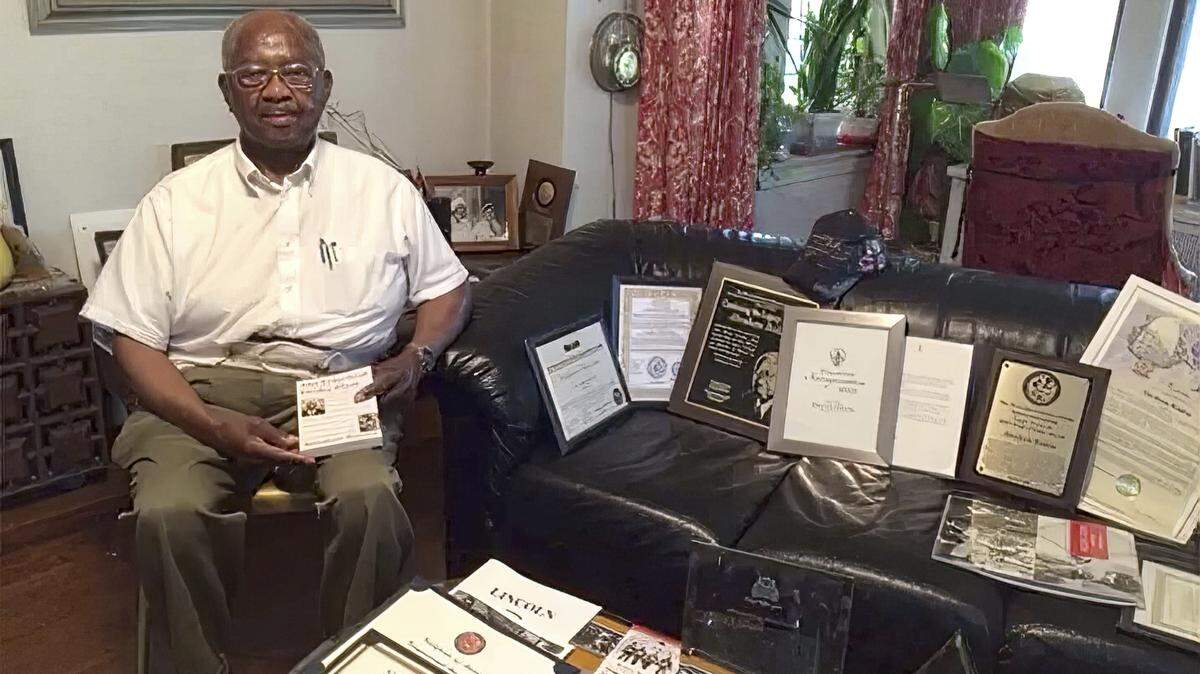
Abraham Bolden went to prison in the 1960s for allegedly trying to sell classified government information while working as a Secret Service agent.
He maintained his innocence for nearly 60 years, claiming the federal charge was payback for his whistle-blowing. His biggest supporters included family and friends from his hometown of East St. Louis.
“He was always an honorable person, and everybody looked up to him and respected him,” his cousin Denise Malone said this month.
Bolden was the first Black Secret Service agent assigned to White House detail. President John F. Kennedy personally recruited him during a visit to Chicago.
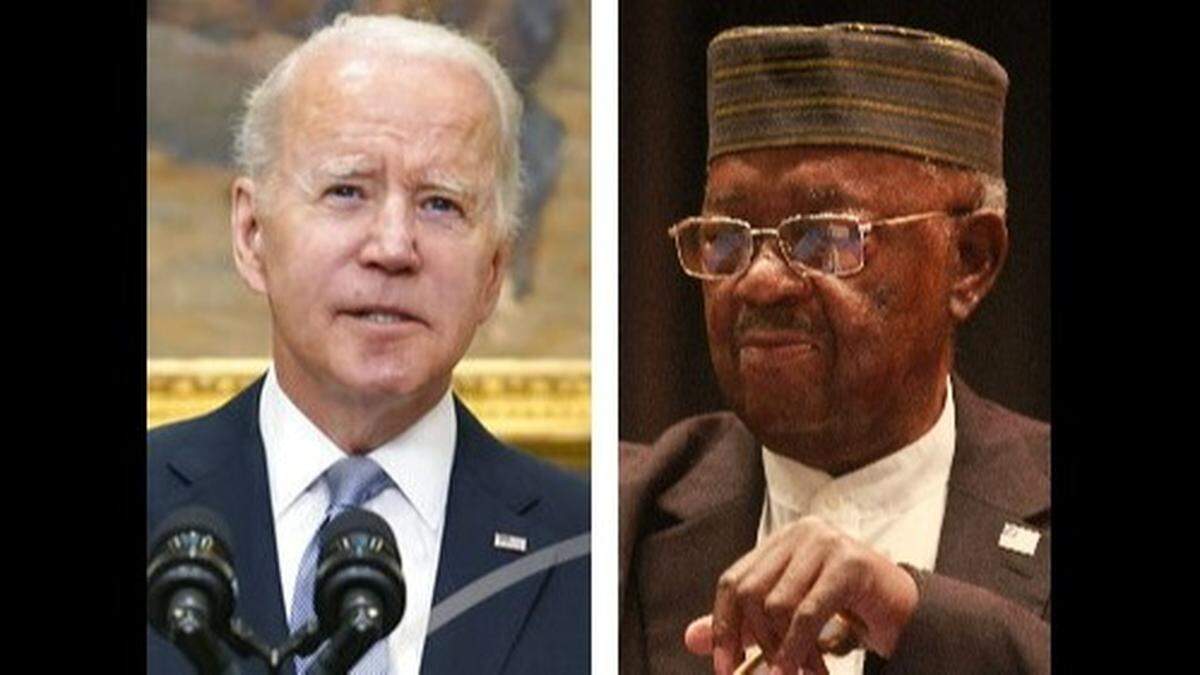
Malone and other family members were elated by the April 26 news that President Joe Biden had pardoned Bolden and two others and commuted the sentences of 75 people.
Bolden’s name was first on the list in a White House statement.
“His first trial resulted in a hung jury, and following his conviction at a second trial, even though key witnesses against him admitted to lying at the prosecutor’s request, Mr. Bolden was denied a new trial and ultimately served several years in federal custody,” it read.
“He has steadfastly maintained his innocence, arguing that he was targeted for prosecution in retaliation for exposing unprofessional and racist behavior within the U.S. Secret Service.”
Bolden, now 87, has lived on the south side of Chicago for decades. He couldn’t be reached for comment on this story.
Bolden posted the White House statement on his Facebook page, along with his own response, describing the pardon as a “justifiable action” and accepting it with “sincere gratitude.”
“It is my hope that my pardon will inspire others to continue to fight for justice and to stand on the truth,” he wrote.
Bolden still has several cousins living in southwest Illinois, as well as a sister, Faye Buck, in Florissant, Missouri, according to Malone, 67.
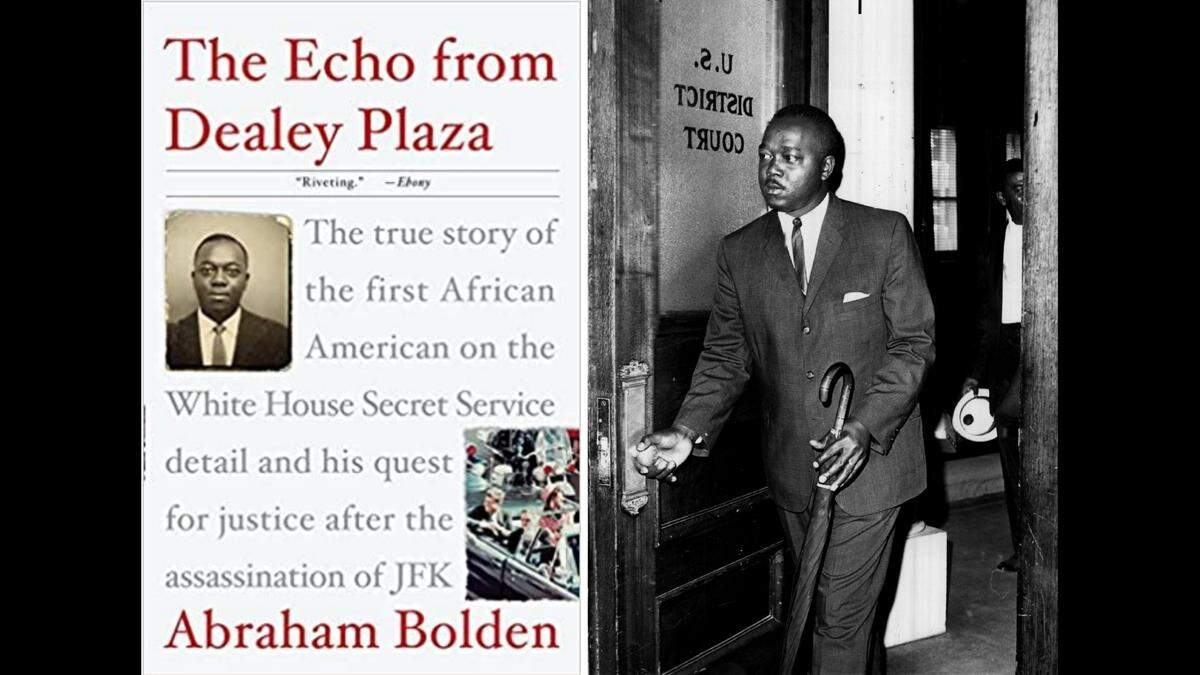
Over the years, Bolden has returned to East St. Louis for panel discussions, workshops and signings of his 2008 book, “The Echo from Dealey Plaza: The True Story of the First African American on the White House Secret Service Detail and his Quest to Find Justice after the Assassination of JFK.”
Last month’s White House statement read:
“Mr. Bolden has received numerous honors and awards for his ongoing work to speak out against the racism he faced in the Secret Service in the 1960s, and his courage in challenging injustice. Mr. Bolden has also been recognized for his many contributions to his community following his release from prison.”
Fateful meeting
Bolden met President Kennedy outside a public restroom at Chicago’s McCormick Place in 1961.
Kennedy’s motorcade had just pulled up. The president got out of a limo and headed for the restroom, which Bolden was guarding as an Illinois-based Secret Service agent.
”(Kennedy) walked toward me and stopped and stood in front of me,” Bolden said in a 2009 interview with the BND. “He had a wonderful smile, and there was a twinkle in his eye, like he was happy to see me.”
Bolden stepped aside to allow Kennedy to pass, but the president mimicked his movement, as if playing a game. Kennedy asked if he was a Secret Service agent or “one of Mayor Daley’s finest.”
“I told him, ‘I’m a Secret Service agent, Mr. President,’” Bolden said. “And he asked me if there had ever been a Negro assigned to the president’s Secret Service detail in Washington, D.C. And I said, ‘Not that I know of, Mr. President.’ And then he asked me if I would like to be the first, and I said, ‘Yes sir, Mr. President.’”
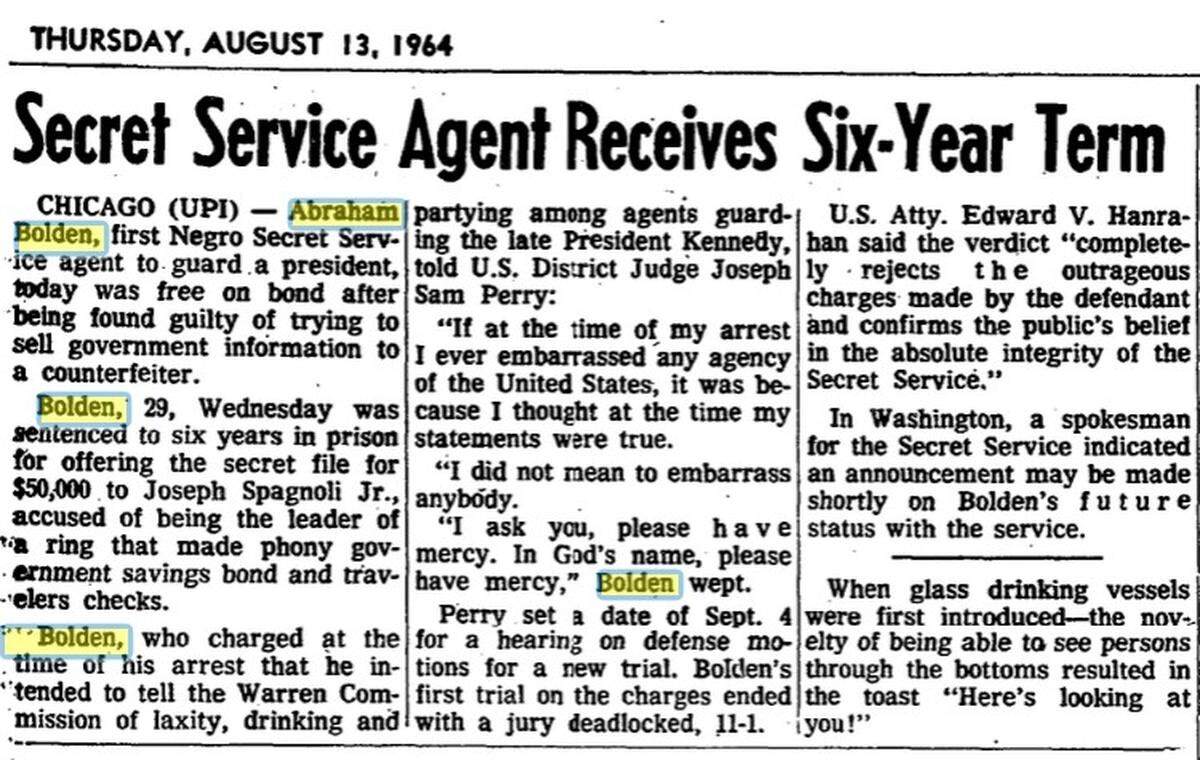
Bolden’s Secret Service career ended in 1964 with the allegation that he had tried to sell information from an investigative file on a counterfeiter for $50,000. He was convicted of conspiracy to solicit a bribe and served three years of a six-year sentence in federal prison.
Bolden maintained that he had been “framed” because of his plan to testify before the Warren Commission after Kennedy’s assassination and criticize the Secret Service for unprofessional behavior, including parties with heavy drinking and prostitutes.
The court case was a shock to his family and friends.
“I grew up hero-worshiping him,” Malone said this month. “He had the job of guarding the president. That was an important position. Then after they trumped up those charges against him, we were afraid for him. We were afraid that he would somehow wind up dead, that someone would try to kill him.”
Trumpeter turned cop
Bolden grew up in East St. Louis and graduated from Lincoln High School in 1952. His father supported the family of eight by working as a carpenter and packing-house employee.
Bolden attended Lincoln University in Jefferson City, Missouri, on a music scholarship and graduated cum laude in 1956.
”I was quite a trumpeter,” he told the BND in 2009. “They called me ‘Little Satchmo’ (after Louis Armstrong). Everybody thought as I got older, I would move up and take his place. I loved that Dixieland music.”
Bolden’s life took a dramatic turn as a college senior. He and other musicians were drinking whiskey at a hotel one night after a dance in southeast Missouri.
”I wasn’t a drinker at all,” he said, “but I became inebriated. The room was spinning around and around, and I fell, and it broke my front tooth, and that ended my trumpet playing.”
Bolden married his East St. Louis sweetheart, Barbara Hardy, in 1955. He considered teaching music but decided to pursue his second interest, law enforcement.
Bolden became one of the first Black investigators for Pinkerton National Detective Agency, despite a secretary’s initial refusal to give him an application.
”I think that they saw a seriousness in me,” he said. “They knew I had this other offer (to teach), and I think they really had a need for a Negro detective. A lot of the work was insurance fraud and being on surveillance in Negro neighborhoods.”
Bolden worked undercover for a year, evaluating the performance of hotel clerks and bus drivers, catching shoplifters in department stores and investigating inventory thefts from warehouses.
Bolden later spent four years as an Illinois State Police trooper in Peoria before becoming a Secret Service agent.
”We investigated counterfeit money,” he said. “We looked for bogus bonds and forged U.S. Treasury checks. That’s one of the main functions of the Secret Service.”
Stint in Washington
Bolden spent only a month on White House detail, accompanying the Kennedy family on vacations to Hyannis Port, Massachusetts, and a Virginia farm, before requesting a transfer back to Chicago.
Bolden claims he witnessed Secret Service agents drinking on the job and otherwise shirking their responsibilities in protecting the president.
”My biggest disappointment was that the only racists (in Washington) I ran into were members within the Secret Service,” he reportedly told the agency’s chief in an exit interview. “There were a couple of incidents where the word ‘nigger’ was used in my presence.”
The bulk of Bolden’s book is a detailed description of events surrounding his federal trial, including “irregularities” that led to his conviction, three-year incarceration and an unsuccessful government attempt to have him declared insane.
After prison, Bolden worked 30 years as a quality-control supervisor for machining and metal-fabricating companies in Chicago. Sept. 11, 2001, was his first day of retirement.
”My wife scrambled a couple of eggs for me, and I had a piece of toast,” he said. “And I turned on the TV and saw a re-enactment of the first plane that hit the twin towers in New York. I thought I was watching a movie.”
Bolden wrote “The Echo from Dealey Plaza” on encouragement from his wife, who died in 2005. The book was published three years later by Harmony Books, an imprint of The Crown Publishing Group, a division of Random House.
Bolden has three children and two grandchildren.
Throughout his life, people have asked for his theory on what really happened to Kennedy in Dallas on Nov. 22, 1963.
”I think that Lee Harvey Oswald was indeed part of a conspiracy, but he didn’t know it,” he said. “He had no idea there were going to be other people shooting. I think it surprised him that other shots were fired (from the grassy knoll).”