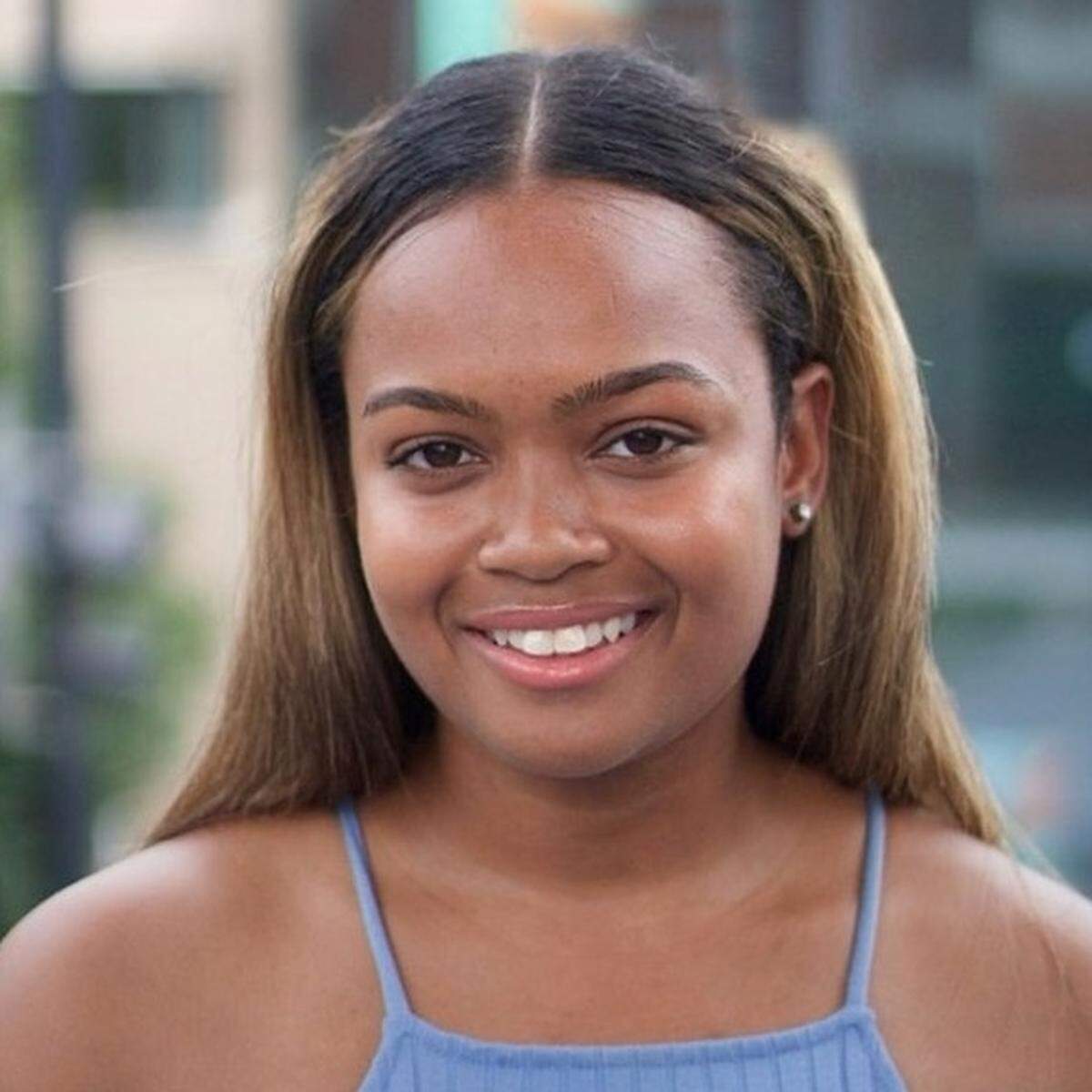
Belleville rapper vows to ‘take the city with him’ ahead of St. Louis pop-up for new EP
There’s a song on Solange’s 2019 album “When I Get Home” titled “Nothing Without Intention (interlude)”. In it, the New Orleans-born, Houston-raised artist samples a directive from a spiritual healer that simply states “Do nothing without intention.”
It’s hard not to think of Sir Eddie C, who also has Louisiana roots, without thinking of that line.
For the Belleville-bred, St. Louis-based rapper, everything has a purpose. And he applies that practice to each facet of his music, even the parts that could be deemed extraneous.
Every detail matters.
During a virtual interview with the Belleville News-Democrat, he’s wearing a bow tie with a pink cardigan over a white shirt. It’s the same outfit he’s worn for public appearances and on social media since the release of his EP “gelato,” which dropped earlier this month. It’ll likely be the same outfit he wears during his pop-up event to further promote the album, which will be held on Saturday, May 28, at a St. Louis gelato and coffee shop appropriately titled The Gelateria Coffee Company.
The 29-year-old firmly believes that rollouts for a project are essential—a mantra that makes sense for an artist who has pursued music for nearly a decade. But putting a gargantuan amount of effort—that’s usually reserved for full-length records—into projects that are typically less than 15 minutes long can be considered uncanny. But, like the Solange song, Sir Eddie C—born Eddie Cox— does nothing without intention.
“If I take the idea of giving people really short, digestible music—because “gelato” is only 11 minutes—but then treat it like the albums that I used to love in giving them a rollout and giving them all of these fleshed-out things they can reach for visually to remember the project by, I think I can win,” he said.
The three-track EP is more memorable for the aesthetic and feeling it invokes than the actual content. Each song sounds like a colorful, frenetic escapade into Sir Eddie C’s world. The upbeat track “bounce” boasts about his physical and lyrical swagger. On the soul-infused “godbody”, he raps about why he’s the best suitor for a potential partner, and on “free market,” he critiques financial inequity while thanking his mom, who passed away in 2018, for giving him invaluable support that surpassed what any dollar can give him.
“Before my mom had passed in 2018, I always, always appreciated the fact that she didn’t push back against the music. She always got it. One of the last text messages she sent me before she passed was “Just do it big, baby. Just do it big.” That was around the time I was getting ready to put my project called “Readmission” out. I’m so thankful for that.”
Perhaps fulfilling his mom’s wish is why Sir Eddie is adamant about creating every project like it’s his last. Or maybe it’s because he grew up watching his mom and aunts---whom he refers to as “The Clark Sisters before The Clark Sisters”--- sing with so much vigor during choir rehearsals at Mt. Sinai Missionary Baptist Church in East St. Louis, knowing that they weren’t able to pursue their dreams outside of the sanctuary. Or maybe it’s because Sir Eddie, a natural competitor who was captain of the debate team at Belleville West High School, felt that he’d already succeeded in debate and needed new terrain to conquer.
Whatever the reason, Sir Eddie C’s relationship with his music is admirable and unflaggingly intense. He really cares. The Belleville News-Democrat talked to the rapper about his Belleville upbringing, how he conceives ideas for his music and his event on Saturday.
This interview has been edited and condensed for clarity
Your recent performance at the Cinco de Mayo festival on Cherokee Street reminded me of church. Did you grow up in church?
I grew up in the church when I was little. My mom is the daughter of a Baptist preacher from the South. They came from Alexandria, Louisiana. It’s so wild because definitely when I was younger, it was “I don’t want to go to church. Why are you bringing us to church,?” but it’s informed a lot of the stuff that I’m doing musically now. Having to go to those choir rehearsals on Wednesdays and just sit there and just watch my mom and her sisters do their thing, I was listening and I was understanding and I was picking things up even though I was really thinking about wanting to play with my Pokémon cards.
You grew up in Belleville. What was that experience like for you?
I grew up there in the 90’s and 2000’s. Essentially, it was very white. It was super, duper white. On my street, it was us and one other Black family that I remember…it was a thing where I’m happy I had strong parents, especially my mom. She was a strong, very, very proud Black mother, a woman in my life, and I didn’t always appreciate that when I’m little. I just wanted to fit in when I was little. I’m in a class (at Signal Hill School) with all white kids and my mom’s a strong influence and if something (racist) does happen, she would address it. I would kind of shy away from it because I didn’t want to cause any trouble, but she was showing me something, and I didn’t appreciate it when I was little.
Can you give me an example of that?
It would just be school stuff. I wish she was still here to tell each story because she’d really break it down. For instance, my mom was a go-getter. She showed me anything in the world that you really want, you can go for it and go get it. I just remember in the 90’s, there would be times where she got really good in the financial market. She was like, “Alright I’m about to go buy a Benz. ‘”It was like the biggest Benz you could get. Black people weren’t really doing that foreal (back then). When we’d pull up (to school), they were giving her a hard time. They would ask us what does your mom do and all this kind of stuff, like really passive things. It got to a point where she told us if they ask us what she does tell them, “I don’t know. Ask my mama. She’ll tell you.”
Have you gone back to Belleville since your mom’s passing?
It seems like a lifetime ago. I don’t go back. Like I’m never really there foreal because like when my mom passed, everything changed. The crib doesn’t even look like the crib anymore. That just shows me that your people are your home. Whenever I’m there, it’s bugged out because I’ll see things that I recognize. Growing up, I’ll see all of these different things, but it’s still home at the same time. It’s very weird to have a disconnect with being back home whenever I do go. Since she passed away in 2018, I’ve probably only been over there maybe five times.
That’s why I still tip my hat to it, if you ever notice. If you look at the bottom of my album covers, it’s the Belleville flag colors---the black, green, yellow, white. That will never leave my album covers because that was a conscious decision I made to always tip my hat to where I’m from and bring Belleville with me everywhere I go. That color bar at the bottom of everything I do is a nod and a wink to the crib.
Being on the debate team seems to be a crucial part of your experience growing up in Belleville, which led to you studying political science at McKendree University. What made you want to pursue music when you had that kind of background?
I was at a debate tournament, actually. Up until that point, school and debate was everything to me. I had invested so much into being the best debater. I remember being at a school (University of Central Missouri), and we were at a tournament, and we had won that tournament. Then, in between rounds, I was working on music. I was working on what would be my first project ever. I just remember reaching out to the coach afterwards and was like “Yea, I think I’m done.” He was like, “What! You just won. What are you talking about?”. I was like “yea, I think I’m done” because that passion was gone.
How did you create the concept for “gelato?”
The music— that comes really easy to me now. In the pandemic and everything, I was writing a lot, and a lot of it was bad, but I did need to actually write something, so I would go to Forest Park, I would go to Tower Grove Park and just write a lot. I just had all of these songs and was like, “What I am going to do with these? I don’t know how to put them together.” When it came down to do “gelato,” everything just really started with me just going to The Gelateria with my homegirl Nyara and seeing the colors and the cakes and being like, “This feels like the music I’ve been making.” I just named it gelato after that. I didn’t know what songs, but I just knew this–the colors– feels (like what I’ve been writing). I really pay attention to colors. Colors mean a lot to me. When I looked in the case, the tones and textures of what I saw and tasted when I ate the stuff and when I looked at it just reminded me of the songs that I was making.
What was the reasoning behind the rollout for the EP?
I knew no matter what I was going to do next, it was going to be really expansive. Whatever it was I was going to, it could’ve been named “Car,” and I would’ve been dressed as a mechanic with a wrench in my hand during this interview. It was definitely going to be this really immersive thing. It started with just seeing gelato in The Gelateria and from there, I went home and my imagination just went crazy and just started drafting up album covers and stuff and looking into what ice cream men wore back in the day and their aesthetic. I just kind of totally fell in love with building a world around the music, so you have something you can ascribe the music to outside of that song
Why are rollouts important to you?
The way people consume music is different. We’re in like the playlist era, but for me, as someone who grew up loving albums, loving really thought-out rollouts, loving really well-constructed things, especially in the music space. Watching Ye growing up and watching “Graduation” coming out and watching “808’s & Heartbreak” come out and watching, on “Graduation,” him having the Takashi Murikami poster inside of the CD—that changed my life. It was like, “Yo, I have a Murikami poster on my wall.” That kind of rollout changed my life.
I always wanted to do that, even though I’m in an era where people don’t sit with music that long.
What can people expect from the event on Saturday?
Everything is happening in pieces. We did (the) Cinco (de Mayo festival), so this is the next step in the rollout. It is the Gelato Social. I’ve been working on that since late November. I’ve been in contact with Gelateria since then to try to make a collaboration happen. I needed them to see that there’s this art culture over here that they can tap into.
The actual Gelato Social itself is just going to be really chill. My DJ, DJ Nico (Marie) will be spinning records. It’s going to just be a pop-up shop where I’ll be in the back in the gelato fit with my ice cream truck with the custom flavors and a bunch of merch. My thing was growing up in school, they would have ice cream socials and it would just be people standing around and listening to music. That’s something that I wanted to do. Everything doesn’t have to be a crazy show. I want to give people experiences that go beyond that because sometimes people don’t have the energy to go to a rap show.
Do you have a favorite ice cream flavor?
It didn’t exist yet until I created it (for the pop-up). I like ice cream, but that’s just how it came for me. My mom is from East St. Louis, so we would go there a lot to visit my grandparents after church. There was this one ice cream place called Pirtle’s (Famous Ice Cream). They had lemon ice cream, and I was like, “Man, why don’t I have access to this thing all the time?”. The first flavor I came up with was lemon vanilla with white chocolate chip, so that’ll be one of the flavors at the pop-up.
The EP ends with “free market,” which concludes with you thanking your mom. How does it feel for you to be pursuing music without your mom’s presence, considering she was very supportive of you?
I think about it a lot. It’s bittersweet. That’s the only way you can really explain these things. Even this (interview), when we put this out with whatever medium it is. Say it’s for the BND. She would’ve loved this because she still lived in Belleville. I can hear her right now “Did you know Lil Eddie is (in the paper)? Oh my God”. She would’ve bought everyone a paper, so it’s stuff like that where I go damn man I really wish she could see these things. I think I’ve grown in how I reconcile these kind of things because for my brother’s kids and for my sister’s kids, I want to make sure that they see her when they see me.
The Gelato Social will be held at The Gelateria, located at 3197 S. Grand Blvd. in St. Louis, from 12 to 5 p.m.
BEHIND THE STORY
MOREWho are our stars?
Help us tell more stories about people from the metro-east making an impact on the arts and culture scene in our region and beyond. Who are the emerging creative artists shaping the future of music, dance, the theater, film, sculpture, television, writing, photography and other arts? Tell us your ideas by completing this survey or contacting DeAsia Paige via email or phone 618-239-2624