
Southern Illinois University archeology field school explores Fort Kaskaskia State Historic Site
This story was originally published by The Southern Illinoisan.
Students in the summer archeology field school at SIU are getting off campus to learn more about archeological investigation. Students are investigating the sites of forts at Fort Kaskaskia State Historic Site in Randolph County through July 1.
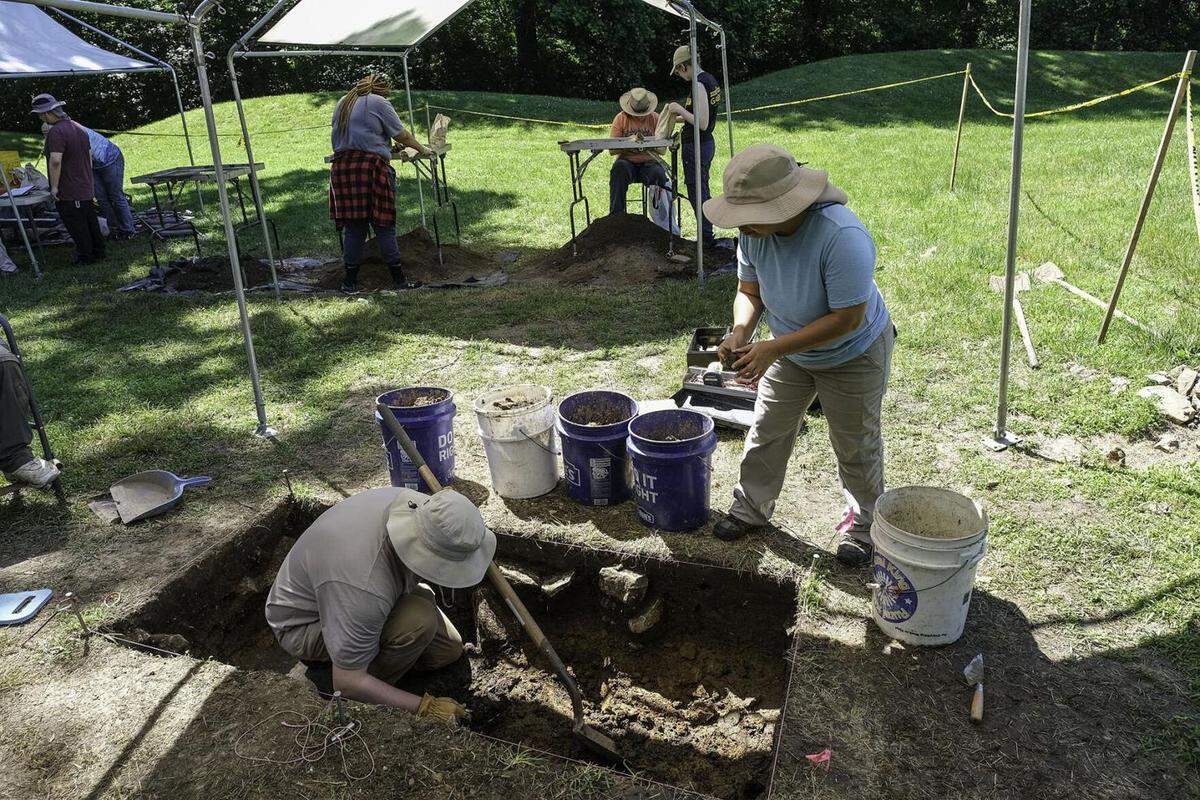
On Thursday, students were excavating in a refuse pit at the French fort site.
Mark Wagner, director of the Center for Archeological Investigation at SIU, said they found a few artifacts in a location they believe is a refuse pit, probably for Americans living in the French fort in around 1803 while they were building the American fort up the hill at the park.
“I think the commander of the troops had them policing the fort and putting the trash they found in the pit,” Wagner said.
He explained that they dug in this place last year and found a couple early-style buttons that were used in 1802. That gave them reason to dig in the same location this year and look for more artifacts.
Wagner said Pierre Menard lived below the fort and would have had Indians visiting him. The town of Kaskaskia also was below the fort on the banks of the Mississippi River.
Indians probably camped near the fort. Wagner said Indians of the time did not like to live in houses. They preferred their own style of homes and camps.
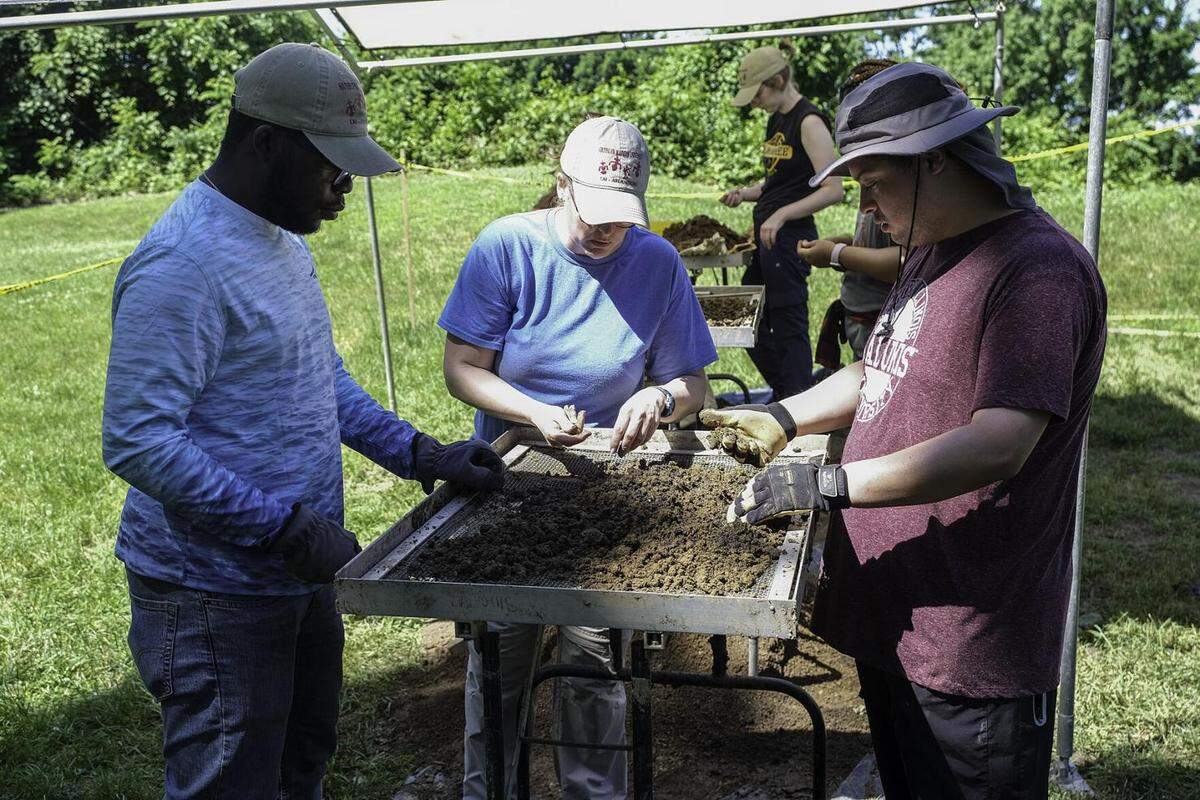
Students are looking carefully through the pit for just about anything that might have survived. The pit had a layer of clay, probably put there by soldiers to cover the trash. On Thursday morning, they were removing that clay.
They know the soldiers bought pork and beef from a merchant in Kentucky, and they found evidence of meats and wild game used in their diets.
The students also found the lid to a tea canister. The military officers of the time drank tea to help distinguish themselves from their soldiers. Tea came in canisters, and this appears to be a lid from one of those canisters.
Wagner said he would like to find evidence that women and children lived at the fort.
“Zebulon Pike, the Pathfinder, was stationed here and his wife Clara was with him,” Wagner said.
The mention of women is found in letters from the fort to relatives back east.
The company of soldiers, about 80 men, would have four ladies to do their laundry, one for every 20 men. Wagner said this was a sought-after position for women and one of the rare ways they could earn money.
He added that the wives and children of the men would have followed them, too. However, they have not seen any items that indicated women or children were there.
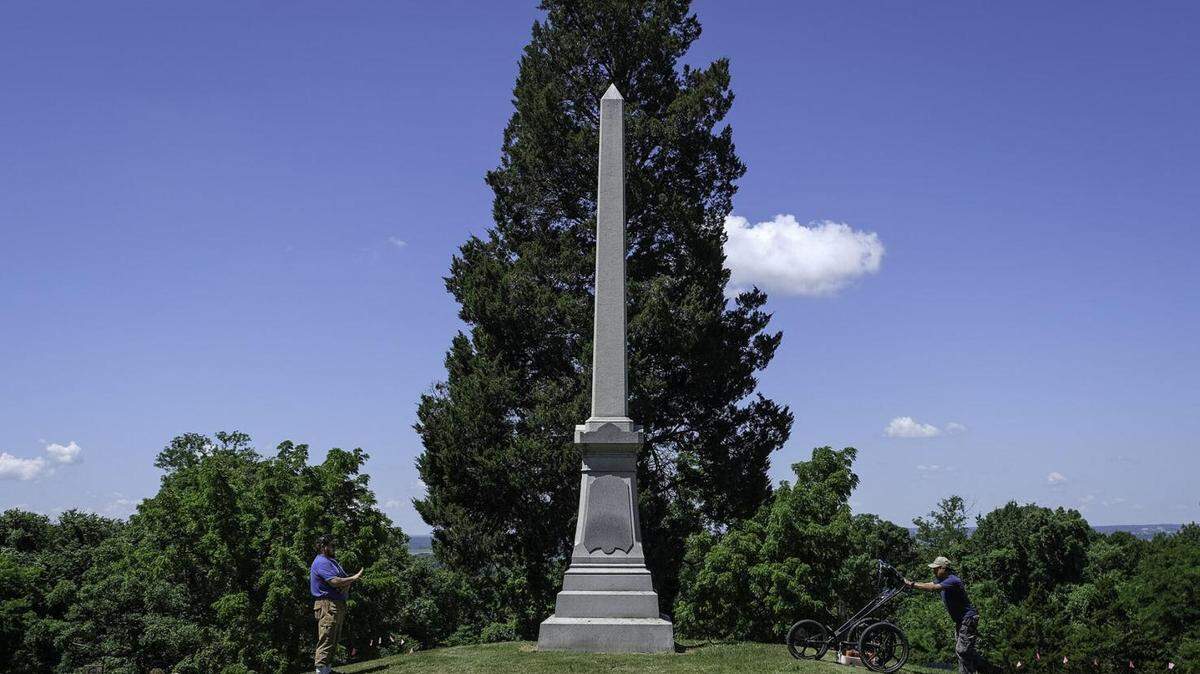
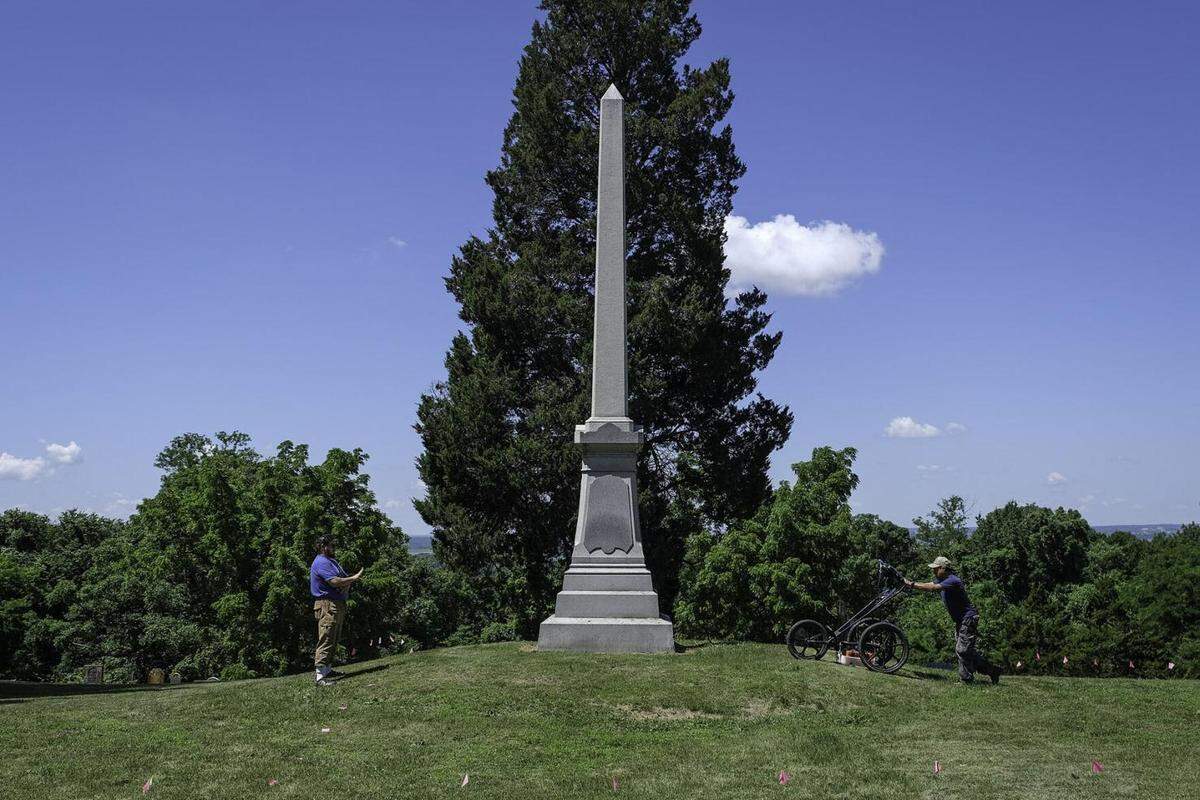
While this work was going on at the French fort, Felipe Nava and Jameson Yong were working with the center’s ground penetrating radar to find anomalies underground near the cemetery on Garrison Hill.
The radar does not have GPS, so they marked a grid with flags and worked from that grid.
Wagner said they were looking for a wall to the American fort that was built on the hill.
They used a magnetometer at the site earlier and were following with the ground penetrating radar. Yong showed the types of grids that came from their use of the machines.
The machine collects data, then it has to be downloaded into a laptop. They have software to process what they find. The ground-penetrating radar produces a grid that resembles a topographical map.
“It shows you possibilities that you have to investigate. If we want to know what they are, we have to excavate,” Wagner said.
Information from the two grids will be show where the students should dig.
“We will end up with a 3-D cutout we can take in levels to make sure we’re seeing everything,” Yong said.
They are working to find the eastern wall of the fort, which should be just uphill from the cemetery. The dirt on the eastern side of the road has not been disturbed.
Wagner said they plan to begin excavating on Garrison Hill next week. Work at the park will continue through July 1.
BEHIND THE STORY
MOREWhy did we post this article from The Southern at bnd.com?
The BND and The Southern have a content-sharing agreement on an article-by-article basis. When our editors see an article from The Southern that might be of interest to BND readers, we ask permission to post it at bnd.com and print it in the Belleville News-Democrat, and vice versa. Readers across southern Illinois benefit by having access to a broader menu of regional news.