What does Juneteenth mean to you? Six people in East St. Louis reflect on the holiday
June 19 marks 157 years since enslaved Black people in Galveston, Texas, learned of President Abraham Lincoln’s Emancipation Proclamation.
It had taken roughly two-and-a-half years for the news of emancipation to reach them. They were deprived of their freedom until Maj. Gen. Gordon Granger and Union troops marched to Galveston to announce Lincoln had declared all enslaved people free.
Though it dates back more than a century, Juneteenth is still a relatively new holiday to some who were celebrating on Saturday in East St. Louis. The federal government first recognized it as a holiday in 2021 following historic protests after the murder of George Floyd in Minneapolis on May 25, 2020.
Residents from the St. Louis area spoke about what Juneteenth has come to mean to them.
‘Celebrating the wrong day’
Terra “T-Baby” Jenkins of East St. Louis said she always celebrated independence on July 4 like many Americans.
After learning about Juneteenth three years ago, she realized she had been “celebrating the wrong day” because Black people weren’t free on July 4, 1776, when the Continental Congress adopted the Declaration of Independence.
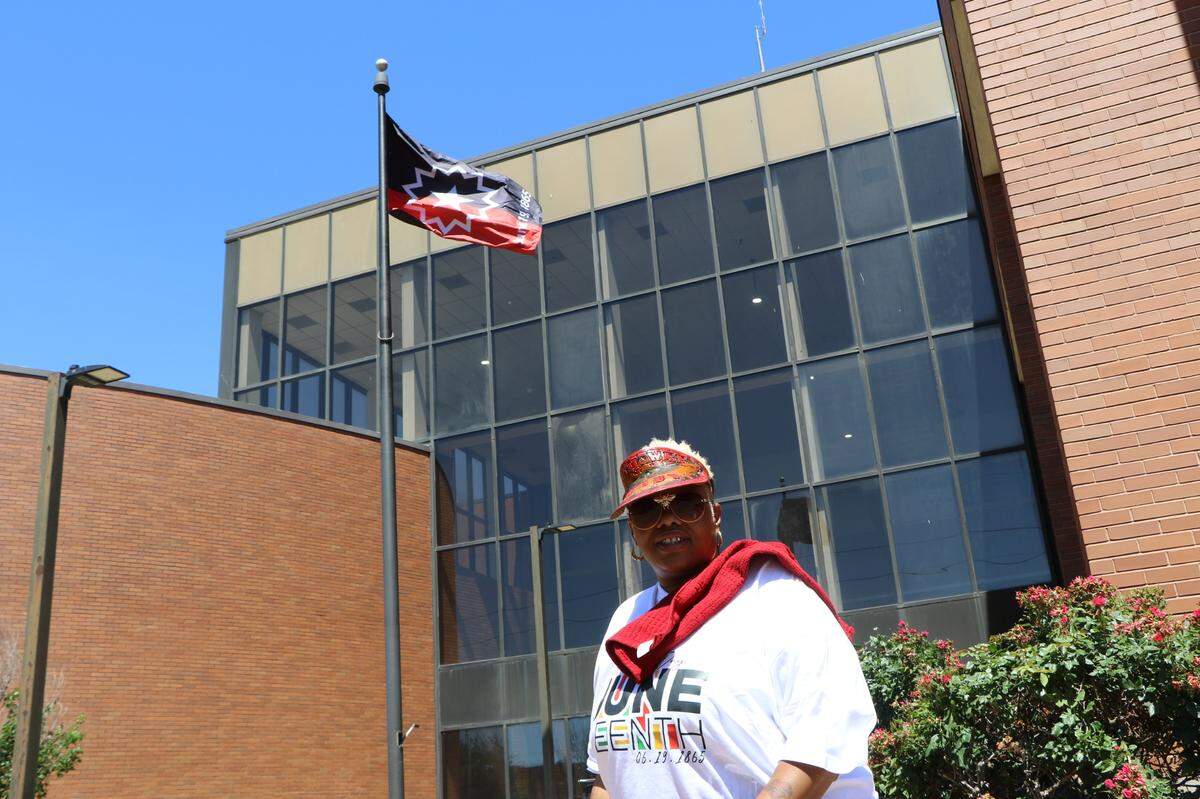
“I’ve educated myself about how (Juneteenth) really was our independence day,” Jenkins said. “We’re learning from our elders and raising our children to recognize how important it really is. I wasn’t educated about it, but kids are going to remember this day. It feels so warming.”
‘Celebrating culture’
Grace Glass, 17, was named Miss Juneteenth Illinois. The incoming high school senior from Swansea says Juneteenth represents a celebration of Black culture.
“It means celebrating our milestones, our past, where we are right now and where we are going to go. It also means taking the time to really reflect on not just the holiday but to see what you can do during this day to see loved ones, get together for reunions, BBQs, just thriving in your Blackness,” Glass said.
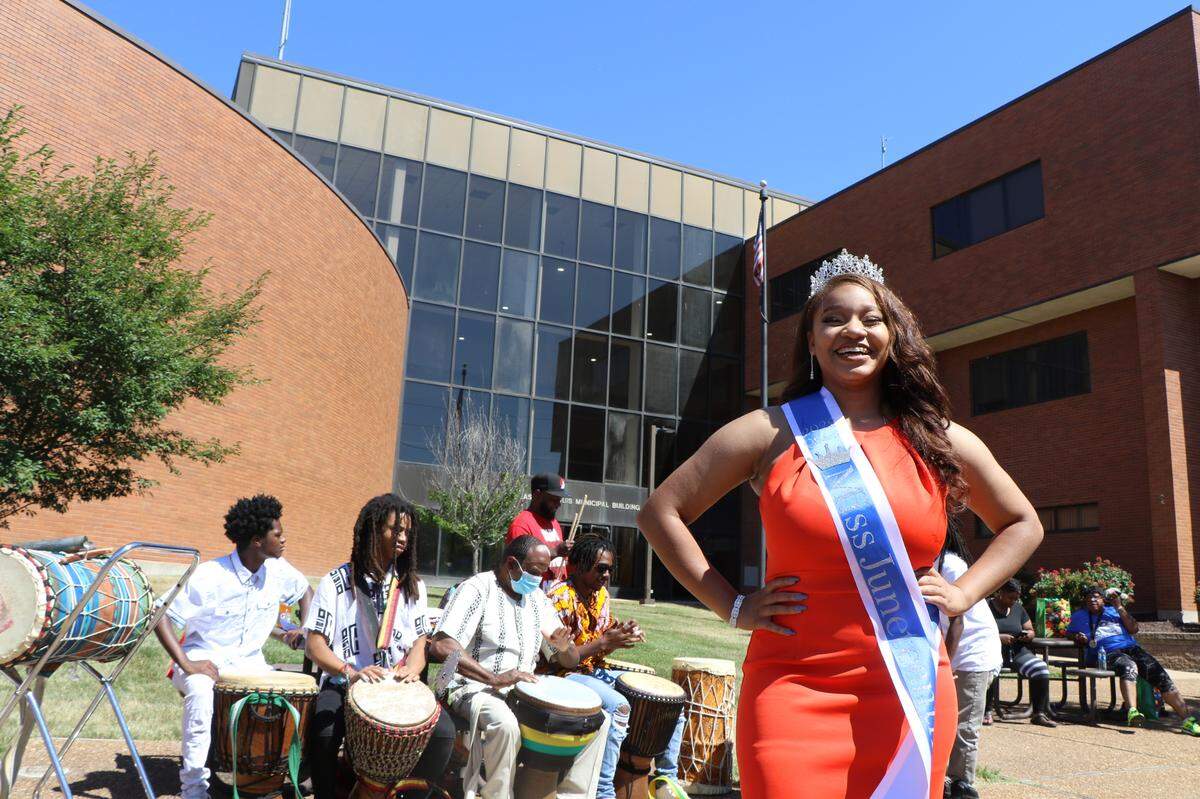
Glass didn’t learn about Juneteenth in school, and so it wasn’t a holiday she celebrated until she discovered it over the past few years.
“I’m so glad it made it to federal holiday status,” Glass said. “I love my people, I love the culture we’ve created, I love how far we’ve come and I love the future that we’ve paved for ourselves.”
‘A very big celebration’
Jahja Uwizeye, 16, of St. Louis, says Juneteenth is a time for friends and family to gather. Uwizeye is a professional African drum and dance performer and played as part of the East St. Louis Community Performance Ensemble on Saturday during Juneteenth events.
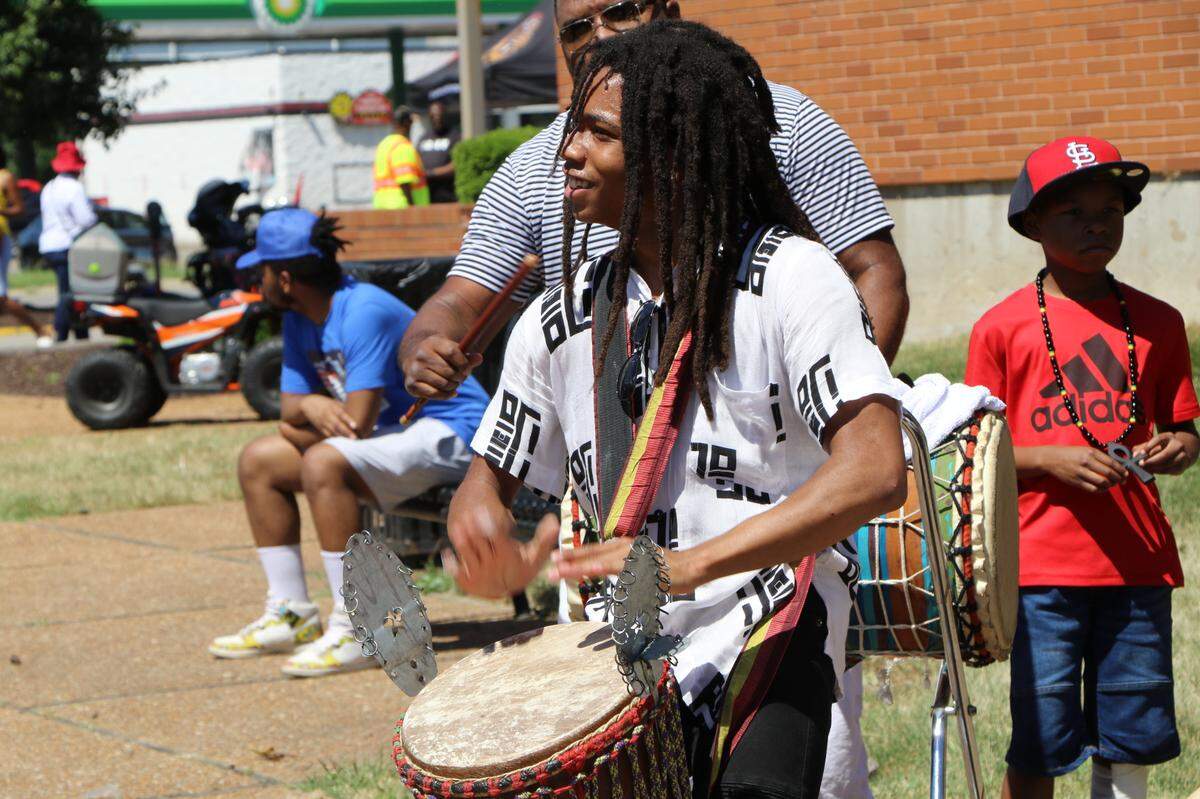
“It’s a very big celebration for us,” Uwizeye said. “It’s a time for us all to gather together. That’s what Juneteenth means, and that’s what we’ve come here to do today. It’s amazing.”
‘Freedom’
Dakari Jefferies and Jevon Gibson, both 7, watched the Junteenth motorcade pass through East St. Louis Saturday. Their families have begun teaching them about the holiday.
“It’s for helping people,” Gibson said.
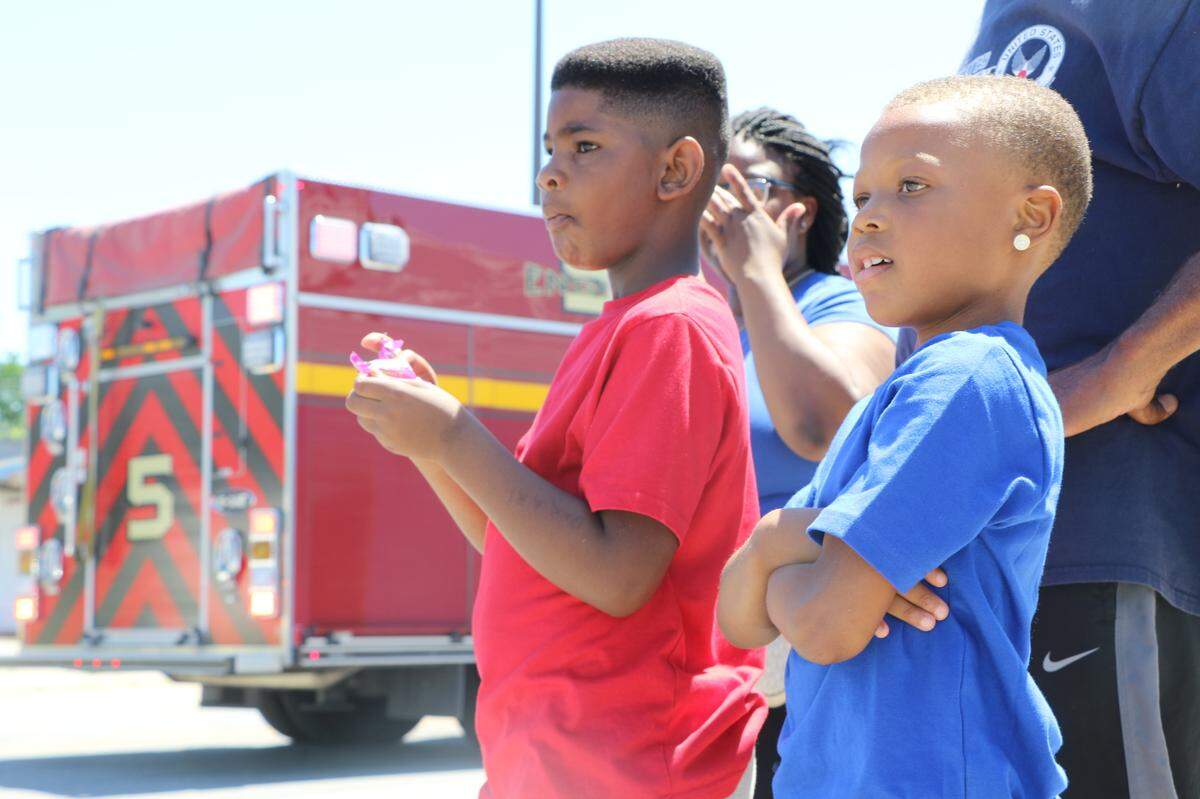
Jefferies celebrated Juneteenth for the first time last year.
“Freedom,” Jefferies said when asked what the holiday means to him.
‘I’m blessed’
George Mays, 78, is Jefferies’ and Gibson’s great-grandfather. He watched the motorcade pass by as firemen tossed candy to his great-grandkids.
“I’ve taken some of the knowledge that I have from my father and passed it on to my grand- and great-grandchildren,” Mays said. “It’s an opportunity to enjoy the freedom that they created for us.”
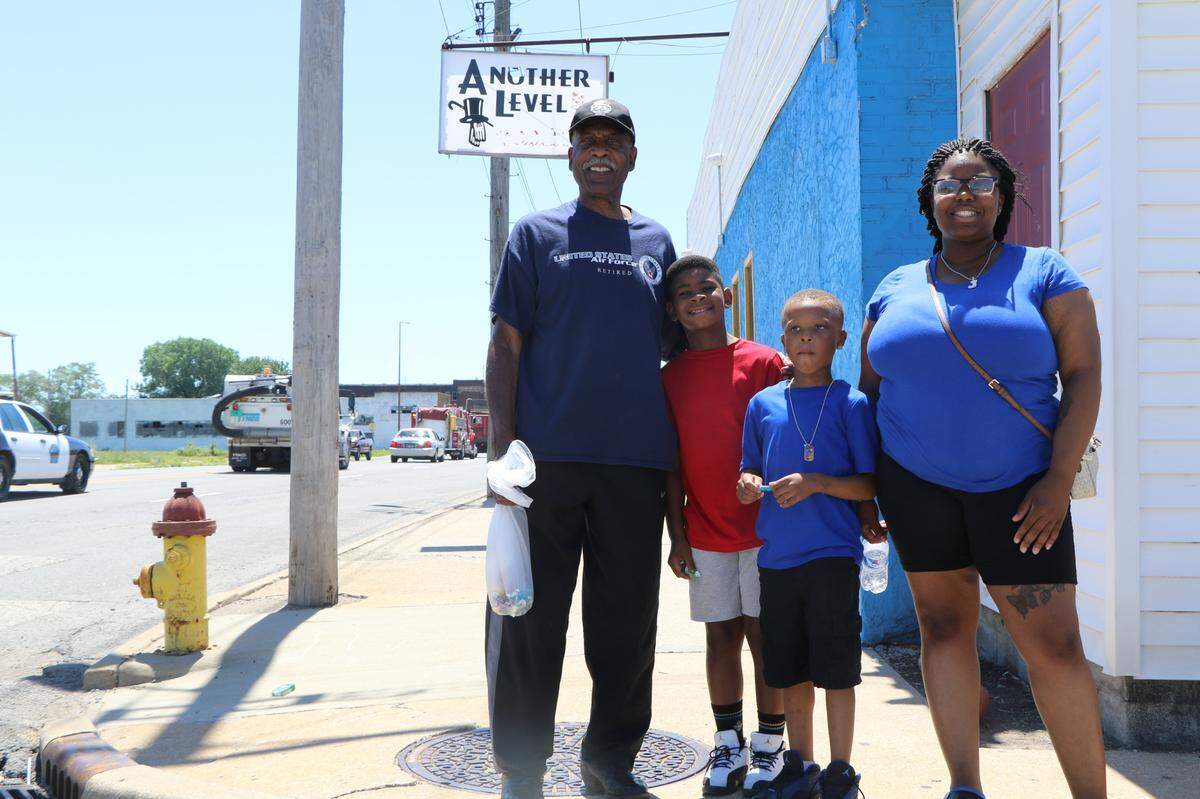
“I’m blessed,” Mays said. “This is my first time coming to a Juneteenth parade in my life. To have my grandson call me this morning and ask me to stand in, it lets me know that I have a double blessing.”
This story was originally published June 18, 2022 at 4:35 PM.