Heated debate divides community over proposal to expand Millstadt library district
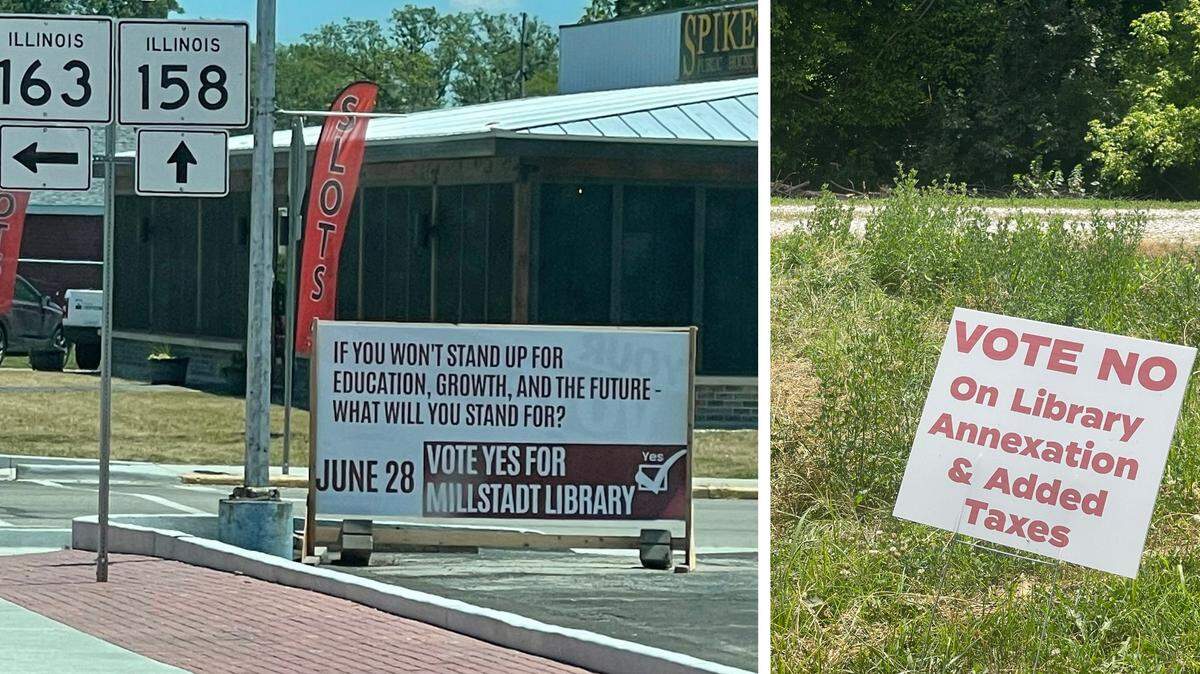
An upcoming referendum on a proposed expansion of Millstadt Library District and construction of a new library building has divided the community in a way that some say is unprecedented.
Supporters have accused opponents of spreading false information, and opponents have accused supporters of being deceptive.
In addition to the usual election signs and mass mailings, people have created “Vote Yes” and “Vote No” pages on Facebook and gotten into heated exchanges at library board meetings.
“Some of the posts have almost been threatening,” said Mary E. Frierdich, an administrator of the “Vote No” page. “It’s like, ‘If your kid plays baseball in Millstadt, you better vote for the new library.’ They’ve even dropped the F-bomb. It’s ridiculous.”
Otto Faulbaum, a member of a political action committee formed to support expansion, said social media has led not only to incivility, but also confusion and misunderstanding.
Expansion opponents have spoken out about higher taxes for rural Millstadt residents whose property would be annexed, the $4.1 million price tag for a new library building, and what they perceive as lack of transparency on the referendum.
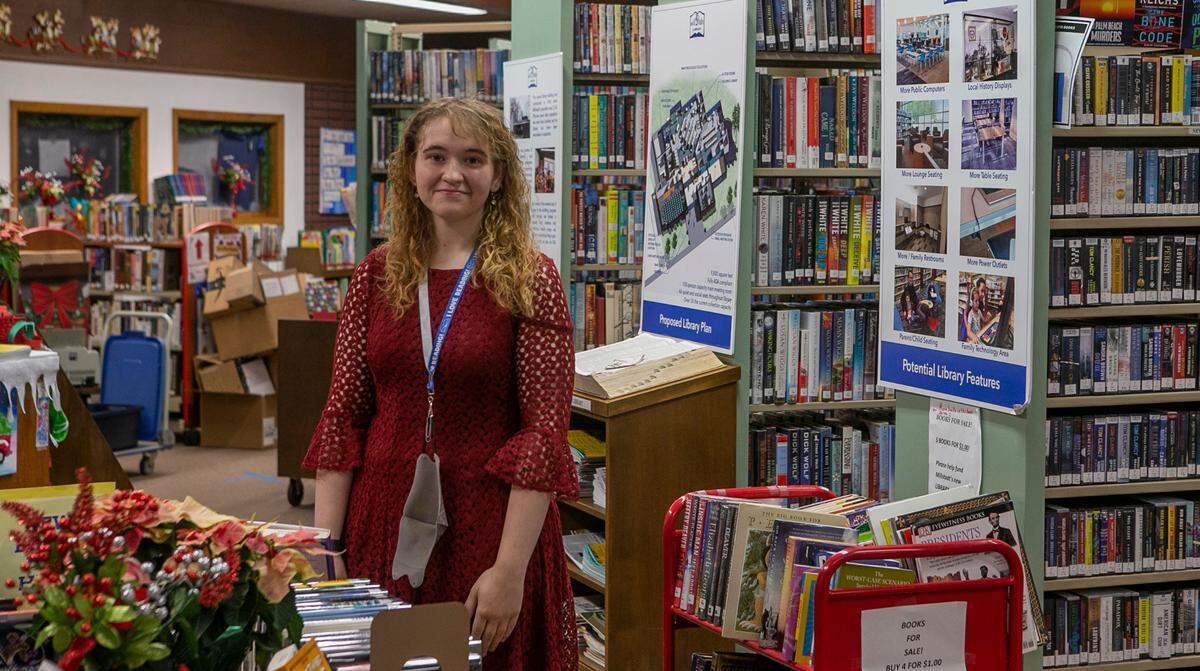
Librarian Nichole Lauko, 27, said officials have been surprised by the level and tone of opposition. They see a new building as important not only for housing books and computers but also improving programs and services and providing a gathering place for area residents.
“That’s part of the library’s purpose,” Lauko said. “We have to keep thinking about, ‘What can we do better for the community?’ And the 1,500-square foot space that we have (in the Village Hall) is not serving our community to its fullest.”
Grant changes equation
The library board has dreamed of constructing its own building for decades, but it didn’t seem possible until last year, according to member Norm Sanders.
That’s when the Illinois State Library determined that the district was needy enough to qualify for a $1.2 million Public Library Construction Grant, contingent on its ability to come up with $2.6 million in matching funds by June 30, either by raising money or taking out a loan.
“It’s a great opportunity,” Lauko said.
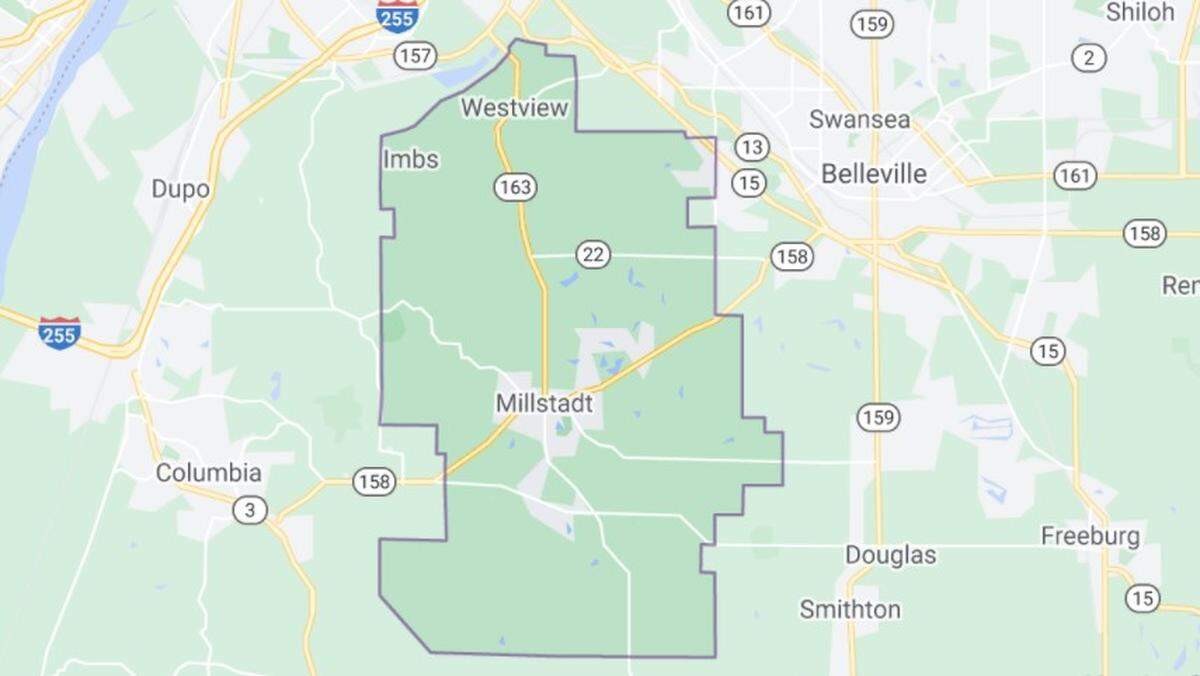
The library district has the same boundary as the village of Millstadt. There are about 3,000 registered voters, according to the St. Clair County Clerk Elections Department.
The expansion, if approved, would annex the remaining property in Millstadt Community Consolidated School District 160, excluding portions already in Belleville or Smithton library districts. There are another 3,800 registered voters in that area.
Tuesday’s primary election deals only with library district expansion, not construction of a new building, but officials say the latter isn’t possible without the former. That’s because the property annexation would raise the tax base, generate more revenue and help the district pay off a 20-year construction loan.
“The tax rate would stay the same,” Lauko said.
Current library district residents would continue to pay .15% of assessed valuation, and other school district residents would start paying that rate after the annexation. That amounts to $150 per year for every $100,000 of a home’s assessed valuation (one-third of market value).
‘Opportunities to connect’
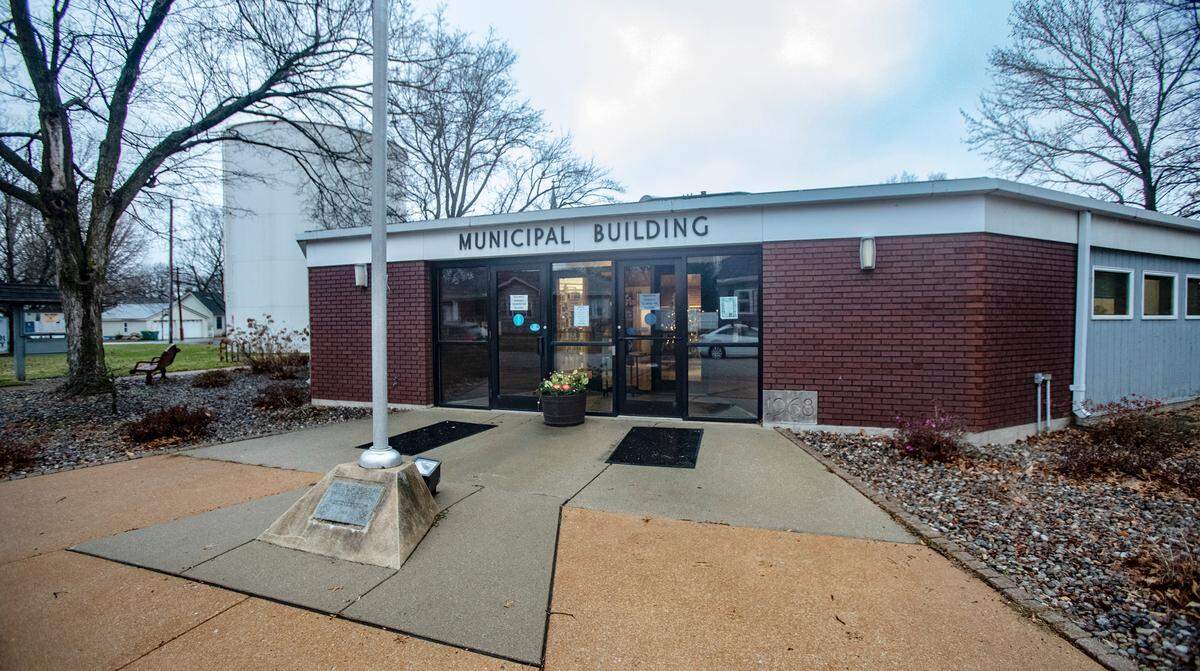
Millstadt Library has been sharing an octagon-shaped building with the Village Hall since 1969, and until August it was a village department instead of an independent public library district.
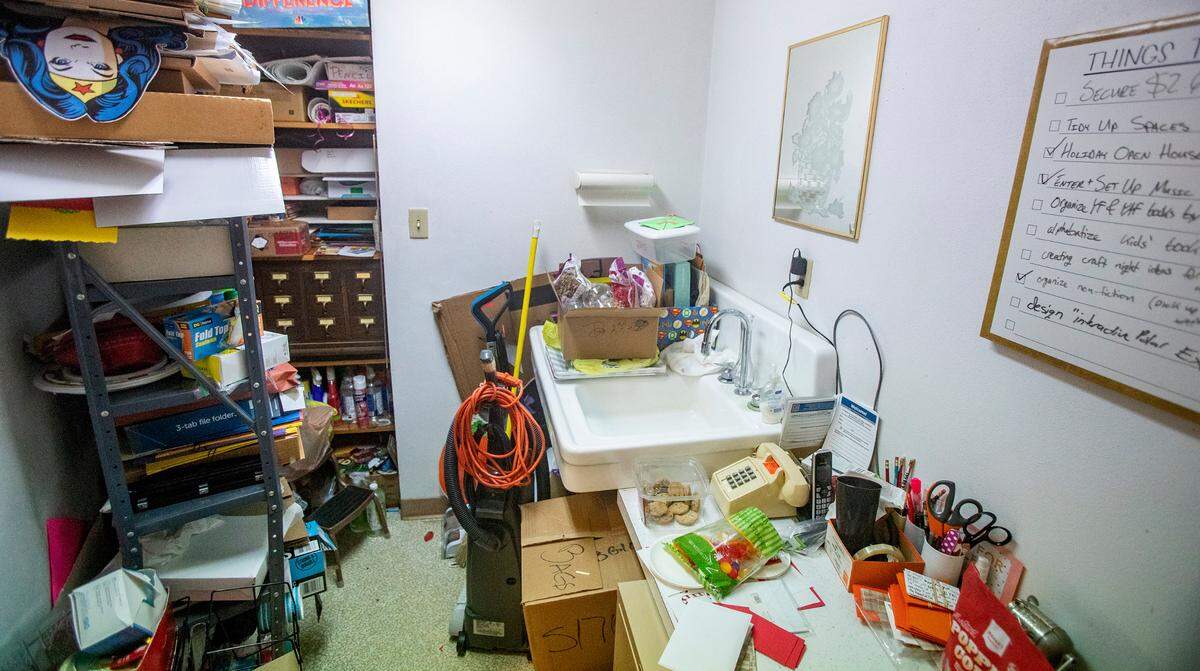
The library’s collections, programs and services have grown dramatically, but not its space. Books, boxes and other items are stacked on carts and the floor. Lauko’s office doubles as a janitor’s closet.
Faulbaum, 70, of Millstadt, said the library board and staff have worked tirelessly on research and planning and made the case that a new building would benefit all residents of Millstadt school district. He doesn’t think they deserve the criticism they’ve received.
“It’s a very well-intentioned, sweet, sedate group of individuals who love Millstadt and love the opportunities that libraries provide, and they’re being treated like evil schemers,” he said.
Faulbaum disagrees with people who say libraries are obsolete because everyone does research on the internet.
He said COVID-19 showed the importance of libraries and other community centers in getting children and adults out of the house and away from TV sets and electronic devices, and that can help with societal problems ranging from tribalism to loneliness.
“A lot of these kids don’t have many opportunities to connect with people,” he said. “A modern library isn’t just a set of books. It’s a place for people to share ideas and learn about things and perhaps make something with their hands.”
Faulbaum said students have access to school libraries, but hours are limited and the public isn’t allowed for security reasons.
Resentment over taxes
Frierdich, 59, lives in rural Millstadt with her husband, Don, a retired teamster and part of a farming family. She said they’re not against the library, but they don’t live in town or use its services.
Frierdich estimates that annexation would cost them about $250 a year in property taxes on their home and farmland.
General contractor Brian Triska, 39, who created the “Vote No” Facebook page, estimates that his family would pay double that amount because they own two properties in rural Millstadt.
“I’ve never stepped foot in that library,” he said. “I didn’t even know where it was until I went to a meeting the other night.”
Triska said his family lives in the country because they don’t want or need many public amenities, and he resents being asked for money to help pay for the village’s library.
Frierdich and Triska think the library board should have mailed letters to all school district residents, notifying them that a referendum was taking place and that annexation would lead to higher taxes.
“It came to our attention through someone who just recently moved into (the school district),” Frierdich said. “He saw something that caught his eye, and he said, ‘Hey, did you know that they’re trying to annex us in, and we’re going to be taxed on it?’ And we were all like, ‘What?’”
When asked about transparency, Lauko said the library has to be frugal with its taxpayer dollars, so staff tried to get the word out by posting on social media, asking local news organizations to publish stories and putting signs around town inviting people to open houses.
A Q&A on the proposed expansion, new building and referendum can be found on the library’s website. The BND published a story both online and in its print edition in December.
Two votes on Tuesday
The expansion actually involves two votes. Library district residents are being asked to allow other school district residents to join, and the other school district residents are being asked to join.
Referendum procedures will be guided by an order handed down earlier this year by St. Clair County Associate Judge Julie Katz, according to St. Clair County Clerk Tom Holbrook.
“Shall the unserved territory of the Millstadt Consolidated School District #160, St. Clair County be annexed to the Millstadt Library District in St. Clair County?” is the ballot question for both groups of voters.
Opponents have argued that the question is misleading because it doesn’t make clear that annexation would involve a property tax increase for rural Millstadt residents.
The question had to be worded that way under state law, according to Faulbaum, a Millstadt attorney.
“There’s a lot of concern out there about the additional property taxes that would be added to their bills if they live outside of the library district and vote to go in, and there’s also a lot of speculation about how the Millstadt Library District put the question,” Holbrook said.
“But everything they did is legal, and the judge reviewed it and made a decision according to the statute on how to execute it.”
Three possible outcomes
The referendum will involve Millstadt precincts 1, 2, 4 and 5, which include people living both in and outside the library district; as well as Millstadt 3, Smithton 3 and Stookey 1, 6 and 10 outside the district.
Ballots cast in “mixed” precincts will go into two different tabulators at the polls, according to Holbrook.
If the majority of voters in the current library district vote no, the district boundary would remain the same, regardless of the vote in the remainder of the school district.
If the majority of voters in the library district and in the remainder of the school district vote yes, the library district would expand fully.
If the majority of voters in the library district vote yes, but the majority of voters in the remainder of the school district vote no, only contiguous precincts with majority yes votes would be annexed.
“They have to be touching the district,” Holbrook said. “But let’s say a precinct votes to go in and then the next precinct that’s further out votes to go in, that (second) precinct would count as being contiguous.”
Only a full expansion would allow the library district to submit its financial plan to the state in time to obtain the grant, begin construction on a new building this fall and open next summer, according to Lauko.
If the expansion is voted down, officials plan to come up with a different “funding strategy” and look for other grants, donors and revenue sources.
“The reason we would continue is because (a new building) is needed,” Lauko said. “We are in the position that every day, we are in standing-room-only for programs, and we just can’t do that anymore.”
Land already purchased
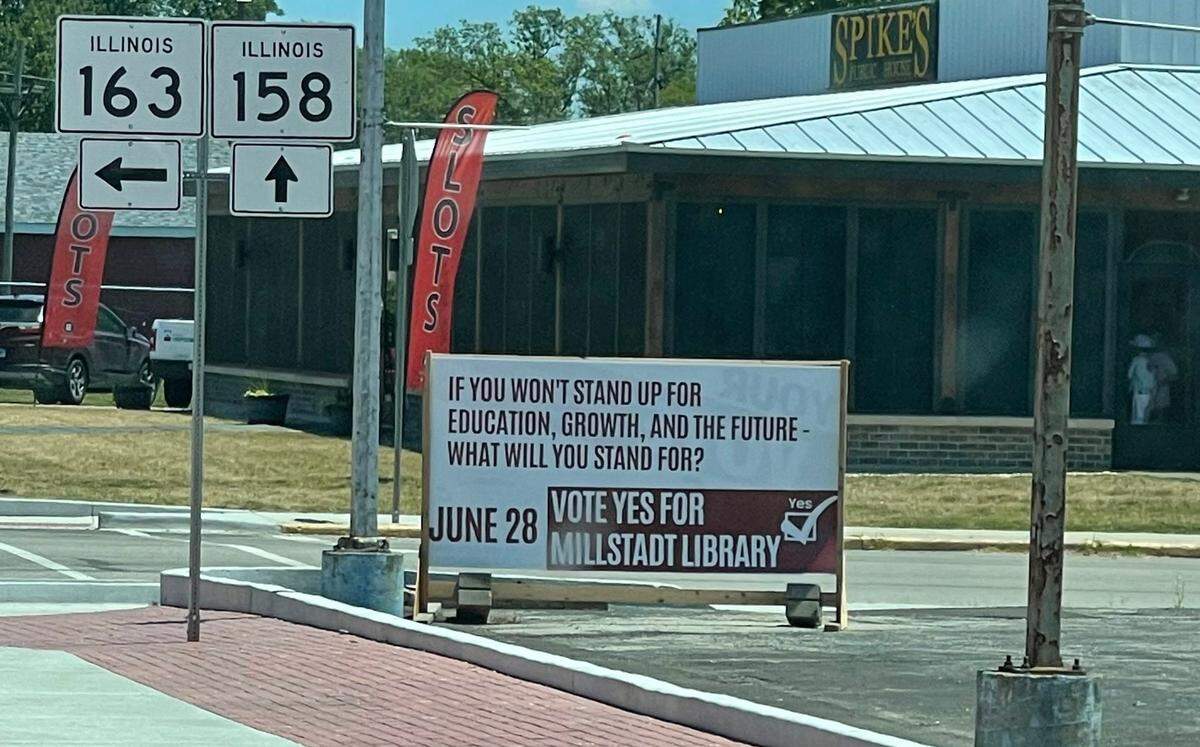
A new library building would be constructed on three acres of land along Illinois 163, across from Liederkranz Park, near Millstadt Primary Center. The board bought it about five years ago.
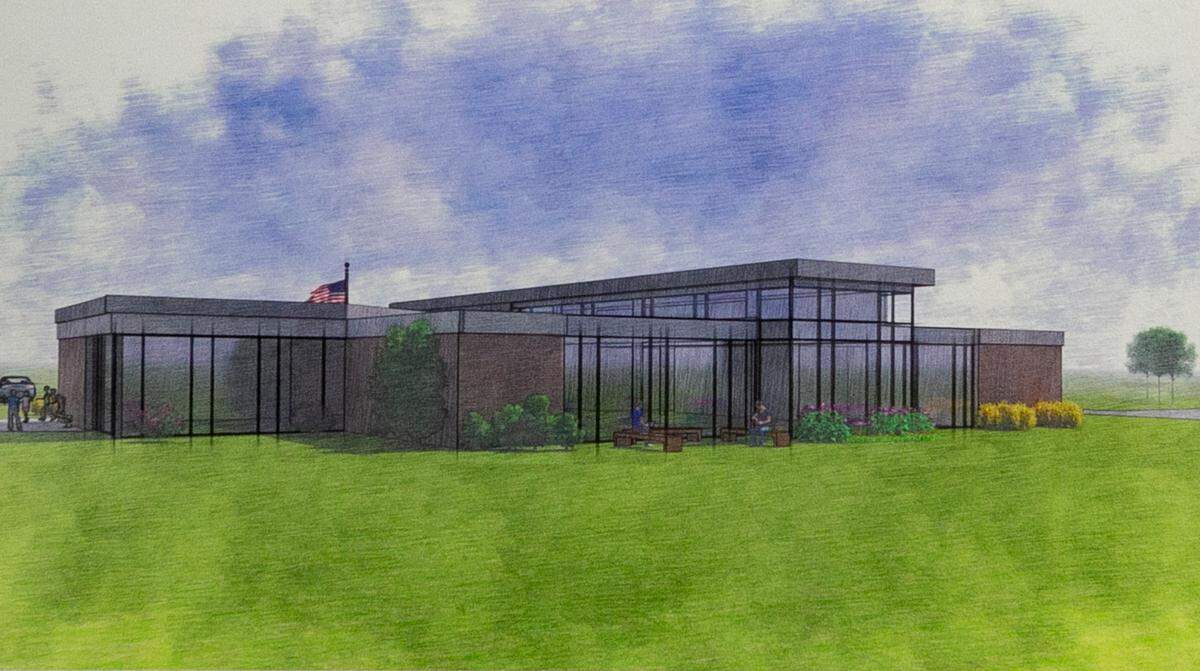
Last year, board members hired a consultant and architect to design the new building and contracted with Poettker Construction in Breese. Preliminary artist renderings show a 9,800-square-foot, masonry and glass structure with space for community meetings.
Some opponents have argued that the $4.1 million cost seems high, considering Millstadt is a village of only about 4,000 people and fewer than 500 have library cards.
“Of those, only 46 or 47 are people from outside the village,” Frierdich said. “That shows there isn’t that much interest.”
Lauko said library cards are only for people who check out books and other materials, so that number doesn’t include hundreds of others who come in to use computers, make copies or send faxes, participate in reading programs or get help with resumes.
Library officials believe a new building would bring in more people for programs, services and meetings.
Frierdich said that while she’s opposed to library district expansion, she wants to remain on good terms with people in the community who have different points of view.
“I can’t wait until Wednesday when this is all over,” she said. “I hope the winners don’t gloat and the losers don’t hold a grudge. We all have to live here.”
This story was originally published June 26, 2022 at 5:00 AM.