IDOT proposes moving remains in former Black cemetery for Interstate 64 bridge work
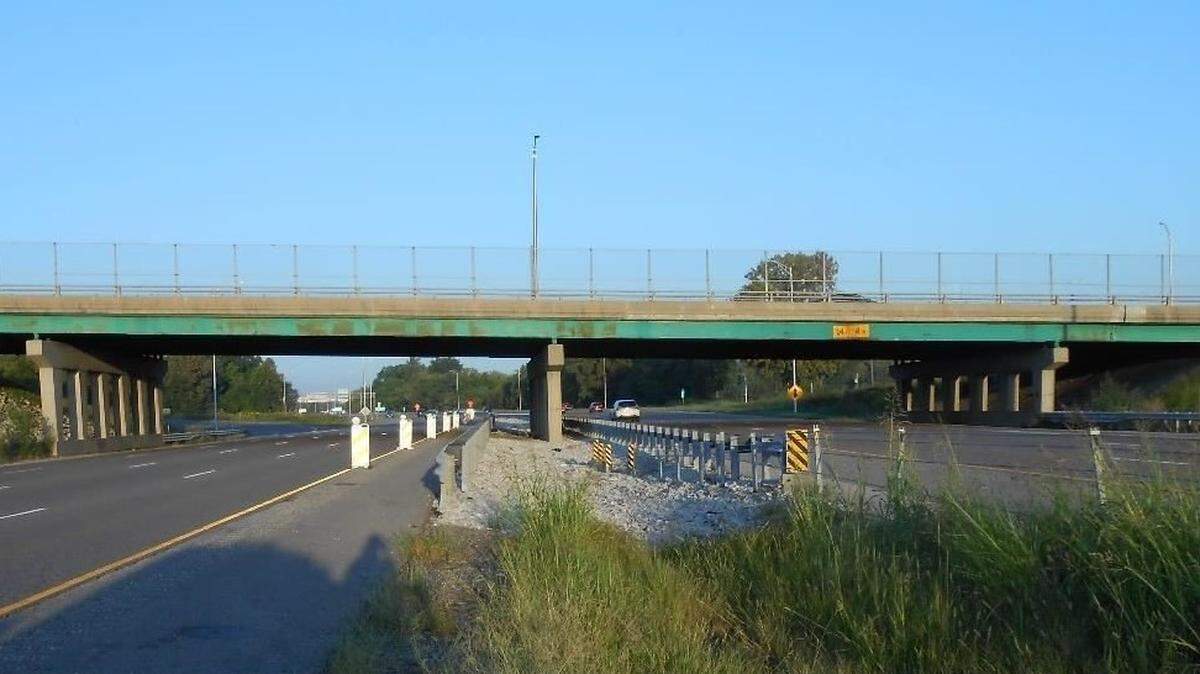
The Illinois Department of Transportation will hold a public hearing this summer on plans to replace the Illinois 111 bridge over Interstate 64, including a proposal to move human remains from a former Black cemetery and the old St. Clair County pauper’s cemetery.
Thousands of graves were supposed to be relocated in the late 1960s to make way for interstate construction, but some bones apparently were left behind, according to IDOT officials.
“Our proposal is to move what features may still be there to another acceptable location, which would probably be another cemetery,” said Cindy Stafford, location studies engineer for District 8, based in Collinsville.
Stafford and Joe Galloy, manager of IDOT’s cultural resources unit, emphasize that the $28.5 million project is still in Phase 1 and the agency won’t be finalizing plans until area residents have had an opportunity to provide more feedback.
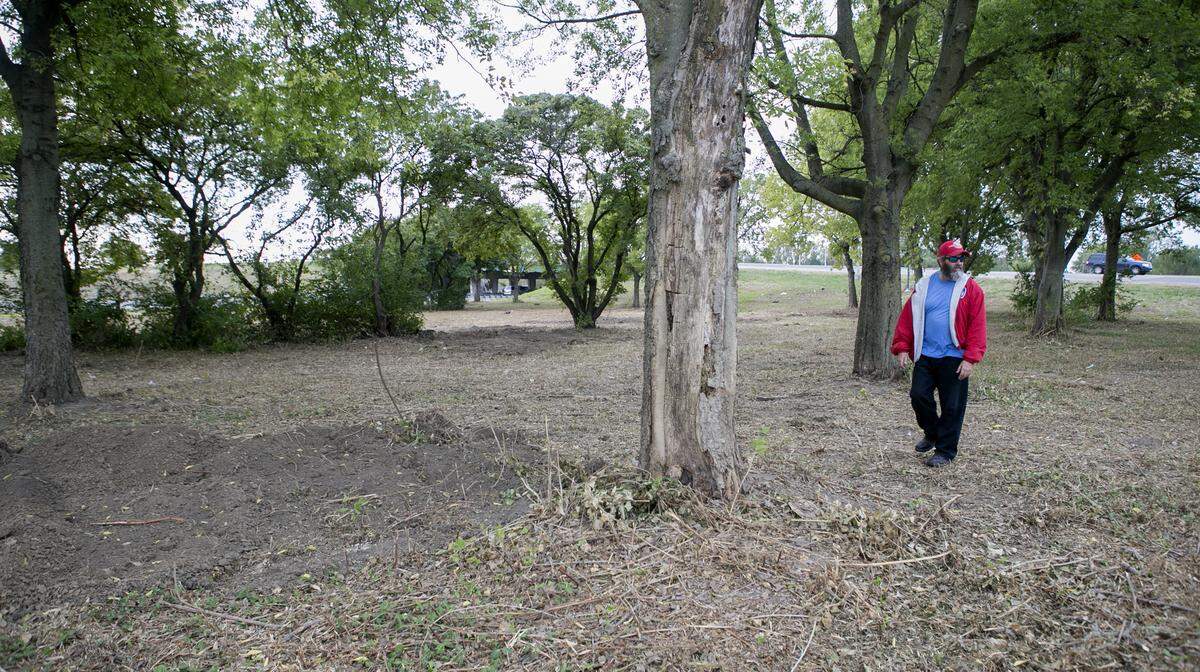
The interchange at Illinois 111, also known as Kingshighway, is in Washington Park. A local resident tipped off IDOT about the cemetery in 2019 after another public hearing. Archaeologists later found human bones, but they only examined a small section within the interchange.
“Our intent at that point was not to disturb any of the graves, but just to assess whether or not the removal that had been done in the past was complete or not,” Galloy said.
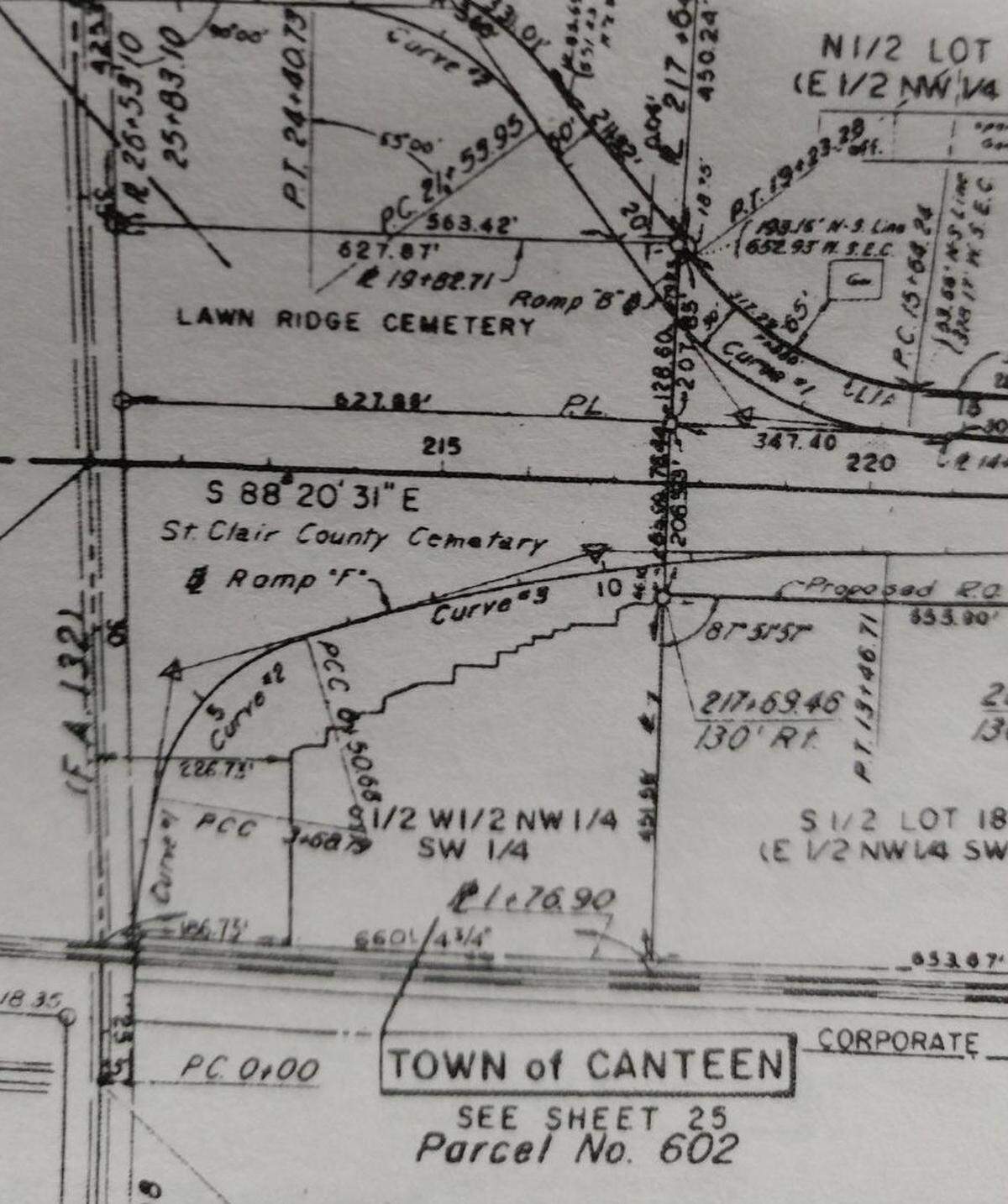
Since that time, IDOT has continued with project planning and determined that it can’t build the new overpass, which officials consider important for safety reasons, without disturbing the remains, according to Stafford.
“One of the things that we looked at is whether or not we could provide an interchange design that would avoid the location of the former cemeteries,” she said earlier this month. “And what we found is that there really isn’t a design that’s acceptable for safety and operations of the traffic that would avoid those areas.”
Even if the areas could be avoided during construction, officials believe they would likely be affected by drainage improvements, utility work or routine highway maintenance in the future.
Phase I of the project includes public involvement, data collection, engineering and environmental analyses and the land-acquisition process. It was expected to take two years, according to the project description.
IDOT will announce the date of the public hearing in the coming weeks.
Too low for trucks
The Illinois 111-Interstate 64 overpass project initially was included in IDOT’s 2019-2024 Proposed Highway Improvement Program, also known as its Multi-Year Plan. It’s now part of the 2022-2027 plan.
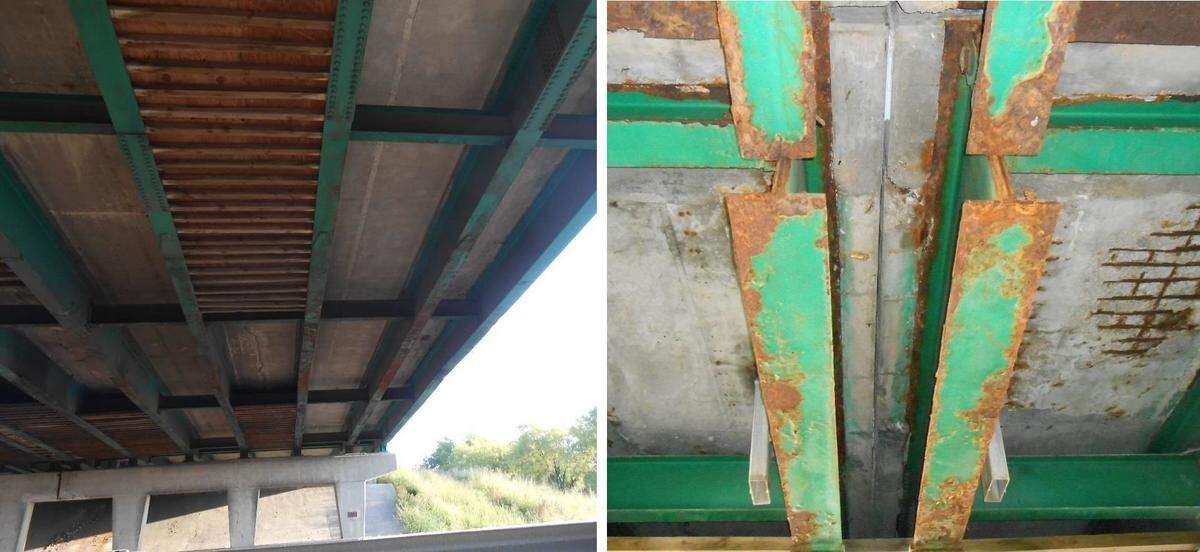
IDOT wants to replace the Illinois 111 bridge because it was built in 1973 and remains largely in original condition, except for deck patching and other repairs, according to the project description.
Officials also point to its clearance of 14 feet and 1 inch above the interstate, which is below the current standard minimum of 16 feet.
“Crash history in this location reflects that the clearance distance between Interstate 64 and the structure that carries IL Route 111 over Interstate 64 is not sufficient,” the description states. “... This structure has been struck by tractor trailers and equipment being hauled by trucks traveling on Interstate 64.”
Former Washington Park resident Scott Rose couldn’t attend the 2019 public hearing, but he filled out a comment form afterward, telling IDOT officials that he had read an article about a Black cemetery in that vicinity.
IDOT later sent archaeologists to the site and conducted historical research on the former Douglas-Lawnridge Cemetery and the old St. Clair County Cemetery, which locals called “Potter’s Field.”
Rose, 59, who now lives in Fairview Heights, still heads security at Larry Flynt’s Hustler Club, which is next to the northeast section of the Illinois 111-Interstate 64 interchange. He met recently with IDOT representatives who gave him an update on the project.
“They said if I hadn’t sent that note, and the cemetery hadn’t been brought up by the time they broke ground, they would have been screwed out of millions of dollars,” he said Thursday.
“They would have done all the engineering, subcontracted out the job, bought all the stuff, broke ground, found a body and had to stop and redo the whole thing.”
Any relocation of remains would be guided by the Illinois Human Skeletal Remains Protection Act, according to Galloy.
Passed in 1989, the law is designed to protect the safety and sanctity of unregistered and unmarked graves and discourage the desecration of human remains and vandalism to grave markers.
Rose said IDOT representatives told him that they planned to only move remains in areas affected by construction, so it’s inevitable that some will stay buried in the larger vicinity.
“There’s only so much that they can do at this point,” he said. “... There needs to be some kind of memorial to recognize the people who are still buried there, and they say that’s what they’re going to do.”
25 acres of graves
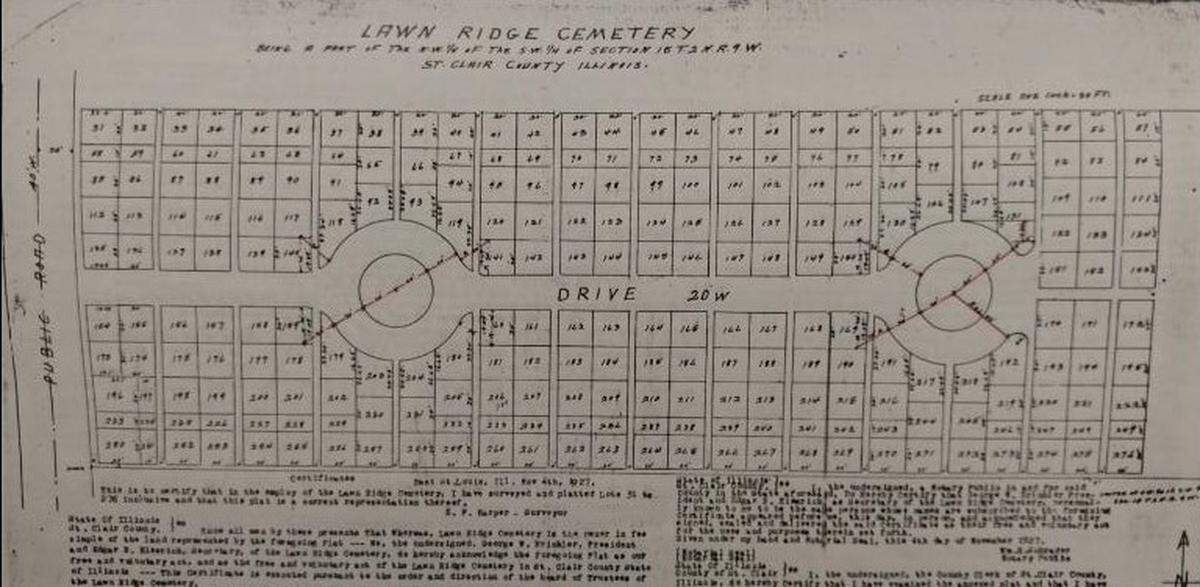
Douglas-Lawnridge Cemetery, also known as Lawn Ridge Cemetery, was a common burial ground for Black residents of East St. Louis, according to a 1968 story in the Belleville News-Democrat.
Douglas-Lawnridge adjoined the old St. Clair County Cemetery for a total of about 25 acres, but it was largely abandoned after World War II, and many of the tombstones disappeared.
In 1968, the state hired Keeley Bros. Construction Co. in East St. Louis to move 3,000 graves to nearby Booker T. Washington Cemetery and Sunset Memorial Gardens, which are historically Black cemeteries, making way for construction of Interstate 64 and its Illinois 111 interchange.
“When we were going through death records, we found a handful of people who were listed as being moved to Booker T. (from Douglas-Lawnridge),” said Judy Jennings, an expert on Black cemeteries in the region. “I only have evidence of one. It says that on the stone.”
In the 1960s, officials tried to locate descendants of people buried at Douglas-Lawnridge by holding public meetings and taking out newspaper, radio and TV advertisements, the BND reported.
The story mentioned the difficulty Keeley faced in finding unmarked graves.
“’Lost’ graves are found by excavating a series of parallel trenches four feet apart with a small backhoe,” it stated. “This machine affords the operator a measure of ‘feel’ in his digging. The backhoe is closely followed by a crew of laborers with spades and shovels for close scrutiny.
“After 40 years interment, there isn’t much left aside from a thin gray coffin outline and occasionally a rusty nail, tooth or bone fragment. A few scoops of this material are deposited in a man-size wooden box painted gray, sealed and transported for reburial.”
The process that companies would have followed in the 1960s to locate and move unmarked graves was very different from how it’s handled today, partly because of advancements and partly because of laws, according to Galloy.
“Professional archaeologists have a trained eye for detecting any disturbances in the ground, and we can easily see things that might have been missed in the past,” he said.
Phase II of the IDOT bridge replacement includes plans, specifications and estimates for letting of construction contracts, as well as negotiations with property owners for any needed right-of-ways or easements. That phase is expected to take two years, according to the project description.
Phase III is construction. It’s expected to take two to three years.
This story was originally published July 5, 2022 at 5:00 AM.