
Intense storms caused damage across the metro-east. Here’s why they got so intense.
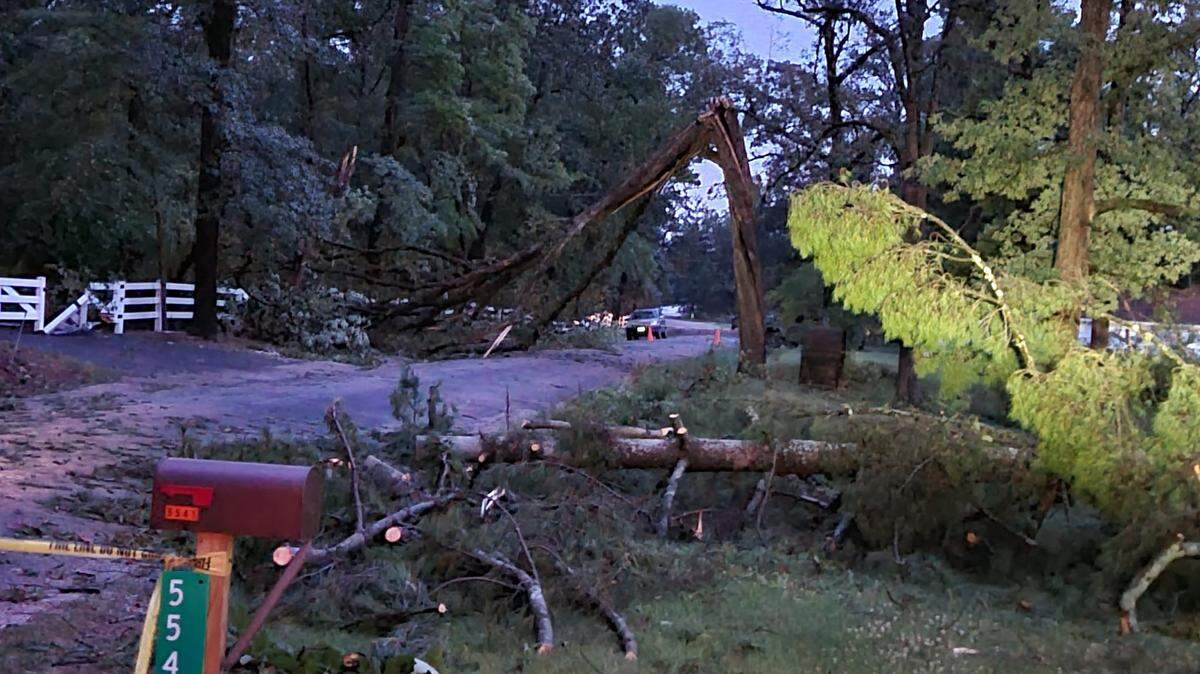
What exactly caused weekend storms across the metro-east to be so destructive?
Matt Beitscher, a meteorologist with the National Weather Service of St. Louis, said an “abundance” of heat and humidity, an an already unstable atmosphere, fueled the storms’ intensity.
“Really, the biggest driver was really-really warm and humid air that provided the energy for these thunderstorms,” he said Monday morning. “We had that in abundance and there was quite a bit of what we like to call ‘instability’ associated with these storms. When the thunderstorms formed, they had that abundance of energy to work with.
“And then we had a subtle upper atmosphere wave/feature that was the catalyst. So, then, once the storms formed, they became rather intense. Those two factors led to the development of the thunderstorms and the abundance of instability led to them being as powerful as they were.”
Global climate change is often cited as a possible contributing factor in increasing intensity of weather and extreme climate. The U.S. Environmental Protection Agency, for example, notes that heat waves are occurring six times more than they did in the 1960s and that more and more liquid precipitation is falling in extreme, “one-day events,” as opposed to multiple events spread out over time.
But Beitscher says head and humidity are trademark of Midwestern summers and, therefore, pop-up thunderstorms such as those that hit the metro-east over the weekend, are normal.
“This is typical this time of the year ... we’re always concerned with stuff like this because of the instability in the atmosphere. So it’s not uncommon to see this,” Beitscher said.
He added people essentially should read the fine print when they get an alert on their phone about a severe thunderstorm warning. Specifically, the bottom of those texts provides an estimate as to what the NWS expects from wind speed warnings: 60 miles per hour is a base wind speed; 70 miles per hour equates to severe winds; and 80 miles per hour or higher equates to destructive winds, Beitscher explained.
“When we include that estimate in our severe thunderstorm warning wireless emergency alerts that usually go off for tornadoes will also go off for destructive wind warnings,” he said. “People should use that information to their advantage. It’s probably not prudent to treat every storm like it’s going to be destructive. At the same time, people shouldn’t treat severe thunderstorm warnings like they’re nothing. But if they want more info, please look at bottom of the text.”
More storms headed this way?
The metro-east could be in the cross-hairs of another impactful round of storms Wednesday. The high Wednesday is projected at 93 degrees with a 40% chance of storms and thunderstorms after 1 p.m. and then a 50% chance of storms and thunderstorms Wednesday evening, according to the latest NWS forecast.
“There is a threat for severe weather on Wednesday,” Beitscher said. “There’s a a bit more uncertainty as to how strong or widespread the storms will be. We’re keeping a close an eye on it. So follow us on social media where we put the latest and greatest information. And follow our website. We provide graphics and information to keep the forecast to manageable info to make people better prepared.”
As Beitscher noted, the National Weather Service recommends keeping plugged into the forecast as it develops at www.weather.gov. Their Facebook page is www.facebook.com/NWSStLouis.