‘Ring of fire’ annular solar eclipse to be visible in metro-east. How to view it safely
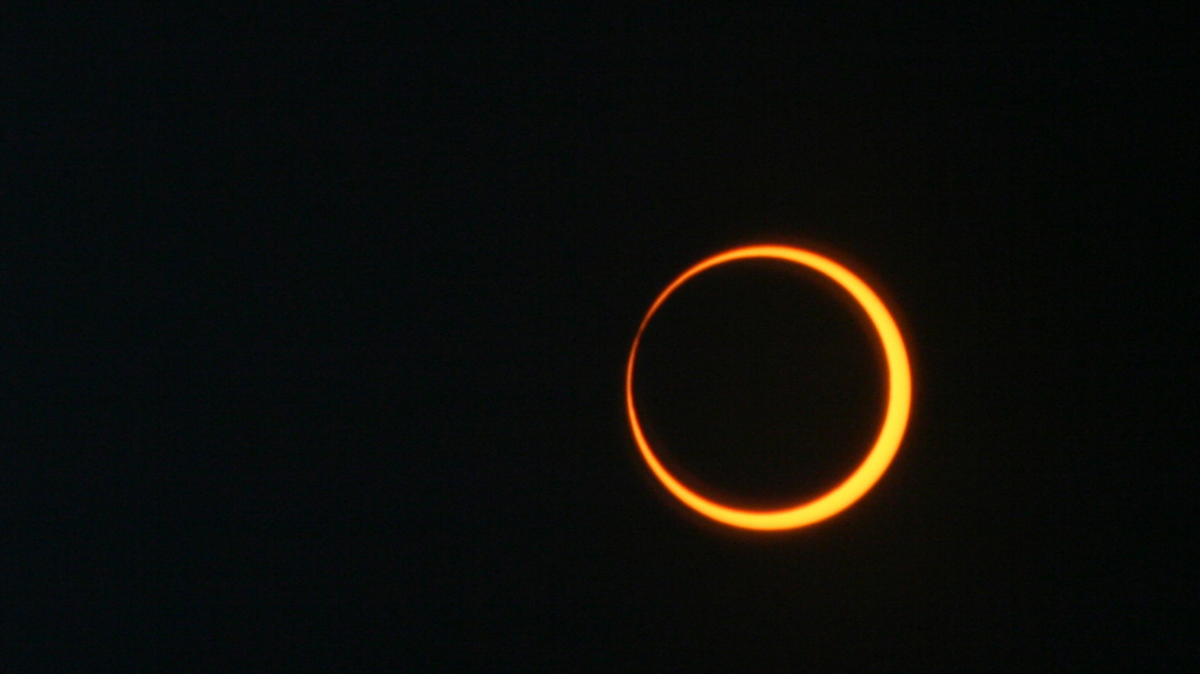
Southwestern Illinois area residents will have the chance to see an annular solar eclipse on Saturday, Oct. 14, weather-permitting. The annular solar eclipse is also known as a “ring of fire” because the moon obscures all but the sun’s outer rim, the Associated Press reports.
An annular solar eclipse occurs when the moon passes between the sun and the earth while it’s at its farthest point from earth, NASA reports. Because the moon is farther away from earth than in a total eclipse, it looks smaller than the sun and never completely obscures it, NASA continues.
The Oct. 14 annular solar eclipse will block approximately 55% of the sun’s light from reaching the St. Louis metro area, according to an Oct. 11 press release from the Saint Louis Science Center. The partial eclipse will be visible between approximately 10:30 a.m. and 1 p.m. in the region, the science center reports.
There’s a 20% chance of rain showers in Belleville Saturday afternoon, National Weather Service forecasters report, and the skies should be mostly cloudy with a high near 60 degrees.
It’s important to take safety precautions when viewing an annular solar eclipse. Here’s what to know about safely viewing the event in the St. Louis region.
How to safely view the 2023 annular eclipse
It’s unsafe to look directly into the sun, and the only time you don’t risk permanent vision loss is during the brief total phase of a solar eclipse, NASA reports.
This year’s eclipse is annular, meaning there will be no point where the sun’s light is entirely obscured by the moon. It will not be safe to look straight at the 2023 annular eclipse without proper eye protection at any point.
“Viewing any part of the bright Sun through a camera lens, binoculars, or a telescope without a special-purpose solar filter secured over the front of the optics will instantly cause severe eye injury,” NASA’s website reads.
To safely view an annular or partial eclipse, you need “eclipse glasses” or a safe handheld solar viewer, NASA says. Regular sunglasses will not provide enough protection and are unsafe for this use.
Safe solar viewers are thousands of times darker than regular sunglasses, NASA reports, and they should comply with international standards. NASA does not “approve” any specific brands of solar viewers.
Here are more tips from NASA on safely viewing the annular eclipse:
Always be sure to inspect your handheld viewer or eclipse glasses before using them. Discard them if they have any tears or scratches or if they’re otherwise damaged.
Always supervise children who are using solar viewers.
Do not look at the sun through binoculars, a camera lens, telescope or any other optical device while wearing eclipse glasses or using a handheld solar viewer. The sun’s concentrated rays will burn through the filter and lead to serious eye damage.
If you don’t have access to a solar viewer, you can indirectly view the eclipse by making a pinhole projector. (This does not mean looking at the eclipse through a pinhole.)
A total solar eclipse will occur April 8, 2024, and should be visible in southern Illinois and southern Missouri around 2 p.m. that day.