You can climb the largest prehistoric mound north of Mexico right here in the metro-east
Uniquely is a series of stories that explore the history, landmarks, culture and people that make southwestern Illinois a unique place to live. Got ideas? Send them to newsroom@bnd.com.
Metro-east history buffs need not travel far to explore the largest pre-Columbian site north of Mexico, which is also a UNESCO World Heritage Site.
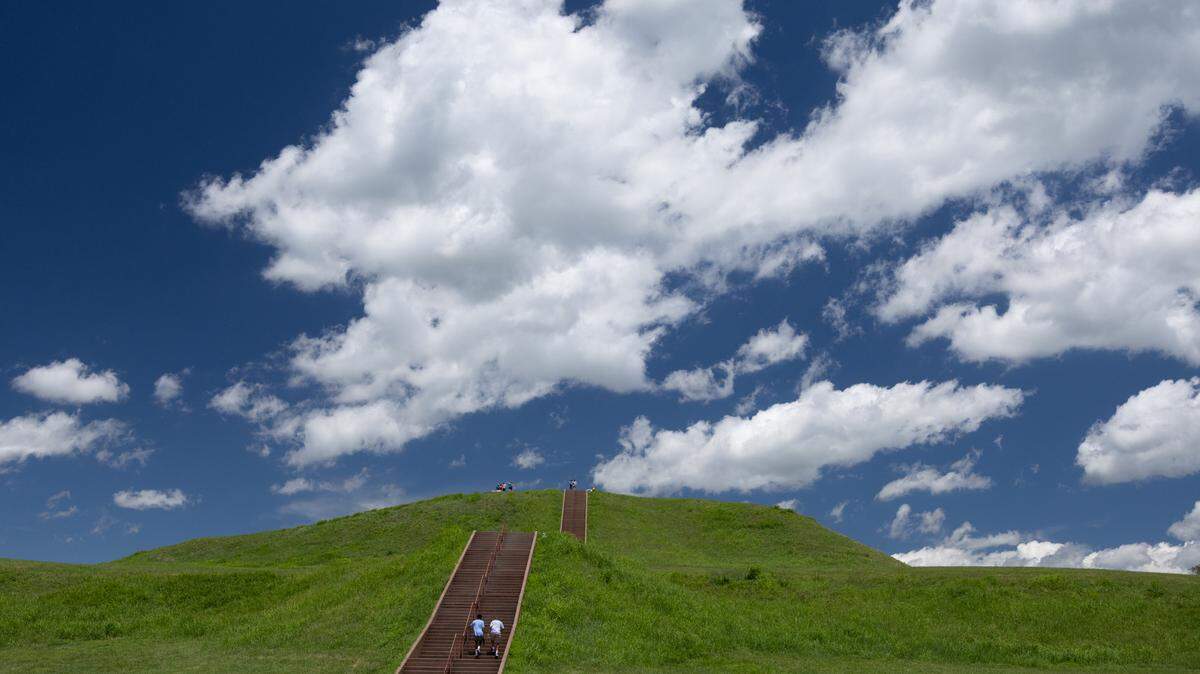
Located less than half an hour’s drive from Belleville is Cahokia Mounds State Historic Site, where you can climb the largest prehistoric earthwork in the Americas and learn about what was once the “largest Indigenous settlement in North.”
The grounds include Monk’s Mound, the Grand Plaza, Twin Mounds, Woodhenge, a picnic area and more. Woodhenge is a circular sun calendar.
There were originally 120 mounds on site, and the state of Illinois owns and preserves 72 of the remaining 80 mounds, Angela Cooper, site service specialist at Cahokia Mounds State Historic Site, said in a recent interview with the News-Democrat.
The other mounds are located on private property, and the Cahokia Mounds Museum Society has a land acquisition program to buy historic land “from willing sellers at a fair price” and donate it to the Illinois Historic Preservation Agency.
Cahokia Mounds State Historic Site was named a UNESCO World Heritage Site in 1982 after being converted from a recreational state park to an Illinois historic site. The conversion involved removing a Boy Scout camp, baseball diamonds, roads, a former drive-in theater and a subdivision of homes built on the Grand Plaza site.
The state bought and cleared out the homes and reconstructed four mounds that were destroyed to build the subdivision. Subdivisions were built on Cahokia Mounds grounds from the 1940s to 60s, and one home remains onsite for security purposes.
History of Cahokia Mounds
Cahokia Mounds and Cahokia Heights are named after the Cahokia, an Indigenous subtribe of the Illiniwek. Cahokia people lived on Monk’s Mound before eventually moving from the area.
“Cahokia Mounds is the largest archaeological site north of Mexico,” Cooper said.
The group’s population suffered from disease and warfare, Cooper said, and went on to join other subtribes. Illiniwek peoples are now known as the Peoria Tribe of Indians of Oklahoma. The term Mississippean is used to describe the people, timeframe and culture around 900 AD, when the city’s planning and monumental construction began.
Cahokia Mounds’ population peaked around 1050 AD to 1100 AD, when about 10,000 to 20,000 people lived there. Residents were attracted to the site because it was a fertile floodplain where crops were plentiful.
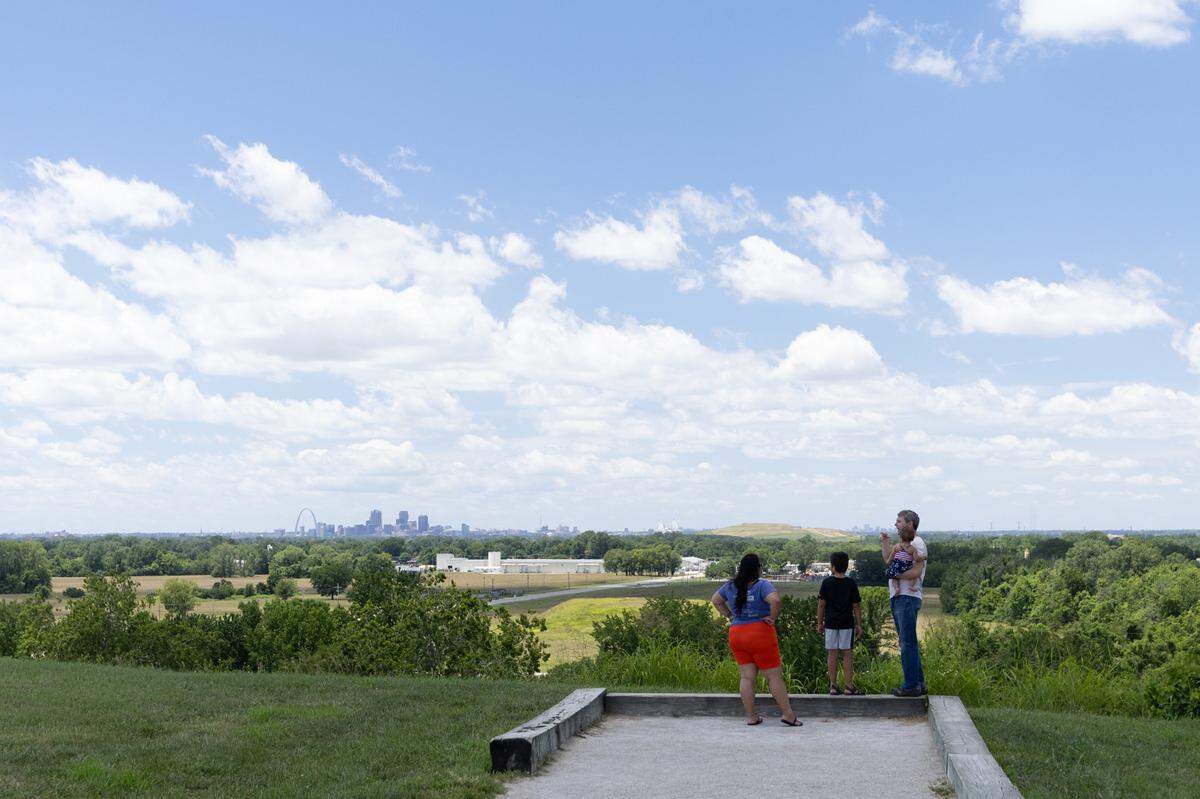
Cahokia Mounds was a great place to live and settle, Cooper said, in part because of its larger population and increased agricultural productivity. The sufficient food supply allowed for the specialization of crafts, such as mound building, building homes, making pottery and flint knapping.
A typical home at Cahokia Mounds was about the size of a modern bathroom, Cooper said, as most of people’s time was spent outdoors.
Evidence of non-local materials and symbols shows it was also a popular trade destination.
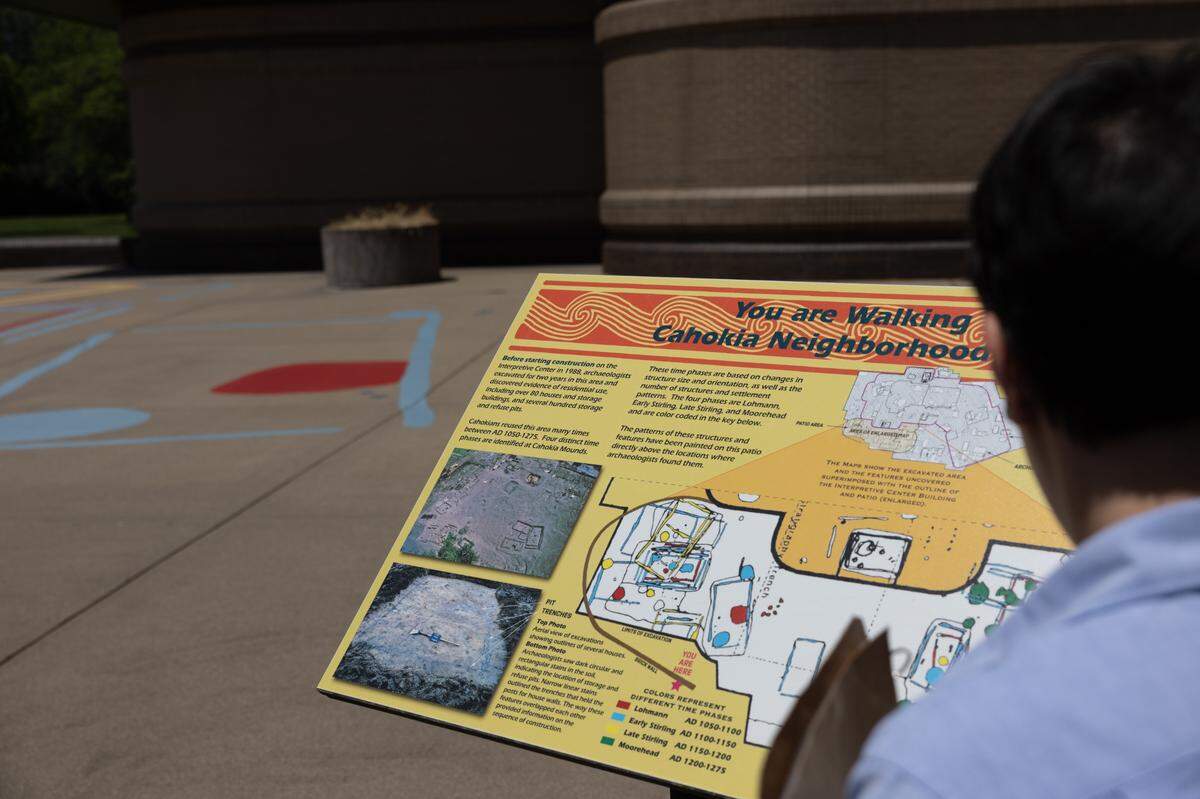
Less than 1% of Cahokia Mounds has been excavated, Cooper said, so staff use comparative data from similar archaeological sites that have been excavated to get an idea of what was likely happening on site.
Cahokia Mounds’ population started to decline around 1200 AD, not due to a declining birth rate, but because people moved out. Possible reasons for the decline include climate change, a mini drought or mini ice age, Cooper said.
A recent article from peer-reviewed journal The Holocene challenges the idea that a drought affected Cahokia Mounds’ crops, but it’s still unclear what exactly caused people to leave the area.
Visiting Cahokia Mounds
The Interpretive Center at Cahokia Mounds is currently closed for renovations. The building’s 35-year-old HVAC system will be replaced, and other updates include a new roof, fresh paint, new lighting and updated fire suppression.
Cooper said Cahokia Mounds staff expect the museum to reopen in early 2026.
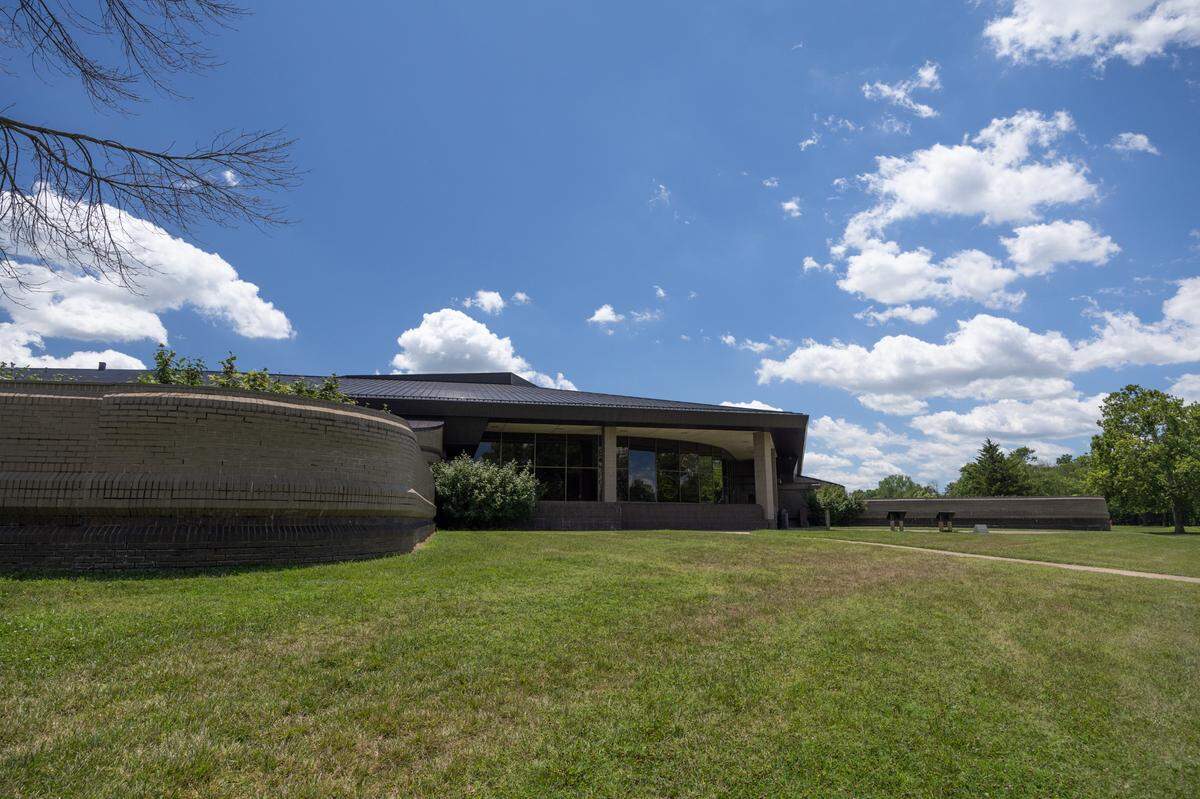
In the meantime, the grounds and trails onsite are open from dawn to dusk. Portable restrooms and a water fountain are available, as well as maps and brochures.
Monk’s Mound has 156 steps and is not generally accessible for people using mobility aids, but the 0.75-mile paved Grand Plaza tour is accessible.
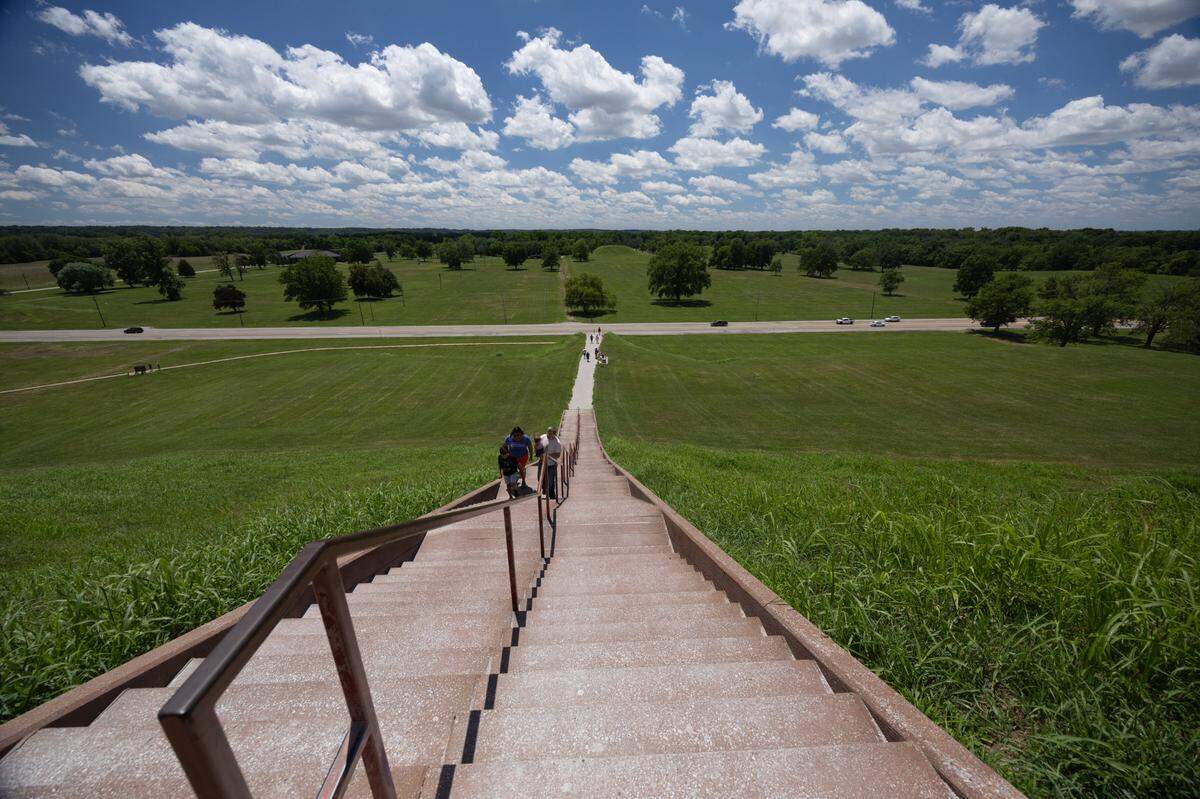
Monk’s Mound is the only mound visitors are permitted to climb out of respect for people buried on site and to prevent erosion, Cooper said.
The number of annual visitors has declined since the Interpretive Center closed for renovations in 2022, but the site still sees 250,000 guests each year, including people from across the globe.
Dogs are allowed in the site’s outdoor areas but visitors are required to leash their pets and keep the leash in their hands. Pet owners are required to pick up after their dogs, as well.
Along with exploring Monk’s Mound and the Grand Plaza, visitors can also bike a 10-mile trail or meander a 6.2-mile nature/culture trail.
Staff give guided tours at 10 a.m. and 1 p.m. Tuesday through Sunday. Call ahead at 618-346-5160 or fill out the site’s online contact form to reserve your spot. Cahokia Mounds staff host sunrise observation events at Woodhenge the Sunday closest to each solstice and equinox.
Location: 30 Ramey St., Collinsville, IL 62234
Hours: The grounds and trails are open daily from dawn to dusk. The Interpretive Center is closed and anticipated to reopen in early 2026.
Do you have a question about the history of the metro-east for our service journalism team? We’d like to hear from you. Fill out our Metro-east Matters form below.