These areas in St. Clair County have the most fatal crashes, road safety report finds
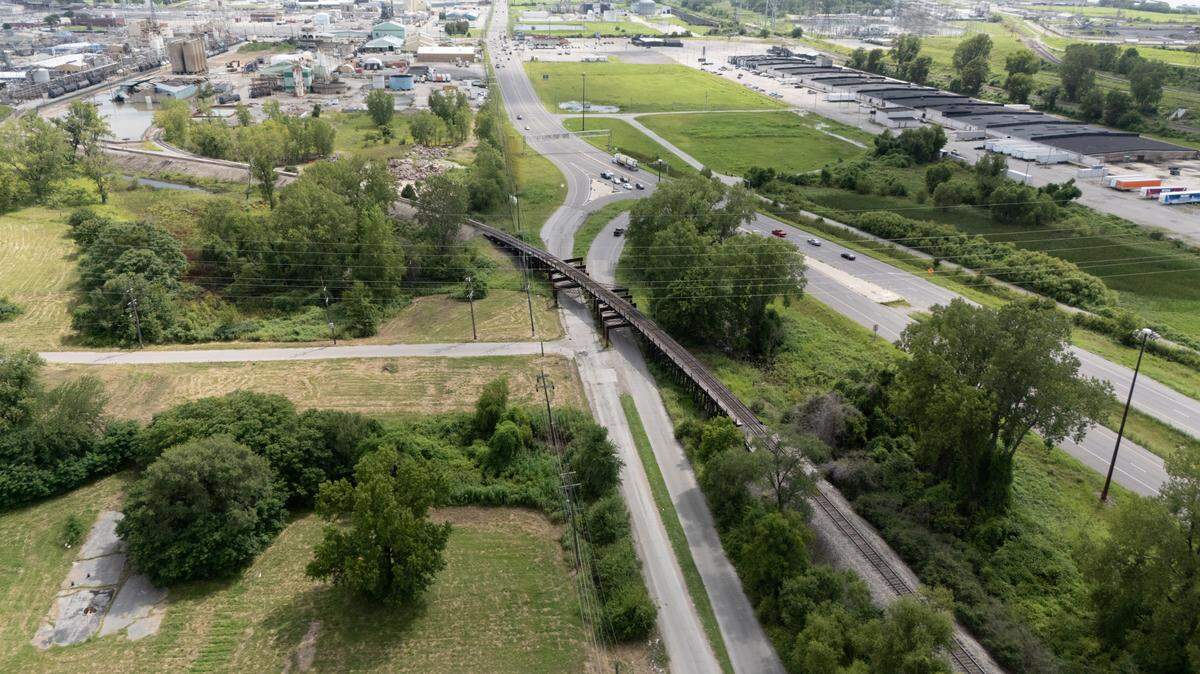
A recent report from the East-West Gateway Council of Governments found St. Clair County has seen fatal crash rates increase in recent years, and the risk is greater in certain parts of the county.
The Gateway to Safer Roadways report was published in June and involved a regional task force, including 20 local stakeholders such as the Illinois Department of Transportation, metro-east and St. Louis area county governments and more.
The plan gives the region a blueprint to reduce severe injury and fatal crashes by 50% by 2050, Anna Musial, transportation planning coordinator with East-West Gateway Council of Governments, said in a recent email to the BND.
Speeding and poor infrastructure contribute to fatal crash rates locally, and metro-east officials have proposed safety projects to help mitigate the issue.
Fatal crash rates in St. Clair County
Here are St. Clair County’s fatal crash numbers through 2022:
- 2018: 30 fatal crashes
- 2019: 25 fatal crashes
- 2020: 36 fatal crashes
- 2021: 34 fatal crashes
- 2022: 47 fatal crashes
St. Clair County had the largest increase in fatal crash rates in the region in 2020, the report said.
In St. Clair County, 52% of fatal and serious injury crashes occur in areas identified as disadvantaged by the Climate and Economic Justice Screening Tool, while only 27% of the county’s population lives in these areas.
East St. Louis, Cahokia, Washington Park, Alorton, Centreville, Caseyville, Granite City and other metro-east cities are considered disadvantaged by the CEJST.
St. Louis city and county also have disparities in their fatal and serious injury crash rates, and portions of north St. Louis County and north St. Louis city are among the disadvantaged areas west of the river.
Speeding is cited in 30% of fatal and serious injury crashes in the St. Louis and metro-east region, the report said, and is the most commonly cited factor in fatal and serious injury crashes in St. Clair County.
“Disadvantaged communities often have additional burdens and barriers to overcome such as poor infrastructure, or lack of (i.e., sidewalks) or enforcement to help slow drivers down,” Musial said.
In addition to speeding, failure to yield, improper lane usage and disregarding traffic signals and signs contribute to St. Clair County’s fatal crash rate.
St. Clair County wasn’t the only area to see increased crash rates in 2020 – the trend was mirrored across the U.S. According to the National Highway Traffic Safety Administration, 2020 brought the highest crash fatality rate since 2007 across the country.
A number of studies are investigating the 2020 spike, Musial said, but potential causes include fewer cars on the roads enabling drivers to speed more and law enforcement decreasing traffic stops to avoid nonessential public contact.
The East-West Gateway Council of Governments compiles priority lists to give direction on “the most critical areas to focus safety efforts,” and 10 sections of St. Clair County roads made the list of 96 priority regional corridors.
The St. Louis region, as defined by the East-West Gateway Council of Governments, includes St. Clair, Madison and Monroe counties in Illinois as well as St. Louis, St. Louis County, St. Charles County, Franklin County and Jefferson County in Missouri.
The 96 regional corridors on the priority list represent approximately 20% of the crashes in the region, the Gateway to Safer Roadways report says.
The Gateway to Safer Roads report includes a high-injury network analysis to identify roads with the highest frequencies of fatal and serious injury-causing crashes.
The following list shows St. Clair County’s 10 roads that made the report’s overall priority list and also mentions what roads made specific high-injury network lists focusing on pedestrians and bicyclists, underserved communities, top contributing factors (including speeding, failure to yield right-of-way, improper lane usage, alcohol/drug use and distraction) and interstates and ramps.
St. Clair County priority regional corridors
IL Route 3 from 8th Street to Cahokia Street was ranked 8th on the regional corridor priority list. The section stretches 2.31 miles in Cahokia and is also on high-injury network lists for “underserved” and “speeding.”
IL Route 15 (Missouri Avenue) from 10th Street/Katherine Dunham Place to 0.5 Mile south of 29th Street was ranked in 31st place. This section spans 2.91 miles in East St. Louis and is also on high-injury network lists for “underserved” and “speeding.”
IL Route 3 (Mississippi Avenue) from Jerome Lane to St. Monica Drive/Ruby Street was in 35th place. This portion of the road spans 2.54 miles in Cahokia and is also on high-injury network lists for “pedestrian,” “underserved,” “speeding,” and “fail to yield.”
W. State Route 161 from Pheasantwood Court/Hanna Drive to Prospect Street/Wedgewood Drive was in 46th place. This section spans 3 miles in Belleville and is also on high-injury network lists for “speeding” and “fail to yield.”
IL Route 157 (Camp Jackson Road) from IL Route 3/Mississippi Avenue to I-255 was in 53rd place. This road section spans 2.67 miles in Cahokia and is also on high-injury network lists for “pedestrian,” “bike,” “underserved” and “fail to yield.”
State Street from 37th Street to 69th Street was in 55th place. This section spans 2.68 miles in East St. Louis and is also on high-injury network lists for “underserved” and “speeding.”
Eads Bridge/IL Route 15 (E. Broadway) from 18th Street to the Missouri/Illinois state border. This section spans 2.96 miles in St. Louis and was listed in 63rd place on the priority list.
State Street from MLK Drive to 37th Street was in 64th place and spans 2.73 miles in East St. Louis. This section is also on high-injury network lists for “bikes” and “speeding.”
W. State Route 161 from Carson Drive to Pheasantwood Court/Hanna Drive was in 68th place and spans 2.78 miles in Belleville.
St. Clair Avenue from I-255 Underpass to 31st Street was in 95th place and spans 2.59 miles in Washington Park.
What reduces crash rates?
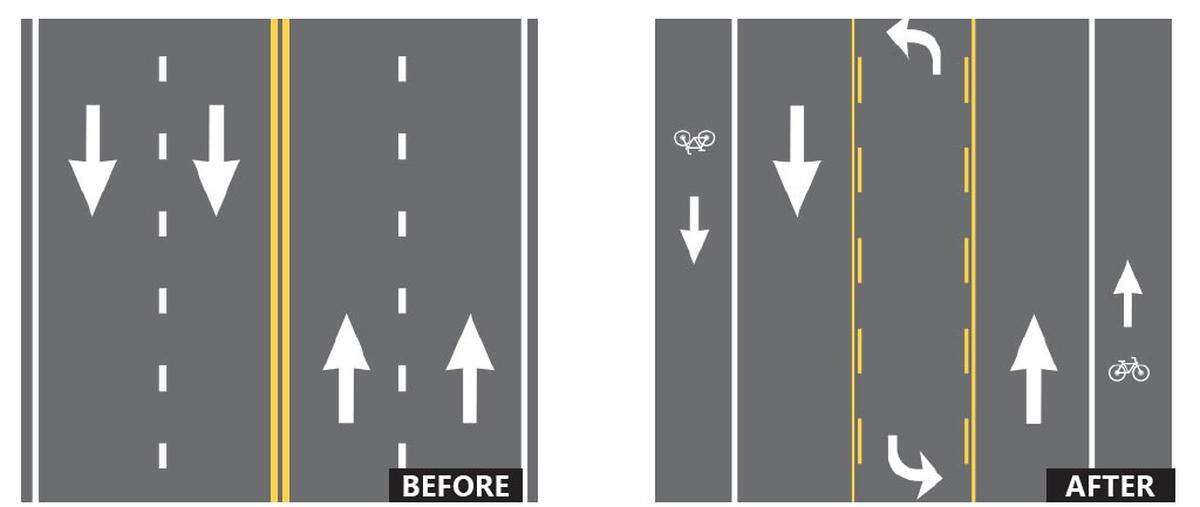
One commonly used mitigation strategy against speeding is a road diet, which the U.S. Department of Transportation reports leads to a 19% to 47% reduction in total crashes when going from four to three lanes.
Road diets often convert four-lane roads into two through lanes, a center turn lane and bike lanes on both sides of the road, the U.S. DOT reports.
Bike infrastructure is an important component of road safety, and the metro-east is known for its trails. Madison County has an extensive trail system and St. Clair County’s MetroBikeLink system has “more than 30 miles of interconnecting trails and bike paths.”
St. Clair County Transit District develops bike and pedestrian trails that are separate from roadways to improve safety, Managing Director Ken Sharkey said in a recent email to the BND, although “share the road” trails are less expensive to build.
One Illinois city, Peoria, released a traffic calming manual in 2023 designed to improve safety for motorists, bicyclists, pedestrians and public transit users.
Traffic calming aims to “reduce the negative effects of motor vehicle use, alter driver behavior, and improve conditions for non-motorized street users,” according to the U.S. Department of Transportation.
Here are some of the traffic calming measures in Peoria’s program:
Education about traffic concerns
Police enforcement
Electronic speed monitors
Bike lanes (One study, from Rutgers University–New Brunswick researchers, found bike lanes reduce vehicle speed.)
Marked crosswalks
Edge-line striping to give the illusion of a narrower road
Parking modifications (This can be adding or removing street parking, depending on the circumstance.)
Radar speed display signs
Speed bumps
Raised crosswalks
Medians and diverters
Do you have a question about transportation in Illinois for our service journalism team? We’d like to hear from you. Fill out our Metro-east Matters form below.