Here’s how Cahokia 187 is building a new high school without the taxpayers’ OK
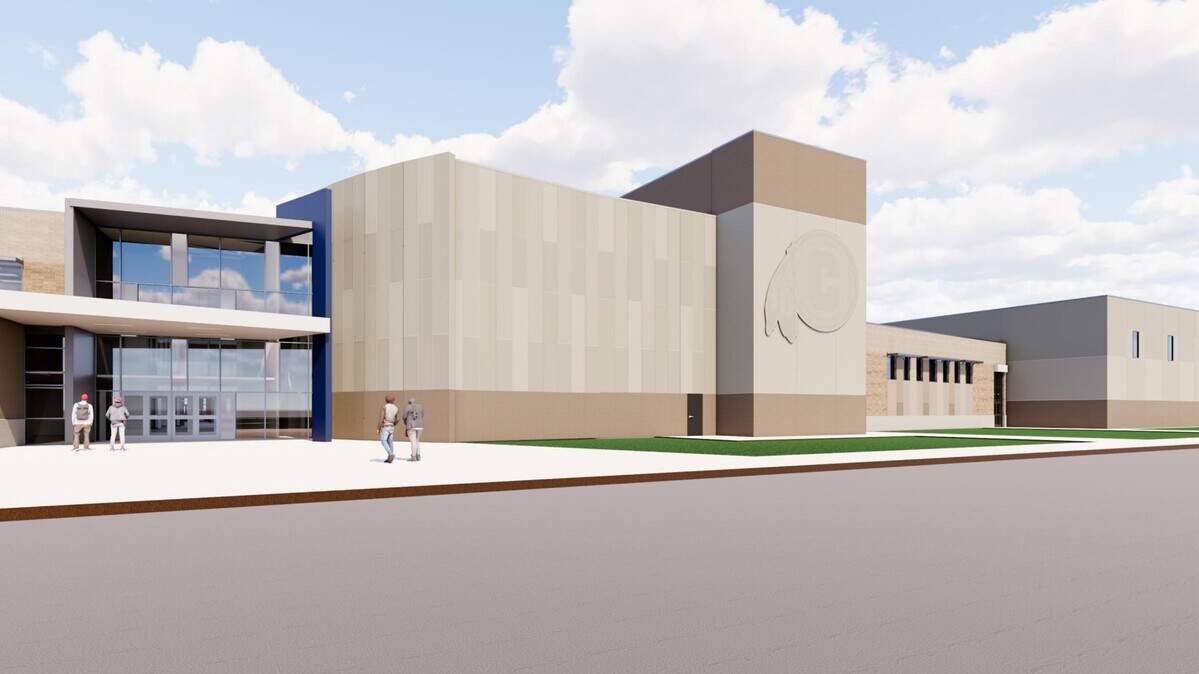
Cahokia School District 187 is getting a new high school that officials say will open its doors to students in fall 2026.
The 180,000-square-foot high school’s address will be 815 Camp Jackson Road/Illinois Route 157, directly southeast of the former Parks Air College and current Cahokia Heights Fitness & Community Center. The whole campus will sit on 48 acres the city of Cahokia Heights has donated to the school district.
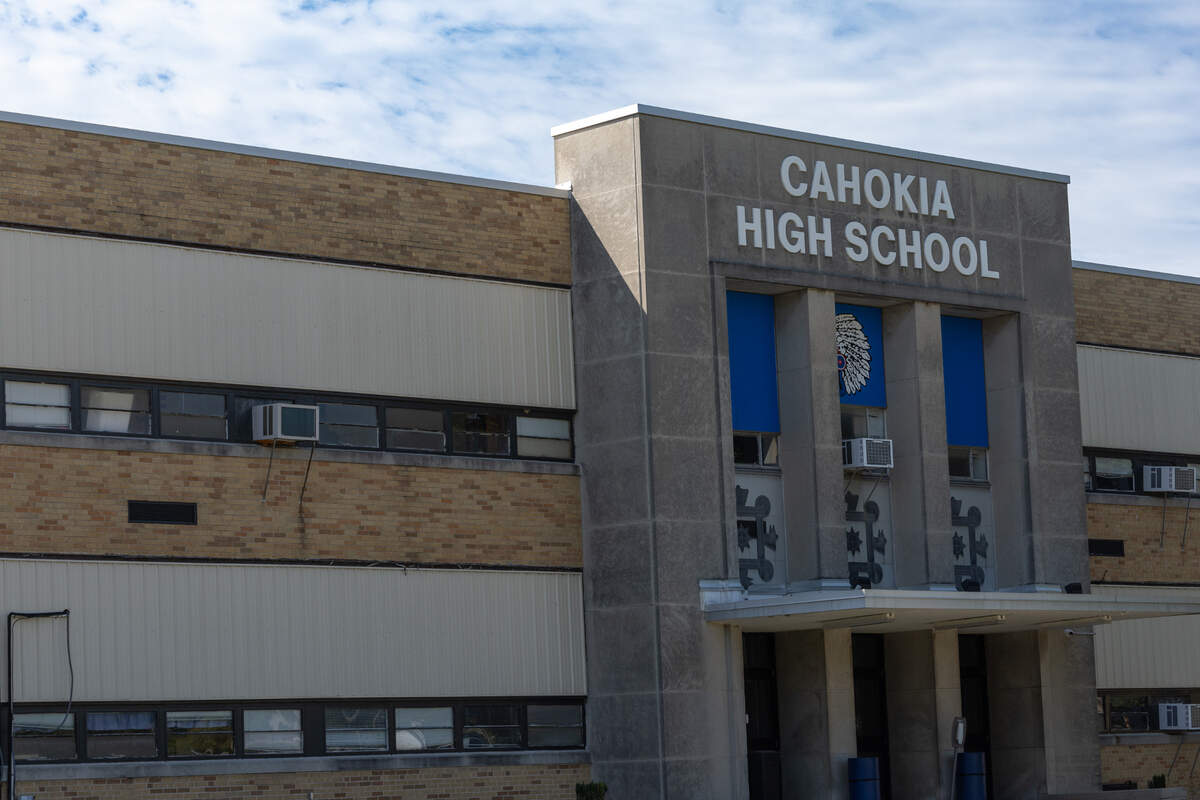
The current Cahokia High School at 800 Range Lane opened its doors to students in September 1951, according to past BND reporting. The construction of the original building was financed with a total of $3.09 million in bonds voters approved in two separate elections in 1949.
That means the current Cahokia High School is nearly 73 years old. The average age of public schools across the country is 49 years, according to federal data. District 187 officials estimate the school needs more than $30 million in repairs.
Now, after two decades of waiting for state funding and two failed bond referendums in the early 2010s, the district has found a way to finance a new high school that — thanks to an exemption made in state law for District 187 — doesn’t require putting the issue on a ballot and, according to district officials, shouldn’t affect residents’ property taxes.
Central to the financing is a mechanism known as “lease certificates.”
According to the nearly 230-page official statement submitted to the Municipal Securities Rulemaking Board, District 187 issued $72.58 million in lease certificates to build and equip a new school with the Chicago-based Chapman and Cutler LLP as bond counsel in March.
The district also issued $25 million in school bonds to replenish the working cash fund in its budget and $24.905 million in taxable school bonds to restructure some of the district’s existing debt, according to the statement and Assistant Superintendent Arnett Harvey.
Oppenheimer & Co. Inc., also based in Chicago, purchased the certificates and bonds as the underwriter.
Harvey said the district will use the $72.58 million in lease certificates, in combination with up to about $20 million in funds the district built up in its budget by supplanting some of its expenses with COVID-19 relief funds from the federal government, to build the school.
In early discussions about the new school, the cost estimate was between $100 and $110 million, he said, but the district and architects brought that down to between $80 and $90 million by tweaking the design so that the building could easily be expanded in the future, if needed.
The school will accommodate 1,100 students with the potential for future expansion to serve 1,500 students.
The district won’t know the final price until the school board awards the construction bids, which is scheduled for early October.
What are lease certificates?
Lease certificates are a municipal security, similar to bonds, that school districts can issue to finance capital projects.
For both lease certificates and bonds, districts then pay back the principal plus interest over a number of years.
A key difference between the two debt instruments is how they are repaid.
Districts generally pay back bonds for school construction by increasing the property taxes it levies on residents within their boundaries, which is why voter approval is required in a referendum.
Lease certificates, however, can be paid back with pledged revenues from a district’s operating funds. Depending on the type of lease certificate issued, the tax levy can still act as a backup, which is the case for District 187.
Another difference between lease certificates and bonds is ownership of the school.
When a school district issues bonds, it typically retains ownership of a new building. With lease certificates, on the other hand, there has to be an entity that leases the new building to the district.
According to the official statement, Zions Bancorp. in Chicago is the lessor for the new Cahokia High School.
“Essentially what it means is that they technically have ownership of the lease until we pay it off,” Harvey said.
District 187 will make annual payments on the lease certificates over the next 30 years. In 2054, the district will become the owner of the high school after paying off the $72.58 million, plus interest.
Why did the district choose lease certificates?
During the COVID-19 pandemic, the federal government provided unprecedented support to schools in three waves of funding.
According to the Illinois State Board of Education, District 187 received about $3 million in the first wave, $12.1 million in the second and $27.6 in the third.
Harvey said the district initially used the relief funds like most school districts: to improve the safety of the buildings, purchase personal protective equipment and pay for new technology and educational services.
After that, the district was able to supplant about $20 million of its existing costs, like salaries, with the federal dollars to then build up a surplus in its budget.
“Even at that we still didn’t have enough money to do either of the two things: build a new building or handle all the repairs at the high school,” Harvey said.
He said the district learned about the leasing option from its bond counsel, Chapman and Cutler.
“In working with them, we devised and came about the lease certificate structure. And within that, we were able to then garner the rest of the funds that we believe are going to be what’s required to build our new building, or at one point to have taken on the repairs,” he said.
Instead of putting so much money into an old facility, the board preferred to have a new building for the community, Harvey said.
The certificates are somewhat unique to District 187 because most school districts go the traditional route of holding a referendum to issue bonds, he said. While higher education institutions have leased buildings for a long time, it hasn’t been as common in public education.
“I would have been hopeful that a referendum to build a new high school in our community would have passed,” Harvey said.
“But if there’s a way to do this and still ... take care of the community responsibilities that we have to the public from a financial stability standpoint, then why not do that, instead of alarming the public, and then going through things that could have made it a much more difficult journey, because we’ve been down that road before.”
The district has been on the Illinois State Board of Education and Capital Development Board’s list of pending applications for school construction grants since fiscal year 2005. All entitlements for the 2003 to 2005 application cycles were suspended, however, due to limited state funding of the program. Only specific projects addressing emergency needs have been approved in recent years.
In 2019, the Associated Press reported that since 2004, 270 Illinois school districts, including Cahokia 187, had applied for 285 school construction grants and not received funding.
The grant would have given the district 75 cents on the dollar for a new high school, Harvey said.
District 187 tried twice to pass bond referendums. The first was in 2011, when the district asked voters to approve the issuance of $50 million in bonds to build a new high school and demolish the old one. The referendum failed 1,213-2,512 with a 31.4% voter turnout, according to county election results.
The second referendum was a year later, with the district lowering the proposed bond issuance to $32 million. According to past BND reporting, the school board had revised its plans after the failed referendum. Instead of building an entirely new school, the money would be used to add on and make repairs to the existing school to bring it up to code.
At the time, the district anticipated getting the 75% reimbursement from the Capital Development Board for the new construction, but not the $26 million worth of repairs needed in the high school at the time.
The second referendum failed 995-1,479 with a 23.09% voter turnout.
Why is no referendum required?
State law generally requires school districts to get the approval of a majority of voters in a referendum to build or purchase a new building for instructional purposes, regardless of how the building will be financed, but the legislature occasionally makes exceptions.
When passing the fiscal year 2024 budget implementation bill in June 2023, it provided an exemption for District 187.
The exemption says that “no referendum shall be required for the lease of any building for school or educational purposes if the cost is paid or will be paid with funds available at the time of the lease in the district’s existing fund balances to fund the lease of a building during the 2023-2024 or 2024-2025 school year.”
According to the Office of the Senate President, the state legislature has approved exemptions to the referendum rule if a school district already has all or most of the money for construction or leasing and if the construction or leasing needs to be completed quickly, like before a referendum is approved.
This was the case for District 187, according to the office. The district had the necessary funds in its existing fund balances to pay for the lease of a new building during the 2023-24 or 2024-25 school year, but some were from pandemic relief funds that need to be obligated this year.
A referendum would likely have prevented the school district from obligating the funds by the deadline, according to the office.
To provide the district with the appropriate time to obligate those funds, and since the funds were readily available and didn’t require additional borrowing authority, the legislature provided an exemption.
The district worked with state Sen. Christopher Belt, D-Swansea, and state Rep. Jay Hoffman, D-Swansea, to get the exemption included, according to the office.
“Cahokia High School operates with no central AC units, leaking roofs and has a boiler from a WWII ship,” Belt said in statement.
“It was essential to address this issue, as Cahokia High School ranks in the bottom 5% of schools in Illinois. The school’s current condition only exacerbates students’ performance, hindering any progress.”
How does the district plan to pay the lease certificates back?
The district will make annual “debt service” payments over the next 30 years to pay off the principal and interest of the lease certificates.
The debt service is about $4.6 million each year through 2054, according to the official statement. At that point, the district will have paid back the $72.58 million in principal and nearly $67.44 million in interest.
The primary revenue source the district has pledged to use to pay back the lease certificates is the personal property replacement tax funds it receives annually from the state, Harvey said.
Personal property replacement taxes are revenues the state collects from businesses and then distributes to local government bodies like school districts. The taxes began in 1979 to replace money local governments lost when their ability to impose personal property taxes on businesses was taken away.
District 187 received about $4.30 million in fiscal year 2024, $6.53 million in 2023, $5.78 million in 2022, $2.65 million in 2021 and $2.09 million in 2020, according to the Illinois Department of Revenue.
“I’ve been at the district a long time, and those funds have come to us on an annual basis. They’ve grown over those ... years. It hasn’t gone down anything significant in a long time,” Harvey said.
The district’s increase in personal property replacement tax revenue it gets from the state in recent years reflects a statewide trend. Between fiscal years 2020 and 2023, total personal property replacement tax revenue jumped by $2.87 billion — or 197% — due to a variety of economic factors, according to the Center for Tax and Budget Accountability.
The funds do fluctuate a little bit from time to time, Harvey said, but as long as there’s not a big reduction, the district will be able to make its annual debt service of about $4.6 million on the lease certificates.
If the personal property replacement tax funds the district gets from the state in a given year aren’t sufficient to cover the debt service, the district would be able to make up the gap with some of the remaining pandemic-era savings, dollars in the operations and maintenance and working cash funds, and interest earnings the district receives, according to Harvey.
How could the tax rate be affected?
The other piece of the financing puzzle is the nearly $50 million in bonds the district issued alongside the $72.58 million in lease certificates in March.
The district issued $25 million in school bonds to replenish the working cash fund in its budget.
The purpose of the working cash fund is to allow school boards to have sufficient funds in their treasury to pay for expenditures, functioning like an internal bank.
At the beginning of fiscal year 2024, the District 187 had nearly $30.5 million in its working cash fund. In recent months, it abated, or transferred, much of those dollars to the operations and maintenance fund for maintaining all of the district’s buildings and the transportation fund, Harvey said.
The issuance of $25 million in bonds re-established the working cash fund for general operating needs that come up, he said.
The district also issued nearly $25 million in taxable school bonds, which essentially restructures some of the district’s bond debt in such a way that the debt service won’t increase until 2027, according to Harvey.
That increase in debt service for the district’s bonds will occur after two tax increment financing districts within Cahokia 187’s boundaries are expected to expire, including the largest one in Sauget that has been around since 1992.
Illinois law allows cities to create TIF districts to encourage economic development, often in blighted or declining areas. As property values within a TIF district rise, all or a portion of the additional tax revenue generated goes to various improvements instead of schools and other local taxing districts until the TIF district expires.
According to the county clerk’s office, over one-third of District 187’s total equalized assessed value is unavailable to it because of 10 TIF districts.
When the two TIF districts expire, the tax dollars that were previously diverted to them — which Cahokia 187 expects to be several millions — will instead come to the school district.
“When those TIFs roll off, it’s going to bring a significant additional amount of revenue to the school district without the school district having to do anything about it,” Harvey said.
This is why there shouldn’t be a tax rate increase from the district, he added. Residents will pay the same taxes as before, but dollars that were previously diverted to the TIF districts will go to the school district.
When the TIFs expire, the district will first use the additional property tax revenue to cover its expanded debt service, Harvey said, including for the lease certificates.
“We’ll see exactly how much of that revenue and any additional growth that may come from the EAV change will affect the district,” he said. “Then we’ll see how much money is on the table, and from that point, we’re going to reassess.”
He said it’s the district’s “true hope that this does not have to result in any negative effect to the taxpayers.”
How much would repairs cost at current high school?
Every year, the regional offices of education perform annual “health and life safety” inspections of Illinois schools. Then every 10 years, school boards are required to hire an architect or engineer to conduct a safety survey.
Hurst-Rosche Inc. did District 187’s most recent 10-year survey in 2012. The documents show about $26.47 million in health and life safety repairs were needed at the time between the high school’s four buildings:
- Main building: $15,240,921.67
- Training center: $13,483.20
- Vocational building: $3,082,421.90
- Annex building: $8,137,553.52
Harvey said the district opted to not to pay for another survey in 2022 since the new high school was closer on the horizon.
Taking into account the fact that it’s been 12 years since the last survey was conducted and expenses have risen over that time, Harvey said the district and its architects estimate the high school now has more than $30 million in repairs needed.
This story was originally published August 5, 2024 at 12:00 PM.