There’s a chance you could see the northern lights in southwestern Illinois tonight
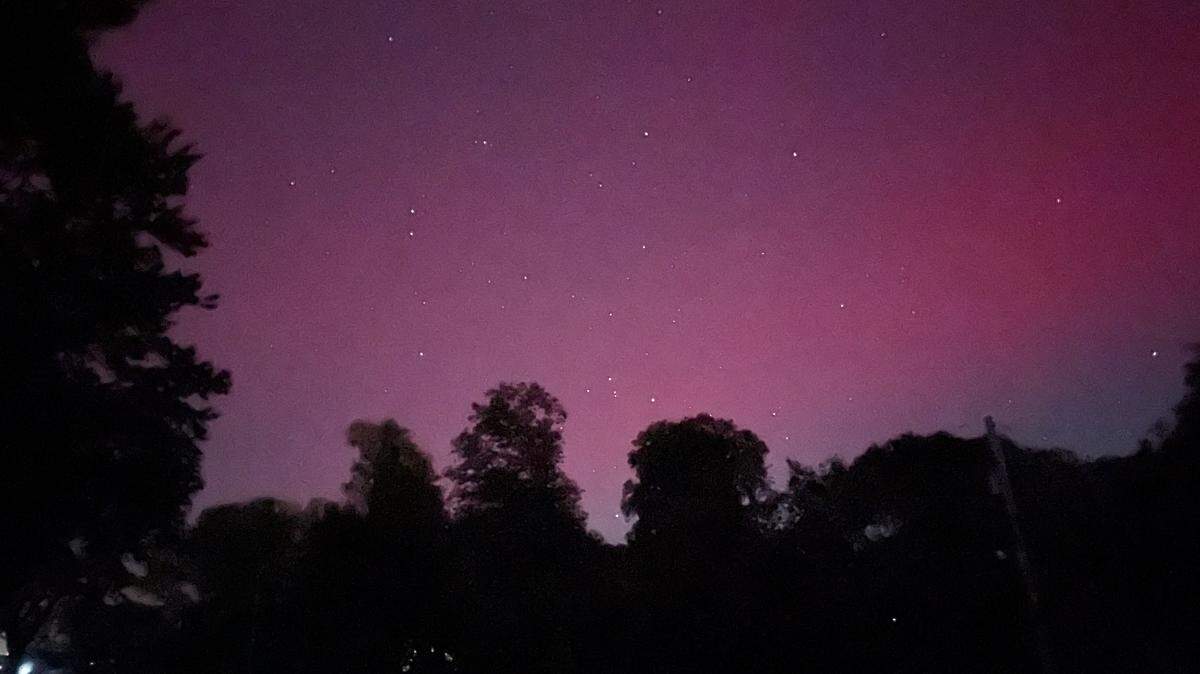
A solar explusion began arriving to the Earth Thursday morning and could bring northern lights across much of the country come nightfall, including the metro-east.
On Tuesday evening, forecasters at the U.S. National Oceanic and Atmospheric Administration observed a fast coronal mass ejection — an explosion of plasma and magnetic field from the sun’s corona — which can cause a geomagnetic storm when it reaches Earth.
The storm could affect power and communications, potentially affecting recovery efforts from hurricanes Helene and Milton in the southeast, according to NOAA. It could also lead to the aurora borealis being visible as far south as Alabama on the east coast and northern California on the west if skies are clear.
NOAA uses a scale to describe the severity of geomagnetic storms, ranging from “G1” minor storms to “G5” extreme storms that are comparatively rare.
Forecasters are continuously studying the strength and structure of the coronal mass injection that arrived Thursday and are currently expecting a “G3” strong storm, according to an update provided in the morning.
“G4” severe levels remain likely and a watch issued Wednesday remains in place, the update said. There’s also a slight chance of “G5” levels based on initial observations of the coronal mass injection’s strength.
Last May, residents across the St. Louis region witnessed the dazzling display of northern lights after several coronal mass injections arrived, “creating the strongest solar storm to reach Earth in two decades — and possibly one of the strongest displays of auroras on record in the past 500 years,” according to the National Aeronautics and Space Administration.
NOAA has an experimental aurora forecast for tonight that shows the “viewline” — the southern-most locations that can see the aurora — cutting through northern Missouri and central Illinois, coming close to the St. Louis area. A shorter-term, 30-minute forecast of aurora location and intensity is available on NOAA’s website.
Often, when the aurora are visible this far south, it’s only through a long-exposure camera lens and not the naked eye, according to Marshall Pfahler, a meteorologist at the National Weather Service St. Louis Office.
If the northern lights do end up being visible, the office is anticipating clear skies Thursday night into Friday morning, Pfahler said.
It “should be optimal viewing conditions, if the actual aurora can cooperate,” he said.
This story was originally published October 10, 2024 at 12:51 PM.