Once called symbol of racism, gates still supported by diverse Signal Hill neighborhood
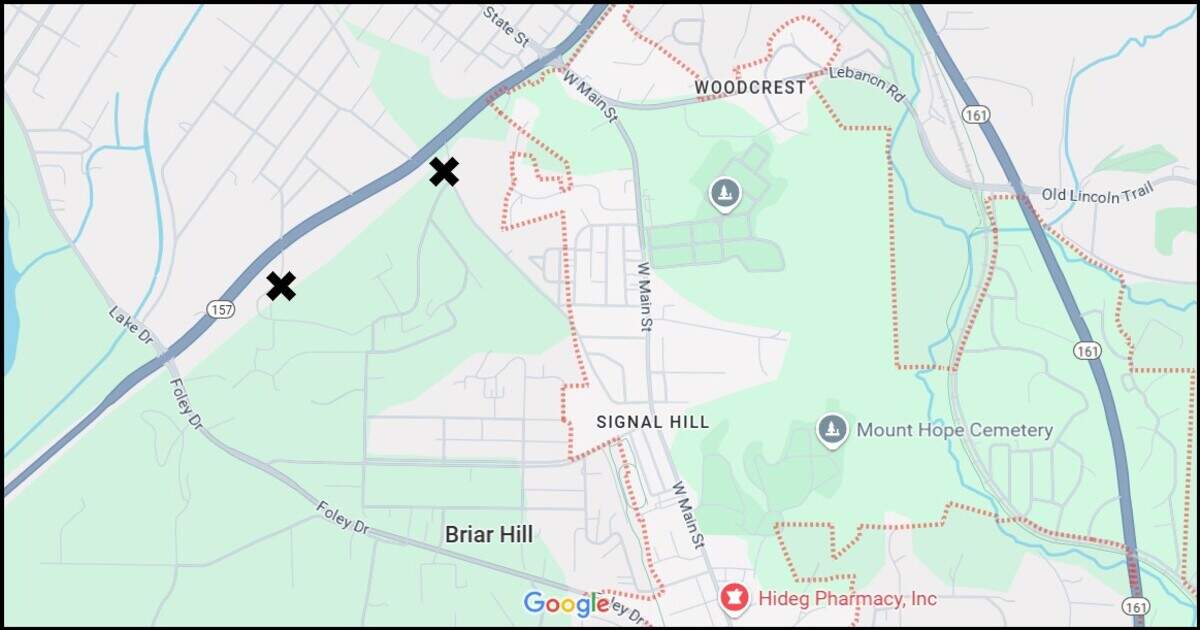
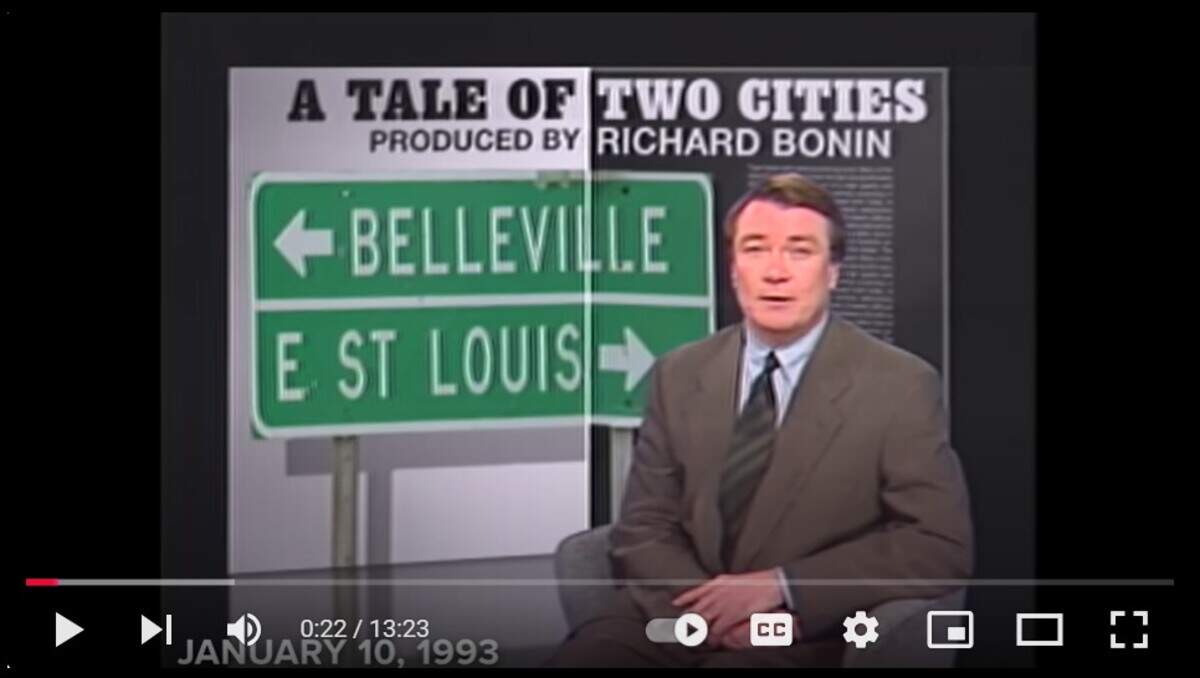
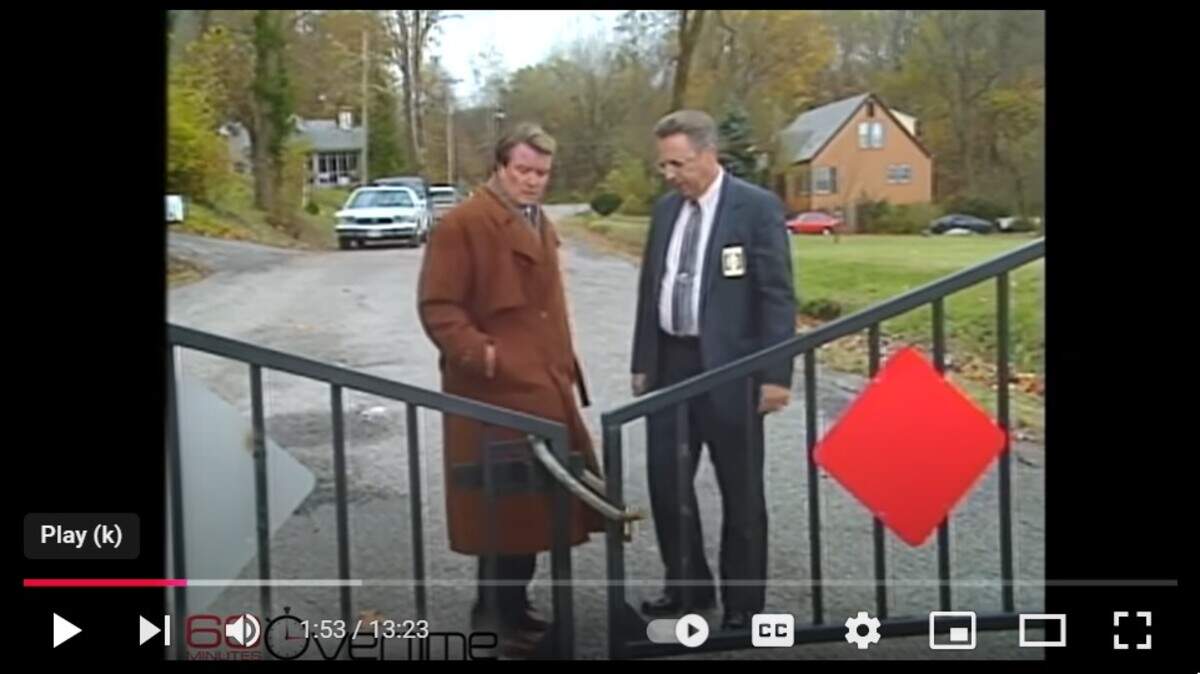
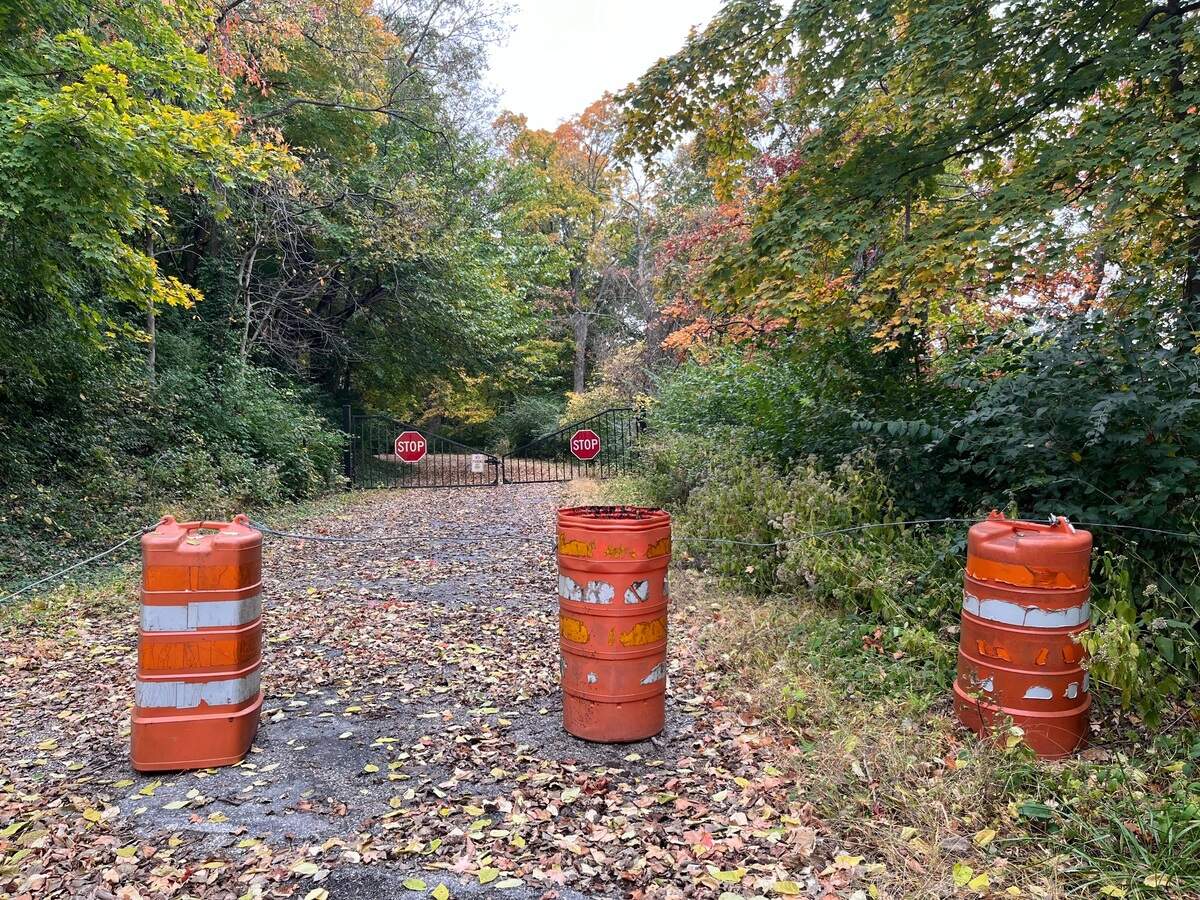
A “60 Minutes” correspondent traveled to Belleville in 1993 to film an episode on alleged racism, and one of his backdrops was a steel gate across a road leading from Illinois 157 to Signal Hill.
More than 30 years later, a Belleville man is upset that the gate on Kingston Drive and another one on nearby Bluff Hill Road are still in place. He believes they were designed to keep people from predominantly Black East St. Louis out of the neighborhood.
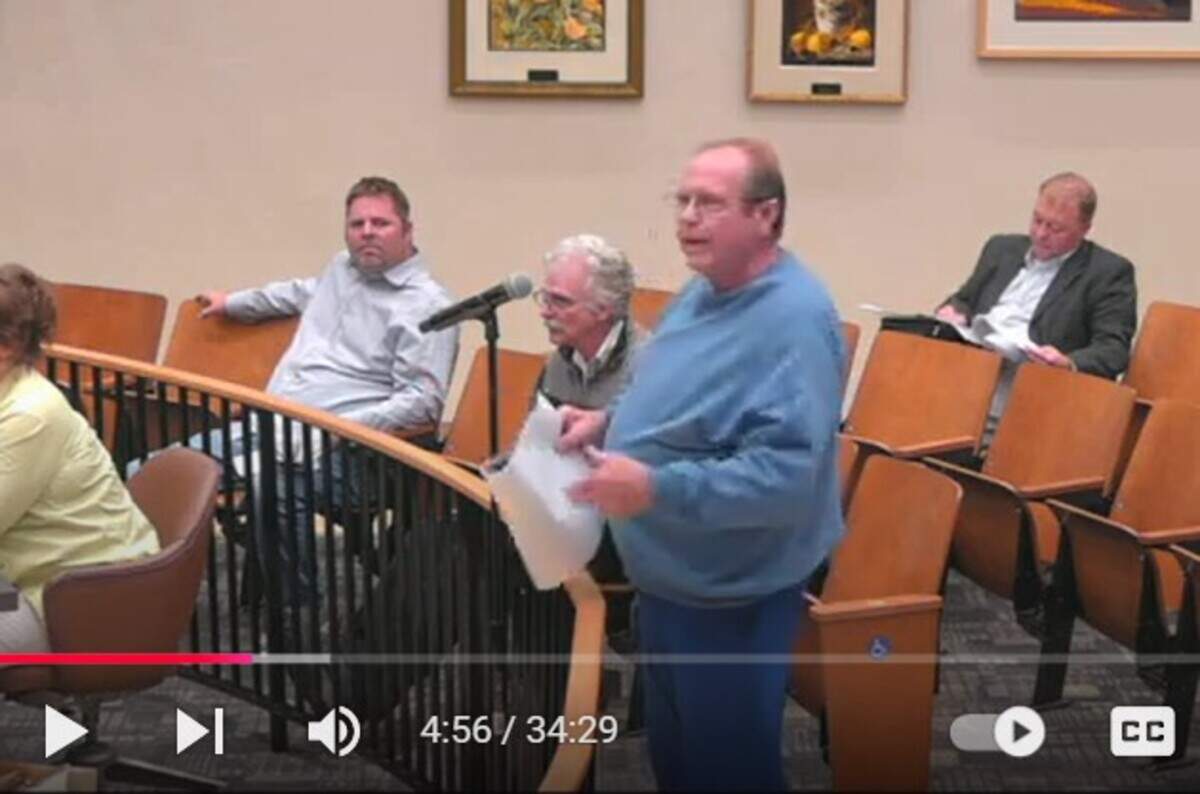
“It’s a hate crime,” said Rick Brown, who is white, in a recent interview. “You can’t block a public street, and if you do it to keep people out because of their race or ethnicity, that’s a crime. It’s no different than putting a burning cross in someone’s yard.”
Brown, a local businessman who owns rental property, has spoken during public-comment periods at several recent Belleville City Council meetings, mainly about zoning regulations he views as discriminatory against poor people and racial minorities, but also about the gates.
Belleville officials have told Brown that they have no control over the gates because they’re not within city limits. They’re in an unincorporated area in Centreville Township.
“Just talk to Kern,” Brown said at the Oct. 21 meeting, referring to St. Clair County Board Chairman Mark Kern. “Tell him, in the words of Ronald Reagan, ‘Tear these walls down.’”
Kern didn’t respond to BND calls for clarification on county ordinances or other legal bases for the gates, nor did County Engineer Norm Etling, who heads the highway department.
Efforts to reach leaders of Signal Hill Neighborhood Association this week also were unsuccessful.
In recent years, association members discussed removing the gates after some residents complained that it was inconvenient to drive the long way around to Illinois 157, according to Centreville Township Highway Commissioner Marty Crawford. The majority voted to leave them in place.
“Most people don’t have a problem with them,” said Crawford, who is Black.
Residents reject allegations
Signal Hill residents have long rejected allegations of racism related to the gates, which were installed in the late 1980s.
At that time, members of the newly formed neighborhood association defended them as a way to increase safety after a violent crime spree, but also to reduce traffic, speeding and trash dumping.
Today, residents include people of all occupations and all racial and ethnic backgrounds, according to retirees Jack and Cindy Leffler, who are white. Their home on Bluff Hill Road is near one of the gates.
“I love the diversity of the neighborhood,” Cindy Leffler said.
The couple moved into their mid-century modern home about seven years ago. It formerly belonged to Cindy Leffler’s parents.
Jack Leffler said the most important reason for the Bluff Hill Road gate today is to limit traffic on the winding, hilly, one-lane, oil-and-chip road, which often develops jagged edges, cracks, potholes and soft spots due to water runoff.
“This road is incapable of holding heavy traffic,” Jack Leffler said, adding that he would rather go through the inconvenience of driving around to Foley Drive or West Main Street to protect it.
Centreville Township is responsible for Signal Hill road maintenance. Crawford, the highway commissioner, said workers have to resurface the oil-and-chip roads every year to keep them up. The township doesn’t have enough money in its budget for blacktop.
Kenneth Ellis, a retiree who lives just southeast of Illinois 157 on Kingston Drive, is a big supporter of the gate near his property. He dreads winter months, when it’s left open to accommodate snow plows.
Is the gate racist?
“Not to me,” said Ellis, who is Black. “I love it. There’s no traffic. There’s no speeding up and down the street. I have to drive up to 89th Street to get out of here, but I wouldn’t have it any other way.”
Violent crime spree in 1985
Signal Hill is a bluff-top neighborhood with a mixture of large, stately homes along a grand boulevard and more modest homes on traditional streets or narrow oil-and-chip roads that wind up, down and around heavy woods with steep ravines and natural springs.
Residents originally accessed the neighborhood from West Main Street to the east, Foley Drive to the southwest or Illinois 157 to the northwest via Kingston Drive and Bluff Hill Drive.
Then they were hit with several violent crimes in the fall of 1985, according to a history written by former BND Answer Man Roger Schlueter.
In October, a 68-year-old woman had a wedding ring ripped from her finger and her home ransacked. Three men invaded another home, scuffled with residents and fired four shots as they fled.
In November, a woman was raped in her home on North 88th Street as her husband lay bound on the floor. Another man, 78, was robbed and left in a ditch as he was waiting for a tow truck.
“We’re scared all the time,” said one mother who began keeping a gun handy after two nearby houses were burglarized. “My kids are petrified. The 6-year-old won’t come in the house until we do first and look under her bed.”
All the victims reported that their attackers were Black, leading some to speculate that the crimes were part of initiations for gangs in East St. Louis, Centreville and Alorton. Signal Hill residents began organizing watch groups, which evolved into the neighborhood association.
“As it turned out, the crime spree was masterminded by one man: Floyd Robinson, of East St. Louis, who finally was arrested and charged in January 1986,” Schlueter wrote in 2013.
“After two escapes from custody — once for nine months — Robinson pleaded guilty and was sentenced April 28, 1987, to 35 years in prison.”
Neighbors paid for gates
Weeks before Robinson’s arrest, Signal Hill residents began discussing ways to make the beautiful and usually tranquil neighborhood safer, according to Schlueter’s history. One idea was installing gates to reduce crime, as well as traffic, speeding and trash dumping.
Crawford, who was already working for the township by then, remembers people using Signal Hill roads as shortcuts to West Main Street and driving like “bats out of hell.”
In 1986, 323 people voted in favor and 120 against the gates in an unofficial referendum. Opponents hired an attorney and explored legal options, citing inconvenience for residents, longer response times for emergency vehicles and discrimination.
”I believe the issue is racial,” one resident said at the time. “Once you put gates up in an area where you have haves and have-nots, it’s like waving a red flag in front of a bull.”
After a three-year battle, opponents finally acquiesced, and then-Highway Commissioner George Touchette ruled that the gates could be installed, according to a BND story in 1989.
The association paid $6,000 for the gates and became responsible for unlocking them each winter and locking them each spring.
Controversy surfaced again in 1993, when “60 Minutes” correspondent Steve Kroft traveled to the metro-east to film an episode titled “A Tale of Two Cities,” in reference to Belleville and East St. Louis.
Kroft focused on an award-winning BND series that revealed the existence of a secret police patrol whose job was to stop, question and ticket Black drivers coming into Belleville from the northwest.
Fallout from the series led to an agreement by the city of Belleville to hire more Black employees — it hadn’t hired one in its first 175 years — and send its police officers to racial-sensitivity training to avoid legal action by the Illinois Department of Human Rights.
Kroft interviewed then-Police Chief Robert Hurst in front of the Kingston Drive gate, asking if he approved of it, given that it could make East St. Louisans feel unwelcome in Belleville.
“I don’t disapprove of it,” Hurst said.
Twenty years later, Schlueter interviewed Barb Ducey, former longtime president of Signal Hill Neighborhood Association, who told him that residents were “thrilled” with the way the gates had reduced traffic, improved safety and contributed to a better quality of life.
“It makes it much safer for people who walk and bike,” she said. “It really does lend itself to a family community. They’re wonderful.”
Mixed feelings in Black community
Black leaders haven’t always agreed on the Signal Hill gates. In the early 1990s, the Rev. John Curry, then pastor of Belleville Bible Way Church, called them a “symbol of racial hatred” and demanded their removal.
The Rev. Johnny Scott, then head of the NAACP’s East St. Louis branch, said he was “double adamant” that the gates were nothing more than a way to deter crime and traffic problems.
”If I could put up gates in my neighborhood, I would,” said Scott, who is now deceased.
Today, Curry is pastor at Conqueror’s Christian Center in Belleville. He backed off his opposition to the Signal Hill gates long ago, after Chief Hurst retired, Rodger Cook defeated former Mayor Richard Brauer and Belleville began taking steps to improve race relations.
“(The city’s effort to keep Blacks out of Belleville) was my main focus,” Curry said this week. “The gates at Signal Hill were a symbol of the gates at City Hall.”
Curry said he has no issues with the Signal Hill gates today. The NAACP branch didn’t respond to a request for comment.
Brown, the man who’s been speaking at City Council meetings against the gates, said they still send a racist message and it’s unfair that public streets can be blocked off in Signal Hill but not other metro-east neighborhoods that deal with crime and traffic problems.
Brown said he has complained to Kern, the County Board chairman, as well as Belleville Police Department, St. Clair County Sheriff’s Department, Illinois State Police and Crawford, the township highway commissioner, who also is a County Board member.
Does Crawford, as a Black public official, think the gates are racist?
“I don’t believe so,” he said. “And they don’t affect me any. Like I say, they open them in the winter time so we can keep the roads clear. Other than that, I go around like everybody else.”
This story was originally published November 1, 2024 at 6:00 AM.