Madison County Jail denied man medicine to prevent a fatal blood clot, family alleges
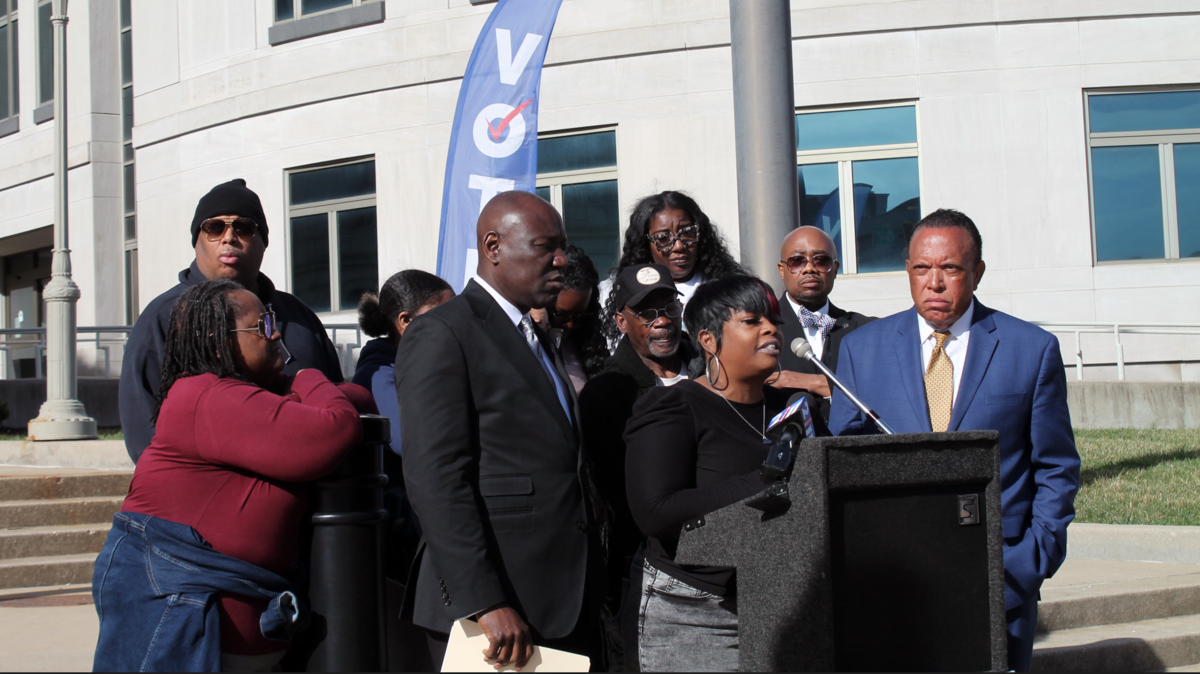
A man died from a blood clot while in custody at the Madison County Jail last year because jail officers failed to give him the medication he needed, his family alleged at a news conference on Tuesday, what would have been his 50th birthday.
Zareef M. Fawaz, 49, of St. Louis, died May 31, 2024 while in custody.
Fawaz repeatedly told his sister LaToya Simmons, of St. Louis, that Madison County Jail officers wouldn’t give him his blood thinners, which were prescribed to take daily, in phone calls before he died, she said during the news conference in front of the courthouse.
“Instead of giving him his medicine, they gave him the death penalty,” she said.
The family has submitted a notice of intent to file a wrongful death lawsuit. They are represented by a group of lawyers, including well-known civil rights attorney Ben Crump, who has also represented the families of Sonya Massey, George Floyd and Breonna Taylor.
“All we want is justice,” Simmons said. “All we want is somebody to say ‘We fumbled the ball. … We should have did better. We should have heard his cries.’”

Jail Administrator Jerry Endicott said he was not at liberty to comment and referred questions to Madison County Sheriff Jeff Connor or Chief Deputy Sheriff Marcos Pulido. Connor and Pulido did not immediately respond to a request for comment on Tuesday.
Crump said during the news conference that the county has a chance to try to resolve the matter without litigation after it receives the notice of intent. If they don’t agree to a resolution, the family plans to file a lawsuit in Madison County Circuit Court on the one-year anniversary of Fawaz’s death, according to Crump.
Fawaz had been charged days before his death with robbery and aggravated domestic battery, accused of strangling his ex-girlfriend and taking money from her on May 22, according to court records. Associate Judge Neil Schroeder ordered him to be detained in the jail until his trial.
Crump described Fawaz’s death as “unnecessary, unjustifiable, and unconstitutional.” He specifically accused the county of violating the Eighth Amendment’s protection against cruel and unusual punishment.
“It’s cruel and unusual punishment for a sick man to beg and plead for his medicine and you deny him that medicine,” Crump said. “... It’s not just about Zareef. If you have a loved one who happens to be in jail and they’re asking for their medicine, then make certain that you don’t take it for granted that they will follow the Constitution in Madison County.”

Fawaz was prescribed blood thinners because he had a history of strokes, according to Richard Banks, another attorney representing the family.
“To go 10 days without his blood thinner is in fact a death sentence,” Banks said. “Medical experts have said that after three days, whatever medication you’re taking is out of your system.”
Two years ago, Madison County settled another wrongful death lawsuit involving the jail for $3 million. In that case, Elissa A. Lindhorst, 28, of Glen Carbon died while experiencing opioid withdrawal. She was in custody in 2020 on a $15,000 bond on a possession of a controlled substance charge.
Lindhorst’s mother accused jail officers of failing to provide medical care as she vomited and was unable to eat or drink for nearly five days. Lindhorst was severely dehydrated and had vomit in her lungs, which caused pneumonia and an irregular heartbeat, leading to her death, according to the complaint.
As part of that settlement, jail officers were required to undergo training on drug withdrawal.
Crump noted during the news conference that a recent Illinois Answers investigation into jails’ use, misuse, and abuse of restraint chairs found Madison County was an outlier in the state.
From 2019 to 2023, the Madison County Jail reported more incidents exceeding the chair manufacturer’s upper limit — 10 hours — than any other jail in the state, according to the investigation. One man was restrained for five days, and several other people were restrained for 20 hours or more, with brief mandated breaks to stretch or use the restroom.
Endicott told Illinois Answers that staff typically only used restraints when people had harmed themselves and that inquiries from the news organization in early 2024 prompted him to review and reform the jail’s policies and practices around the use of restraint chairs.
.jpg "Madison County Jail 2 (1).jpg")