Few know about crime victim compensation. East St. Louis group wants to change that
By Madison Lammert
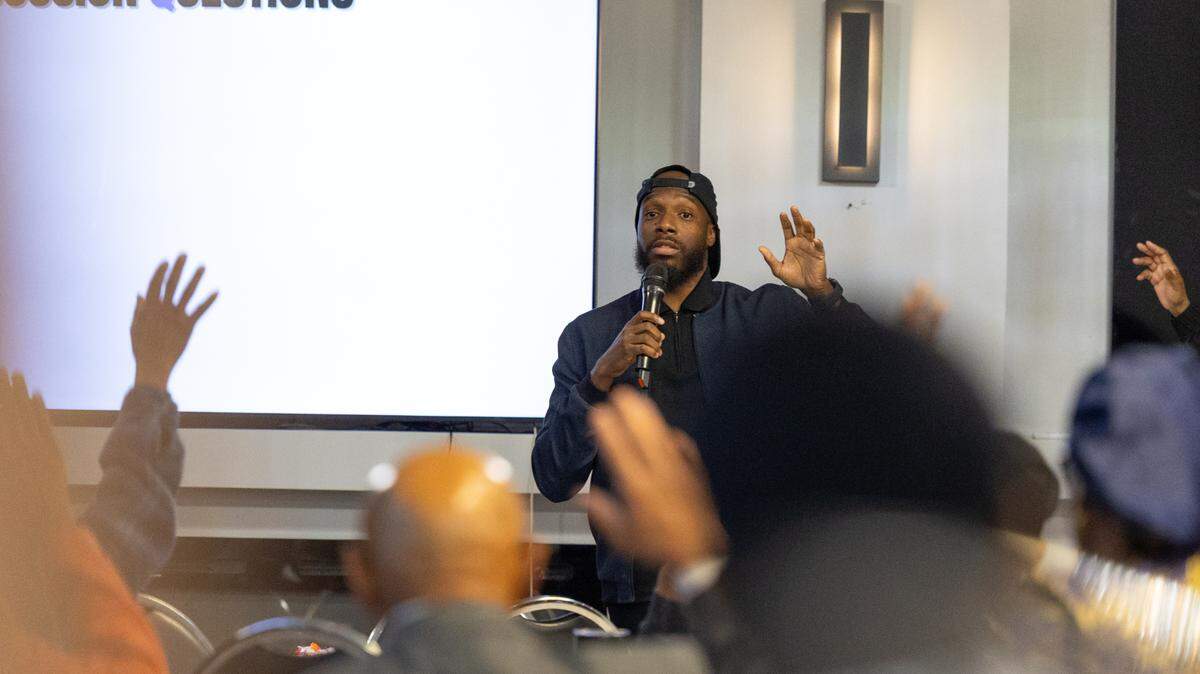
Aswad Thomas, a survivor of gun violence and National Director of Crime Survivors for Safety and Justice, asks members of the audience to raise their hands if they’ve been affected by violent crime.
Joshua Carter
Belleville News-Democrat
EAST ST. LOUIS
Back in 2019, East St. Louis’ Gloria Hicks received a last-minute invitation to a meeting at a local church. It was about an organization called Crime Survivors for Safety and Justice.
There, while reflecting on her experiences leaving a former partner, she had a realization.
“I never thought of being a survivor, I thought it was just a part of life,” Hicks said, recalling the fights she’d had with her ex.
Since that initial meeting, East St. Louis gained its own chapter of Crime Survivors for Safety and Justice, with Hicks as the volunteer chapter coordinator. She has marched at the U.S. Capitol to advocate for policy that better supports survivors. Hicks said she’s also worked with Illinois Attorney General Kwame Raoul to change the state’s Crime Victims Compensation Act.
Laticia Simms wears a shirt showing people close to her who have died as victims of crime. Joshua Carter Belleville News-Democrat
That legislation was the center of a vigil Saturday in East St. Louis, where local crime survivors and victims’ loved ones gathered. It was one of a number of similar events to mark National Crime Victims Rights Week (April 6-12).
“You can ride around East St. Louis and see all of these makeshift memorials for their family,” Hicks said. “You go down this street, there’s one down there. You go down State Street, there’s something down there. You go up there by the court, there’s something there. (It’s) everywhere you go.”
Every state has a victim compensation program, which can provide financial reimbursement to violent crime victims and those close to them for expenses that stemmed from the crime. But nationwide, only 4% of survivors know about it, data from the Alliance for Safety and Justice shows.
On Saturday, nearly everybody in the room raised their hand when asked if they’ve been a victim of violence or know somebody who has. Less than a quarter said they knew about victim compensation before the event.
“Why is the information not readily available? You’ve got commercials for all of these people who can sell you something … but you cannot put this information out there? Don’t give me excuses,” Kelvin Robinson said.
Robinson said he’s a survivor of violence by virtue of being raised in East St. Louis. His cousin died by gun violence in another state, and “it would have come a long way” if the family knew about victim compensation.
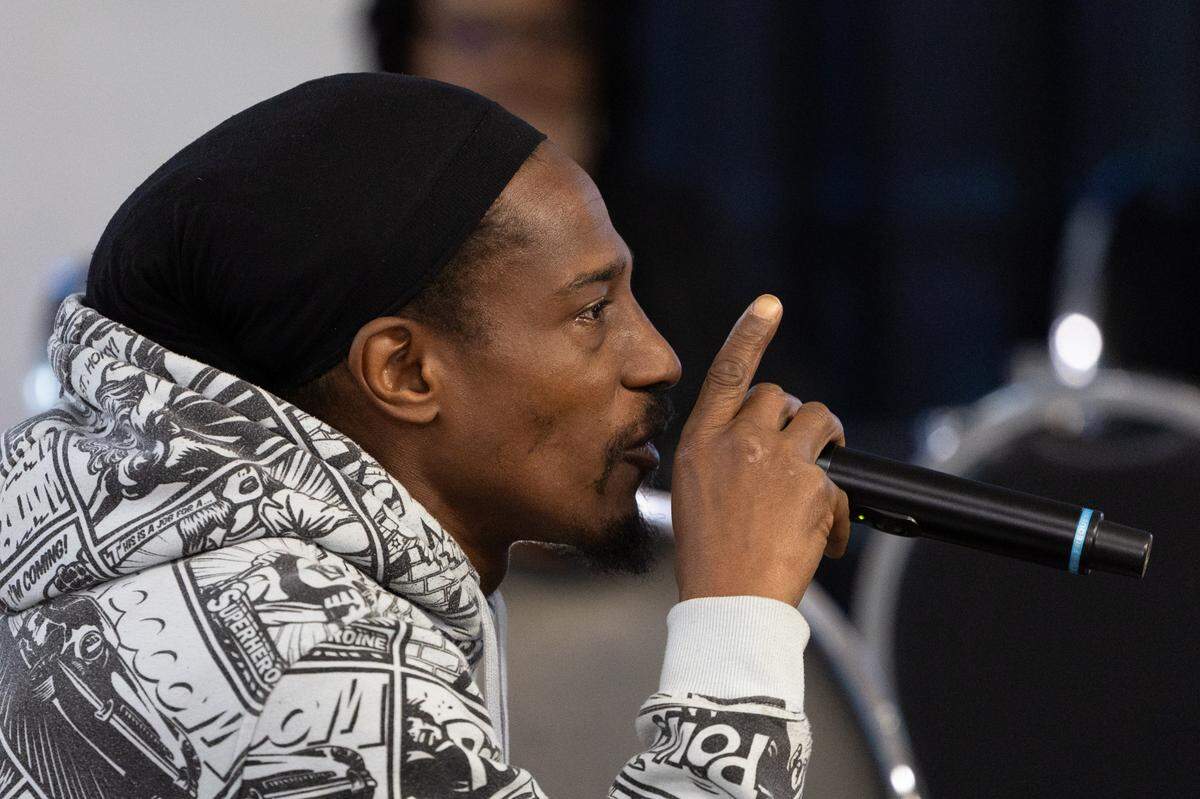
Kelvin Robinson speaks during a crime vigil and information session regarding crime victim compensation in East St. Louis. “We have to get together and actually do something if we want to change this community,” Robinson said. “We need to be there for ourselves, be there in our community, and we need to go door to door to meet the needs of the people who have suffered for so long.” Joshua Carter Belleville News-Democrat
Illinois’ violent crime victim compensation law changed. What’s next?
Even those who know about Illinois’ Crime Victim Compensation program, reporting and application deadlines may make them ineligible. Recovering from injury or in the midst of funeral and burial arrangements is not an ideal time, often an impossible one, to fill out a 10-page application, National Director of Crime Survivors for Safety and Justice Aswad Thomas said.
There’s also a myriad of other barriers that prevent people from even seeking compensation, he said.
That’s why so much of the organization’s work is not only educating people about compensation programs, but walking through applications with them and advocating to improve the laws.
Recently, Crime Survivors for Safety and Justice realized a win. Illinois amended its law so that somebody convicted of a felony, so long as it’s not related to the violent crime they’re seeking compensation for and they’re not incarcerated, can apply. It also allows the timeline in which a victim needs to report a crime to law enforcement to be eligible for compensation, should the Attorney General allow it, among other changes.
That doesn’t mean there’s not more to be done, Crime Survivors for Safety and Justice believes. East St. Louis does not have a trauma recovery center, a program that helps survivors both in the immediate aftermath of a crime and with ongoing mental health and other support.
“The TRC model was designed to meet the needs of people of color to access support and services, and it removes all of the red tape that you actually have to go through in order to access services,” Thomas said.
“That is a goal of ours — to bring a trauma recovery center to East St. Louis.”
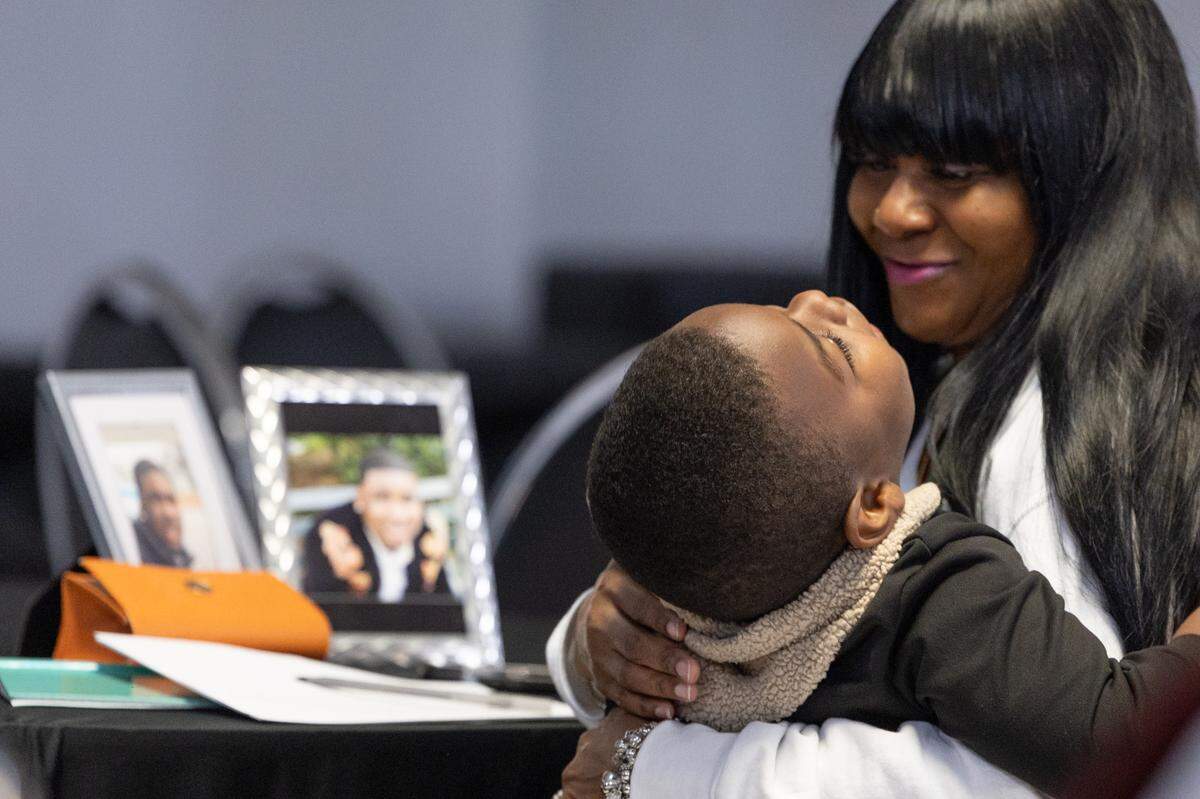
Sheleasa Blackwell of St. Louis holds a child in her lap while photos of her son Corey, who was murdered in 2022, sit on the table. Joshua Carter Belleville News-Democrat