Another bear sighted in St. Clair County. Is this the ‘new normal’?
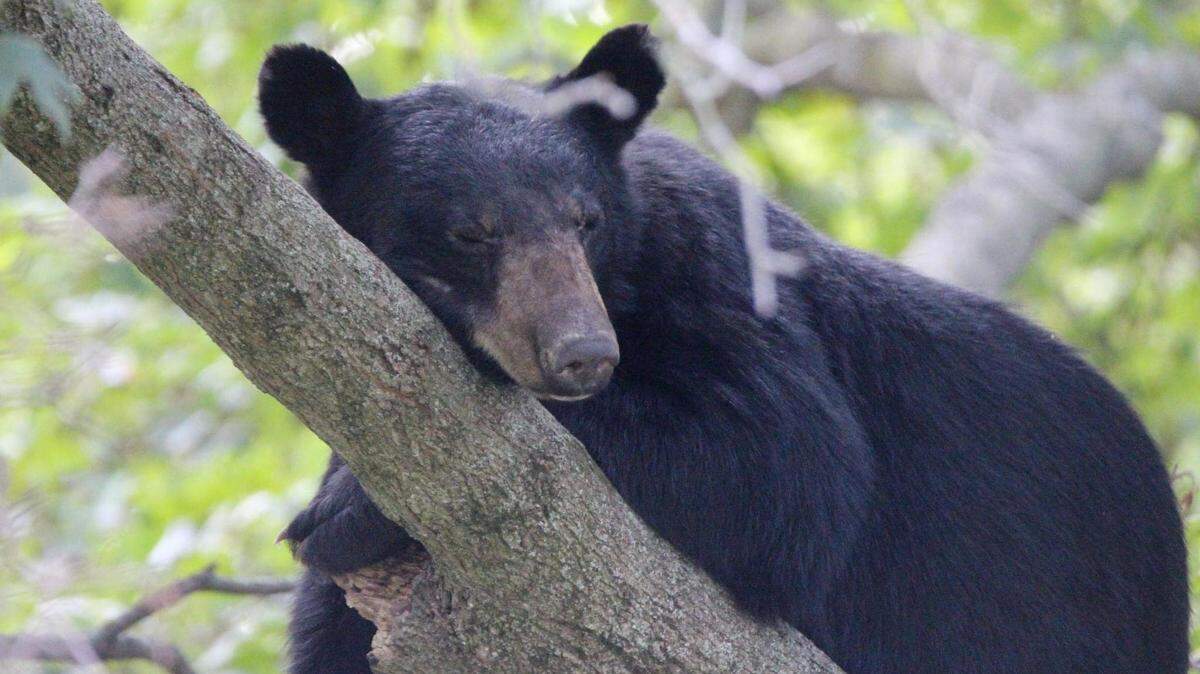
The Illinois Department of Natural Resources is reporting that a black bear was sighted three times last week in St. Clair County, meaning that bears have made their way to southern Illinois four out of five years.
Does that signal a “new normal” of bears living among us? Yes and no, according to Don Schachner, an Illinois conservation police officer (also known as a game warden) based in Monroe County.
Schachner and other state wildlife experts expect black bears to keep crossing into Illinois from Missouri, but it could take years or even decades for a significant population to become established.
“Missouri has a population of roughly 900 bears, and if you look at their location, it’s like a band extending at an angle across the state, from the Arkansas border to the Mississippi River,” Schachner said.
“(Monroe County is) on the opposite side of that river, and it’s absolutely nothing for a bear to swim it. As bears are naturally expanding their range, the first ones you’re going to encounter are males. They have a tendency to roam out farther. They are just eating machines, and they cover a tremendous amount of territory.”
Schachner determined that a black bear he monitored in southern Illinois last year traveled 26 miles in 24 hours. It visited Valmeyer, Columbia, Fairview Heights, O’Fallon, Lebanon, Mascoutah, the Kaskaskia River, Coulterville, Rend Lake and the Wabash River before crossing into Indiana.
Bear sightings also occurred in 2021 and 2023 in southern Illinois after decades of only rare examples.
“We do not have a breeding population of bears,” Schachner said. “The bears that we see are just ranging out. They cover a lot of ground, and the next thing you know, they’re back in Missouri.”

Bee hives damaged
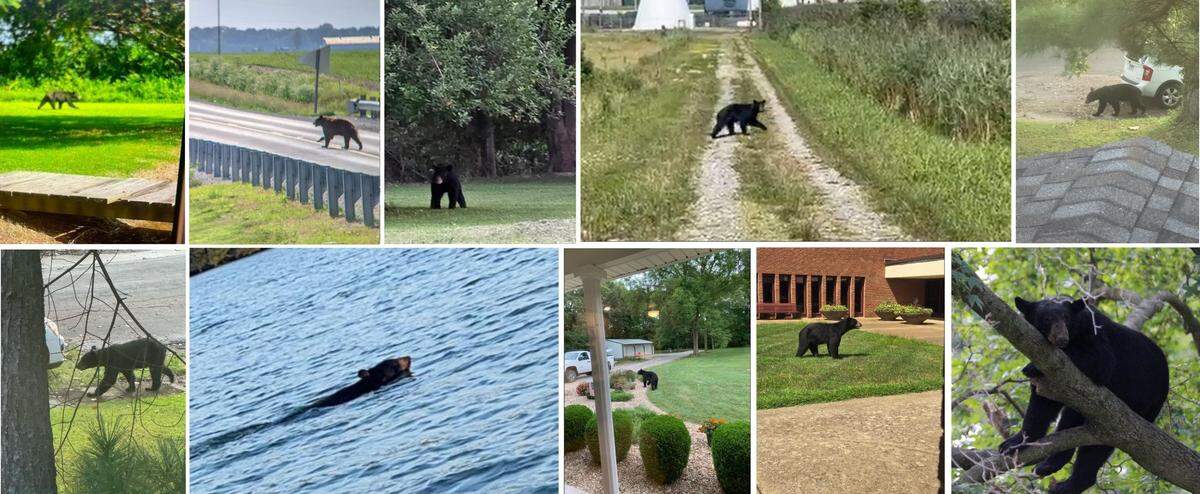
Last week, a black bear was sighted on Monday, Wednesday and Thursday in St. Clair County, according to an IDNR news release emailed Friday. It didn’t provide specific locations.
“The bear has had no interaction with humans, though it has damaged some bee hives on private property,” the release stated.
“IDNR’s wildlife division reminds residents that although sightings of black bears in Illinois are rare, the potential exists that animals from neighboring states may be observed in Illinois over the next few months.”
Both Missouri and Wisconsin have established black bear populations. In recent years, Illinois has confirmed sightings in more than a dozen counties.
IDNR encourages people to avoid direct encounters with bears and to check their property for food sources that could attract a bear if one is reported in the area.
“Bears can follow their powerful noses to food sources and can pick up nearly anything with an odor from more than a mile away,” the release stated.
“Through learned behavior, bears often investigate anything that may yield a food reward, such as bird feeders, (barbecue) grills, garbage cans, and dog food. Once a bear finds a food source, they will likely return, so prevention is key.”
Yearling bears (1 to 2 years old, between cub and adult) disperse from their birth ranges in early summer months, looking for food and permanent home ranges, according to the release.
“Adult males travel far and wide looking for mates, and nursing females venture further from home range core areas to meet the energetic demands of raising cubs,” it stated.
Making a comeback
Black bears are omnivores that eat a wide range of plants, small mammals, fish, insects, birds, reptiles and amphibians. They were found throughout the United States at one time but disappeared from many regions due to unrestricted hunting and loss of habitat.
Arkansas, formerly known as the Bear State, boasted up to 50,000 black bears in pre-settlement days, according to the Arkansas Game and Fish Commission website. After numbers dwindled, the state revived the population with a restoration program from 1958 to 1968.
Black bears also are making a comeback in Missouri.
“Most Missouri bears live just south of Interstate 44 (core range), but as the population continues to grow, bears have started to inhabit new areas of the state (expansion range),” the Missouri Department of Conservation website states.
“Each year, bears — mostly subadult males — are ‘observed’ in counties outside of their core range, but have yet to settle in these areas.”
The presence of a black bear shouldn’t necessarily be perceived as a threat, the IDNR release stated. But experts warn that any wild animal can be dangerous under certain circumstances.
IDNR encourages people to report bear sightings online at www.wildlifeillinois.org. It also provides the following safety checklist:
- Never feed or approach bears.
- Secure food, garbage and recycling.
- Remove or limit use of bird feeders when bears are active.
- Avoid leaving pet food outdoors.
- Thoroughly clean and store grills and smokers after each use.
- Alert neighbors to bear activity.
Experts suggest that people who encounter a bear should give it sufficient space while backing away slowly and quietly. If encounters persist after food sources are cleaned up, contact Chris Jacques, IDNR’s large carnivore program manager, at chris.jacques@illinois.gov.