He bought and sold derelict homes in Belleville. He may go to prison for fraud
The guilty plea of a prominent metro-east businessman on federal fraud charges in June came as a relief to some people concerned about Belleville’s derelict-housing crisis.
That’s because Columbia contractor Gregg Crawford, 65, who formerly lived in Belleville, and his companies allegedly have been buying older properties in the city as part of a fraudulent-loan scheme, allowing some to sit vacant for years and fall into ruin.
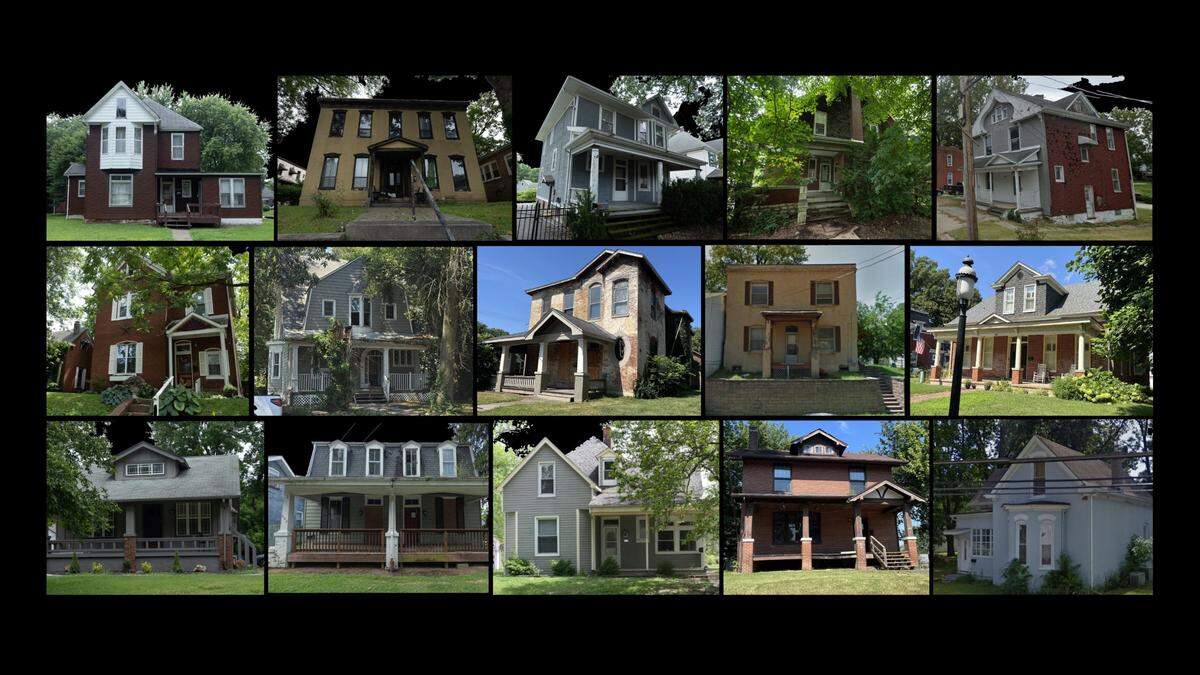
Historic homes on at least four of Crawford’s former or current properties in Belleville and on its Swansea border have been demolished. Others were — or still are — considered derelict by neighbors and city officials.
“This has done so much harm to neighborhoods, to redevelopment, to property values, to people who’ve had to try to live and raise their kids across the street from one of these properties,” said Lori Creason Powell, 60, a local rehabber and real-estate investor.
“There’s homeless people and crime and needles, and one (of Crawford’s homes) was being used as a feeding stop for a feral-cat colony.”
Crawford and his brother-in-law, Francis “Frank” Eversman, 74, of Collinsville, a senior loan officer at the former Tempo Bank in Trenton, pleaded guilty to conspiracy to commit bank fraud on June 23 in U.S. District Court for the Southern District of Illinois in East St. Louis.
According to court documents, they worked together from 2011 to 2020 to falsify loan applications so that individual “straw buyers” recruited by Crawford could get mortgage loans and pretend to purchase highly overvalued properties from his companies.
“(Eversman) steered these loans through the approval process,” stated a news release from U.S. Attorney Steven Weinhoeft’s office.
Appraisals were often based on renovation plans, but Crawford used some of the money for other purposes, court documents show. Powell said some of his historic homes in Belleville were abandoned, allowing squatters, animals and water to enter through broken windows or holes in roofs.
It’s unknown how much Crawford spent on renovations or what were the “other purposes.” His many projects include the $5.7 million redevelopment of a former Columbia church into a venue called Main Street Abbey with shops, lofts, a hotel and microbrewery.
Crawford didn’t respond to requests for comment. His St. Louis attorney, David Neimeier, declined to comment at this time.
Unusual pattern
Gregg Crawford has been investing in properties throughout the metro-east for decades. Federal prosecutors didn’t identify the addresses or cities involved in the fraud scheme.
St. Clair County parcel records show that Crawford and two of his Columbia-based companies have bought at least 15 homes in Belleville and on its Swansea border at low prices and sold them for 10 to 40 times more within days, weeks or months to people who got mortgage loans from Tempo Bank.
In all but one case, the companies, Main Street Redevelopers and Mid America Contracting, regained control when buyers transferred ownership to them via quit-claim deeds.
“It just wasn’t adding up,” said Nichole Hettenhausen, 38, a resident of Old Belleville Historic District and former member of Belleville Historic Preservation Commission who’s restoring her second home with husband Chris.
Hettenhausen had noticed the unusual pattern of Crawford’s real-estate transactions. At one point, she said she complained to city officials about historic homes that seemed to be languishing under his ownership.
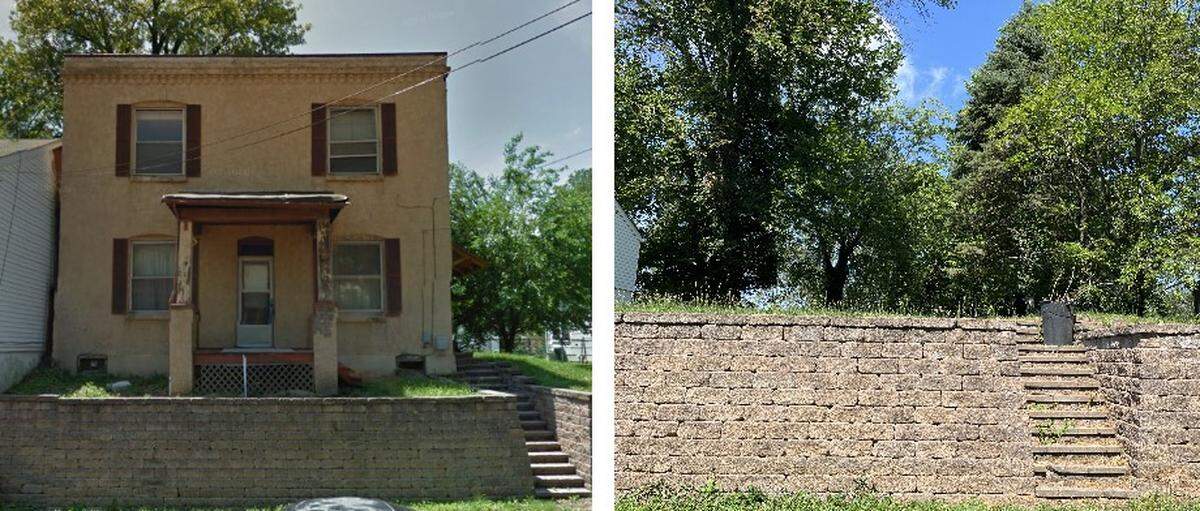
Hettenhausen gave the example of a two-story, stucco-covered brick home at 505 Abend St. Belleville Historical Society Historian Bob Brunkow described it as a “townhouse of the working class,” dating back to the late 1800s.
Its dentil cornice reflected styles of German American folk houses. Early residents included laborer Hermann Burmann, flour mill worker Henry Hertling, foundry molder Charles Boerner and bricklayer Jacob Zulauf.
Crawford bought the property for $5,400 on Dec. 20, 2013, from a local couple, parcel records show. He sold it for $238,000 on Jan. 30, 2014, to an individual, who got a mortgage loan from Tempo Bank.
In 2020, the individual transferred ownership to Main Street Redevelopers via quit-claim deed, and Main Street transferred it to Mid America Contracting.
Parcel records provide names of property buyers and sellers. The BND is withholding some of them to avoid casting suspicion on people who haven’t been charged with crimes.
At one point, the stucco facade at 505 Abend St. was removed, perhaps an attempt at restoration. But the home was demolished in 2019. Mid America sold the vacant lot to an individual for $1,000 in 2023.
“That was a really good example of something allowed to sit and sit and sit to the point that it became too expensive to fix, and it was thought to be a public nuisance,” Brunkow said.
In 2020, the U.S. Treasury Department’s Office of the Comptroller of the Currency, which oversees banks, began investigating suspicious loans authorized by Eversman, court documents show. Also involved were the department’s office of inspector general and FBI’s Springfield office.
Crawford and Eversman pleaded guilty to conspiracy to commit bank fraud in June before being formally charged.
“Typically, people are charged by a complaint or an indictment by the grand jury,” said Lauren Barry Duncan, spokeswoman for Weinhoeft’s office. “But in this case, they both pleaded guilty to an ‘information.’ So basically, their lawyers contacted our office instead of waiting on charges.”
Conspiracy to commit bank fraud is a felony punishable by up to 30 years in prison, five years of supervised release and fines up to $1 million.
Southern District Chief Judge Nancy Rosenstengel released Crawford and Eversman on personal-recognizance bonds after they agreed to surrender passports and not possess firearms. Sentencing is set for Oct. 14.

Community impact
Powell brought up the fraud case at a Belleville City Council meeting on July 7. She urged officials to submit a victim-impact statement to let the judge know how Crawford has impacted the community.
“He should go to prison,” Powell said in an interview, arguing that $1 million is a small fine for someone with so many businesses and projects. “He should be ashamed of himself.”
Mid America Contracting has offices in St. Louis, Chicago, New Orleans, Dallas and Phoenix, according to its website.
Crawford’s wife, Jane, sells real estate under the name Palmer Properties, formerly Concept Real Estate, and operates several businesses with her husband, Illinois Secretary of State business entity records show. She wasn’t charged or mentioned in court documents related to the fraud case.
Like Powell, Hettenhausen spoke at the City Council meeting about Gregg Crawford’s derelict homes.
“Some of them were eventually demolished, despite interest from locals who wanted to purchase and restore them,” Hettenhausen told aldermen. “These weren’t just empty structures. They were pieces of our neighborhood’s history, and now they’re gone.”
Hettenhausen asked city officials to publicly acknowledge that Crawford had harmed the community and take steps to ensure that his remaining properties are protected from further deterioration.
County parcel records show that Gregg and Jane Crawford or their companies still own at least 12 structures in Belleville, including nine homes at 706 State St., 609 S. Jackson St., 827 S. Illinois St., 14 Granvue Drive, 234 Lebanon Ave., 303 N. Jackson St., 520 E. C St., 420 State St. and 1823 W. Main St.
A Crawford company known as Cave Creek Properties Inc. also owns three brick storefronts that house Tavern on Main at 301-305 W. Main St. and its sister business, T2 Taps and Tapas at 307 W. Main St.
Edwardsville-based Scott Credit Union acquired Tempo Bank in 2022. The deal included its main office in Trenton and branch office in Breese, a news release stated at the time.
On July 24, Scott President and CEO Frank Padak said he didn’t know about the federal investigation or fraud case involving Tempo until recently, when he read about them in news reports.
“We did our due diligence (during the acquisition process) and asked if there were any lawsuits or litigation we should know about, and they said, ‘No,’” Padak said. “... Since that time, we’ve had no issues.”
60 properties
Gregg and Jane Crawford and their companies have bought and/or sold more than than 100 homes, apartment complexes, commercial buildings and vacant lots in St. Clair County in the past 25 years, parcel records show. That includes about 60 in Belleville.
Most of the structures are historic or aging, and many were showing signs of disrepair well before the Crawfords bought them, according to Google street-view photos. Some were renovated or repaired, sold or rented, although the number and extent are unclear.
“I have been investing in real estate for 30 years as well as construction,” Gregg Crawford wrote in his Realtor.com bio. “I own my own construction company which does rehabbing as well as remodel work.
“I feel with my extensive knowledge of real estate and construction I am a huge asset to clients trying to buy and sell in the market. I also have many banking connections that may assist my clients in obtaining financing.”
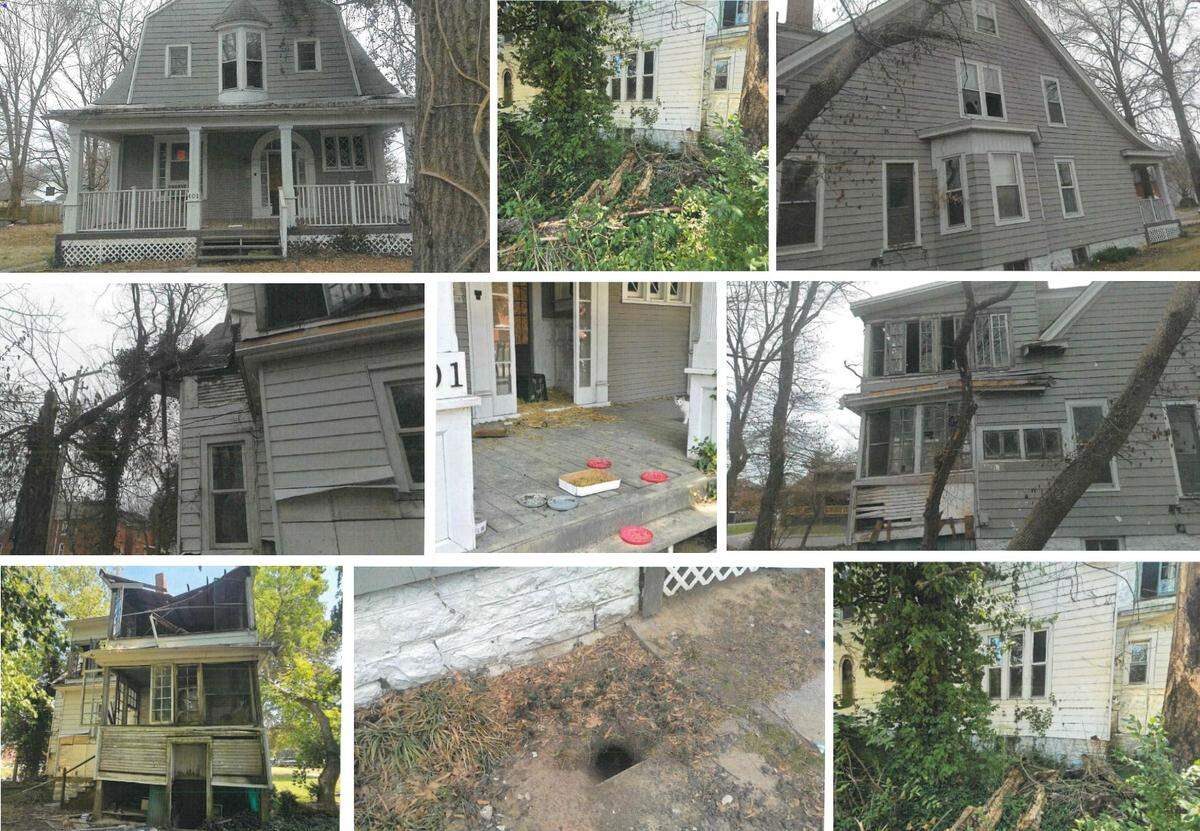
Crawford’s rehab credentials didn’t benefit his historic home at 401 S. Jackson St. in Belleville. It was demolished in November 2024 after being condemned by city officials.
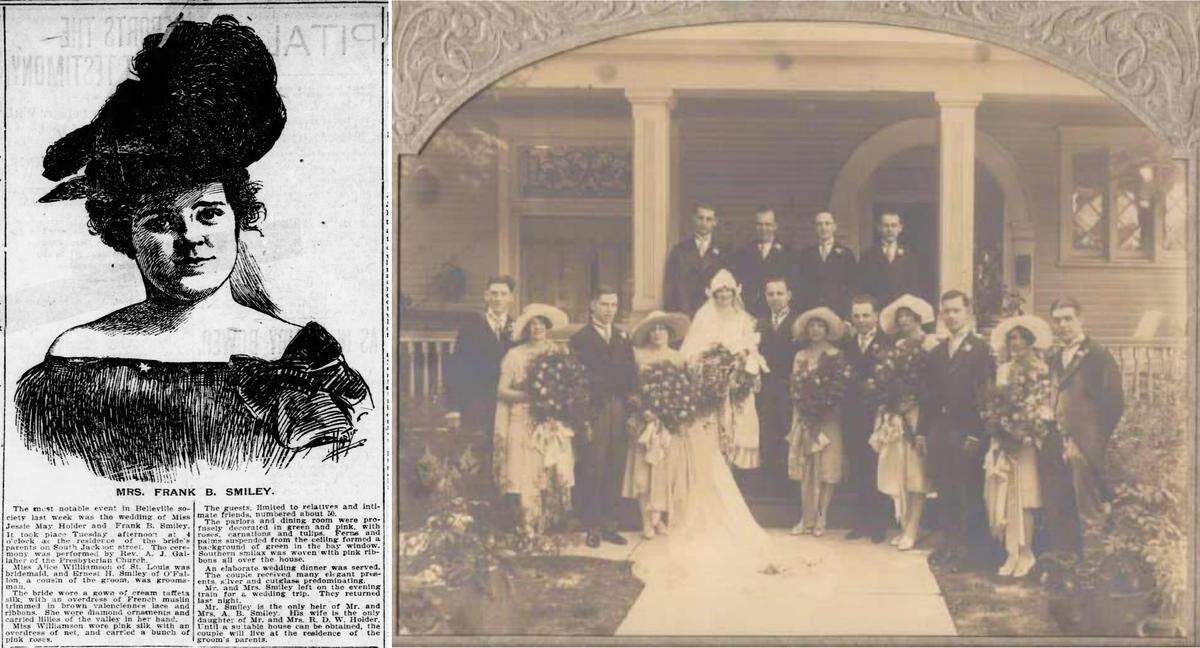
The 2 1/2-story frame home with a Dutch colonial front was built in 1901 for Frank Smiley, a “pioneer” auto dealer and bank director, and his wife, Jesse May, Brunkow said. Her father was a St. Clair County judge.
“In 1902, an elegant Valentine’s Day tea was held for 200 invited guests, and an orchestra played from the balcony,” Brunkow said.
The home later was occupied by Henry Clay Begole, a business executive, state senator and county treasurer. Brunkow considered it historically significant because “people of prominence lived there, and it was built to last.”
Belleville city directories show that the Seibert family last occupied the home in 2009. Barry Moon said he and two other partners bought it to “flip” six years later, when it was essentially being used as a “warehouse” with squatters sleeping on the porch.
Moon specializes in historic salvage, but in this case, he said he emptied the home of old TV sets, furniture and other contents but left the wooden staircase and other architectural features intact.
“If you wanted to spend some serious money on it — $200,000 or something like that — you would have had a nice home on a double lot on a corner in a nice area of Belleville,” Moon said. “But Belleville property is not bringing what it used to.”
Moon noted that the home needed roof repairs, a new kitchen, new electrical system and many other renovations. He called it a “shell.”
Main Street Redevelopers bought the property for $35,000 on July 24, 2015, from Moon and his partners, parcel records show. The company sold it for $248,000 on Aug. 24, 2015, to an individual, who got a mortgage loan from Tempo Bank.
In 2020, the individual transferred ownership to Mid America Contracting via quit-claim deed.
It’s not known if Crawford planned to restore or renovate the home. Local preservationists say some people buy historic structures with good intentions then drop projects when they realize the severity of problems or how much time and money it would take to meet modern building codes.
Hettenhausen and Powell said other people expressed interest in buying and restoring the home on South Jackson, but Crawford wouldn’t sell it and perhaps couldn’t sell it for legal reasons.
“He holds these houses hostage until there’s no turning back,” Hettenhausen said. “It’s just a shame.”
Scheme in action
At least nine Crawford companies have bought and sold properties in St. Clair County, parcel records show. Main Street Redevelopers and Mid America Contracting were the only two mentioned in court documents related to the fraud case. Gregg Crawford serves as president.
Stipulations of facts agreed upon by Crawford, Eversman and Assistant U.S. Attorney Kevin Burke outlined the following scheme:
- As early as November 2011, Crawford began recruiting straw buyers to purchase properties on his behalf.
- Many of the buyers were “financially disadvantaged” in that they had poor credit scores, payment delinquencies and incomes that wouldn’t support their mortgage loans.
- Crawford assured the buyers that bank loans in their names would improve their credit scores.
- Crawford obtained appraisals of the straw-purchased properties based on promises of future renovation and improvements.
- Eversman reviewed and approved 30 such fraudulent loans through Tempo Bank from about November 2011 to March 2017.
- Crawford paid mortgage payments, property taxes and insurance costs on the properties but used some of the loan proceeds for other purposes.
- Crawford paid off the straw buyers with cash in exchange for use of their names on loan applications.
- Crawford later “purchased” the properties for no payment while assuming the loans.
- After the fraudulent nature of the loans was discovered, all were repaid in full to Tempo Bank.
- Crawford instructed one of the straw buyers to lie to investigators and say that he or she originally had intended to live in a purchased home.
Crawford and Eversman pleaded guilty to conspiracy to commit bank fraud in a plea agreement that is partially sealed.
“Every American citizen deserves to walk into their bank and trust the people behind the counter,” FBI Springfield Special Agent in Charge Karen Marinos stated in the news release from Weinhoeft’s office.
“In southern Illinois, these people are usually our neighbors and friends, people that we trust with our money and well-being. The defendants in this case violated that trust through schemes aimed to self-serve and increase wealth.”
Other companies now or formerly owned or co-owned by the Crawfords that have bought and/or sold property in St. Clair County include Cave Creek Properties Inc., S&G Holdings LLC, Searchlight Properties, JAG Inc., Colonial Group Inc., Avery Holdings and Midwest Design F&G, parcel records show.
Eversman was president of Midwest Design, according to the state’s list of business entities. S&G was a partnership between Gregg Crawford and a Fairview Heights businessman. Gregg and Jane Crawford also have bought and/or sold properties under their own names.
Neighborhood crisis
Founded in 1814, Belleville is known for its historic architecture, ranging from German American folk houses to Greek revival, Italianate, mid-century modern and other styles.
But the city has struggled in recent years to deal with vacant and derelict buildings that have turned into neighborhood eyesores and contributed to squatting, crime, drug use and decreased property values.
To complicate the issue, many properties are bought by limited-liability companies with anonymous, out-of-state owners. Scott Tyler, the city’s director of health, housing and building, often describes how hard it is to reach them about code violations or demolition orders.
That hasn’t been a problem with Gregg Crawford, Tyler said. His known companies were formed in Illinois, where owner identities are public. City officials have issued him citations for tall grass and other code violations, condemned some of his homes and asked him to demolish a few.
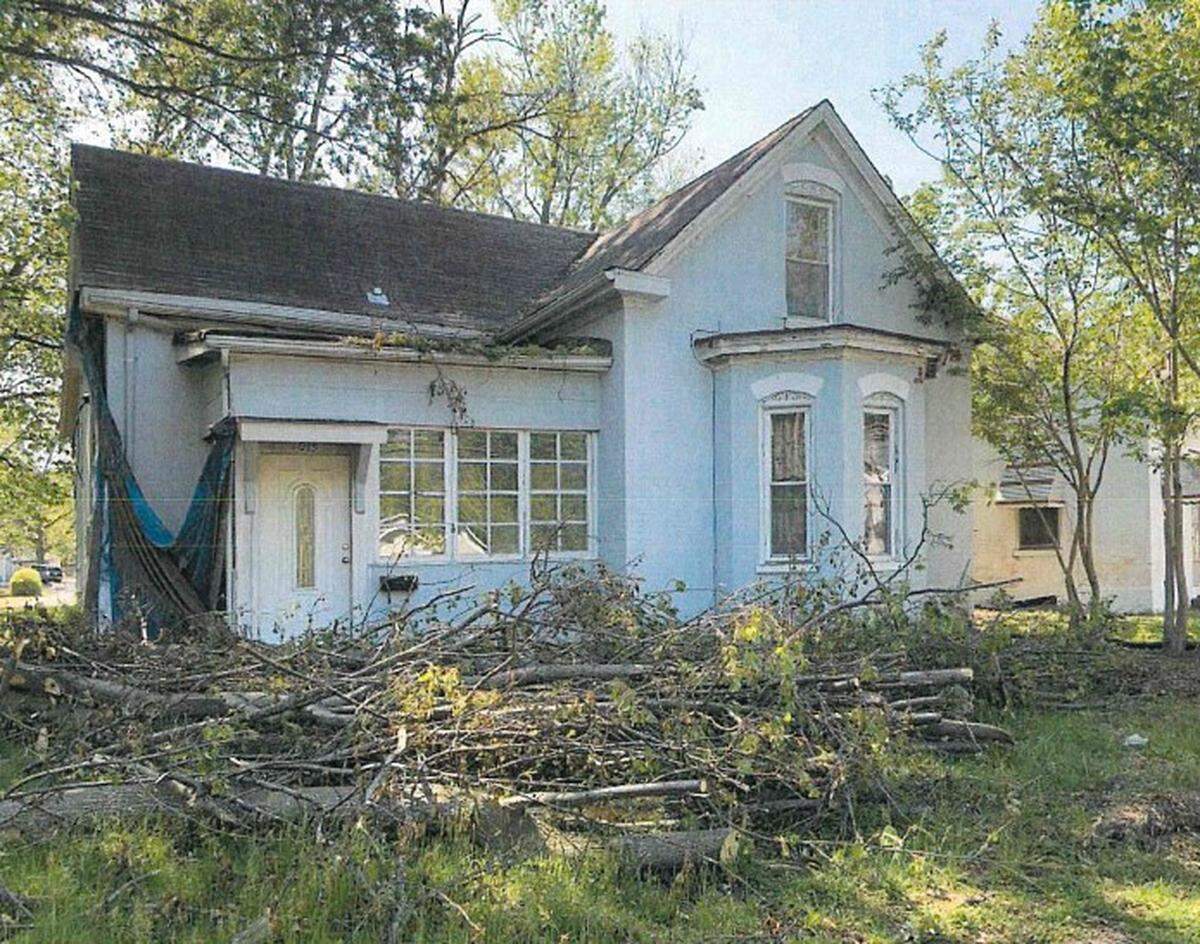
“They were just beyond repair, especially the one on Caseyville Avenue,” Tyler said. “The roof was caved in, and there was extensive water damage. It was ready to fall down on itself.”
Tyler was speaking of an 1800s brick home painted blue at 1015 Caseyville Ave. Main Street Redevelopers bought it for $25,000 on Jan. 12, 2016, from a Columbia bank, county parcel records show. The company sold it for $174,900 on Jan. 28, 2016, to an individual, who got a mortgage loan from Tempo Bank.
In 2020, the individual transferred ownership to Mid America Contracting via quit-claim deed. The home was demolished earlier this year.
“The house is falling apart,” an anonymous person wrote in 2023, one of several complaints filed with the city. “(There) are people smashing the windows to get into the house to do drugs.
“The police have been called out several times. (The) house has been condemned and the animals ... living in it are starting to migrate to other houses. It is a disgusting and very unsafe place. Please tear it down.”
Crawford is generally cooperative and willing to correct problems when contacted by the city, Tyler said, but officials would rather people take care of their properties without being told and before they deteriorate to the point of becoming public nuisances.
Powell and Hettenhausen said its been frustrating for local residents who have worked tirelessly to restore historic homes and improve their neighborhoods to watch Crawford, a Belleville East High School graduate, benefit from their deterioration.
Powell lives half a block from a derelict two-story brick home at 609 S. Jackson St. that’s owned by Main Street Redevelopers. It’s been sitting vacant for more than 10 years, neighbors say. On a recent morning, a squatter’s tent was set up in the backyard.
“What we as neighbors have to do is monitor it, because nobody here is going to call the city and tell them what’s going on,” Powell said.
The home was first occupied by attorney and Justice of the Peace William Ward and his wife, Elizabeth, from the 1890s to the 1920s, according to Brunkow.
Crawford bought the property for $65,000 on Oct. 4, 2013, from an individual, county parcel records show. He sold it for $280,000 on Oct. 17, 2013, to another individual, who got a mortgage loan from Tempo Bank.
In 2018, the second individual transferred ownership to Main Street Redevelopers via quit-claim deed.
Today, the home has gaping holes in eaves, a leaky roof, sagging porch and buckling floors inside. City Building Commissioner Steve Thouvenot identified several code violations in a recent inspection.
“It’s not condemned yet,” Tyler said. “(Thouvenot) thinks it can be fixed.”
Garage turntable
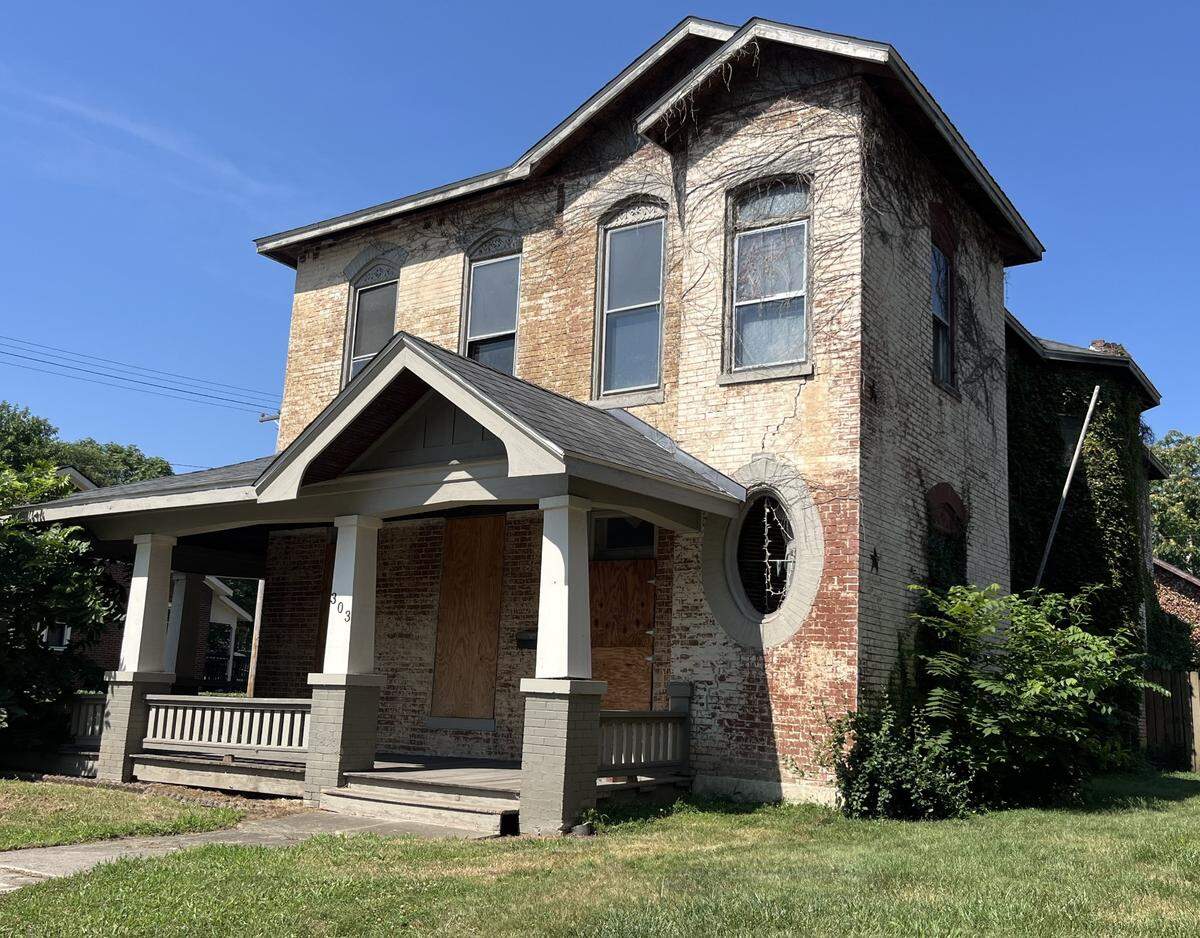
Another massive brick home of concern to local preservationists is at 303 N. Jackson St. It was built for Joseph Penn, a “wealthy county farmer” with about 2,000 acres, who moved to Belleville around 1874, according to Brunkow.
The home’s garage, built between 1907 and 1919, has a turntable that originally kept Model Ts from having to back out.
A local couple sold the property for $25,000 in 2012 to a limited-liability company, county parcel records show. The LLC transferred ownership to Main Street Redevelopers via quit-claim deed on June 24, 2016. The same day, Main Street sold it for $250,000 to an individual.
Both the LLC and individual got mortgage loans from Tempo Bank. In 2021, the individual transferred ownership to Mid America Contracting via quit-claim deed.
Unlike many derelict homes, the one on North Jackson has a newer roof that seems to be keeping water out. But it’s been vacant for more than 10 years and deteriorating in other ways, neighbors say.
“It is an absolute blight on the neighborhood,” Powell said. “The neighbors have all kinds of problems with homeless people breaking out the windows and getting in and camping and doing drugs.”
Of the 15 homes bought in Belleville and on its Swansea border at low prices and quickly sold for unusually high prices to Tempo Bank borrowers, only one didn’t end up back with a Crawford company. It’s an 1800s frame duplex with a mansard roof at 603 Mascoutah Ave.
Main Street Redevelopers bought the duplex for $12,000 on Jan. 14, 2015, from a government agency, parcel records show. Main Street sold it for $240,000 on June 24, 2015, to an individual, who got a mortgage loan from Tempo Bank.
Main Street continued to pay property taxes some years, and Tempo released the individual from her loan obligation in 2021. But she didn’t transfer ownership via quit-claim deed like other buyers.
The individual, whose name still is on the deed, is close to forfeiting it to a limited-liability company that purchased two of three years of her delinquent property tax bills.
“They’ve already started the (forfeiture) process,” said Whitney Strohmeyer, president of Joseph E. Meyer & Associates, the company the serves as St. Clair County’s trustee and delinquent-tax agent.
Click here for a list of 15 homes in Belleville and on its Swansea border that involved Crawford or his companies buying at low prices and quickly selling for much higher prices to Tempo Bank borrowers.
BND visual journalist Joshua Carter contributed information for this story.
.jpg "2025.07.18_603 Mascoutah (1).jpg")
This story was originally published July 28, 2025 at 5:30 AM.