Swansea mayor, trustee at odds over ‘illegal’ build-up of reserve funds
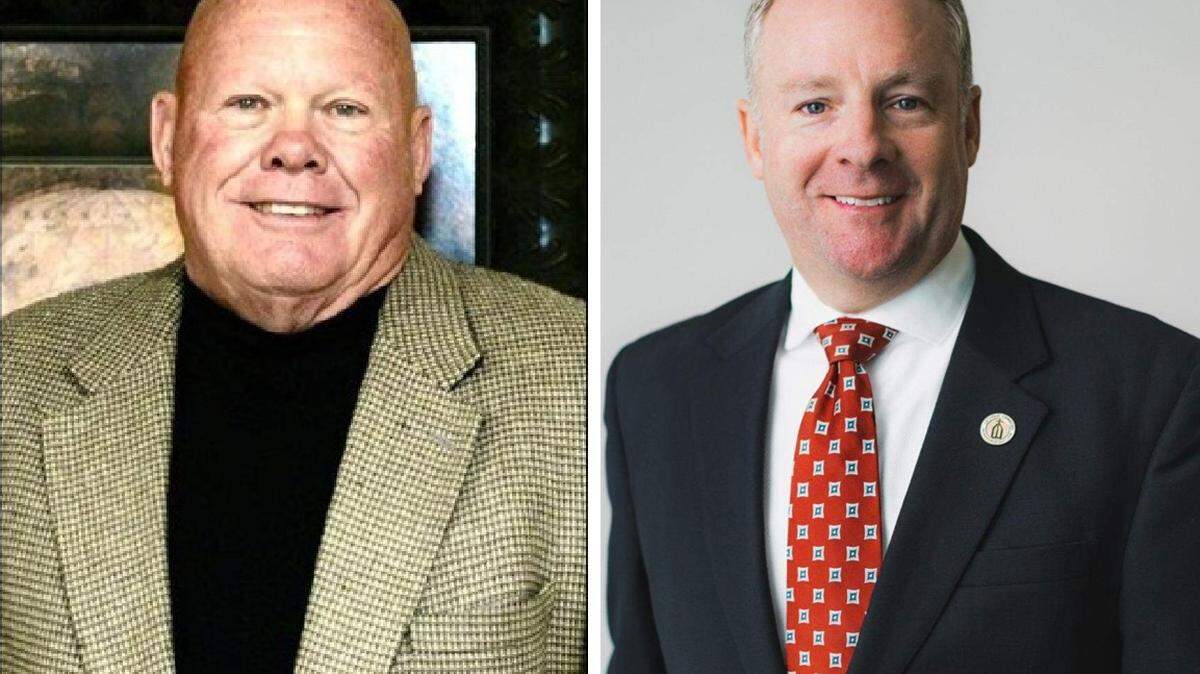
A member of the Swansea Board of Trustees is accusing the village administrator and finance committee chairman of allowing the village to violate its own ordinance by amassing too much money in its reserve fund, which functions like a savings account.
In a Facebook post last week, Trustee Brian Thouvenot referred to the action as “illegal” and called for an independent “forensic audit.”
“We’ve been taking overages in our annual budget — money that we didn’t spend — and putting it into this general reserve fund,” Thouvenot said in an interview. “... “At the same time, we were raising taxes.”
Thouvenot, a former mayoral candidate who was defeated by Mayor Jeff Parker in April, said this has been going on for several years.
In 2011, trustees passed an ordinance providing for minimum reserve fund balances equal to two months’ worth of village operating expenses and maximum balances equal to four months’ worth.
With the current year’s budget of $10.5 million, reserve fund balances under the ordinance would range from about $1.74 million to $3.45 million, Parker said. The balance now stands at $7.53 million, which is equal to about eight months of village operating expenses.
Parker called that “healthy” for municipalities in today’s world. He said Swansea needs to be ready in case of a tornado, such as the one in St. Louis this year, or another emergency.
“I campaigned on readiness,” he said.
However, Parker acknowledged that officials violated the ordinance. He promised that the board would look into the matter and resolve the issue.
Parker described the ordinance as “out of date” and argued that a reserve fund balance equal to four months’ worth of operating expenses is insufficient. He favors raising the maximum limit.
Parker defended Village Administrator Ben Schloesser and longtime Trustee and Finance Committee Chairman Matt Lanter, saying they were guided by positive reports from auditors at C.J. Schlosser & Company (no relation to Schloesser) and by standard practices of municipalities in Illinois.
“Our auditor has told us that he’s happy with our finances and the reserves that we’ve been able to build up,” Parker said.
Parker initially appointed a committee consisting of the mayor (who also serves as a trustee), Schloesser, Village Treasurer John Walter, Lanter, and Thouvenot to address the ordinance violation. But after learning that closed meetings with three trustees would violate the Illinois Open Meetings Act, he said discussions would take place at regular board meetings.
Thouvenot is opposed to the idea of an internal investigation and is calling for those responsible to be held accountable.
“This Board cannot, nor will the public accept a simple change in an ordinance and move on,” he wrote in his Facebook post.
“What is done is done. The monies that have been amassed above the statutory limit are currently no longer ours to decide what to do with. That includes all of the interest the Village has gained on these funds. These are taxpayers dollars, unfairly collected and/or managed, and kept.”
Trustees are responsible for approving annual budgets and tax levies. Both Parker, who served as a trustee before being elected mayor, and Thouvenot have voted for them in recent years, despite the effect on reserve fund balances.
Thouvenot served as vice chair of the finance committee during his first two years on the board. At a tax levy meeting in December 2024, Schloesser argued for, and Thouvenot argued against, dipping into reserve funds to pay for increased village costs.
Thouvenot said Schloesser — who earns more than $140,000 a year plus benefits — should have known about the ordinance related to reserve fund limits and advised trustees accordingly.
“If the longtime Village Administrator and/or the longtime Finance Committee Chairman did not read, understand, and comply with the code of ordinances related to financial reserves, that is a serious issue,” Thouvenot wrote in his Facebook post.
“If they knew of these ordinances and did not follow them, for whatever reason, that also is a serious issue. There would have been ample opportunities to amend the code to remain in compliance.”
Schloesser declined to comment this week on the advice of Village Attorney John Kurowski. He referred a reporter to his statement at a special board meeting held Friday to consider the village’s new tax levy.
Schloesser told trustees that he polled other municipalities in southern Illinois and, of the 16 that responded, all reported that they had no maximum limits on reserve fund balances.
“In the opinion of the Illinois Municipal League’s executive director, in the opinion of our auditors, in the opinion of our attorney, nothing improper or illegal has taken place,” he told trustees.
Beyond reserve fund balances, Thouvenot said he suspects that officials have violated another part of the ordinance specifying what the money can be spent on. He argues that an independent audit is the only way to get all the facts and maintain trust in local government.
At Friday’s meeting, Parker addressed Thouvenot directly regarding his Facebook post.
“I find it a little bit appalling, Mr. Thouvenot, that you wrote the word ‘illegal,’ like there was something that was criminal going on here and that’s why a forensic audit was needed,” he said.
“A forensic audit is for things like theft and fraud. This was a mistake apparently made, and I don’t think the intent was on purpose. .... Let’s start working as a team together ... for the benefit of the village, not to look at something (with a) gotcha attitude.”