Metro-east rescues see spike in pet surrenders. Where to find food, low-cost vet care
AI-generated summary reviewed by our newsroom.
- Owner surrenders have doubled since 2023 at the Belleville Area Humane Society.
- Housing loss and rental restrictions drive most pet relinquishments across metro-east.
- Local clinics and pantries offer low-cost spay, vaccines and pet food to retain owners.
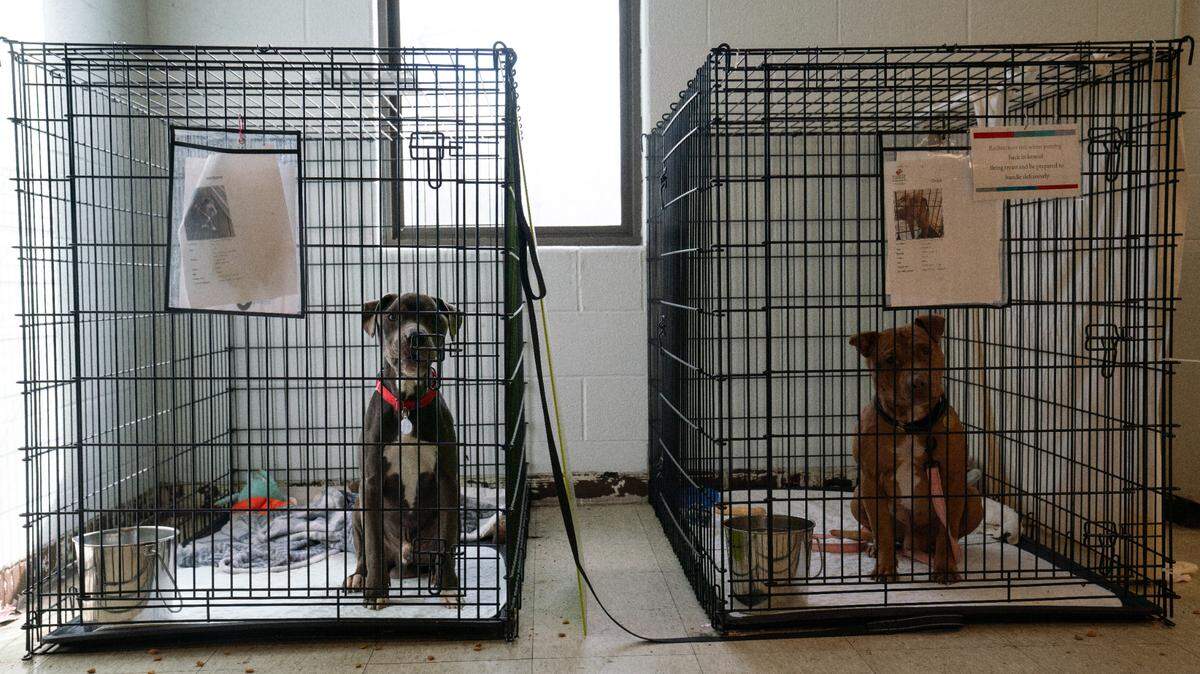
The Belleville Area Humane Society has seen owner surrenders of dogs and cats more than double since 2023, and organizations across the metro area are providing resources to try to help people keep their pets.
The “huge uptick” in owner surrender requests has required the shelter to completely reorganize how they process them, executive director Savannah McDonald said. While the job was previously doable by about half an employee, it now takes nearly two workers just to handle the surrender requests.
“And the reason that’s happening is very simple and very straightforward,” McDonald said. “People are losing their housing.”
BAHS staff are seeing many people who are “urgently becoming homeless” and living in their cars, as well as moving in with relatives because they can no longer afford to live independently, McDonald continued. Rental restrictions also play a key role in pet surrenders, as a number of landlords ban dogs based on their weight or breed.
Scott Air Force Base, a major local employer, has restrictions on what kind of dogs can live on base.
In 2023, BAHS had 149 owner-surrendered pets, and the number spiked to 406 in 2024, and 346 in 2025. McDonald expects the number to increase this year.
The Metro East Humane Society, which has locations in Edwardsville and Highland, has also reported a significant increase in pet-surrender requests.
“Animal welfare trends very much are dependent upon socio economic factors like human homelessness, unemployment rates, cost of living, etc,” executive director Anne Schmidt wrote the News-Democrat via email. “Because of the general climate in our country right now, animal welfare is a really overwhelming place to be. Many people can’t afford to care for themselves so caring for a pet is not an option for some, and finding affordable housing that allows pets is very difficult. Naturally, shelters and rescues become very full very quickly as a result.”
Southwest Illinois is far from the only place experiencing sharp increases in owner surrenders, as many humane societies, rescues and shelters across the nation report similar issues. Housing challenges are the top contributor to pet relinquishment nationwide, according to Hill’s Pet Nutrition’s 2025 State of the Shelter Adoption Report, though financial difficulties trail closely behind.
If you’re struggling with finding pet-friendly housing, there’s an online database where you can search for dog-friendly rentals in your area. Additionally, Illinois state law offers some protections for pets living in designated low-income housing.
There are also housing rights protections for service animals and emotional support animals.
Owners who surrender their pets cite affordable or free veterinary care as the top resource that could have prevented the surrender, and the metro-east and greater St. Louis area has several organizations focused on this solution.
In addition to veterinary services, paying for pet food is a significant barrier. BAHS alone provides food for about 800 pets in St. Clair County each month, McDonald said, although the figure does include some feral cats.
Behavior issues are another leading cause of relinquishment, and McDonald said shelter staff frequently field calls from adopters for advice about issues they’re experiencing with their dogs or cats.
Positive reinforcement training offers “the most advantages and least harm to the learner’s welfare,” according to the American Veterinary Society of Animal Behavior, and some local shelters assist owners post-adoption with any behavior problems they may encounter.
St. Clair County residents can call BAHS at 618-235-3712 for information about community resources, including pet food assistance, training questions, spay and neuter options and more.
We’ve rounded up a few more resources for metro-east residents in need of assistance for their pets. Did we miss one? Email the information to mhoward@bnd.com so we can add it.
Bi-State Pet Food Pantry
The Bi-State Pet Food Pantry hosts monthly pet food distribution events to those who meet income qualifications and provide necessary paperwork. Distributions are held at 4950 Connecticut St. in St. Louis on select Sunday mornings, including Feb. 15, March 15 and April 19.
To receive assistance from the pantry, applicants must be at least 18 years old, have had their pet for at least six months and provide proof of financial need, such as documentation of receiving Medicaid, food stamps, unemployment or disability or a tax return demonstrating a low income.
Other requirements apply, including having pets spayed or neutered, agreeing to not keep pets outside 24/7 and more. Pet food is the primary item clients receive, but depending on donations, the pantry also distributes cat litter, food bowls, collars, leashes and treats and toys for dogs and cats. Items are distributed first-come, first-serve to qualifying clients.
As the name suggests, services from the Bi-State Pet Food Pantry are available to metro-east residents and those in St. Louis, provided they can make the drive to the distribution center.
Carol House Quick Fix Pet Clinic
Carol House Quick Fix Pet Clinic offers spay and neuter surgeries, vaccines and other basic veterinary services for lower costs than traditional veterinarian offices. The clinic has locations in St. Louis and Rolla, Missouri, and there is no residence requirement.
“At Carol House Quick Fix Pet Clinic, we work to remove barriers to veterinary care by providing accessible, affordable spay/neuter and wellness services,” executive director Wendy Heckman wrote in a Jan. 7 email. “We welcome pet owners from across the region, including southwest Illinois, who are able to travel to our St. Louis clinic. Our focus is on keeping pets healthy and at home with the families who love them.”
The clinic’s standard price for a spay or neuter procedure is $199 for a dog or $99 for a cat, but lower prices are available to those who qualify based on income. Pricing for people with a household income of $70,000 or less or an individual income of $50,000 or less is $94 for a dog and $74 for a cat, and households with an income of $50,000 or less and individuals with an income of $30,000 or less pay $59 for a dog’s procedure and $39 for a cat’s.
Spay and neuter surgeries are by appointment only, and can be made online or by calling the clinic at 314-771-7387.
Typical prices at a traditional, full-service veterinarian’s office will run you closer to $500 for a spay or neuter surgery for a dog or about $300 for a cat, though prices vary significantly based on the animal’s sex and age. The surgeries generally cost more for larger, older animals and females.
Carol House Quick Fix Pet Clinic also offers $25 rabies vaccines, bordetella, feline distemper and feline leukemia shots for $20 each, $30 microchips, $25 heartworm tests, $10 nail trims, $5 ear cleanings and a $25 test for feline leukemia virus and feline immunodeficiency virus.
There’s a $15 office visit fee for wellness visits, and an additional $15 fee for unaltered pets making a wellness visit. You can make an appointment online for wellness services.
Preventive medicine for fleas, ticks and heartworm is available and pricing varies.
The clinic also treats a limited number of medical issues such as flea or tick infestations, minor ear infections, minor skin infections, eye infections, ingrown toenails, diarrhea without accompanying vomiting, lethargy or appetite loss and minor respiratory infections in cats only. The clinic does not function as a full-service animal hospital.
Cheap Pricks
Cheap Pricks offers low-cost vaccines, testing, preventatives, microchipping and other basic pet services from its clinic in Valley Park, Missouri. Its services are available to anyone who’s able to make the drive.
The clinic does not offer spay or neuter services, but can assist with a variety of other common veterinary needs. Clients can choose among individual services or care packages.
A “bare care” package for a dog costs $130, and includes a wellness exam, rabies vaccine, distemper four-way vaccine, bordetella vaccine and dewormer. An indoor cat package goes for $100 and includes a wellness exam, rabies vaccine, FVRCP vaccine and dewormer.
Gateway Pet Guardians
This East St. Louis animal shelter offers a low-cost retail store that sells pet food, as well as has a pet food pantry for those in ZIP codes 62201 through 62207. To get help from Gateway Pet Guardians’ pantry, all pets in the home must be spayed or neutered, and proof of residency and need are also required.
Gateway also offers free spay and neuter services for dogs that weigh more than 30 pounds and live in ZIP codes 62201 through 62207.
Metro East Humane Society
The Metro East Humane Society has a low-cost spay and neuter clinic at its Edwardsville location, with pricing tiers determined by ZIP code. Prices range from $100 to $250 for dogs less than 65 pounds and $75 to $125 for cats. Appointments are required.
Pricing includes the spay or neuter surgery, a rabies vaccine and take-home pain medication. For an extra charge, you can add on additional vaccines, a microchip and other basic services.
MEHS also hosts vaccine and microchip clinics, which are open to anyone with no appointment required. The 2026 schedule hasn’t been posted yet.
The shelter’s pet food pantry is open to all metro-east pet owners, regardless of ZIP code. An ID is required, and dry and canned food, litter and pet supplies are offered, depending on availability. After the first month of receiving food, proof of spay or neuter is required to continue pantry use.
Do you have a question about animals, wildlife or the environment in Illinois for the News-Democrat? We’d like to hear from you. Fill out our Metro-east Matters form below.