Granite City residents pack forum to press officials about data center proposal
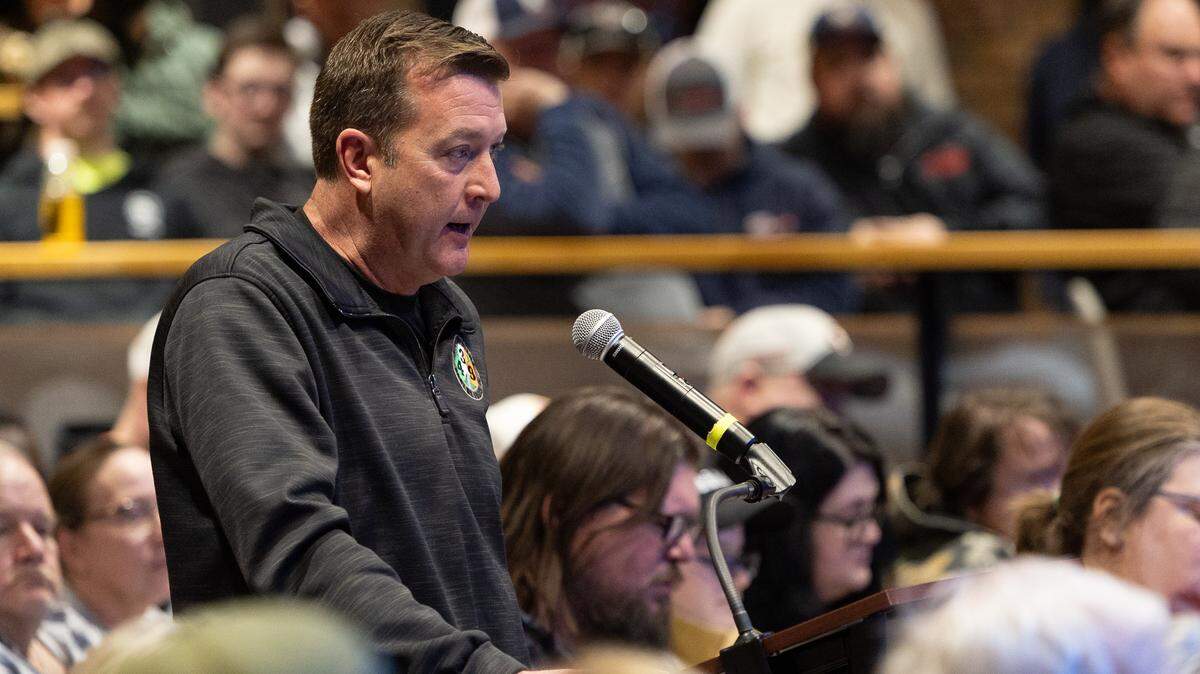
A standing-room-only crowd of nearly 300 people packed The Mill community center in Granite City last week to get information on a controversial proposal to allow a tech company to build a data center.
Opinions were plentiful and divided. Trade union leaders spoke in favor of the facility, touting it as a job creator and economic development tool. Other residents expressed concerns about utility costs, environmental impacts and transparency.
Several speakers questioned whether the project was a “done deal,” noting that city officials appeared to have been laying groundwork without public input. One suggested placing a referendum on the ballot.
Chris Hankins, business manager and financial secretary for International Brotherhood of Electrical Workers Local 309 in Collinsville, praised those in attendance for asking thoughtful questions and listening to differing viewpoints respectfully.
“Everybody here wants the same thing,” he said. “We want to see Granite City prosper again.”
Hankins said data centers will be built in the United States regardless, and Granite City should reap benefits in the form of property tax revenue and other community contributions that could be negotiated.
Resident Taylor Wyatt disagrees. She said data centers are not retail or manufacturing facilities that bring many permanent jobs, do not increase tourism or foot traffic, rarely create secondary businesses and often raise water and electric bills.
“What economic value will this bring to Granite City?” she asked.
Data centers house and manage servers, storage systems, networking equipment and hardware for processing and distributing large amounts of data. With advances in artificial intelligence, the need for them is growing.
Granite City is not the only metro-east community being considered for a data center. St. Louis-based Karabell Industries held a public forum in East St. Louis on Wednesday, Feb. 4, to gauge interest.
The city of Troy will hold a public information meeting on “potential data center development” at 6 p.m. Tuesday, Feb. 10, at Triad High School. Speakers will include representatives of Cloverleaf Infrastructure, a developer based in Houston, Texas.
“We encourage everyone with questions, concerns and/or comments to attend,” states a post on the city’s Facebook page.
Meeting turned into forum
The Granite City Planning Commission was scheduled to meet Thursday, Feb. 5, and vote on a zoning code amendment, known as Article 17. According to officials, it would set minimum standards for the development of any industrial complexes, including data centers.
Word spread in the community, leading to widespread social-media debate that mixed fact with fiction.
Then St. Louis Public Radio published a story revealing that Granite City Mayor Mike Parkinson and Economic Development Director Cathy Hamilton were part of a group of St. Louis-area officials who traveled to tour a Google data center in Nebraska in December.
Granite City leaders quickly pivoted, turning the Planning Commission meeting into a public forum on data centers.
“I was talking to the mayor, and we decided that this really needs to be slowed down a bit,” said Commission Chairman Dan Comer, announcing that the Article 17 vote was being postponed.
Officials also created a webpage specifically for information and updates on the data center issue.
Hamilton told the forum crowd that no company had submitted a formal proposal to build a data center in Granite City, but that officials had been approached by Cloverleaf about the possibility, prompting them to launch a “fact-finding” mission.
Hamilton said company scouts discussed the potential construction of a hyperscale center that would involve 250 to 300 acres of land and a 1.2-million-square-foot building for a 500-megawatt facility.
“These are large impactful projects for the community, and they could only go a few places,” she said.
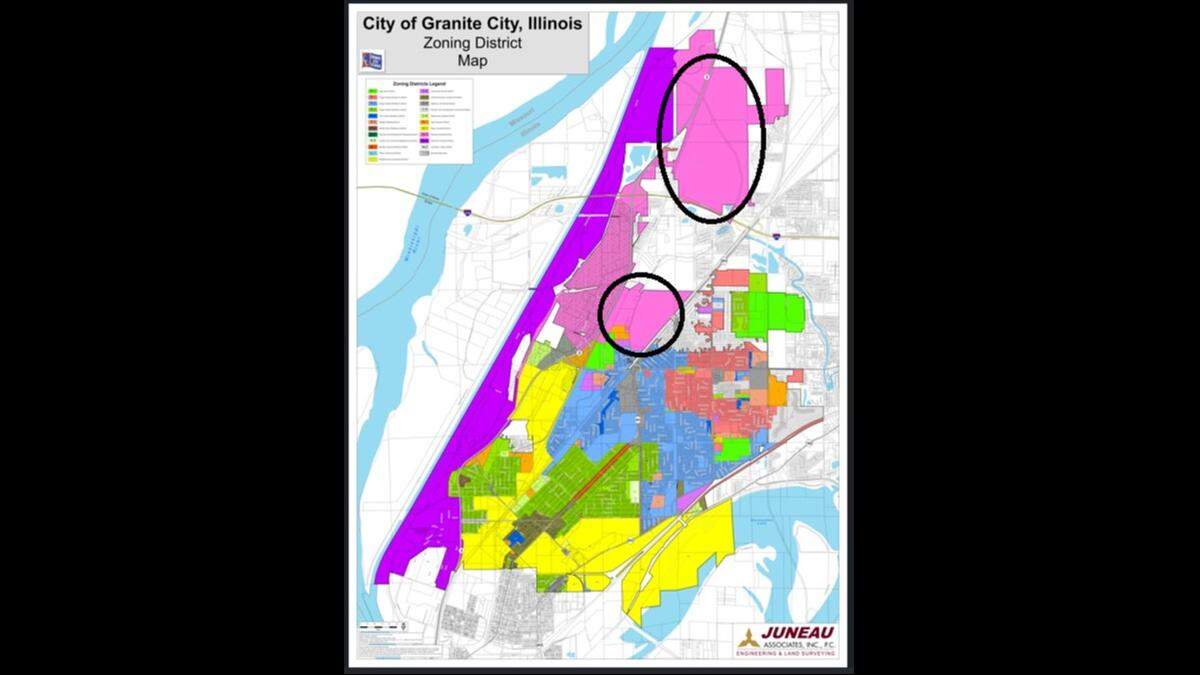
Two sites under consideration
Hamilton said Cloverleaf expressed interest in two sites in Granite City’s M-4 area, which has been zoned industrial since the 1990s. Both are north of the city center and east of Illinois 3. One is north of Interstate 270, and one is south.
Cloverleaf didn’t respond to a request for comment. The company “works with utilities to develop clean-powered, ready-to-build sites for the largest data center users and providers,” its website states.
Hamilton said city officials created Article 17 to protect the community by amending the zoning code, which now has no restrictions or development standards in industrial zones.
“Article 17 is just trying to identify minimum standards so developers understand that when we get these projects, we’re not negotiating from no standards,” she said. “We’re negotiating from minimum standards.”
St. Louis Public Radio reported that the Nebraska trip was one of several such trips to data centers organized for area leaders by Greater St. Louis Inc., a nonprofit economic development group. It paid for hotel rooms and ground transportation but not flights.
Travelers to Nebraska included Hamilton, Parkinson, Madison County Board Chairman Chris Slusser, Troy City Administrator Jay Keeven, Jefferson County Executive Dennis Gannon, Festus City Council member Jim Trinnin and Ameren employees from Illinois and Missouri.
A trip itinerary indicated that officials would be asked to sign “nondisclosure agreements” at the Google data center, according to STLPR. At the Granite City forum, someone asked Hamilton if she or Parkinson had signed one, and she said “no.”
In a press release, Slusser stated that the trip was a way for local leaders to better understand data centers in the wake of concerns about noise, water, power and pollution.
After the trip, Hamilton emailed an official from Papillion, Nebraska, thanking him for his time, STLPR reported.
“The St. Louis region has had a bad narrative started on these and it has just grown to moratoriums, etc,” she wrote. “Your time helped our leadership cut through that and know the Datacenters would be a tremendous benefit to our area.”
Parkinson didn’t attend The Mill forum. Hamilton said he’s made it clear that Granite City would only approve a data center plan if it would provide direct and immediate benefits to residents.
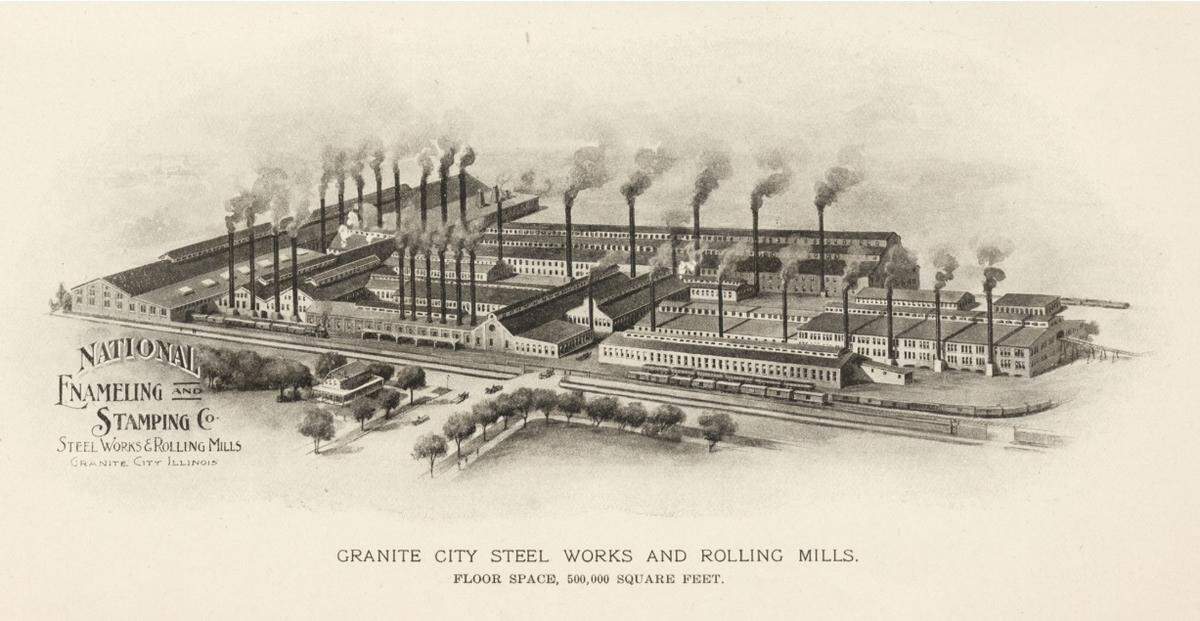
Industrial town from the start
Granite City was founded in the 1890s as a company town, and it always has gone up and down with the steel industry. But the announcement by U.S. Steel in September that the company would fully idle the local plant was a particularly hard blow.
That was the backdrop for Thursday night’s forum, where trade union leaders implored people to embrace the idea of allowing a tech company to build a data center using local labor.
“It would create jobs for building it and for future maintenance,” said Charles Bailey Jr., business manager and financial secretary for Steamfitters Local 409 in East St. Louis.
“The money generated by (data centers) is in the 10s of millions of dollars, and communities like this need that. ... We’re just trying to promote new growth. Granite City Steel was always a mainstay here. Why can’t we be a tech hub as well?”
Several speakers noted that the steel mill had supported generations of local families, but some argued that industrial dependence hasn’t been all positive, and the city should explore a different path forward.
Wrenne Abreus, 32, who moved to town last year, said the siding on her home is covered with black soot, and she worries about how pollution from the steel mill is affecting residents’ health.
“These data centers are polluters,” she said. “They’re usually powered by diesel generators or coal and natural gas, so it would get even worse.”
Topher Sudlik, a community organizer from Missouri, warned that data centers are part of an ”A.I. bubble” that could burst, leaving communities with half-empty structures. A bubble refers to rapid rises in market values and asset prices resulting from massive speculative investments.
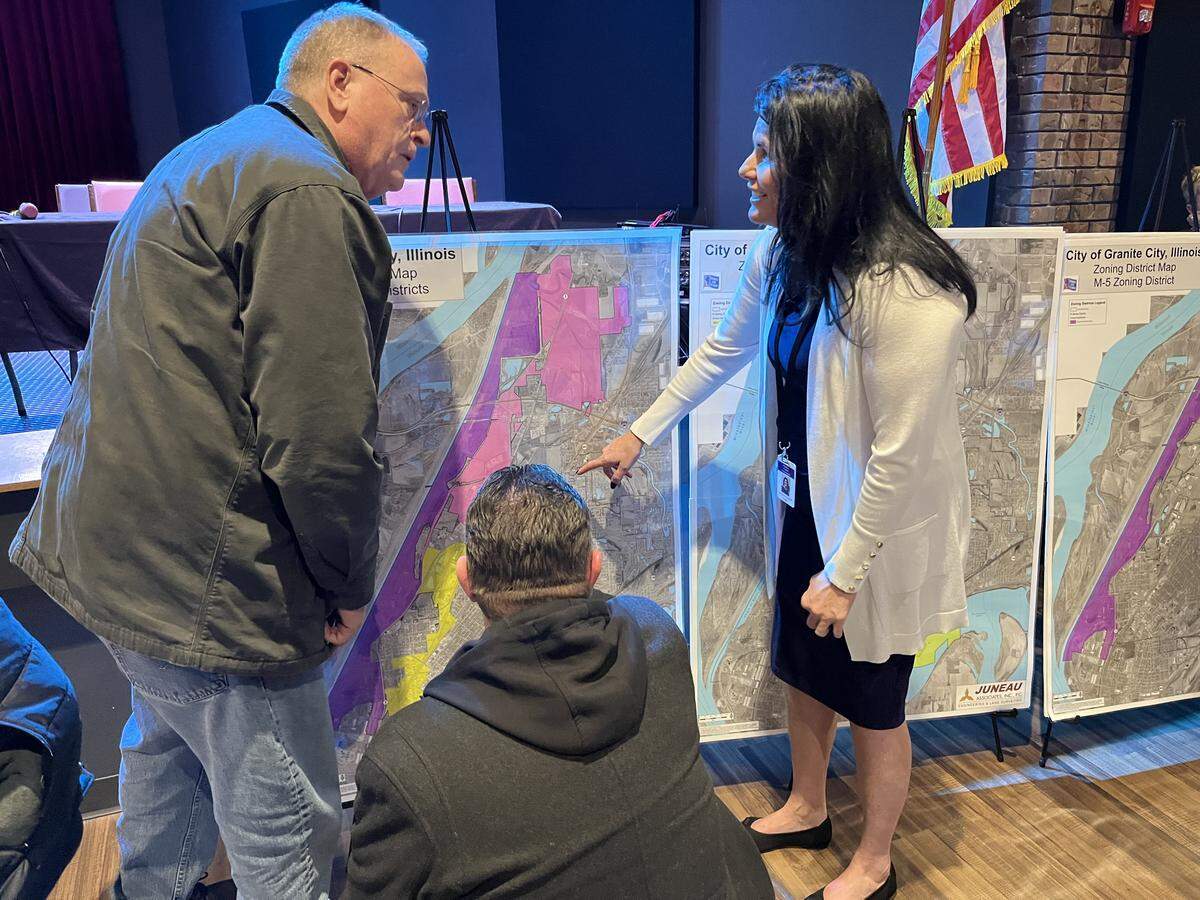
Concerns over utility bills
Several people at the forum spoke emotionally about the effect of already-high utility bills on elderly people and other Granite City residents struggling to make ends meet.
Sandra Rogers, 65, said electricity costs have risen significantly, and her water bill has tripled since the city’s decision in 2024 to sell its wastewater treatment plant to Illinois American Water.
“Even though we own our own home, we may not be able to afford to live here anymore,” she said.
Studies show that data centers often raise local utility bills, partly because their enormous demand for water and electricity requires expensive structural upgrades.
At the forum, Walter Puryear, who formerly worked for the Missouri Division of Environmental Quality, said he wasn’t “categorically opposed” to a data center but argued that such operations only work with extensive planning and enforcement capabilities.
“The city should request analysis by Ameren Illinois to predict the cost of electricity to residents under high-demand conditions,” he said.
“I just recently learned that, when the supply system is challenged and reaches capacity, generating facilities come online that are much less efficient than the standard generating units, and that inefficiency results in much, much higher electrical costs, (and) we know who’s going to pay them.”
Later, Taylor Wyatt went a step further by suggesting that any data center agreement should require Ameren Illinois and Illinois American Water to provide written confirmation that residents won’t be responsible for any utility-related increases.
Other speakers asked for city leaders to specify how a data center fits into their overall economic development plan, hire an independent expert to evaluate such a project and provide solid projections on how many permanent jobs would be created.
Comer, the Planning Commission chairman, said he hasn’t personally reached a conclusion on whether a data center is a good idea for Granite City. He and Hamilton encouraged residents to submit questions and comments on the city’s dedicated webpage.
Resident Rachel Lawhon has launched a petition at Change.org called “Delay data center construction around Granite City.” It had more than 500 signatures as of Sunday night.
Lawhon is asking that no construction contracts be signed until every individual and corporate investor is disclosed, that environmental, social and economic impacts are discussed fully and openly and that all nondisclosure agreements be waived.
“Before any such projects commence, it is crucial that all aspects are thoroughly examined and shared openly with the community,” she wrote.
This story was originally published February 9, 2026 at 5:30 AM.