Gambling mogul with metro-east ties reaches ‘settlement’ to keep state license
The Illinois Gaming Board spent more than eight years investigating, litigating and otherwise attempting to revoke the state license of a video gambling terminal operator from the metro-east.
That effort has now ended.
The regulatory agency’s citizens board approved an agreement requiring Lucky Lincoln Gaming to pay a $1.2 million settlement and allowing it to continue operating.
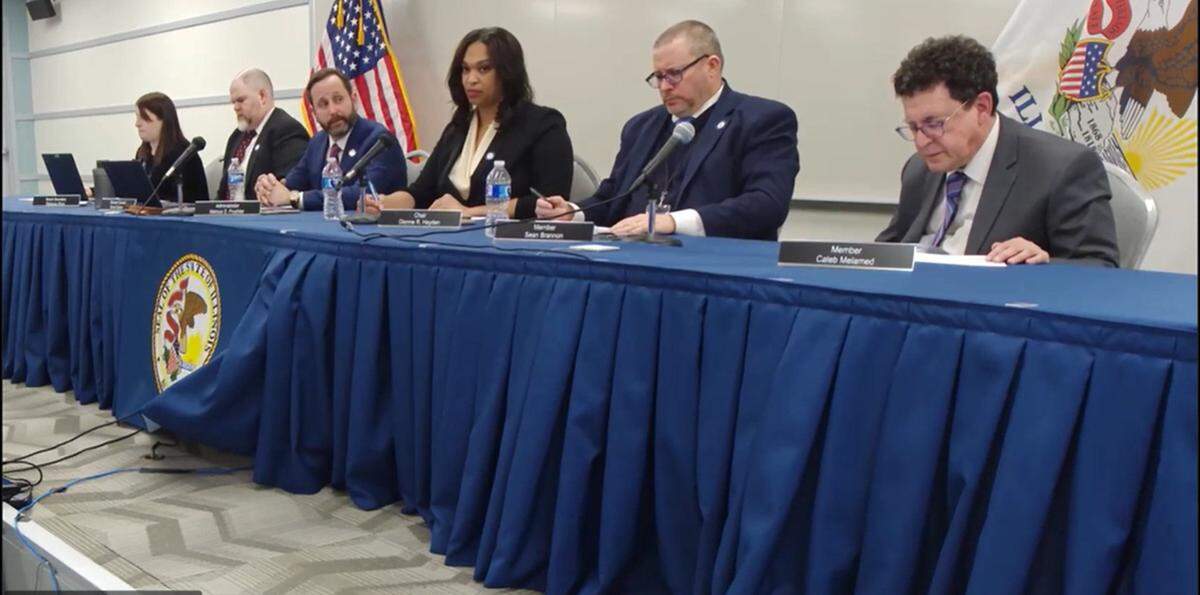
“The IGB staff and I believe that the (agreement) serves the public interest,” Gaming Board Administrator Marcus Fruchter said at the agency’s February meeting. “And the Illinois gaming industry, as well as Lucky Lincoln, benefit from resolving these disputed matters through the settlement terms instead of engaging in protracted litigation.”
The disciplinary review process was delayed in part by lawsuits Lucky Lincoln filed in Cook County Circuit Court, including one involving an Illinois Open Meetings Act violation by the Gaming Board and one that temporarily halted a limited suspension.
Lucky Lincoln is one of the largest video gambling terminal operators in Illinois with nearly 1,500 slot and poker machines in bars, restaurants, gas stations and other establishments. The company is owned by Jeff Rehberger Jr., a Highland native based in Chicago and Puerto Rico.
Gaming Board staff filed three disciplinary complaints in 2017, 2019 and 2023. They alleged that the company violated state law by offering inducements to establishments that agreed to install its terminals, tampered with witnesses and maintained an improper relationship with a chain of video gambling lounges owned by Rehberger’s father.
The complaints were reviewed by a Gaming Board administrative law judge, who issued a report with recommendations in May after conducting hearings in 2023 and 2024, according to Fruchter.
The judge, John White, concluded that Lucky Lincoln violated state law by failing to timely notify the Gaming Board that it had hired a sales agent, but stated that “a preponderance of credible evidence does not show that (the company) committed any of the other violations.”
“The Board has stipulated that the usual discipline it has imposed for a terminal violation of the notification duties is a fine in the range of $2,500 to $10,000 per instance,” White wrote in his 169-page report.

Employees to undergo training
The Gaming Board could have accepted, rejected or modified the judge’s recommendations. It rejected them by entering into the settlement agreement.
Under the agreement, Lucky Lincoln acknowledges that some of its conduct underlying the 2023 complaint did not meet Gaming Board standards or expectations, and it promises to create a compliance plan, engage an independent monitor for two years and require all employees and agents to undergo annual inducement and ethics training.
In return, the Gaming Board will dismiss all disciplinary complaints and consider the company’s state license “active, in good standing and eligible for renewal, without restriction of any kind.”
“However, this Settlement Agreement does not restrict the IGB from bringing a disciplinary action in the future,” it states.
The 2023 complaint alleged that Lucky Lincoln illegally paid more than $21,000 to build a video gambling addition onto a restaurant in a Chicago suburb in 2020 to persuade the owner to install its terminals.
Rehberger declined a BND interview request through spokesman Randall Samborn this week. But Samborn emailed a statement, noting that the administrative law judge largely ruled “in (the company’s) favor, excluding one self-admitted count for the failure to disclose a sales agent.”
“We’re pleased to close this chapter and move forward with clarity and momentum,” Rehberger said in the statement. “We respect the important role the Illinois Gaming Board plays in overseeing a well-regulated industry, and we look forward to a constructive relationship focused on compliance, service to our licensed establishment partners and industry growth.”
Chicago-area resident Kevin McGourty, a Gaming Board watchdog and frequent critic, said the settlement follows an agency pattern of filing complaints against companies that violate state law, then imposing fines that represent a fraction of their earnings.
Lucky Lincoln earned more than $204 million during the Gaming Board’s disciplinary review, from November 2017 to February 2026, according to agency spokeswoman Beth Kaufman. Its terminals also produced an equal amount for host establishments and $211 million for state and local governments.
McGourty, who formerly worked in the video gambling industry but not for Lucky Lincoln, called the $1.2 million settlement “a drop in the bucket.”
“It’s the same old shit with these guys,” McGourty said. “They file these complaints, and then they turn around and settle the case, so (Rehberger) pays a fine and walks away.”
McGourty said Gaming Board staff fought harder than usual to revoke Lucky Lincoln’s license by filing one complaint, amending it to add more violations, and then filing two additional complaints.
In 2023, the agency suspended the company from entering into any new use agreements with establishments, but a Cook County judge issued a temporary restraining order.
“Years have passed since the supposed bad acts occurred,” the judge wrote. “There was ‘considerable confusion’ surrounding the prohibition on inducements at the time Lucky Lincoln was cited, and the alleged violation has purportedly been cured.
“All the while, (the Gaming Board) has allowed Lucky Lincoln to operate despite having two complaints pending. The balancing of interests calls for an injunction to issue to maintain the status quo ... until after a hearing.”
Complaints contained 21 counts
The Illinois Gaming Board is a state regulatory and law-enforcement agency that oversees casino, video and sports gambling. It consists of an administrator, staff and a board of four citizens appointed by the governor and confirmed by the Illinois Senate.
McGourty has long argued that the Gaming Board is not given enough resources to provide adequate oversight of multimillion-dollar video gambling companies with large legal budgets. He also contends that Illinois laws are too weak to prevent crime and corruption.
Rehberger’s attorneys have included Sergio Acosta, a former Gaming Board administrator now in private practice with Akerman LLP.
Lucky Lincoln operates more than 1,450 poker and slot machines in 240-plus bars, restaurants, gas stations and other establishments throughout Illinois, according to its website. That includes about 10 in the metro-east. Rehberger also owns five marijuana dispensaries, including one in Edwardsville, under the company name Cloud9 Cannabis.
The three Gaming Board complaints contained 21 counts, each referring to alleged violations of the Illinois Video Gaming Act, the Illinois Gambling Act and the Board’s Adopted Rules on Video Gaming.
Inducements listed in the complaints range from $5,000 cash payments and Rolex watches to construction of video-gambling rooms that Lucky Lincoln allegedly offered to owners of restaurants and other establishments for agreeing to install its terminals.
The Illinois Video Gaming Act “prohibits terminal operators from giving anything of value to a video gaming establishment as an incentive or inducement to locate (terminals) in that establishment.”
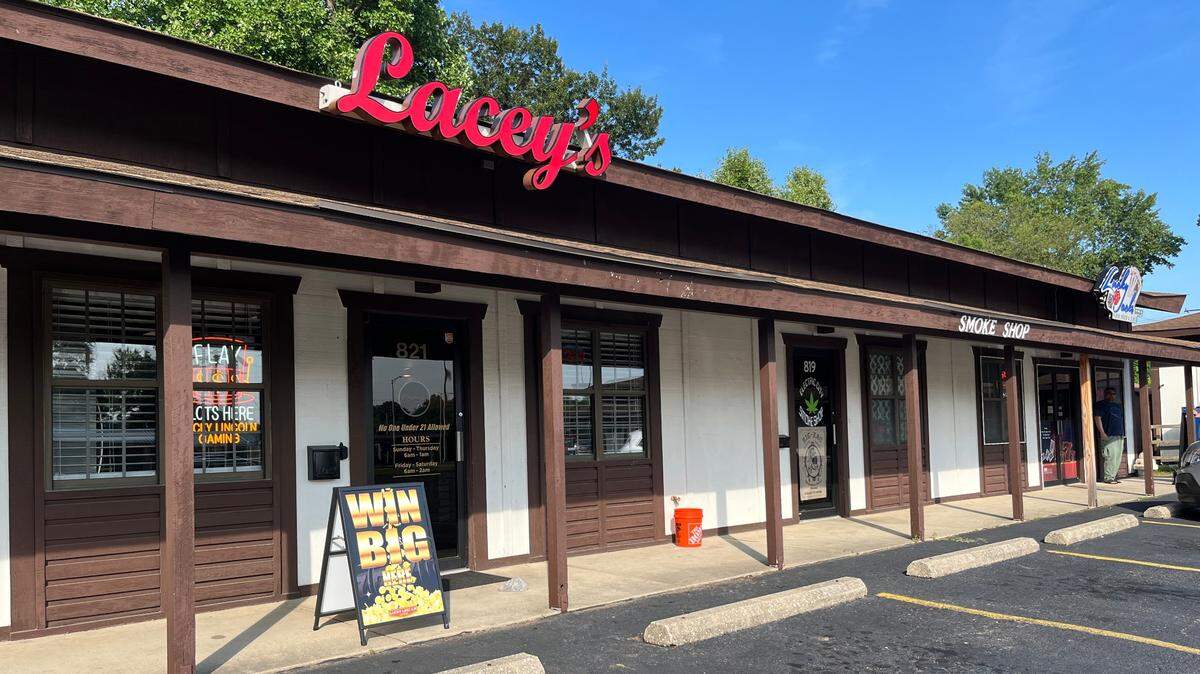
Several counts related to Lucky Lincoln’s allegedly improper relationship with Lacey’s Place, a company co-owned by Jeff Rehberger Sr., of Highland, which operates 39 video gambling lounges. One is off South Belt West in unincorporated Belleville.
State law provides for a tiered licensing system, requiring separate licenses for video gambling establishments and terminal operators, to prevent “vertical integration,” maintain competition and avoid monopoly.
The Gaming Board didn’t propose disciplinary action against Lacey’s Place or Rehberger Sr. in the complaints.
Other counts alleged witness-tampering in the form of Rehberger Jr. trying to pressure a former sales agent to change his testimony, and failure to properly disclose employee names and activities.
“(Lucky Lincoln’s conduct) discredits or tends to discredit the Illinois video gaming industry and does not serve the best interests of the citizens of Illinois,” the complaints stated.

This story was originally published February 13, 2026 at 6:00 AM.