
East St. Louis hopes to save one of the nation’s first Black public schools
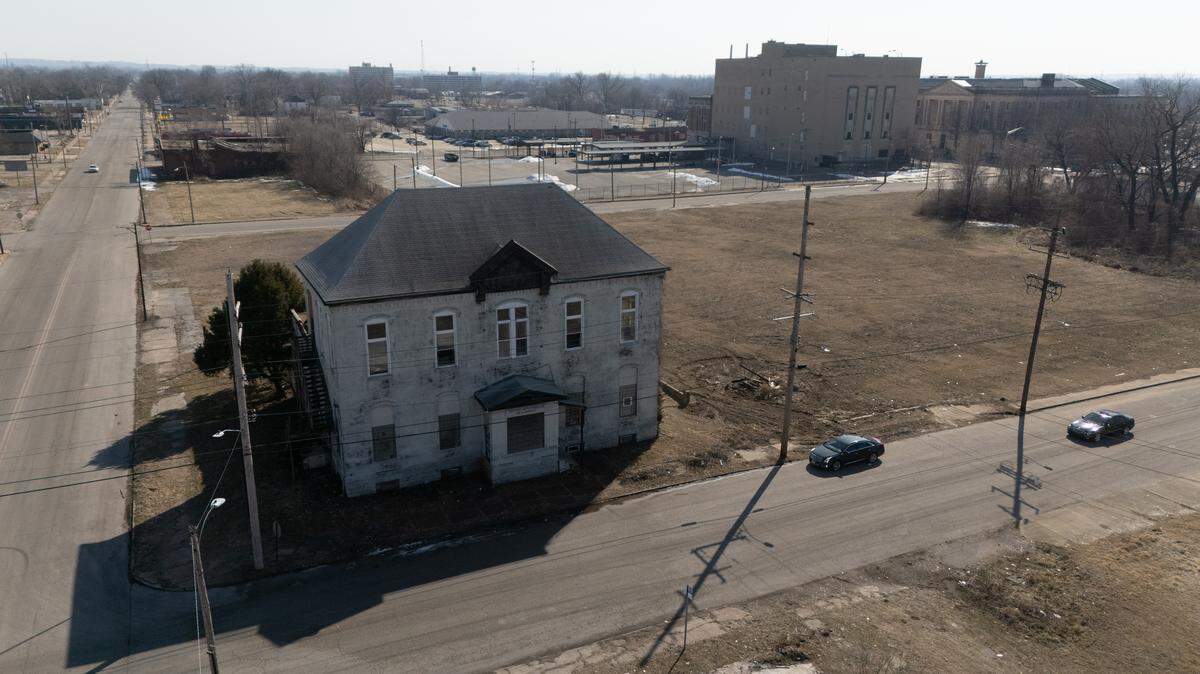
Built in 1886 after Black families in East St. Louis demanded better schools for their children, Abraham Lincoln School now sits on the state’s list of most endangered historic buildings, threatened with demolition nearly 140 years later.
In the decades following the American Civil War, John Robinson, a Civil War veteran and former slave, had a revolutionary idea: a school for Black children.
At the time, most Black people had to attend schools hosted in a variety of settings, such as churches or home basements. Seeing the disparity, Robinson helped organize and lead a protest of Black mothers and students into the nearby, all-white Clay School to demand equitable education.
What resulted was the establishment of Abraham Lincoln School in 1886 at the corner of Sixth and St. Louis.
Though it was planned as a first- through 12th-grade school for Black students, the rapid expansion of East St. Louis into a manufacturing powerhouse saw the students outgrow the school, prompting the construction of a new Lincoln High School in 1909. From then on, the building became the headquarters for the board of education until its final closing in 1975.
Now, it’s listed as one of the most endangered historic buildings in Illinois and is under threat of demolition. A plan by the East St. Louis Historical Society to save the building, however, is gaining traction.
“We tend to just demolish, demolish, demolish, but we lose our history when we do that,” said Leverne Backstrom, a retired educator and member of the East St. Louis Historical Society.
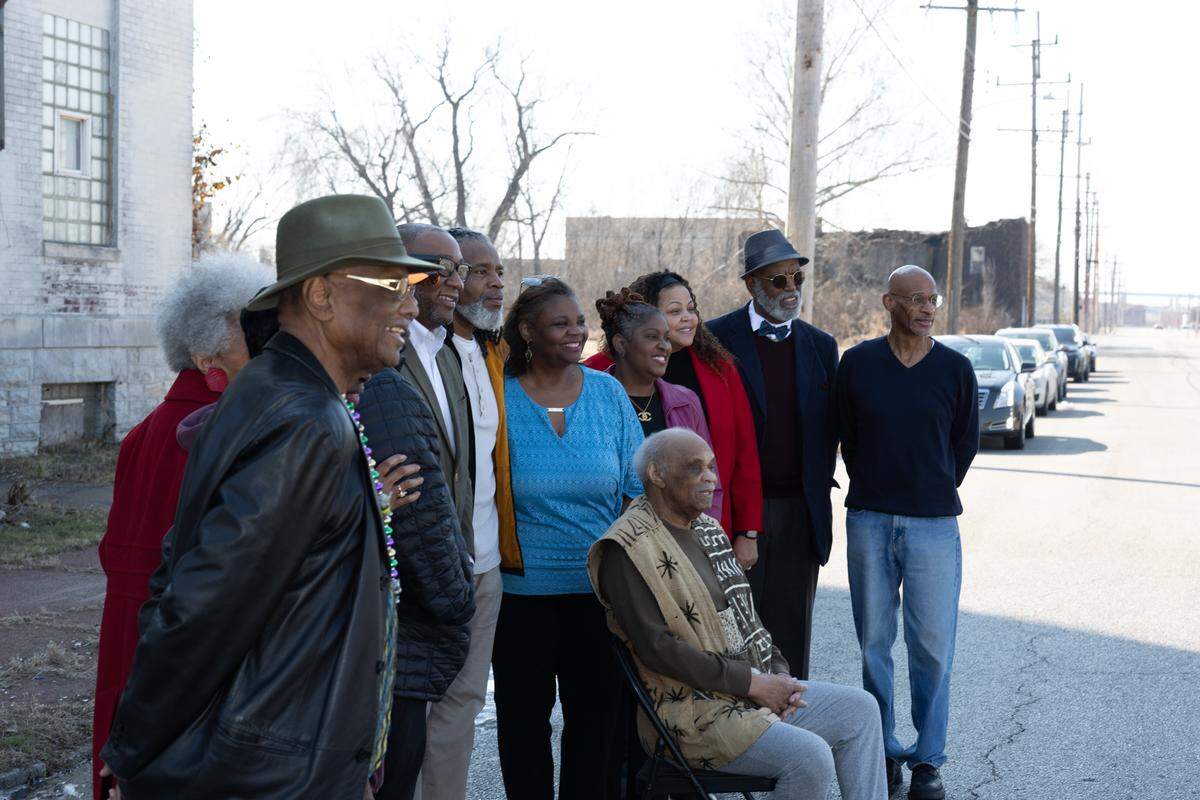
To save the building, the society first needed to determine its use. Rather than use it as another building in District 189, the board decided to turn it into a museum and community center.
“The school has an incredible legacy, and not just in East St. Louis,” said Jerome King, a director in the East St. Louis Historical Society, “But all of American history. We want to preserve it and teach folks that history.”
Reginald Petty, who helped found the society, said it’s his mission to teach people about the history of East St. Louis. He was instrumental in getting East St. Louis put in the curriculum in District 189, but says it’s important to get children on location to see the history for themselves.
“Learning about the history in schools is significant, but we feel it’s equally important for people to come and see these places in person. I’m just so glad to a part of the historical society that’s helping to preserve at least one building in the city of East St. Louis.
Jaye Willis, the executive director of the society, reiterated Petty’s point.
“I think the biggest thing for us is not only being able to get the East St. Louis history into the school curriculum, but having a place where the students can come and actually see and touch the history.”
The East St. Louis Historical Society has been around for five decades, having been founded in the 1970s. Many of the original founders went on to become mayors, cementing the society in the fabric of the city, and those who associated with the society ranged from state representatives to local history buffs. Later associates of the society were equally high-profile, such as state Sen. Christopher Belt, who was instrumental in receiving the funding in the project.
“We had a conversation about seed money and they had a conversation about making (Lincoln) a museum and part of an office space for the historical society,” Belt said. “What better building for them to be housing than the original 1886 Lincoln? From that conversation, we got through the budget process in Springfield.”
Belt took his proposal to Springfield in April last year and received $300,000 in seed money — funds used to initiate a project — to start the process.
“There’s a lot more to go but at least we got a ground level to start.”
The society still needs donations to finish the project, and that includes but goes beyond financial contributions. Willis says that relics from the old days of East St. Louis are also important to the renovation process.
“We’re already getting amazing donations,” Willis said, “and that includes items to go inside the building.
“So many people have things in their homes that they don’t know what to do with. And then as older folks pass away, things just go in the trash.”
Willis says that people often move out of East St. Louis and keep their relics, but will often reach out to the society to donate items too precious to discard. One such case is a yearbook donated from someone who moved to Pickneyville many years ago.
“They said ‘Hey, I got this East St. Louis yearbook and want to give it to the Historic Society.’ When they died, their people could’ve given it away but said, ‘No, that belongs to the city of East St. Louis.’”
Former Mayor Alvin Parks Jr., the city’s current director of economic and community development, is passionate about the project and instrumental in writing its legislation.
“I had to prepare it in a way that the members of the city council would be very comfortable voting for it. that’s important because those members of the council are actually representing the entire community. So it had to be put together in a way where the society would be comfortable signing onto the terms and conditions by which we’ll expect them to operate.”
The society is looking for a total of $7 million to save the school. While the price tag is high and will undoubtedly take a while to obtain through donations, Parks says its historical significance is worth the cost.
“This building will be used as a museum, a showcase, a place where important organizations will be able to meet. Not just the historical society, I’m sure they’ll make it available to the NAACP and other organizations in the community, but also for the people.”
From an economic and community development standpoint, Parks says the project is essential.
“Not having everything we have in this town just torn to the ground is important; we need to actually take some of these buildings and reverse them and repurpose them. We need to understand that a building is not useless because it’s 100 years old. If you take care of it and you take the time and invest in the building, it can mean the world and boost up the rest of the community.”
To donate or volunteer with the society, visit the East St. Louis Historical Society website.