
How East St. Louis became a battleground against an international chemical giant

Joe Harrison’s quest for justice against the Swiss agrochemical giant Syngenta began, officially at least, in August 2023 — just three months before his death. That’s when Harrison’s attorneys filed a lawsuit in the federal courthouse in East St. Louis, Illinois.
Harrison owned and worked a small cattle ranch in northeastern Oklahoma, and the lawsuit accuses Syngenta of failing to provide adequate warnings about the dangers of paraquat, the key ingredient in its blockbuster weedkiller Gramoxone. An amended lawsuit filed after Harrison’s death alleges that between 1997 and 2022, he was repeatedly exposed to paraquat in the course of applying it to vegetation.
The lawsuit charges that Syngenta “failed to warn of the nature and scope of the health risks associated with Paraquat, namely its toxic properties and its propensity to cause or serve as a substantial contributing factor in the development of Parkinson’s disease.” (Syngenta has yet to respond to the lawsuit.)
Parkinson’s disease made Harrison’s life a living hell, according to Patti Pouncil, his niece.
Parkinson’s disease is an incurable progressive nervous system disorder that kills off the brain cells that generate the neurotransmitter dopamine, which controls motor movement in the body. It causes a severe loss of balance, tremors in arms and legs, and often leaves victims bedridden and reliant on a wheelchair. The disease can become debilitating, leading indirectly to death. It is the world’s fastest-growing brain disease. At least 90,000 Americans are diagnosed every year.
A one-time high school football star renowned for his physical strength and speed, Harrison was known to his family as Uncle Joe. As the disease progressed, he fought to remain as independent as possible, including being able to feed himself.
The Veterans Administration provided Uncle Joe with specially made spoons with extra big ladles and handles that he could strap to his wrist. “But he got very frustrated with that,” as his worsening tremors soon made manipulating utensils impossible, Pouncil said.
“Eventually, he couldn’t feed himself,” she said. “We had to feed him. Parkinson’s is really a very gruesome, slow, painful demise.”

East St. Louis’ legal battleground
Harrison’s lawsuit is one of nearly 6,500 so far filed against both Syngenta and Chevron, which distributed paraquat until the mid-1980s, in the federal courthouse in East St. Louis.
Another 1,600 cases have been brought in Pennsylvania state court, along with nearly 500 in California, while dozens more have been filed in state courts across the U.S.
The East St. Louis lawsuits, which have been filed by people nationwide, have been folded into a Multidistrict Litigation, or MDL, which combines lawsuits against a common defendant into a single federal court. Almost all the paraquat cases are still pending. And unlike the lawsuits against Bayer’s herbicide Roundup, they have yet to lead to a bellwether trial—perhaps one reason that controversy around paraquat has yet to bubble into mainstream consciousness.
For now, at least, America’s courthouses are the only places the Parkinson’s patients, or surviving family members who have lost someone to the disease, can push for justice or obtain compensation for their pain and suffering.
Paraquat remains legal in all 50 states, though lawmakers in 10 states—state Rep. Sherri Gallick (R-Belton) in Missouri—introduced legislation this January to ban it. That same month, EPA Administrator Lee Zelden announced his agency plans to take a new look at paraquat’s safety and will require the herbicide’s makers to provide clear-cut proof that current uses are safe under real-world conditions.
Syngenta has previously stated in court papers there is “no credible evidence” that paraquat causes Parkinson’s.
The EPA states on its website that after reviewing the science, it has “not found a clear link” between paraquat exposure and Parkinson’s disease, though the agency does have a number of restrictions on use due to its acute toxicity.
In 2024, more than 50 members of Congress called on the EPA to ban paraquat, assailing it as a “highly toxic pesticide” whose continued use cannot be justified given its harms to farmworkers and rural communities,” according to the investigative website The New Lede.
The lawmakers pointed to “numerous studies” that have underscored paraquat’s links to Parkinson’s disease, as well as non-Hodgkin’s Lymphoma, thyroid cancer, and other serious illnesses.
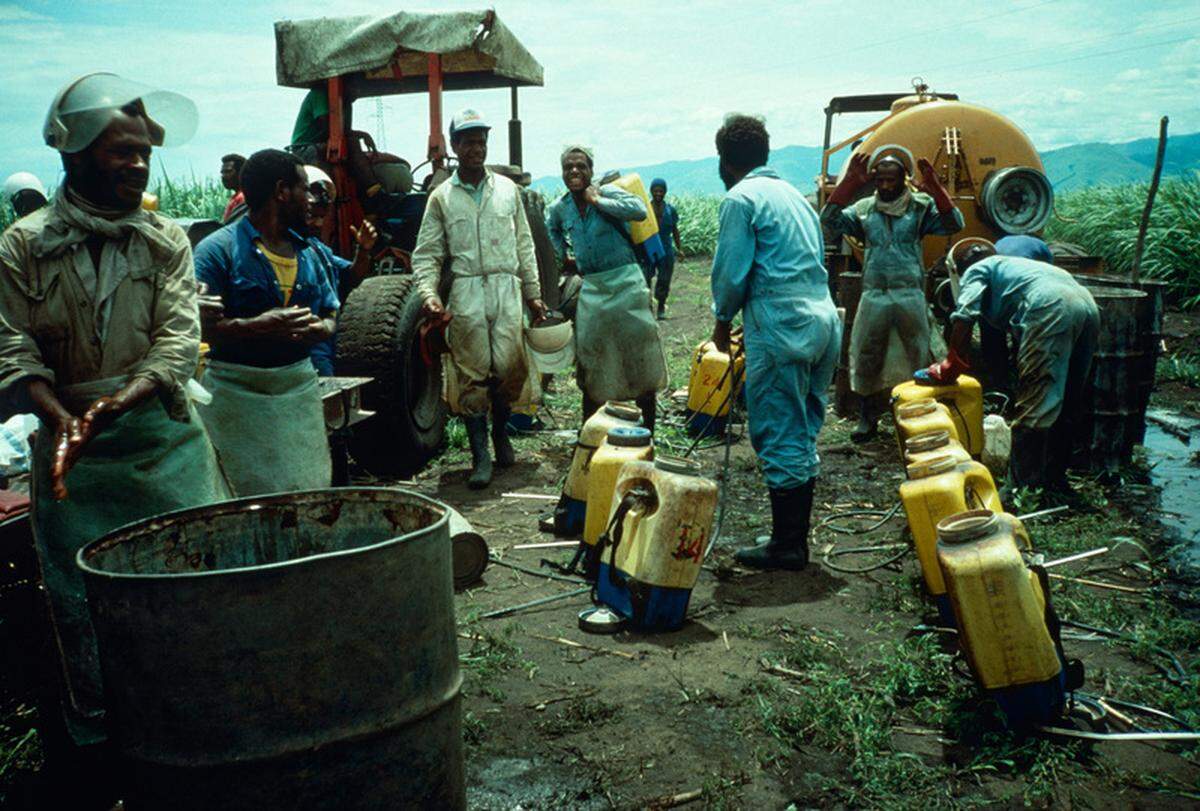
Parkinson’s and paraquat
The studies cited by the lawmakers form a growing mountain of evidence showing clear links between Parkinson’s disease and paraquat, as well as other environmental sources.
Up until the last decade, researchers theorized that Parkinson’s disease was mostly the result of genetics. But researchers began noticing the number of new Parkinson’s cases being reported globally kept rising year over year, especially in industrialized nations such as China. About half of all known cases of the disease—at least 5 million—are located there.
So scientists began scrutinizing possible environmental sources, such as the many millions of pounds of pesticides sprayed on the world’s farm fields, golf courses, gardens, and lawns each year.
A study published in May, for instance, in the Journal of the American Medical Association indicates that living within a mile of a golf course doubles a person’s chances of developing Parkinson’s, a correlation possibly explained by exposure to herbicides sprayed on the course that drain into drinking water.
The evidence that paraquat is a key factor in the growing number of new Parkinson’s disease cases is so powerful that Ray Dorsey, one of America’s leading researchers into the disease, is calling for a worldwide ban on the chemical compound.
Dorsey, a neurologist, is also calling for bans on other major neurotoxins, including trichloroethylene, or TCE, a cleaning chemical used in a long list of products, including household cleaners, and across a wide range of industries, from dry cleaning to manufacturing.
An underground plume of TCE, for example, has contaminated the drinking water at Camp Lejeune, the sprawling Marine Corps base in North Carolina. Veterans and family members stationed there between 1953 and 1987 show a 70 percent higher risk for developing the brain disease, according to a study published by JAMA Neurology in 2023.
The evidence for the connection between Parkinson’s and paraquat and TCE “is overwhelming,” according to an article Dorsey co-wrote in 2020 in the journal American Scientist. The same article notes that from 1990 to 2015, the number of people living with Parkinson’s more than doubled from 2.6 million to 6.3 million.
“By 2040, the number is projected to double again to at least 12.9 million, a stunning rise,” according to Dorsey, director of the Center for Human Experimental Therapeutics at the University of Rochester Medical Center.
Dorsey called the disease “largely preventable” and said the world can prevent the vast majority of new cases “If we clean up our environment.”
Most of the nations in the industrialized world are already heeding this advice. At least 70 countries have banned paraquat, including Brazil, Argentina, and all the nations that make up the European Union.
Paraquat is banned in Switzerland, where Syngenta is headquartered, and in China, the home of Sinochem Holdings, Ltd., the firm that owns Syngenta. It’s also banned in England, where a factory in the Yorkshire town of Huddersfield makes it and exports it to the United States.
Paraquat’s dangers even led the EPA—which has so far refused to ban paraquat for agricultural uses—in 2021 to ban it from golf courses “to prevent severe injury and/or death” from ingestion.
Scientists have noted that countries that have experienced the least industrialization have the lowest rates of Parkinson’s disease, “whereas those that are undergoing the most rapid transformation, such as China, have the highest rates of increase,” Dorsey and his co-authors wrote.
What’s more, the highest rates of Parkinson’s disease are found in agricultural regions, especially in the U.S. A study by researchers at UCLA, published in the International Journal of Epidemiology in 2024, shows that people living or working within 500 meters —or 1,640 feet—of paraquat application more than double their odds of developing Parkinson’s disease.

Cattle ranch troubles
Harrison believed he developed Parkinson’s during the course of spraying paraquat across his cattle ranch outside his hometown of Haskell, Oklahoma, according to Pouncil, his niece. She said he was never warned of the dangers.
“He was certainly intelligent enough to know if something were really dangerous,” she said. “I don’t think he would’ve intentionally done something that would’ve harmed him or his family.”
Harrison began raising cattle in 1995. By then, he had already led a full life.
A big man with impressive natural strength, Harrison excelled as a football running back while growing up in segregated rural Oklahoma in the mid-1950s. Such was his talent that Oklahoma State University tried to recruit Harrison as its first Black football player, but Harrison turned down the offer and joined the Army, serving as a medic.
After earning a college degree in social work, Harrison spent his career in the Wichita, Kansas, school system. Upon retirement, he returned to Haskell, raising cattle on a ranch he at first sharecropped and later owned that was tucked away in the rolling prairies of eastern Oklahoma.
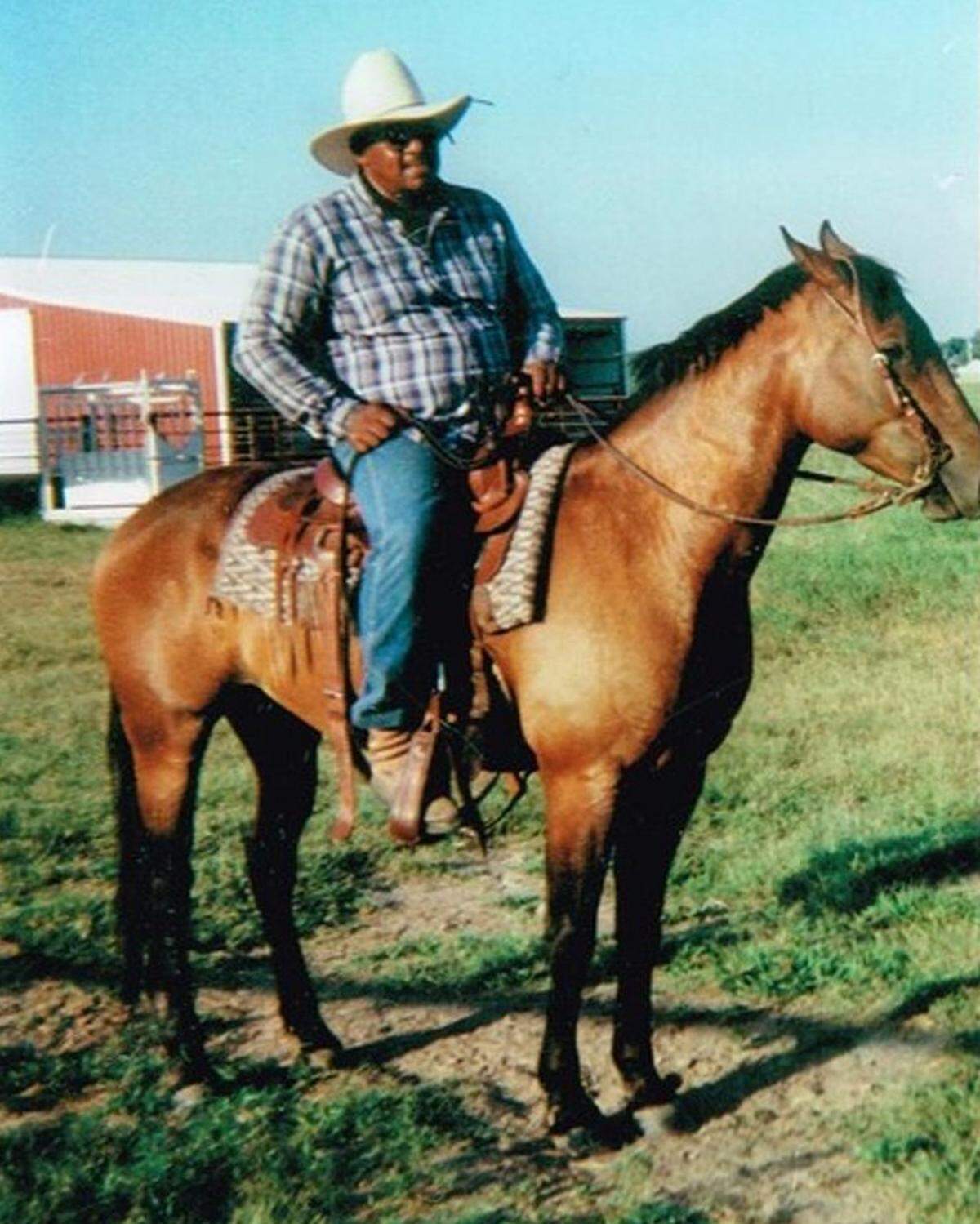
“He could do anything, lift anything,” Pouncil said of her Uncle Joe. “He drove trucks. He rode horses, he used to rope cattle. He was a really, really active person.”
Around 2013, in his mid-70s, Harrison noticed a tremor in his right hand, while the strength in his arms and legs began flagging. “Just losing that strength, losing that vitality, slowing down,” Pouncil said. “He couldn’t take care of his cattle anymore. That really broke his heart.”
After he was diagnosed with Parkinson’s, Harrison moved with the aid of a cane, then a wheelchair.
Harrison summoned Pouncil to his house on the cattle ranch in the summer of 2023, just before he entered hospice care. His hands quivering uncontrollably, Uncle Joe gave her his cell phone and a piece of loose-leaf paper.
On it was scrawled the phone number of a personal injury attorney in Texas.
“And he had me dial the phone number and put the lawyer on speaker phone,” Pouncil said. “Uncle Joe did the talking. He answered the questions.”
Harrison died four months later.

A powerful herbicide
Syngenta spokeswoman Michelle Ng said paraquat is safe as long as it is used as directed.
“Around the world, regulatory authorities have the mandate to determine which products may be registered for use in their relevant geographies; their assessment also considers the necessity of these products in their respective markets,” Ng wrote in an email.
Furthermore, Ng noted, Syngenta “only sells products in markets where these are authorized, and the products we sell in each market also reflects our consideration of sustainable and profitable growth that can enable us to continue to invest in innovation.”
What is not in dispute is that paraquat is a highly effective way for farmers to rid their fields of weeds and other unwanted vegetation.
Paraquat was first synthesized by British scientists in 1882, but it wasn’t until 1955 that scientists working for Britain-based Imperial Chemical Industries—Syngenta’s predecessor—recognized its powerful properties as a herbicide. ICI began marketing it in the U.S. as a weedkiller in the early 1960s under the trade name Gramoxone.
Paraquat is popular because it effectively suppresses weeds and annual grasses. It destroys cell membranes in the plant tissue it touches, stopping photosynthesis.
Despite the many health risks surrounding it, paraquat demand in the U.S. continues to grow. The Washington Post reports that between 11 million and 17 million pounds of paraquat are sprayed annually on American crops. “And despite the alleged known risks, its use is increasing, according to the most current federal data, more than doubling from 2012 to 2018,” the paper added, relying on estimates from the U.S. Geological Survey.
The New Lede reports that paraquat imports have been increasing. One reason: Paraquat has shown itself to be effective in killing the weeds and grasses resistant to Bayer’s better-known—and equally controversial—herbicide Roundup.
“Over a recent eight-year period, U.S. imports of paraquat have totaled between 40 million and 156 million pounds per year, most coming from China and Chinese-owned manufacturing operations in the United Kingdom,” the publication reported. “On average, paraquat imports have been on the rise since 2008, with a large spike seen in 2022.”

The rural dilemma
Some scientists believe that Paraquat and other pesticides pose a risk not simply to agricultural workers in rural America, but also to their neighbors.
“People who simply live in rural areas have high rates of Parkinson’s disease,” wrote Dorsey and his co-authors in American Scientist. “These individuals may be exposed to pesticides in the air that can drift into residential communities.” Pesticides can also contaminate groundwater or well water.
Paraquat-tainted well water is how Deborah Gorman believes her parents, Tom and Nancy Grandcolas, contracted Parkinson’s disease almost simultaneously, which seemingly couldn’t be explained by genetics alone.
The Grandcolas lived in a subdivision in Freeburg, Illinois, in St. Clair County for more than 20 years. Their house abutted farm fields where they believe paraquat was sprayed.
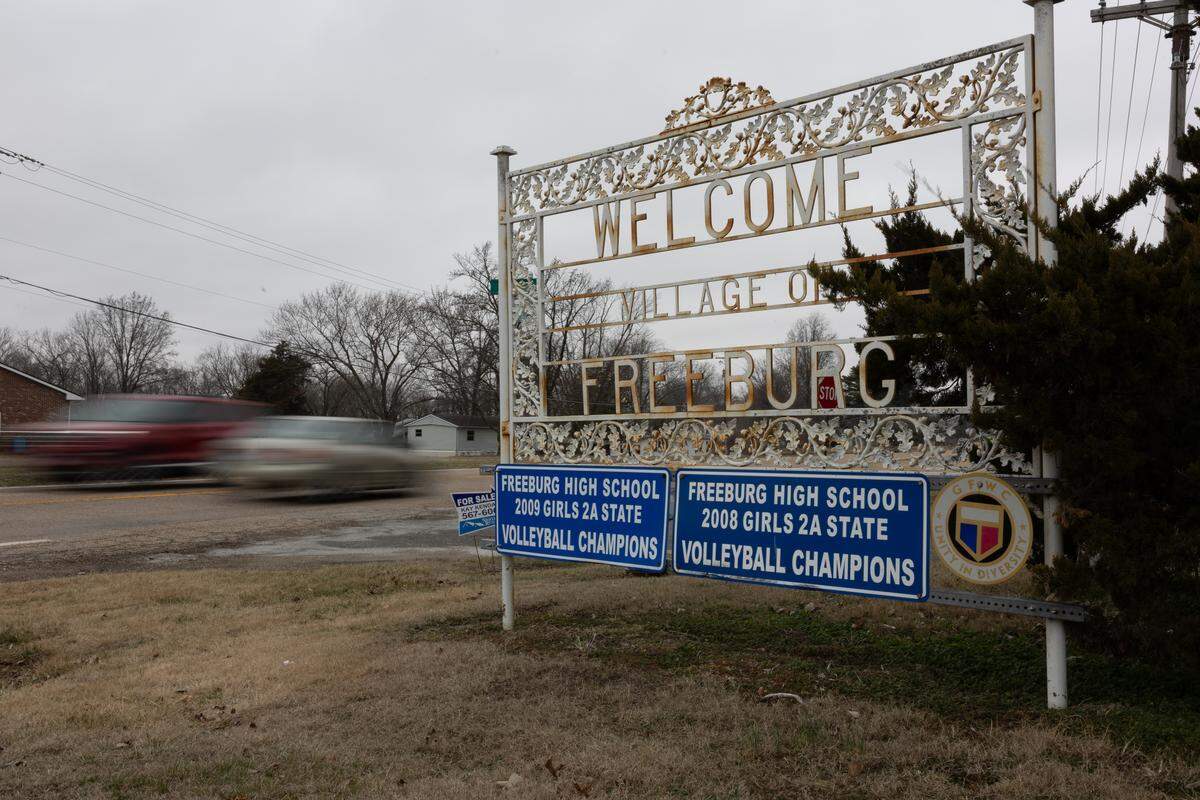
Tom Grandcolas died in 2021 at the age of 79 from complications related to his Parkinson’s. Nancy Grandcolas, who is severely debilitated with Parkinson’s, lives in a nursing home in Quincy, Illinois.
Both Tom and Nancy Grandcolas led very active lives. “My mom used to teach tennis,” Gorman said. “My dad’s nickname in the neighborhood was ‘walking man’ because he walked, walked, walked. And so did my mom.”
The fact that both contracted Parkinson’s at about the same time makes Gorman believe there was an environmental cause.
The water they drank came from a well that her father tested regularly, but not for paraquat. “He was very by the book and meticulous about everything,” she said. “So they had their water tested probably twice a year. They’re always worried, but like we saw, unfortunately, [testing for paraquat] wasn’t on the checkbox.”
In 2022, Gorman filed a negligence lawsuit against Syngenta in St. Clair County, alleging that her parents’ symptoms of Parkinson’s disease stemmed from paraquat in their drinking water.

Joe’s goodbye
The Harrisons buried Uncle Joe on a cold, windy November day, on a mound of land overlooking the cemetery outside his hometown of Haskell.
Proud of his Army service, Harrison had joined the American Legion chapter in the mid-1990s. He loved marching in Independence Day parades with fellow Legionnaires. One of his favorite tasks as a legion member was serving in the honor guard that paid tribute to deceased veterans at their funerals, Pouncil said.
So it was only fitting that an American Legion honor guard showed up for his burial on that November day. The three Legionnaires presented Mattye, Uncle Joe’s widow, with an American flag folded in a triangle as tight and taut as a drumskin.
The three-man honor guard shouldered their bolt-action rifles, aimed for the far horizon and fired three volleys—to represent the values of duty, honor and country. Then a bugler played “Taps.”
As the bugler played, Pouncil recalled her Uncle Joe’s last days in hospice.
They were hard days, bitter days, but Uncle Joe refused to give up. He wanted the world to hear his warning about paraquat.
“I think he felt that people didn’t know, people weren’t warned, they weren’t aware,” Pouncil said. “He wanted to highlight this, to let people know the potential for serious harm.”